
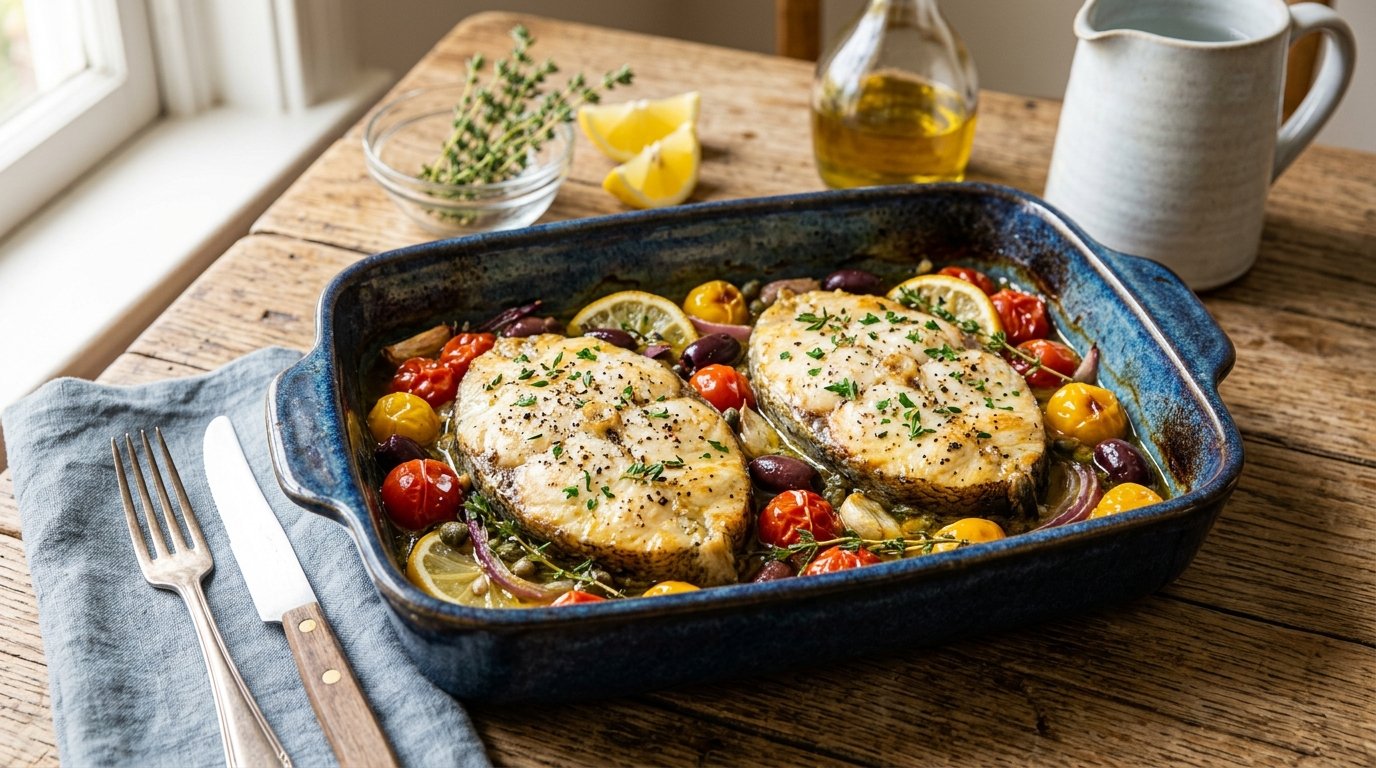
Quick Recipe Summary
| Feature | Details |
|---|---|
| Prep Time | 15 minutes |
| Cook Time | 25–30 minutes |
| Total Time | 40–45 minutes |
| Servings | 4 |
| Cuisine | Mediterranean / Greek-Inspired |
| Course | Main Course / Dinner |
| Difficulty | Easy |
| Calories | ~380 kcal per serving |
Table of Contents
| Section | Description |
|---|---|
| Introduction | Why this baked fish recipe is a weeknight hero. |
| Why This Recipe Works | The science of one-pan roasting and flavor infusion. |
| Why You’ll Love This Recipe | Key benefits: health, speed, and minimal cleanup. |
| Ingredient Notes | Choosing the right fish, olives, and aromatics. |
| Kitchen Equipment | Essential tools for perfect roasting. |
| Step-by-Step Instructions | Mastering the layering and roasting technique. |
| Expert Tips | Professional secrets for moist fish and crispy skin. |
| Common Mistakes | Avoiding dry fish and soggy vegetables. |
| Recipe Variations | Spicy, low-carb, and alternative protein options. |
| What to Serve With This Recipe | Perfect sides, grains, and wine pairings. |
| Make Ahead & Meal Prep | Prepping components for stress-free cooking. |
| Storage & Reheating | Keeping leftovers fresh and flavorful. |
| Nutritional Information | Macros and dietary estimates. |
| Troubleshooting Guide | Fixing texture and temperature issues. |
| Frequently Asked Questions | Answers to common reader queries. |
| Final Thoughts | Encouragement to cook and share. |
Introduction
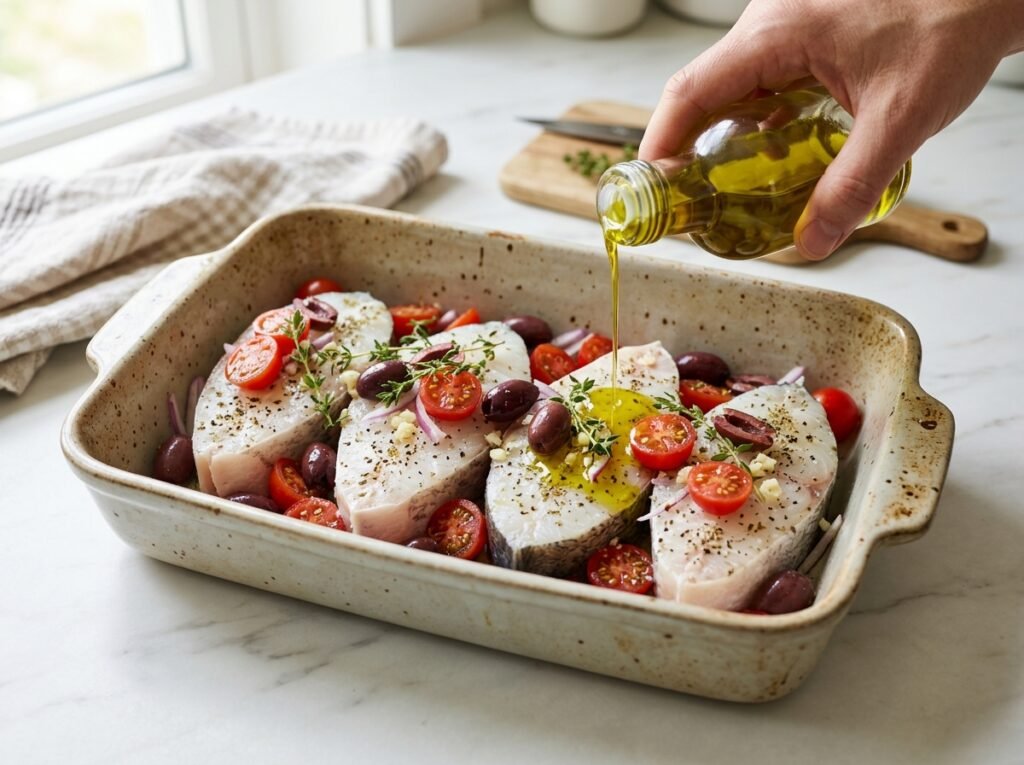
There is something profoundly satisfying about a meal that comes together in a single dish without sacrificing complexity or flavor. This Mediterranean baked fish steaks recipe delivers exactly that—a vibrant, aromatic centerpiece where thick-cut fish rests atop a bed of bursting cherry tomatoes, briny olives, capers, and garlic, all bathed in golden olive oil and fresh thyme. It is the kind of dinner that feels like a vacation but fits perfectly into a busy Tuesday night schedule.
Unlike delicate fillets that can easily overcook or fall apart, fish steaks (cross-section cuts with the bone intact) are incredibly forgiving. The bone acts as an insulator, keeping the flesh moist while the exterior develops a beautiful golden crust. Roasting everything together allows the juices from the fish to mingle with the vegetables, creating a natural sauce that needs no thickening or extra effort. Whether you are cooking for family, entertaining guests, or simply treating yourself to a wholesome meal, this dish proves that healthy eating doesn’t mean compromising on taste or satisfaction.
Why This Recipe Works
This recipe succeeds because it leverages the principles of high-heat roasting and acid-fat balance. By arranging the ingredients in a single layer in a hot oven (typically 400°F/200°C), we encourage caramelization on the tomatoes and browning on the fish skin while steaming the interior gently in its own juices. The combination of salty olives, acidic lemon juice, and rich olive oil creates an emulsion that coats every bite, ensuring no element tastes bland or isolated.
Furthermore, using fish steaks instead of fillets solves the most common problem home cooks face with seafood: dryness. The central bone structure conducts heat more evenly than thin flesh alone, acting as a built-in thermometer and moisture retainer. The surrounding vegetables aren’t just garnish; they release water and sugars during roasting, effectively braising the fish in a flavorful micro-climate. This synergy means you get tender, flaky fish and jammy, intense vegetables simultaneously, with zero additional pans or steps required.
Why You’ll Love This Recipe
- One-Pan Simplicity: Everything cooks in a single baking dish, meaning less cleanup and more time enjoying your meal.
- Forgiving Technique: Fish steaks are much harder to overcook than fillets, making this ideal for novice cooks or nervous seafood eaters.
- Pantry-Friendly Ingredients: Olives, capers, canned tomatoes (if fresh aren’t available), and dried herbs are staples that keep well, allowing spontaneous cooking.
- Nutrient-Dense Powerhouse: Packed with omega-3 fatty acids, lean protein, fiber-rich vegetables, and heart-healthy fats from olive oil.
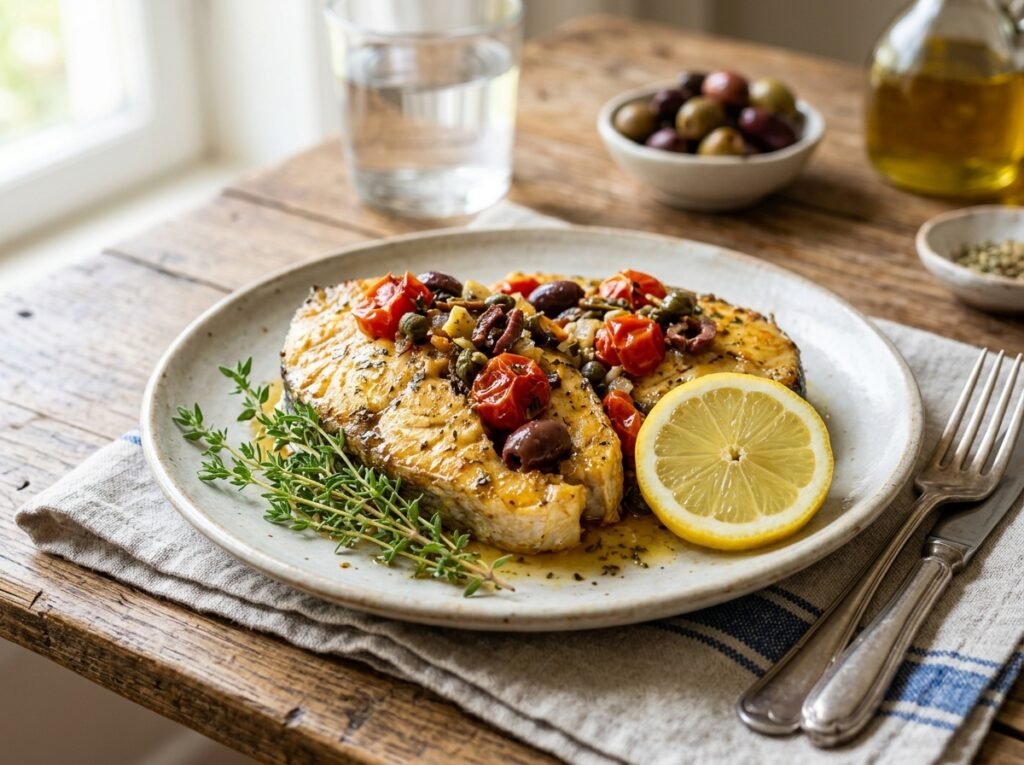
- Visually Stunning: The contrast of white fish, red tomatoes, green olives, and purple kalamatas makes for a gorgeous table presentation straight from the oven.
- Naturally Gluten-Free & Dairy-Free: A complete main course that accommodates common dietary restrictions without needing substitutions.
Ingredient Notes
Firm White Fish Steaks (Swordfish, Halibut, or Salmon)
- Purpose: The protein anchor. Steaks provide structural integrity and rich flavor that holds up to bold Mediterranean ingredients.
- Substitutions: Swordfish is traditional and meaty. Halibut is milder and sweeter. Salmon works beautifully with these flavors due to its higher fat content. Avoid delicate flaky fish like tilapia or sole—they will disintegrate.
- Buying Tips: Look for steaks cut 1–1.5 inches thick. Flesh should be translucent and firm, not opaque or mushy. Skin should be shiny and intact if present. Smell should be clean and oceanic, never “fishy.”
- Storage: Use within 1–2 days of purchase. Keep on ice in the coldest part of the fridge. Freeze up to 3 months if vacuum-sealed.
Mixed Olives (Kalamata & Green)
- Purpose: Provides salinity, umami depth, and textural contrast. The variety adds visual interest and complex flavor layers.
- Substitutions: Use whatever quality olives you have. Kalamata offer tangy fruitiness; Castelvetrano are buttery and mild; Niçoise are small and delicate. Avoid pre-sliced olives in jars—they’re often too soft and salty.
- Buying Tips: Buy from olive bars or reputable brands packed in brine, not oil (unless specified). Pitless olives save prep time but may have slightly different texture.
- Storage: Keep refrigerated in their original brine. Lasts months unopened, weeks opened.
Cherry Tomatoes
- Purpose: Burst during roasting to create natural sauce and sweetness that balances saltiness of olives/capers.
- Substitutions: Grape tomatoes work identically. Larger tomatoes can be halved or quartered. Sun-dried tomatoes (oil-packed) add intense chewiness—use sparingly.
- Buying Tips: Choose plump, heavy-for-size tomatoes with intact stems. Avoid wrinkled or soft ones. Organic often has better flavor concentration.
- Storage: Never refrigerate! Store stem-side down at room temp. Use within 3–5 days for peak sweetness.
Capers
- Purpose: Adds sharp, pickled brightness that cuts through richness of fish and oil. Essential for authentic Mediterranean profile.
- Substitutions: Chopped cornichons or green peppercorns in brine. Lemon zest + splash of vinegar in a pinch (though not identical).
- Buying Tips: Small nonpareil capers are preferred for even distribution. Salt-packed capers have superior texture/flavor but require rinsing. Jarred in brine are convenient and consistent.
- Storage: Refrigerate after opening. Brine-packed last 6+ months. Salt-packed last indefinitely if kept submerged.
Fresh Thyme & Garlic
- Purpose: Aromatic foundation. Thyme’s earthy pine notes complement fish perfectly; garlic provides savory backbone.
- Substitutions: Dried thyme (use ⅓ amount) works in emergencies. Rosemary or oregano also pair well. Granulated garlic is acceptable but fresh is superior here.
- Buying Tips: Thyme sprigs should be fragrant when rubbed. Garlic cloves firm and papery-skinned. Avoid pre-minced garlic in jars—it lacks potency and can taste metallic.
- Storage: Thyme keeps 1–2 weeks wrapped in damp paper towel in fridge. Garlic lasts months in cool, dark place.
Extra Virgin Olive Oil & Lemon
- Purpose: Fat carries flavor and promotes browning; acid brightens and tenderizes. Together they form the dressing/sauce base.
- Substitutions: Good quality avocado oil for higher smoke point if roasting >425°F. Lime or orange juice can replace lemon for different citrus notes.
- Buying Tips: EVOO should be harvested within last year, stored in dark glass/tin. Look for harvest date on bottle. Lemons should feel heavy and yield slightly to pressure.
- Storage: EVOO in cool, dark place (not fridge). Use within 6 months of opening. Lemons at room temp for juicing, fridge for longevity.
Kitchen Equipment
- Oval or Rectangular Ceramic/Glass Baking Dish: 9×13 inch minimum. Ceramic retains heat evenly and presents beautifully. Glass allows monitoring bottom browning. Avoid metal pans which can react with acid.
- Sharp Chef’s Knife: For trimming fish, halving tomatoes, smashing garlic.
- Cutting Board: Dedicated board for raw fish to prevent cross-contamination.
- Measuring Spoons/Cups: For accurate oil, lemon juice, caper ratios.
- Tongs or Spatula: For safely removing hot fish steaks without breaking them.
- Instant-Read Thermometer: Critical for checking fish doneness without guessing. Target 135°F–140°F internal temp.
- Small Bowl & Whisk: For combining oil, lemon, herbs before pouring.
- Aluminum Foil (Optional): For tenting if fish browns too quickly before cooking through.
Step-by-Step Instructions
H3: Prepare the Vegetable Base
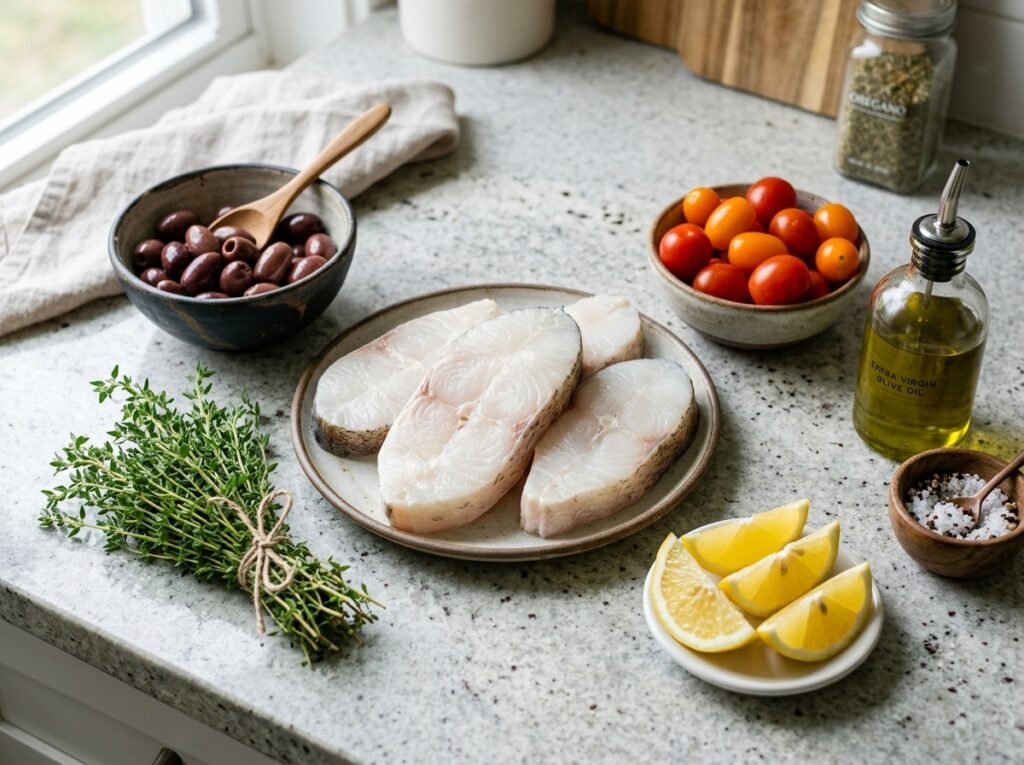
Preheat oven to 400°F (200°C). In your baking dish, scatter cherry tomatoes, mixed olives, capers, and smashed garlic cloves evenly across the bottom. Why this matters: Creating a vegetable bed prevents fish from sticking and ensures veggies roast in fish juices rather than drying out. Visual Cue: Vegetables should cover bottom in single layer, not piled high. Texture Cue: Tomatoes should be whole and taut. Pro Tip: Smash garlic cloves with flat side of knife to release oils without chopping—this prevents burning while infusing flavor.
H3: Season and Arrange Fish Steaks
Pat fish steaks completely dry with paper towels. Season both sides generously with kosher salt and freshly ground black pepper. Nestle steaks into the vegetable bed, skin-side down if applicable, leaving slight space between each. Why drying matters: Moisture on surface steams fish instead of searing it, preventing golden crust formation. Visual Cue: Fish should sit snugly among veggies, not floating above them. Aroma Cue: Fresh fish smells clean and briny; discard if ammonia-like odor detected. Common Mistake: Overcrowding causes steaming instead of roasting. Leave ½-inch gaps for air circulation.
H3: Add Aromatics and Dressing
Strip fresh thyme leaves from stems (or use whole sprigs tucked around fish). Squeeze fresh lemon juice evenly over entire dish. Drizzle extra virgin olive oil generously over fish and vegetables—about 3–4 tablespoons total. Why order matters: Acid first penetrates fish surface; oil seals and conducts heat. Herbs added now infuse during roasting without burning. Visual Cue: Oil should pool slightly around vegetables, coating fish sheen. Texture Cue: Fish surface should glisten but not drown. Professional Tip: Reserve some thyme sprigs for garnish post-roast to maintain fresh color and aroma.
H3: Roast Until Perfectly Cooked
Place dish in center rack of preheated oven. Roast 20–25 minutes for 1-inch steaks, 25–30 for 1.5-inch. Check at 20-minute mark. Visual Cues: Fish turns opaque white/pink (depending on type); edges begin to separate slightly from bone. Tomatoes burst and wrinkle; olives soften. Texture Cue: Fork inserted at thickest point meets little resistance and flakes gently. Temperature Cue: Instant-read thermometer reads 135°F–140°F at center near bone. Critical: Remove when 135°F—carryover cooking raises temp 5° while resting. Overcooked fish becomes chalky and irreversibly dry.
H3: Rest and Serve Immediately
Remove dish from oven. Let rest 3–5 minutes before serving. Why resting matters: Juices redistribute throughout fish muscle fibers instead of spilling onto plate when cut. Residual heat finishes cooking gently. Visual Cue: Bubbling subsides; oil settles. Aroma Cue: Fragrance intensifies as steam releases. Serving Tip: Spoon pan juices and roasted vegetables over each steak portion. Garnish with reserved fresh thyme sprigs and optional lemon wedges. Serve directly from baking dish for rustic communal style or plate individually for elegance.
Expert Tips
- Bone-In Is Non-Negotiable: The bone isn’t just for show—it regulates heat transfer and adds collagen-rich flavor to surrounding flesh. Ask fishmonger specifically for “steaks” not “fillets.”
- Salt Early, Not Late: Season fish 10–15 minutes before roasting. Salt draws out surface moisture initially, then reabsorbs seasoned liquid deeper into flesh. Salting immediately before cooking leaves salt only on surface.
- Oil Quality Matters: Since olive oil is a primary flavor component, use your best EVOO. Cheap, oxidized oil tastes rancid when heated. Save expensive finishing oils for drizzling post-roast.
- Vegetable Size Consistency: Ensure tomatoes and olives are similar size so they roast evenly. Halve larger tomatoes to match cherry tomato diameter.
- Don’t Peek Too Often: Opening oven door drops temperature significantly, extending cook time and risking uneven results. Trust your timer and thermometer.
- Acid Balance Test: Taste pan juices before serving. If too salty (from olives/capers), add squeeze of fresh lemon. If too acidic, drizzle bit more oil. Adjust seasoning at end, not beginning.
Common Mistakes
- Dry, Chalky Fish: Caused by overcooking or using thin fillets instead of steaks. Fix: Use instant-read thermometer. Pull at 135°F. Choose 1″+ thick steaks. Rest before cutting.
- Soggy Vegetables: Result of overcrowding or insufficient oven temp. Fix: Use large enough dish for single layer. Ensure oven fully preheated to 400°F+. Don’t cover dish during roasting.
- Bitter Burnt Garlic: Whole cloves burn faster than expected at high heat. Fix: Smash cloves instead of mincing. Tuck under tomatoes/olives for protection. Or add minced garlic in last 5 minutes only.
- Fish Sticking to Dish: Insufficient oil or acidic marinade breaking down proteins prematurely. Fix: Generously oil dish bottom. Pat fish dry before placing. Let fish rest 3 mins before attempting removal—proteins release naturally as they cool slightly.
- Bland Flavor Profile: Underseasoning or low-quality ingredients. Fix: Taste vegetables before adding fish—they should be well-seasoned. Use good olives, real capers, fresh herbs. Finish with flaky salt and fresh lemon.
- Uneven Cooking: Fish steaks varying greatly in thickness. Fix: Ask fishmonger for uniform cuts. Place thicker pieces toward oven center, thinner toward edges. Rotate dish halfway if oven has hot spots.
Recipe Variations
- Spicy Calabrian Chili Version: Add 1–2 tbsp chopped Calabrian chilies or chili flakes to vegetable base. Drizzle with spicy honey post-roast for sweet-heat contrast.
- Vegetarian Adaptation: Replace fish with thick slices of halloumi or portobello mushroom caps. Halloumi holds shape beautifully; mushrooms absorb Mediterranean flavors intensely. Reduce cook time to 15–20 mins.
- Vegan Option: Substitute fish with cauliflower steaks (1.5″ thick slices from head). Toss cauliflower in oil/spices first, roast 15 mins alone, then add vegetables and continue 15–20 mins. Use vegan feta crumble post-roast.
- Chicken Alternative: Use bone-in chicken thighs (skin-on). Increase cook time to 35–40 mins until 165°F internal. Chicken skin crisps beautifully with this method.
- Shrimp/Prawn Upgrade: Add large shrimp (peeled/deveined) in last 5–7 minutes of cooking. Shrimp turn pink and opaque when done. Prevents rubbery texture from overcooking.
- Extra Cheesy Twist: Sprinkle crumbled feta or grated kefalotyri cheese over dish in last 3 minutes of roasting. Cheese melts into bubbling gold without burning.
- Low-Carb/Keto Friendly: Already naturally low-carb! Boost fat content with avocado slices added post-roast. Serve over zucchini noodles or cauliflower rice instead of potatoes/bread.
- High-Protein Boost: Add cannellini beans (rinsed/drained) to vegetable base. Beans absorb flavors and add plant-based protein/fiber. Increases satiety significantly.
- Citrus Herb Swap: Replace thyme with rosemary + oregano. Use orange juice/zest instead of lemon for sweeter, warmer profile. Pair particularly well with salmon.
What to Serve With This Recipe
- Crusty Sourdough Bread: Essential for soaking up the incredible pan juices. Warm bread absorbs oil, tomato essence, and fish flavors perfectly.
- Lemon-Herb Couscous or Orzo: Light grain that complements without competing. Toss with parsley, mint, and lemon zest for freshness.
- Roasted Potatoes or Fingerlings: Crispy potatoes echo the roasting method and provide hearty starch balance. Toss with same olive oil/herbs for cohesion.
- Simple Arugula Salad: Peppery greens with shaved Parmesan and balsamic glaze cut through richness. Acidic dressing mirrors dish’s brightness.
- Tzatziki or Yogurt Sauce: Cool, creamy contrast to warm, oily fish. Mint/cucumber refreshes palate between bites.
- Grilled Asparagus or Broccolini: Charred green veg adds bitterness and texture contrast. Lemon-garlic finish ties to main dish.
- White Wine Pairing: Assyrtiko (Greek), Vermentino, or Albariño. High-acid whites cut through oil and complement briny elements beautifully.
- Sparkling Water with Citrus: Cleanses palate without overwhelming delicate fish flavors. Add cucumber slices for spa-like refreshment.
Make Ahead & Meal Prep Tips
- Vegetable Base Prep: Chop tomatoes, measure olives/capers/garlic up to 24 hours ahead. Store covered in fridge. Bring to room temp 30 mins before roasting for even cooking.
- Fish Prep: Pat dry and season fish up to 2 hours ahead. Keep uncovered on rack in fridge to air-dry surface further (enhances browning). Do not season earlier than 2 hrs or texture becomes mushy.
- Dressing Mix: Combine oil, lemon juice, herbs in jar up to 3 days ahead. Shake before using. Flavors meld and improve over time.
- Full Assembly Ahead: Assemble dish completely (fish + veggies + dressing) up to 4 hours ahead. Cover tightly, refrigerate. Add 5–7 mins to cook time since starting cold.
- Leftover Transformation: Flake leftover fish into pasta with pan juices, cherry tomatoes, and cream for quick lunch. Or fold into grain bowls with greens and tahini dressing.
- Freezing Components: Roasted vegetables freeze well 3 months. Fish does NOT freeze well cooked—texture degrades. Freeze raw fish steaks separately if needed.
Storage & Reheating Instructions
Refrigerator
Store leftovers in airtight container up to 2 days. Fish quality declines rapidly after 48 hours. Keep vegetables and fish together to maintain moisture. Discard if fish develops strong ammonia odor or slimy texture.
Freezer
Not recommended for cooked fish—texture becomes mealy and watery upon thawing. Raw fish steaks freeze excellently up to 3 months. Wrap individually in plastic, then foil. Thaw overnight in fridge before cooking.
Reheating
- Oven (Best Method): 300°F for 10–12 mins covered with foil. Gentle heat preserves moisture. Uncover last 2 mins if wanting to re-crisp skin slightly.
- Air Fryer: 300°F for 5–7 mins. Excellent for reheating single portions. Spray lightly with oil to prevent drying. Watch closely—air fryers cook fast.
- Stovetop: Low heat in skillet with splash of water/wine. Cover 3–4 mins to steam gently. Uncover to evaporate excess liquid. Best for preserving texture.
- Microwave (Last Resort): 50% power in 30-sec bursts. Cover with damp paper towel. Will make fish rubbery and vegetables mushy. Only use if speed outweighs quality loss.
Nutritional Information
Per Serving (1 Fish Steak + Vegetables)
- Calories: 380
- Protein: 34g
- Carbohydrates: 12g
- Fat: 22g
- Fiber: 3g
- Sugar: 5g
- Sodium: 680mg
Note: Values vary based on fish type, olive oil quantity, and olive/caper brands. Sodium is primarily from olives/capers—reduce if watching intake. Omega-3 content significant in swordfish/salmon.
Troubleshooting Guide
| Problem | Cause | Solution |
|---|---|---|
| Fish dry/chalky | Overcooked or thin cut | Use thermometer. Pull at 135°F. Choose 1″+ steaks. Rest before serving. |
| Vegetables watery | Overcrowded or low oven temp | Single layer only. Ensure 400°F+ oven. Don’t cover during roasting. |
| Fish sticks to dish | Insufficient oil or premature moving | Oil dish well. Pat fish dry. Wait 3 mins post-roast before removing. |
| Bitter burnt garlic | Minced garlic burns fast | Smash whole cloves. Tuck under veggies. Or add late in cooking. |
| Bland flavor | Underseasoned or poor ingredients | Taste veggies before adding fish. Use quality olives/capers. Finish with flaky salt. |
| Uneven cooking | Varying steak thickness | Uniform cuts from fishmonger. Thicker pieces center, thinner edges. Rotate dish. |
| Too salty | Olives/capers overly salty | Rinse olives/capers briefly. Reduce added salt. Balance with extra lemon/oil. |
Frequently Asked Questions
Can I use frozen fish steaks? Yes, but thaw completely in fridge overnight first. Pat extremely dry before seasoning. Frozen fish releases more water during cooking, so increase oven temp to 425°F and extend time 5–7 mins to compensate for excess moisture.
What’s the best fish for beginners? Swordfish is most forgiving—meaty texture resists flaking apart. Salmon is second choice due to high fat content preventing dryness. Avoid delicate white fish like cod or haddock until confident with timing.
Can I make this dairy-free? It’s naturally dairy-free! Just verify your olive oil brand doesn’t process with dairy equipment if highly sensitive. No cheese or butter needed—the richness comes entirely from fish fat and olive oil.
How do I know when fish is done without thermometer? Look for opacity change: translucent/raw → opaque/cooked. Gently press thickest part—it should feel firm but yielding, not hard. Insert fork at angle near bone; flesh should separate easily into large flakes, not shred.
Can I use dried herbs instead of fresh? Yes, but use ⅓ amount (dried is concentrated). Add dried herbs to oil/lemon mixture before pouring so they rehydrate. Fresh thyme added post-roast still recommended for bright garnish.
Why are my olives shriveled and tough? Over-roasted or low-quality olives. Quality olives hold shape better. Reduce cook time or add olives in last 10 minutes only. Soak overly salty/shriveled olives in warm water 10 mins before using.
Is this recipe keto-friendly? Absolutely! Naturally low-carb (<10g net carbs). Boost fat with extra EVOO drizzle or avocado slices. Serve over cauliflower mash or zucchini noodles instead of grains/bread.
Can I double this recipe? Yes, but use two dishes or very large roasting pan. Overcrowding ruins texture. If doubling in one pan, ensure vegetables still in single layer and fish not touching. May need +5 mins cook time.
Final Thoughts
This Mediterranean baked fish steaks recipe embodies everything wonderful about coastal cooking: simplicity, freshness, and bold flavors that celebrate quality ingredients rather than masking them. There’s immense satisfaction in pulling a bubbling, fragrant dish from the oven knowing every element was transformed by heat and time into something greater than its parts. Whether you’re introducing someone to seafood or revisiting a beloved classic, this dish delivers consistent, impressive results with minimal fuss. Don’t hesitate to adapt it to your pantry and palate—the beauty of Mediterranean cooking lies in its flexibility.