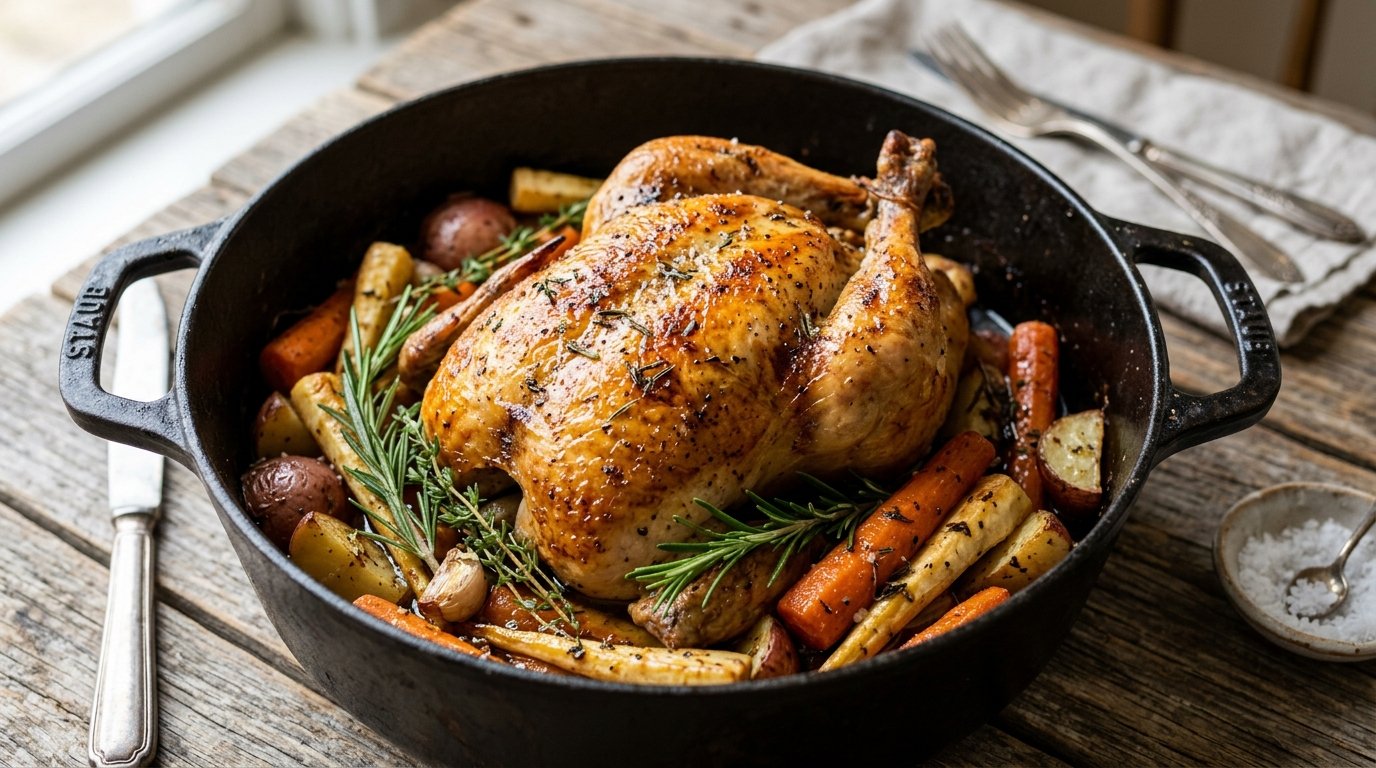
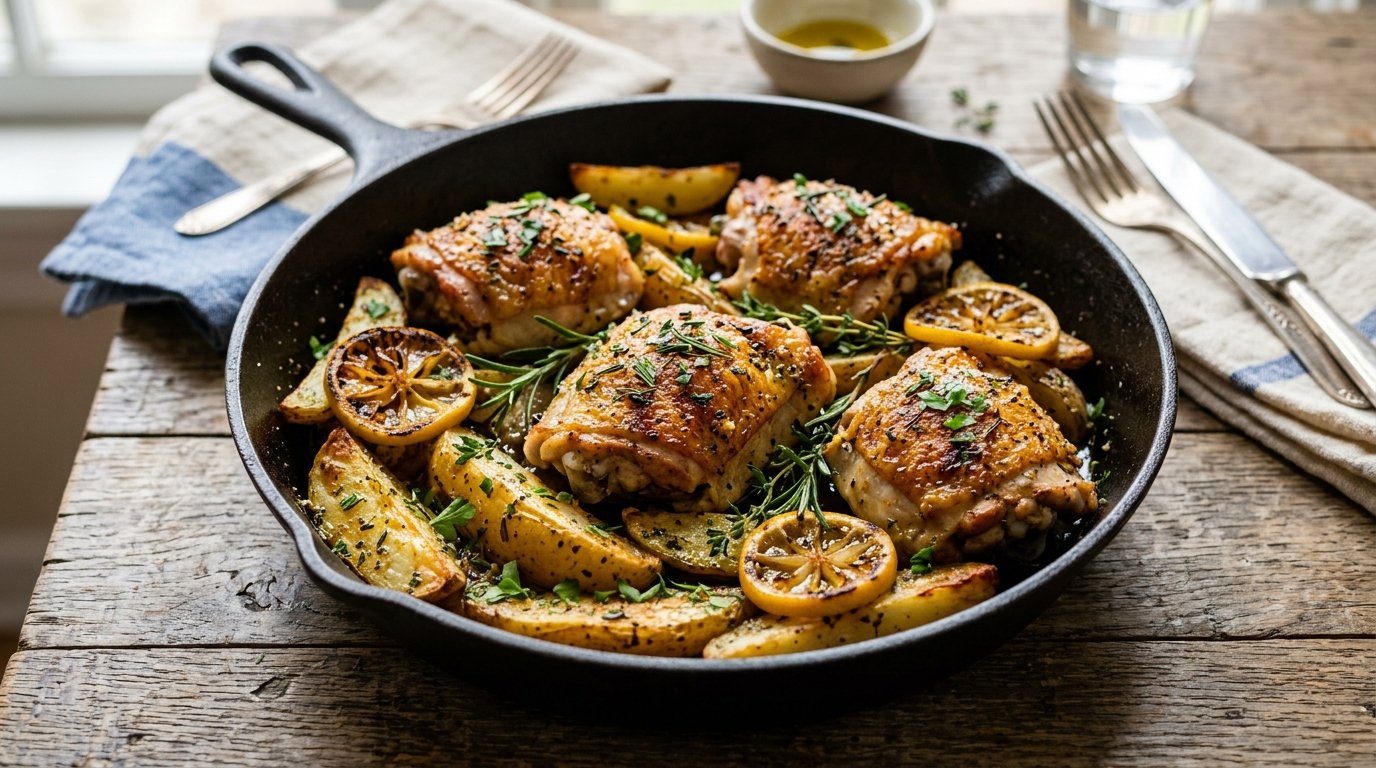
There is something profoundly comforting about pulling the lid off a heavy cast iron pot to reveal golden, glistening skin and tender vegetables that have been slowly braising in their own juices. This one-pot Dutch oven roast chicken recipe captures that magic perfectly, transforming humble ingredients into a Sunday dinner masterpiece with minimal effort. Unlike traditional roasting methods that require multiple pans and constant basting, this technique uses the superior heat retention of enameled cast iron to create a self-basting environment. The chicken steams gently in its own moisture while the root vegetables below caramelize in the rendered fat and herbs. Whether you are cooking for a holiday gathering or simply craving a nourishing weeknight meal, this method delivers restaurant-quality results with the ease of a sheet pan dinner. Let’s explore how to master this timeless culinary tradition in your own kitchen.
Why This Recipe Works
The secret to this one-pot Dutch oven roast chicken lies in thermodynamics and flavor layering. A Dutch oven acts as a miniature convection oven; its tight-fitting lid traps steam and heat, circulating them evenly around the bird. This prevents the breast meat from drying out—a common issue with open roasting—while still allowing the skin to crisp up during the final uncovered phase. By placing the chicken directly on a bed of chopped onions, carrots, and potatoes, we elevate it slightly above direct heat, preventing scorching while infusing the vegetables with savory drippings. The herb butter rubbed under and over the skin serves a dual purpose: it seasons the meat deeply and creates a protective lipid barrier that promotes even browning. As the butter melts, it mixes with vegetable moisture to form a rich, aromatic sauce at the bottom of the pot. This isn’t just cooking; it’s engineering a perfect microclimate for poultry.
Why You’ll Love This Recipe
Minimal Cleanup: Everything cooks in one vessel, meaning fewer dishes and less scrubbing after dinner.
Foolproof Moisture: The enclosed environment guarantees juicy breast meat every time, even for novice cooks.
Built-In Side Dish: Potatoes, carrots, and onions cook alongside the protein, absorbing incredible flavor without extra effort.
Impressive Presentation: Serving straight from the pot creates a rustic, communal dining experience that wows guests.
Versatile Flavor Base: The simple herb butter can be customized with garlic, citrus zest, or spicy peppers to suit any palate.
Budget Friendly: Uses affordable, seasonal root vegetables and a whole chicken to feed a crowd economically.
Aromatic Kitchen: The scent of roasting chicken and fresh herbs fills your home, creating an inviting atmosphere instantly.
Ingredient Notes
Whole Chicken (3-4 lbs)
Purpose: The centerpiece protein. A smaller bird fits better in standard Dutch ovens and cooks more evenly than larger ones.
Substitutions: Chicken thighs or legs can be used for quicker cooking, though presentation differs. Cornish hens work for individual servings.
Buying Tips: Look for air-chilled chickens; they retain less water and brown better. Organic or pasture-raised birds often have superior flavor and texture.
Storage Tips: Keep refrigerated until ready to use. Pat completely dry before seasoning to ensure crispy skin. Do not wash raw chicken.
Root Vegetables (Potatoes, Carrots, Red Onion)
Purpose: Provides a flavorful roasting rack and absorbs drippings to become a delicious side dish.
Substitutions: Sweet potatoes, parsnips, turnips, or fennel bulbs work beautifully. Avoid watery veggies like zucchini which may make the pot soggy.
Buying Tips: Choose firm vegetables without soft spots. Similar-sized pieces ensure even cooking. Baby carrots save prep time but larger chunks hold up better to long roasting.
Storage Tips: Store in a cool, dark place. Cut vegetables can be kept in water in the fridge for up to 24 hours to prevent oxidation.
Unsalted Butter
Purpose: Creates the herb compound butter for basting and crisping skin. Unsalted allows control over sodium levels.
Substitutions: Olive oil or avocado oil for dairy-free version, though butter provides superior browning and flavor. Ghee works well for high-heat tolerance.
Buying Tips: European-style butter has higher fat content (82%+) which yields richer flavor and better browning than standard American butter.
Storage Tips: Freeze excess butter in sticks for future use. Compound butter can be made ahead and frozen in logs for instant flavor boosts.
Fresh Herbs (Rosemary, Parsley, Thyme)
Purpose: Infuses aromatic oils into the butter and cavity, elevating the dish beyond basic salt and pepper.
Substitutions: Dried herbs work in a pinch (use 1/3 amount). Sage, tarragon, or marjoram offer different flavor profiles.
Buying Tips: Look for vibrant green leaves without yellowing or wilting. Smell should be potent and fragrant.
Storage Tips: Treat like flowers; trim stems and place in water on counter. Wrap in damp paper towel in fridge crisper for longer life.
Lemon
Purpose: Adds acidity to balance richness and brightens flavors inside the cavity.
Substitutions: Orange or lime for different citrus notes. Vinegar splash in sauce if lemon unavailable.
Buying Tips: Heavy for size indicates juiciness. Bright yellow color suggests ripeness.
Storage Tips: Room temp for immediate use; fridge for longer storage. Zest before juicing to capture essential oils.
Kitchen Equipment
5-7 Quart Enameled Cast Iron Dutch Oven: Essential for even heat distribution and moisture retention. Lodge, Le Creuset, or Staub are reliable brands.
Small Mixing Bowl: For combining softened butter and herbs.
Sharp Chef’s Knife: For chopping vegetables uniformly.
Cutting Board: Large enough to handle whole chicken safely.
Kitchen Twine (Optional): For trussing legs to promote even cooking and neat presentation.
Instant-Read Thermometer: Crucial for verifying safe internal temperature without guessing.
Tongs: For handling hot vegetables and adjusting chicken position.
Pastry Brush (Optional): For applying melted butter if not using compound butter method.
Preparation Information
Prep Time: 25 minutes
Cook Time: 1 hour 30 minutes
Total Time: 1 hour 55 minutes
Servings: 4-6 people
Step-by-Step Instructions
H3: Prepare the Vegetable Bed
Wash and chop 3 medium potatoes into wedges, 4 large carrots into 2-inch chunks, and 2 red onions into thick wedges. Toss vegetables in the Dutch oven with 1 tbsp olive oil, 1 tsp salt, and ½ tsp black pepper. Arrange them in an even layer across the bottom. This vegetable bed serves three critical functions: it elevates the chicken to prevent burning, it steams in the released moisture to stay tender, and it caramelizes in the rendered fat to become a flavorful side. Uniform sizing ensures everything finishes cooking simultaneously. Visual cue: vegetables should look glossy and seasoned, not dry or clumped.
H3: Season and Stuff the Chicken
Remove giblets from cavity if present. Pat chicken completely dry with paper towels—this is non-negotiable for crispy skin. Season cavity generously with salt and pepper. Stuff with half a lemon (cut side down), a few sprigs of fresh rosemary, and parsley. The lemon releases steam and acid during cooking, keeping interior moist while aromatics perfume the meat from inside out. Truss legs loosely with twine if desired; this helps maintain shape and ensures thighs cook at same rate as breasts. Aroma cue: fresh herbs and citrus should smell bright and clean.
H3: Make and Apply Herb Butter
Soften 4 tbsp unsalted butter at room temperature. Mix with 2 tbsp finely chopped fresh parsley, 1 tbsp minced rosemary, 2 minced garlic cloves, ½ tsp salt, and ¼ tsp pepper. Gently loosen skin over breast and thighs with fingers, creating pockets without tearing. Push half the butter mixture under skin, spreading evenly against meat. Rub remaining butter over exterior skin. This technique delivers flavor directly to the meat while the surface butter promotes Maillard reaction for golden color. Texture cue: butter should be pliable but not melted; skin should feel smooth, not torn.
H3: Assemble and Cover
Place chicken breast-side up on top of vegetable bed. Ensure legs aren’t pressing against pot sides to allow air circulation. Cover Dutch oven tightly with lid. Place in cold oven, then set temperature to 400°F (200°C). Starting cold allows gradual heating, rendering fat slowly before skin sets. Alternatively, preheat oven to 400°F and place pot inside immediately for faster start. Both methods work; choose based on your schedule. The covered phase lasts approximately 1 hour, creating steam-rich environment that cooks chicken gently while vegetables soften.
H3: Uncover and Finish Roasting
After 1 hour, carefully remove lid (steam will escape!). Check vegetable tenderness with fork; they should be yielding but not mushy. If skin isn’t golden yet, continue uncovered for 20-30 minutes. Baste chicken once with pan juices if desired, though often unnecessary due to trapped moisture. Visual cue: skin should be deep golden brown, juices running clear when thigh is pierced. Internal temperature must reach 165°F (74°C) in thickest part of thigh without touching bone. Aroma cue: rich, nutty roasted chicken scent indicates proper caramelization.
H3: Rest Before Serving
Remove pot from oven. Transfer chicken to cutting board tented loosely with foil. Let rest 15-20 minutes. This resting period is crucial; it allows juices redistributed throughout meat rather than pooling on cutting board. Vegetables can stay in warm pot. During rest, carryover cooking raises internal temp 5-10 degrees, ensuring safety without overcooking. Texture cue: meat should feel firm but springy, not rigid. Slice against grain for tender bites. Serve chicken atop vegetables with pan juices spooned over everything.
Expert Tips
Dry Skin = Crispy Skin: Moisture is enemy of crispness. Pat chicken dry thoroughly and leave uncovered in fridge for 2-24 hours before cooking for ultimate crunch.
Room Temp Butter Matters: Cold butter tears delicate skin when applied. Soften butter 30-60 minutes before use; it should yield to finger pressure without melting.
Don’t Overcrowd Pot: Leave 1-2 inches space between chicken and pot walls. Crowding creates steam pockets that prevent browning and lead to soggy skin.
Thermometer Placement: Insert probe into thickest part of thigh, avoiding bone. Bone conducts heat differently and gives false readings. Breast temp matters less; thighs need higher temp to break down connective tissue.
Vegetable Size Consistency: Cut all veggies to similar size. Small pieces burn before large ones cook through. Aim for 1.5-2 inch chunks for optimal roasting.
Lid Management: Keep lid on during initial cook phase. Every peek releases precious steam and heat, extending cook time and risking dryness. Trust the process.
Common Mistakes
Mistake: Soggy, Pale Skin
Why It Happens: Excess moisture on skin or overcrowded pot traps steam instead of allowing evaporation.
Prevention: Dry chicken thoroughly; air-dry in fridge overnight. Ensure adequate space in pot. Uncover for final 20-30 mins.
Fix: Broil briefly (watch closely!) or finish under salamander. Next time, prioritize drying and spacing.
Mistake: Dry Breast Meat
Why It Happens: Overcooking or insufficient fat protection.
Prevention: Use thermometer; pull at 160°F (carryover reaches 165°F). Apply butter under skin. Start covered to steam gently.
Fix: Cannot reverse dryness. Brine chicken next time for moisture insurance. Always rest before slicing.
Mistake: Burnt Vegetables
Why It Happens: Pieces too small, oven too hot, or placed directly on pot bottom without buffer.
Prevention: Cut uniformly large. Toss with oil. Check at 45-min mark; stir if browning too fast. Add splash of broth if needed.
Fix: Remove burnt pieces immediately. Reduce oven temp. Next time, use larger cuts or add liquid mid-cook.
Mistake: Undercooked Chicken
Why It Happens: Relying on time instead of temperature; starting with cold chicken; oven calibration issues.
Prevention: Always use instant-read thermometer. Verify oven temp with separate thermometer. Allow chicken to sit at room temp 30 mins before cooking.
Fix: Return to oven covered until safe temp reached. Never serve undercooked poultry. When in doubt, cook longer.
Recipe Variations
Spicy Harissa Butter Chicken
Replace herb butter with harissa paste mixed into softened butter. Add cumin and coriander to vegetables. North African-inspired warmth with complex heat.
Vegetarian Stuffed Squash
Use delicata or acorn squash halves instead of chicken. Fill with quinoa, cranberries, and pecans. Roast same way; reduce time to 45 mins. Vegan-friendly with oil swap.
Vegan Mushroom “Chicken”
Substitute king oyster mushrooms scored to mimic drumsticks. Marinate in soy-ginger glaze. Roast with same veggie bed. Umami-rich plant-based alternative.
Beef Short Rib Braise
Replace chicken with seared short ribs. Add red wine and beef stock. Low-and-slow braise for fall-off-bone tenderness. Hearty winter variation.
Seafood Cioppino Style
Use firm white fish fillets and shrimp. Add tomatoes, fennel, and white wine. Cook uncovered; fish needs only 15-20 mins. Lighter coastal twist.
Extra Cheesy Potato Gratin Layer
Layer sliced potatoes with Gruyère and cream beneath chicken. Cheese melts into veggie bed creating decadent foundation. Indulgent comfort upgrade.
Healthy Greek Yogurt Marinade
Marinate chicken in yogurt-lemon-herb mix overnight. Yogurt enzymes tenderize while adding protein. Lower fat than butter method; equally moist results.
Low-Carb Cauliflower Swap
Replace potatoes with cauliflower florets. Reduce cook time by 15 mins as cauliflower softens faster. Keto-friendly without sacrificing satisfaction.
High-Protein Lentil Base
Use cooked lentils instead of potatoes. Lentils absorb flavors beautifully and add fiber/protein. Earthy, nutritious foundation for health-conscious diners.
Citrus Herb Fusion
Add orange zest and thyme to butter. Stuff cavity with orange slices. Bright, sunny flavor profile perfect for spring entertaining. Refreshing alternative to classic rosemary.
What to Serve With This Recipe
Side Dishes
Crusty Sourdough Bread: Essential for mopping up glorious pan juices and vegetable fond.
Green Beans Almondine: Toasted almonds and butter provide textural contrast to soft roasted veggies.
Creamed Spinach: Rich, velvety greens complement hearty chicken without competing.
Chimichurri: Fresh herb sauce adds vibrant acidity and color to plate.
Drinks
Côtes du Rhône: Medium-bodied red complements herbal notes without overpowering.
Dry Hard Cider: Apple effervescence cleanses palate; echoes orchard-fresh vegetable sweetness.
Sparkling Water with Rosemary Sprig: Non-alcoholic option that mirrors dish aromatics elegantly.
Desserts
Poached Pears: Gentle fruit dessert continues autumnal theme without heaviness.
Lemon Posset: Silky citrus custard refreshes after savory feast.
Dark Chocolate Tart: Bittersweet finish balances meal’s richness perfectly.
Make Ahead Tips
Compound butter can be made 3 days ahead; roll into log, wrap in parchment, freeze for months. Chop vegetables up to 24 hours in advance; store submerged in water in fridge to prevent browning. Pat and season chicken night before; leave uncovered in fridge to dry skin. Assemble pot morning-of; refrigerate covered until ready to bake. Bring to room temp 30 mins before cooking for even results. This staging transforms dinner prep into mere assembly.
Meal Prep Tips
Portion cooled chicken and vegetables into individual containers for lunches. Sauce separates upon reheating; pack separately or accept rustic appearance. Shred leftover chicken for salads, sandwiches, or soups. Freeze bones for stock; simmer with veggie scraps for free broth. Label containers with dates; consume within 4 days refrigerated or 3 months frozen. Repurpose creatively to minimize waste.
Storage Instructions
Refrigerator
Store leftovers in airtight container for up to 4 days. Separate chicken from vegetables if possible; moisture migration affects texture. Cool completely before sealing to prevent condensation. Place parchment between stacked portions.
Freezer
Freeze shredded chicken in portion-sized bags for easy reuse. Vegetables freeze poorly due to high water content; best consumed fresh. Pan jus freezes excellently in ice cube trays; pop out for future sauces. Consume frozen chicken within 3 months. Thaw overnight in fridge before reheating.
Reheating Instructions
Oven (Best Method)
Preheat to 325°F. Place chicken and veggies in oven-safe dish, cover with foil. Heat 15-20 minutes until internal temp reaches 165°F. Uncover last 5 minutes to crisp skin if desired. Preserves texture and moisture best.
Air Fryer
Reheat at 300°F for 5-8 minutes. Spray lightly with oil to revive crispness. Best for smaller portions; monitor closely to prevent drying. Excellent for restoring skin texture quickly.
Microwave (Quick Fix)
Cover with damp paper towel. Heat in 30-second intervals, checking frequently. Skin will soften; accept trade-off for speed. Add fresh herb garnish post-heating to revive aroma.
Stovetop
Warm vegetables in skillet with splash of broth or water. Reheat chicken separately in covered pan over low heat. Good for reviving sauciness; less effective for skin crispness.
Nutritional Information
Approximate values per serving (based on 6 servings):
Calories: 520 kcal
Protein: 42g
Carbohydrates: 28g
Fat: 26g
Fiber: 4g
Sugar: 6g
Sodium: 680mg
Note: Values vary based on chicken size, vegetable proportions, and butter quantity. Consult nutrition labels for precise calculations.
Troubleshooting Guide
Problem: Chicken Not Browning
Cause: Pot too crowded, lid left on too long, or oven temp too low.
Solution: Ensure adequate space. Uncover for final 20-30 mins. Verify oven calibration. Broil briefly if needed.
Problem: Vegetables Mushy
Cause: Cut too small, overcooked, or excess liquid.
Solution: Cut larger chunks. Check doneness earlier. Drain excess liquid if pooling. Next time, reduce cook time or increase temp.
Problem: Skin Sticking to Pot
Cause: Insufficient fat, pot not preheated properly, or moved too early.
Solution: Ensure adequate butter/oil. Don’t move chicken until skin releases naturally. Deglaze stuck bits with broth for sauce.
Problem: Bland Flavor
Cause: Under-seasoning or poor quality ingredients.
Solution: Season aggressively at each stage. Taste vegetables before roasting; adjust salt. Use fresh herbs, not dried. Finish with flaky salt and acid.
Problem: Smoke in Oven
Cause: Butter dripping onto pot bottom or oven residue burning.
Solution: Ensure butter stays on chicken, not pooling. Clean oven beforehand. Place drip tray below if necessary. Trim excess fat from chicken.
Frequently Asked Questions
Can I use a regular roasting pan instead?
Yes, but results differ. Roasting pans lack lids, so chicken dries faster. Tent tightly with foil for first hour, then uncover. Add ½ cup broth to prevent drying. Dutch oven’s sealed environment is superior for moisture retention.
How do I know when chicken is done without thermometer?
Pierce thigh near bone; juices should run clear, not pink. Legs should wiggle freely in joints. Meat should feel firm, not squishy. However, thermometer is always recommended for safety; visual cues can deceive.
Can I add other vegetables?
Absolutely! Parsnips, turnips, celery root, or fennel work beautifully. Avoid high-water veggies like tomatoes or zucchini which create sogginess. Adjust cook time based on density; harder roots need longer.
Why start in cold oven?
Gradual heating renders fat slowly before skin sets, promoting even cooking and crispness. Prevents shock that causes uneven browning. Preheating works too; choose based on preference. Both methods yield excellent results.
Can I make this gluten-free?
Naturally gluten-free! Verify butter and seasonings are certified GF if sensitive. No flour or breadcrumbs needed. Perfect for celiac diets without modification.
What if my Dutch oven is smaller?
Use smaller chicken (2.5-3 lbs) or spatchcock (butterfly) it to fit flat. Reduce vegetable quantity accordingly. Ensure chicken isn’t touching lid; steam needs circulation space.
Can I skip the herb butter?
Yes, but flavor and browning suffer. Substitute with olive oil, mayo, or yogurt marinade. Mayo contains egg proteins that brown exceptionally well. Oil alone works but lacks depth.
Is trussing necessary?
Not strictly, but recommended. Trussed chicken cooks more evenly and presents neatly. Untied legs may splay, exposing cavities to direct heat. Loose tie suffices; tight trussing restricts airflow.
Final Thoughts
This one-pot Dutch oven roast chicken embodies the essence of thoughtful home cooking: maximizing flavor while minimizing fuss. The alchemy of slow-roasted poultry nestled among caramelized vegetables creates memories worth savoring around the table. Whether you’re hosting friends or nurturing family, this dish delivers both nourishment and joy. Don’t hesitate to adapt herbs or vegetables to your taste; cooking is personal expression. If you try this recipe, please share your experience in the comments below.