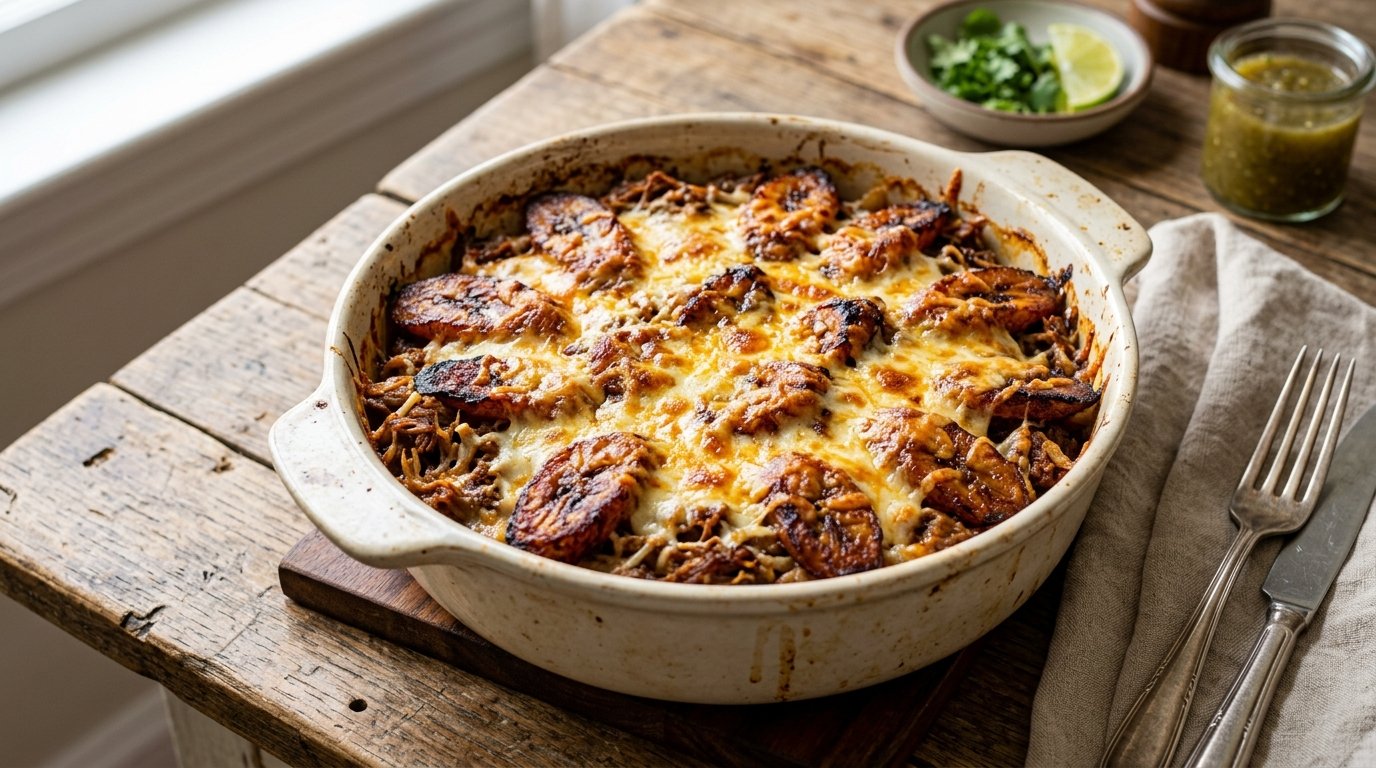
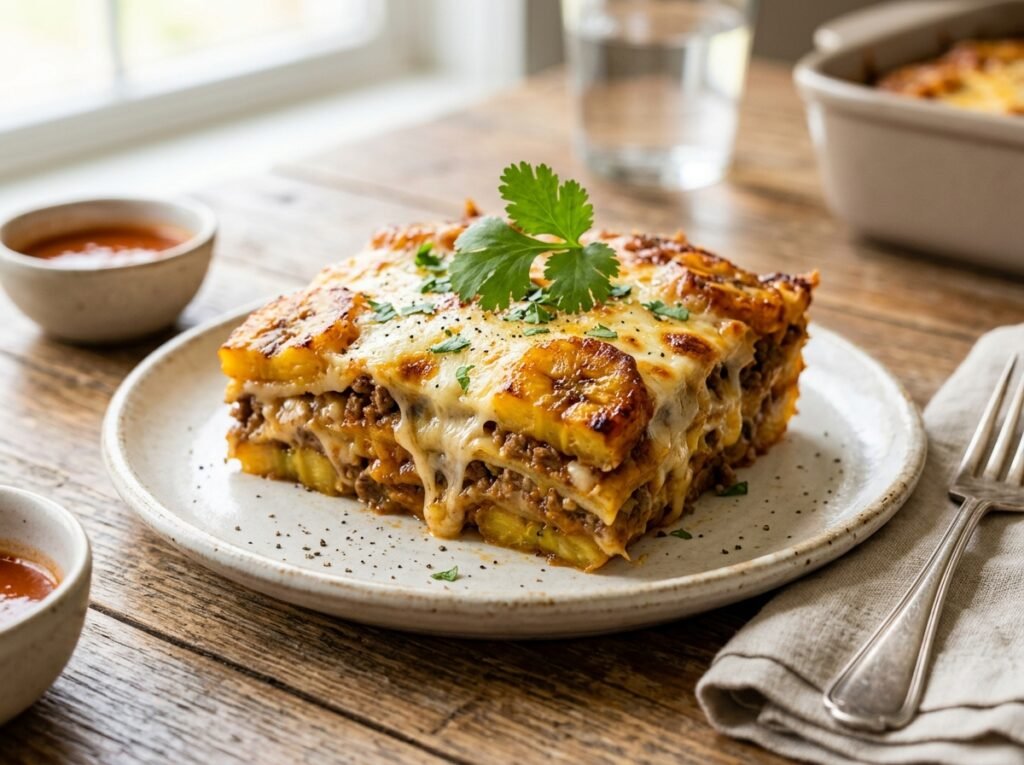
This comforting layered plantain casserole with meat and cheese turns crispy flattened plantains, savory seasoned ground beef, and plenty of melty cheese into pure comfort. Think of it as a skillet “lasagna” where golden tostones-style plantain rounds replace noodles. The result is a bubbling, stretchy-cheese masterpiece with starchy plantain edges, rich meat filling, and that irresistible pull when you lift a slice.
Quick Recipe Summary
| Category | Details |
|---|---|
| Prep Time | 35 minutes |
| Cook Time | 40 minutes |
| Total Time | 1 hour 15 minutes |
| Servings | 6–8 |
| Cuisine | Latin American / Caribbean |
| Course | Main dish / Casserole |
| Difficulty | Intermediate |
| Approx. Calories | 520–580 per serving |
Table of Contents
- Why This Recipe Works
- Why You’ll Love This Recipe
- Ingredient Notes
- Kitchen Equipment
- Preparation Information
- Step-by-Step Instructions
- Expert Tips
- Common Mistakes
- Recipe Variations
- What to Serve With This Recipe
- Make-Ahead Tips
- Meal Prep Tips
- Storage Instructions
- Reheating Instructions
- Nutritional Information
- Troubleshooting Guide
- Frequently Asked Questions
- Final Thoughts
Introduction
If you love the contrast of crispy plantains, savory ground beef, and stretchy melted cheese, this plantain casserole with meat and cheese will become a regular in your kitchen. Golden flattened plantain rounds form sturdy layers that hold a flavorful seasoned beef filling and generous amounts of cheese. Everything bakes together in a cast-iron skillet until the top is bubbly and browned and the cheese pulls in long, satisfying strands. It delivers the comfort of classic pastelón or lasagna with the satisfying crunch and starchiness of tostones-style plantains. Perfect for family dinners, potlucks, or anytime you want something hearty and shareable.
Why This Recipe Works
The success of this plantain casserole comes from smart layering and textural contrast. Frying and flattening the plantains creates firm, golden rounds that stay structured under the weight of meat and cheese yet soften slightly as they absorb juices. The seasoned ground beef provides savory depth and moisture, while the combination of sliced and shredded cheese melts into every crevice and forms a golden, stretchy top. Cooking and assembling in a cast-iron skillet allows even heat distribution and creates beautiful browned edges. The short bake time finishes the dish without drying it out, leaving you with distinct layers that hold together when sliced yet remain juicy and flavorful.
Why You’ll Love This Recipe
- Crispy-edged plantain layers that hold up like sturdy “noodles”
- Rich, seasoned ground beef filling that tastes homemade
- Extra-cheesy pull with both sliced and shredded cheese
- One-skillet assembly and baking for easier cleanup
- Naturally gluten-free base
- Crowd-pleasing comfort food that travels well
- Easy to scale or customize with different proteins or heat levels
- Leftovers reheat beautifully
Ingredient Notes
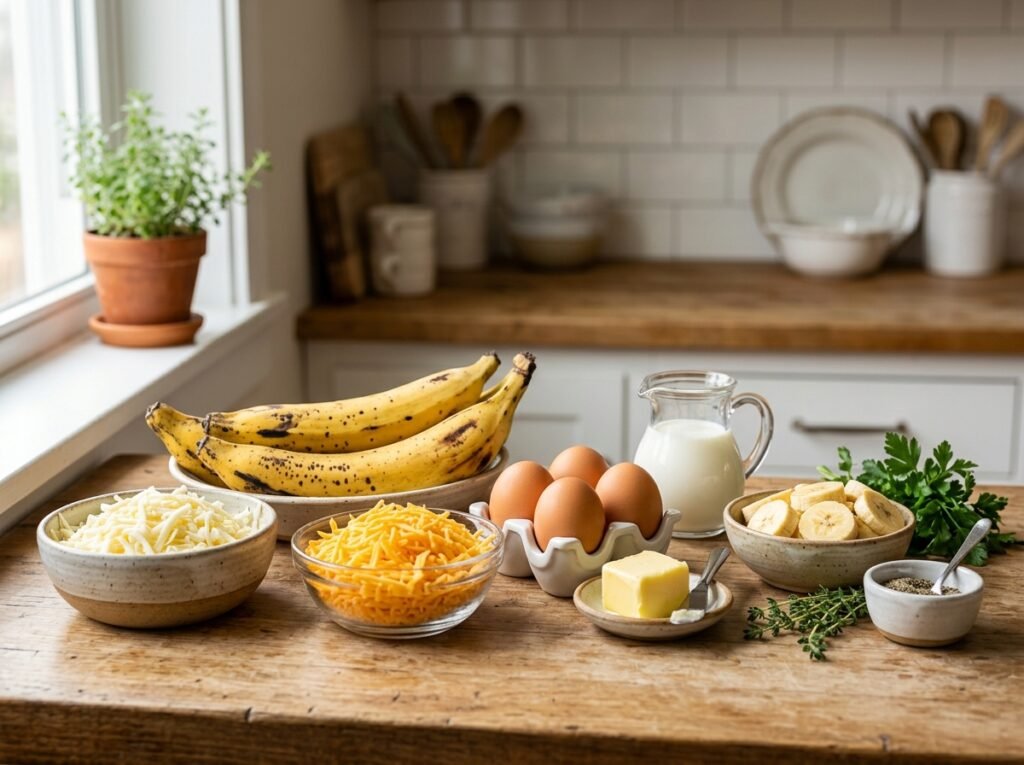
Plantains (4–6 medium, preferably green to yellow-green) Purpose: Provide the starchy, slightly sweet base layers that replace pasta. Buying tips: Choose firm plantains that are mostly green or just turning yellow for the classic tostones texture. Fully black-ripe plantains become too soft and sweet. Substitutions: Frozen pre-made tostones can work in a pinch (thaw and pat dry). Yellow plantains produce a slightly sweeter result. Storage: Keep unripe plantains at room temperature until ready to use; refrigeration slows ripening but can darken the skin.
Ground beef (1–1½ lb) Purpose: Creates the savory, juicy filling. Buying tips: 80/20 or 85/15 gives good flavor without excess grease. Substitutions: Ground turkey, chicken, pork, or a plant-based alternative. Storage: Use within 1–2 days of purchase or freeze.
Oil for frying (vegetable, canola, or neutral oil) Purpose: Achieves the golden, crispy exterior on the plantains. Tips: Use enough for shallow frying (about ½–1 inch deep). Reuse once if strained and cooled properly.
Cheese (sliced white melting cheese such as mozzarella or provolone + shredded mozzarella or similar, about 12–16 oz total) Purpose: Provides creamy melt, stretch, and golden top. Buying tips: Freshly shredded melts better than pre-shredded. Substitutions: Monterey Jack, cheddar, queso blanco, or a mix. Dairy-free shredded cheese works for a non-dairy version. Storage: Keep refrigerated and use within a week of opening.
Seasonings for the meat (onion, garlic, tomato sauce or paste, salt, pepper, optional cumin, oregano, adobo, or sazón) Purpose: Builds flavor in the filling. Tips: A simple sofrito-style base of onion and garlic with tomato and basic spices is classic and reliable. Adjust salt carefully because cheese adds salinity.
Optional but recommended: Fresh cilantro or green onions for brightness after baking.
Kitchen Equipment
Required:
- Large cast-iron skillet or heavy oven-safe skillet
- Tongs or slotted spoon
- Flat-bottomed glass, plate, or tostonera for smashing plantains
- Cutting board and sharp knife
- Spatula
Optional: Paper towels for draining, baking dish if not using the skillet, meat thermometer.
Preparation Information
Prep Time: 35 minutes (includes making the plantain rounds and cooking the filling) Cook Time: 40 minutes (frying + baking) Total Time: Approximately 1 hour 15 minutes Servings: 6–8 generous portions
Step-by-Step Instructions
Prepare the Plantains
Peel the plantains by cutting off both ends and scoring the skin lengthwise, then peeling away the peel. Cut into 1–1½-inch thick rounds or leave larger pieces if frying whole first as shown in the technique. Heat about ½–1 inch of oil in the cast-iron skillet over medium heat until it shimmers (around 325–350°F). Fry the plantain pieces in batches until they turn light golden and soften, about 3–5 minutes per side. Remove to a paper-towel-lined plate or board. While still warm, place each piece between plastic wrap or parchment and smash firmly with a flat-bottomed glass or plate into thin rounds (about ¼-inch thick). Light scoring or pressing can create the flower-like appearance. Return the flattened rounds to the hot oil and fry a second time until golden and crisp on both sides, 1–3 minutes per side. Drain well and season lightly with salt. This double-fry method creates the sturdy yet tender base essential for the casserole structure.
Cook the Ground Beef Filling
In the same skillet (pour off excess oil if needed, leaving a light coating), cook the ground beef over medium heat, breaking it up as it browns. Add diced onion and minced garlic if using, and cook until the onion softens and the meat is no longer pink. Stir in tomato sauce or a bit of tomato paste thinned with water, along with salt, pepper, and any preferred spices (cumin, oregano, adobo). Simmer until the mixture thickens slightly and the flavors meld, about 8–12 minutes. Taste and adjust seasoning. The filling should be moist but not watery so the plantain layers stay distinct.
Assemble the Casserole
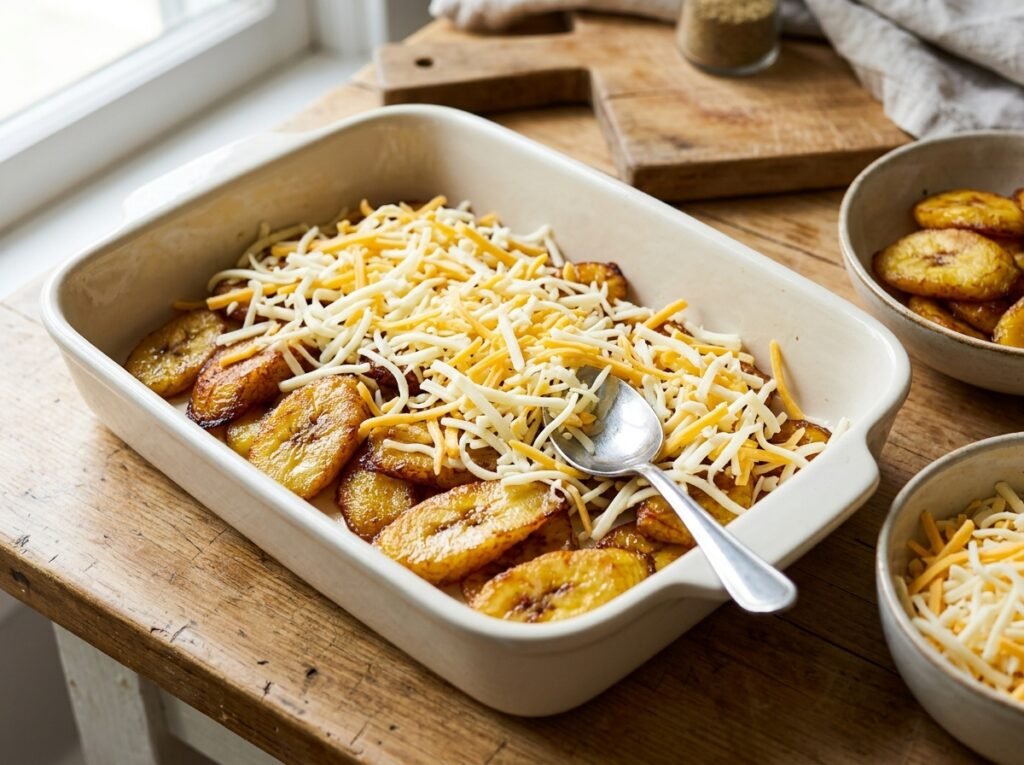
Preheat the oven to 375°F (190°C). If the skillet still has residual oil, wipe or pour most of it out. Arrange a single layer of the fried plantain rounds across the bottom of the skillet, overlapping slightly if needed to cover. Spoon and spread about half of the seasoned ground beef evenly over the plantains. Top with a layer of cheese slices, then a generous handful of shredded cheese. Add another layer of plantain rounds, the remaining beef, more cheese slices, and finish with a thick blanket of shredded cheese. The generous cheese amount ensures excellent melt and that signature stretch.
Bake Until Bubbly and Golden
Place the skillet in the preheated oven and bake 20–25 minutes, or until the cheese is fully melted, bubbly, and developing golden-brown spots on top. For extra color, broil for the last 1–2 minutes while watching closely. The edges of the plantains should look crispy and the whole dish should be steaming hot. Let the casserole rest 5–10 minutes before slicing so the layers set and the cheese firms slightly for cleaner cuts. Use a spatula to lift portions; the stretchy cheese will still pull beautifully.
Expert Tips
Smash the plantains while they are still hot from the first fry—they flatten more evenly and hold together better. Season the plantains right after the second fry so the salt adheres. Keep the beef filling on the thicker side; excess liquid can soften the bottom plantain layer too much. Use a mix of sliced and shredded cheese for both structure and stretch. Resting the finished casserole is important for neat slices. A well-seasoned cast-iron skillet gives the best browning and makes serving straightforward.
Common Mistakes
Using overly ripe black plantains results in mushy layers that fall apart—stick to green or yellow-green. Under-frying the plantains the second time leaves them soft instead of crisp-edged. Overcrowding the oil drops the temperature and produces greasy results; fry in batches. Skipping the rest after baking causes the slices to collapse. Adding too much liquid to the meat filling makes the bottom soggy.
Recipe Variations
- Spicy: Add diced jalapeños, chipotle in adobo, or red pepper flakes to the beef.
- Vegetarian: Replace beef with seasoned black beans, lentils, or sautéed mushrooms and peppers.
- Chicken or turkey: Use ground poultry and brighten with extra lime or cilantro.
- Extra cheesy: Double the shredded cheese or add a layer of cream cheese.
- Healthier: Bake the plantain rounds with a light oil spray instead of frying, and use lean ground meat.
- Low-carb lean: Serve smaller portions with a big green salad.
- Seafood twist: Swap the beef for seasoned shrimp or flaked fish added near the end of cooking.
What to Serve With This Recipe
A simple green salad with avocado and lime vinaigrette cuts the richness. White rice or cilantro-lime rice soaks up juices. Fried or boiled eggs make it even more substantial. Fresh tomato salsa, hot sauce, or a quick garlic-lime aioli on the side. For drinks, cold beer, agua fresca, or a light red wine. Finish with tropical fruit or flan for dessert.
Make-Ahead Tips
Fry and flatten the plantains up to a day ahead; store covered in the refrigerator and re-crisp briefly in a hot skillet or oven if needed. The beef filling can be made 2 days ahead and refrigerated. Assemble the full casserole (without baking) up to 8 hours ahead, cover, and refrigerate; add a few extra minutes to the bake time if starting cold.
Meal Prep Tips
Portion the baked casserole into individual containers with rice or salad. It holds up well for 3–4 days of lunches. Reheat individual portions gently to preserve texture.
Storage Instructions
Cool completely, then cover the skillet tightly or transfer portions to airtight containers. Refrigerate up to 4 days. For freezing, wrap individual slices or the whole cooled casserole well and freeze up to 2 months. Thaw overnight in the refrigerator before reheating.
Reheating Instructions
Oven (best): 350°F covered with foil for 15–20 minutes, then uncover to re-crisp the top. Air fryer: 350°F for 5–8 minutes for individual slices. Stovetop: Low heat in a covered skillet with a splash of water to create steam. Microwave: Short bursts at medium power, though the plantains soften more.
Nutritional Information (Approximate per serving, based on 8 servings)
Calories: 550 Protein: 28 g Carbohydrates: 42 g Fat: 32 g Fiber: 4 g Sugar: 12 g Sodium: 680 mg
Values vary with exact ingredients and portion size.
Troubleshooting Guide
Soggy bottom layer: Plantains were not drained well or the filling was too wet—next time blot plantains thoroughly and simmer the meat longer. Cheese not melting evenly: Oven temperature too low or cheese was cold from the fridge—bring cheese closer to room temperature and ensure the oven is fully preheated. Plantains falling apart when smashed: They needed a slightly longer first fry. Dry casserole: Filling needed more moisture or bake time was too long—add a tablespoon of broth or tomato sauce if needed and check earlier. Excess grease: Drain the beef well and blot the fried plantains.
Frequently Asked Questions
Can I use ripe yellow plantains? Yes, but the result will be sweeter and softer, closer to traditional pastelón. Green or yellow-green give the sturdier tostones texture shown in this style.
Do I have to fry the plantains twice? The second fry is what creates the crisp edges and structure. A single fry leaves them too soft for clean layers.
Can I make this in a regular baking dish instead of a skillet? Absolutely. Transfer the fried plantains and layers to a greased 9×9 or similar dish and bake as directed.
Is this the same as pastelón? It is a close cousin. Classic pastelón often uses longer slices of ripe plantains or mashed plantains. This version highlights flattened, twice-fried rounds for extra texture.
How do I know when the plantains are ready to smash? They should be soft enough to yield under pressure but not falling apart—usually after 3–5 minutes of the first fry.
Can I prepare it completely vegetarian? Yes—use a hearty bean or mushroom filling seasoned the same way and plenty of cheese (or dairy-free alternatives).
Why is my cheese not stretching? Low-moisture mozzarella and similar melting cheeses give the best pull. Avoid pre-shredded if possible, as anti-caking agents can reduce stretch.
How spicy is the base recipe? Mild. Heat is completely adjustable with the spices you add to the beef.
Can I freeze the unbaked casserole? Yes. Assemble, wrap tightly, and freeze. Bake from frozen (covered) at 350°F, adding 15–25 extra minutes, then uncover to brown.
Final Thoughts
This plantain casserole with meat and cheese delivers everything you want in a comforting main dish: crispy-edged plantain layers, savory seasoned beef, and rivers of melted cheese that stretch with every serving. It looks impressive yet comes together with straightforward techniques that reward a little care in the frying and layering steps. Once you taste the contrast of textures and the rich, satisfying flavors, you will understand why versions of plantain-and-meat casseroles are beloved across the Caribbean and Latin America. Make it for a weeknight dinner, a weekend gathering, or meal prep—it holds up beautifully either way. Give it a try, then come back and let me know how it turned out or what variation you created. Enjoy every cheesy, plantain-packed bite.
SEO Output