
| Prep Time | Cook Time | Total Time | Servings | Cuisine | Course | Difficulty | Calories (approx.) |
|---|---|---|---|---|---|---|---|
| 20 minutes (+ marinating) | 25–35 minutes | 1 hour 15 minutes (plus marinating) | 6–8 | American BBQ | Main Course | Easy–Medium | 380–420 per serving |
Table of Contents
- Introduction
- Why This Recipe Works
- Why You’ll Love This Recipe
- Ingredient Notes
- Kitchen Equipment
- Preparation Information
- Step-by-Step Instructions
- Expert Tips
- Common Mistakes
- Recipe Variations
- What to Serve With This Recipe
- Make Ahead Tips
- Meal Prep Tips
- Storage Instructions
- Reheating Instructions
- Nutritional Information
- Troubleshooting Guide
- Frequently Asked Questions
- Final Thoughts
Introduction
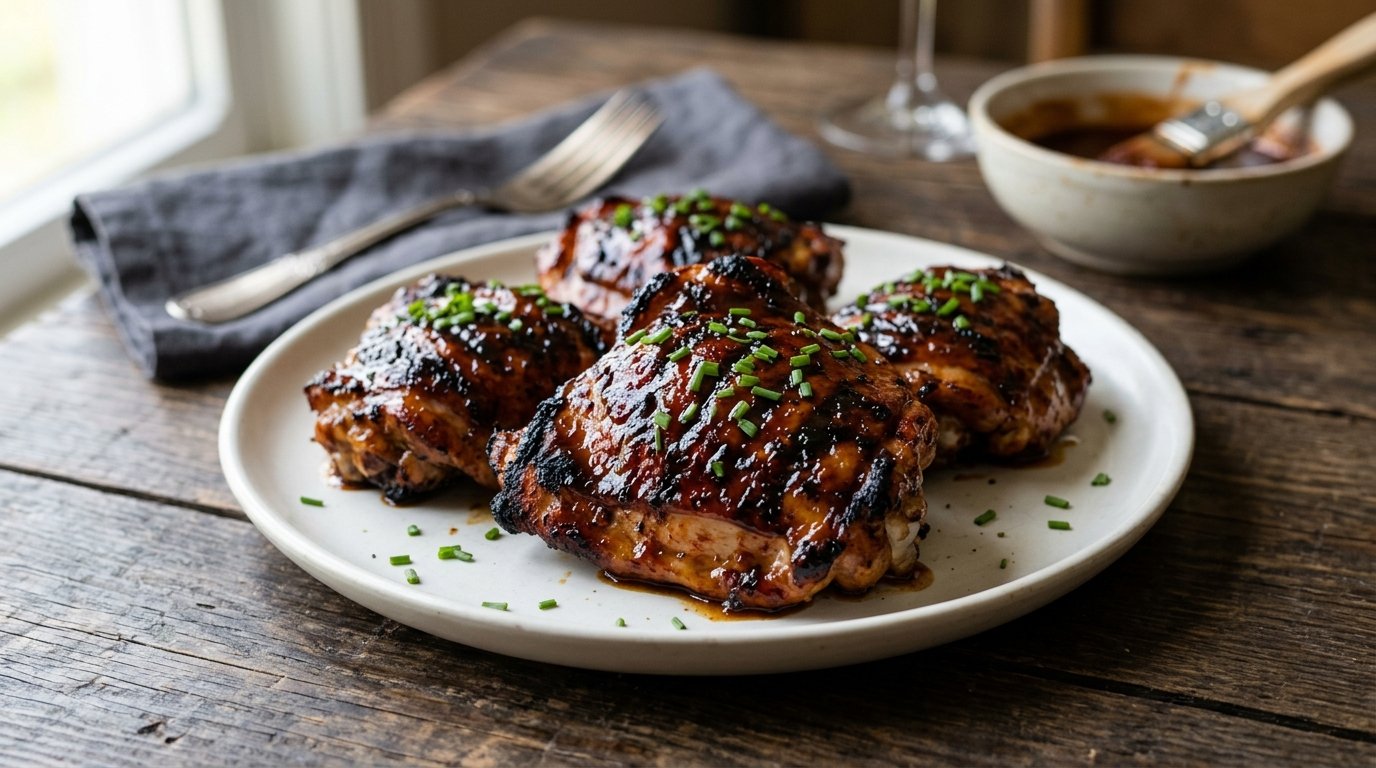
These grilled BBQ chicken thighs deliver exactly what you want from backyard cooking: deep smoky flavor, a sticky caramelized glaze, and juicy meat that pulls apart easily. The simple spice-and-sauce marinade clings to the chicken, builds beautiful char marks over charcoal, and finishes with a glossy, finger-licking coating. Whether you’re firing up a charcoal grill for a weekend cookout or looking for a reliable weeknight main, this recipe produces restaurant-quality results with everyday pantry ingredients. The combination of sweet, tangy, and savory notes makes every bite satisfying and keeps the chicken moist even if you cook it a minute or two past the usual mark.
Why This Recipe Works
Chicken thighs stay juicy on the grill because of their higher fat content compared with breast meat. A balanced marinade that includes oil, acid, sweetness, and spices tenderizes the surface while seasoning the meat deeply. Applying the glaze near the end of cooking prevents the sugars from burning and creates that classic sticky BBQ finish. Cooking over live charcoal (as shown with the Hasty Bake-style setup) adds genuine smoke that bottled sauce alone cannot match. The final parsley garnish cuts through the richness and brightens the plate.
Why You’ll Love This Recipe
- Juicy, flavorful results every time thanks to thigh meat and a protective marinade
- Uses simple pantry staples you likely already have
- Perfect balance of sweet, smoky, and tangy flavors
- Scales easily for a crowd or meal prep
- Beautiful char and glossy glaze that look impressive
- Works on charcoal, gas, or pellet grills with minor adjustments
- Leftovers reheat well and taste even better the next day
Ingredient Notes

Chicken thighs (about 3–3½ pounds / 1.4–1.6 kg, bone-in skin-on preferred) Purpose: Rich flavor and moisture that forgives slight overcooking. Substitutions: Boneless skinless thighs work (reduce cook time); drumsticks or a mix of pieces also succeed. Buying tips: Choose pieces of similar size for even cooking. Skin-on adds crispiness and protection. Storage: Keep raw chicken refrigerated and use within 1–2 days of purchase or freeze up to 3 months.
Paprika (preferably smoked, 2–3 tablespoons total in marinade and glaze) Purpose: Provides color, mild sweetness, and smoke depth. Substitutions: Sweet paprika + a pinch of liquid smoke, or chili powder for more heat. Buying tips: Fresh paprika has a brighter color and aroma; replace if it smells dusty. Storage: Airtight container in a cool, dark cupboard.
Garlic powder and onion powder (1–2 teaspoons each) Purpose: Savory backbone that distributes evenly without burning like fresh garlic can. Substitutions: Fresh minced garlic (use less and add later) or granulated versions. Buying tips: Look for pure powders without anti-caking agents if possible. Storage: Same as paprika.
Dried oregano or Italian seasoning (1–2 teaspoons) Purpose: Herbal note that balances the sweetness. Substitutions: Thyme, rosemary, or a blend of dried herbs. Buying tips: Rub between fingers before adding to release oils. Storage: Airtight, away from heat.
Ketchup or barbecue sauce base (½–¾ cup) Purpose: Forms the sticky, tangy foundation of the marinade and glaze. Substitutions: Tomato sauce + extra brown sugar and vinegar, or your favorite bottled BBQ sauce. Buying tips: Choose a sauce with balanced sweetness; avoid extremely thick or overly sweet varieties for the marinade stage. Storage: Refrigerate after opening.
Oil (¼–⅓ cup neutral or olive oil) Purpose: Helps the marinade adhere, promotes even browning, and keeps the surface from drying. Substitutions: Avocado, canola, or vegetable oil. Buying tips: High-smoke-point oils are ideal for grilling. Storage: Cool, dark place.
Mustard (Dijon or yellow, 1–2 tablespoons) Purpose: Emulsifies the marinade and adds tang that cuts richness. Substitutions: Whole-grain mustard or a splash of vinegar. Buying tips: Dijon gives more complexity; yellow works for a milder profile. Storage: Refrigerator after opening.
Brown sugar or honey (optional but recommended, 1–2 tablespoons) Purpose: Encourages caramelization and balances acidity. Substitutions: Maple syrup or white sugar. Buying tips: Packed light or dark brown sugar both work. Storage: Airtight to prevent hardening.
Salt and black pepper Purpose: Essential seasoning that enhances every other flavor. Additional common pantry items that fit the visual profile: a pinch of cumin or chili powder for depth, and fresh parsley for garnish.
Kitchen Equipment
Required
- Large mixing bowl or zip-top bag for marinating
- Whisk
- Glass or ceramic baking dish
- Charcoal grill (or gas/pellet alternative) with lid
- Long tongs and spatula
- Basting brush
- Instant-read thermometer
Optional but helpful
- Charcoal chimney starter
- Heat-resistant gloves
- Aluminum drip pan
- Grill brush for cleaning grates
Preparation Information
Prep Time: 20 minutes Marinating Time: 30 minutes minimum, ideally 2–4 hours or overnight Cook Time: 25–35 minutes Total Time: Approximately 1 hour 15 minutes active + marinating Servings: 6–8
Step-by-Step Instructions
Prepare the Marinade
In a large bowl combine the paprika, garlic powder, onion powder, dried oregano, salt, and pepper. Add the ketchup or BBQ sauce base, oil, mustard, and brown sugar or honey if using. Whisk until smooth and emulsified. The mixture should be thick enough to coat the back of a spoon yet pourable. Reserve about one-third of the mixture in a separate clean bowl for basting later—this prevents cross-contamination.
Season and Marinate the Chicken
Pat the chicken thighs dry with paper towels. Place them in a glass baking dish or large zip-top bag. Pour the remaining marinade over the chicken and turn or massage until every piece is evenly coated. Cover and refrigerate for at least 30 minutes (up to overnight). The oil and acid begin to tenderize the surface while the spices penetrate.
Prepare the Grill
Light a full chimney of charcoal and let it burn until the coals are covered with gray ash and glowing. Dump the coals into the grill and arrange for two-zone cooking if possible (hotter side for searing, cooler side for finishing). Clean and oil the grates. Aim for a medium heat of roughly 350–400°F (175–200°C) under the lid. Adjust the vents to maintain steady temperature and good airflow.
Grill the Chicken
Remove the chicken from the marinade, letting excess drip off. Place the thighs skin-side down (if using skin-on) on the hotter side of the grill. Close the lid and cook 6–8 minutes until the first side develops deep grill marks and the edges begin to brown. Flip and continue cooking another 6–8 minutes. Move pieces to the cooler zone if flare-ups occur or if the glaze starts to darken too quickly.
Baste and Finish
When the internal temperature reaches about 155–160°F (68–71°C), begin basting with the reserved clean sauce. Brush generously, close the lid for 2–3 minutes, then flip and baste the second side. Repeat once more. The sugars will caramelize into a sticky, glossy coating with attractive charred spots. Continue until the thickest part of the meat reaches 165–175°F (74–79°C). Thighs benefit from a slightly higher finish temperature for optimal tenderness.
Rest and Garnish
Transfer the chicken to a clean platter. Tent loosely with foil and rest 5 minutes so the juices redistribute. Sprinkle with chopped fresh parsley just before serving. The herbs add color and a fresh counterpoint to the rich glaze.
Expert Tips

- Dry the chicken thoroughly before marinating so the sauce clings instead of sliding off.
- Reserve a portion of marinade before it touches raw chicken for safe basting.
- Two-zone fire gives you control: sear over direct heat, then finish gently.
- An instant-read thermometer removes guesswork—pull the chicken a few degrees early because residual heat continues cooking.
- For extra smoke, add a small chunk of hardwood (hickory, oak, or fruitwood) to the coals.
- Let the glaze set for a minute or two after the last basting so it becomes tacky rather than wet.
- Resting is non-negotiable for juicy results.
Common Mistakes
- Applying sweet glaze too early → sugars burn and turn bitter. Solution: wait until the last 8–10 minutes.
- Cooking over pure high heat the entire time → exterior chars before interior is done. Use two-zone setup.
- Skipping the rest → juices run out when cut. Always rest 5 minutes.
- Overcrowding the grill → steam instead of sear. Cook in batches if needed.
- Using cold chicken straight from the fridge → uneven cooking. Let it sit 15–20 minutes at room temperature before grilling.
Recipe Variations
- Spicy: Add ½–1 teaspoon cayenne or chipotle powder to the marinade and finish with a drizzle of hot sauce.
- Extra smoky: Use smoked paprika exclusively and add a pinch of liquid smoke.
- Honey-garlic: Replace brown sugar with honey and increase garlic powder.
- Low-sugar: Use a sugar-free BBQ sauce base and omit additional sweetener.
- Boneless version: Reduce total grill time to 12–18 minutes; watch carefully.
- Oven-broiler method: Roast at 400°F then broil with glaze for the final minutes if outdoor grilling is unavailable.
- High-protein meal-prep style: Portion into containers with roasted vegetables.
What to Serve With This Recipe
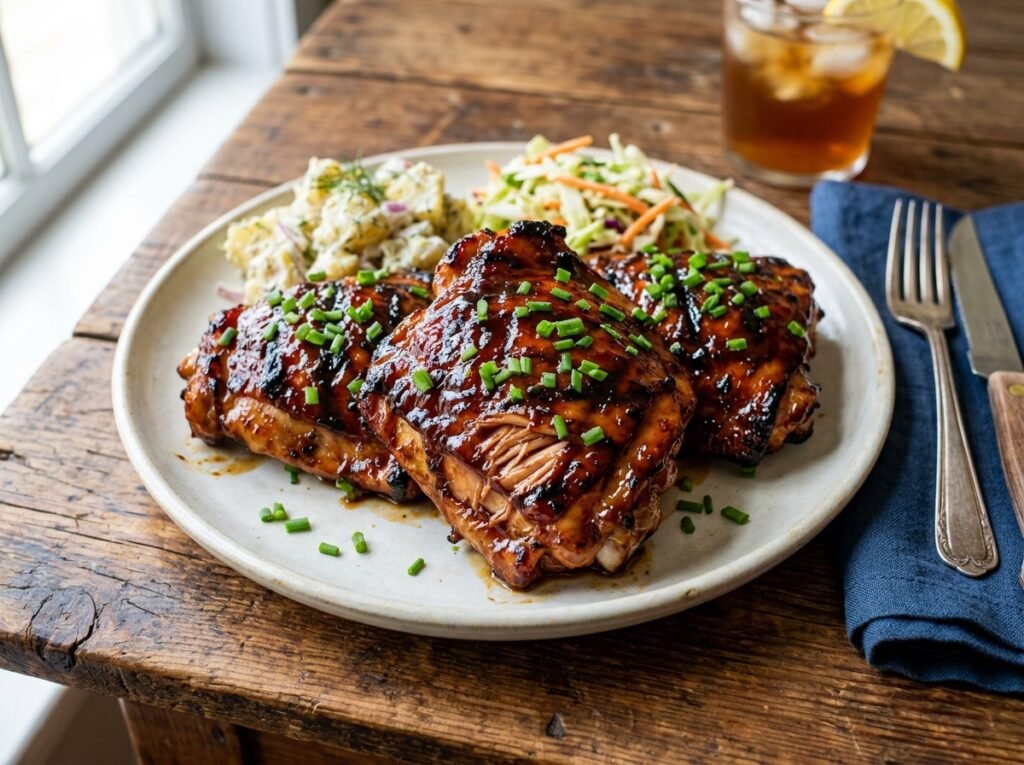
Classic sides: creamy coleslaw, potato salad, grilled corn on the cob, baked beans, or cornbread. Lighter options: crisp green salad with vinaigrette, cucumber-tomato salad, or roasted broccoli. Sauces: extra BBQ sauce on the side, ranch, or a simple yogurt-herb dip. Drinks: iced tea, lemonade, light beer, or a crisp white wine. Dessert: fresh watermelon, peach cobbler, or vanilla ice cream.
Make Ahead Tips
Mix the marinade up to 3 days ahead and store refrigerated. Marinate the chicken the night before for deepest flavor. The finished chicken can be fully cooked a day ahead, cooled, and refrigerated; reheat gently before serving.
Meal Prep Tips
Cook a double batch. Portion into airtight containers with a side of vegetables or grains. The chicken holds well for 3–4 days and reheats without drying out when done properly.
Storage Instructions
Refrigerator: Cool completely, then store in an airtight container up to 4 days. Freezer: Wrap individual pieces tightly or place in freezer bags; freeze up to 2–3 months. Thaw overnight in the refrigerator.
Reheating Instructions
- Oven: 325°F (160°C) covered with foil for 12–15 minutes until warmed through; uncover and broil briefly if you want the glaze to re-glaze.
- Air fryer: 350°F (175°C) for 5–7 minutes.
- Microwave: Short bursts on medium power, covered, to avoid toughening.
- Stovetop: Low heat in a covered skillet with a splash of water or extra sauce.
Nutritional Information
(Approximate per serving, based on 8 servings using bone-in skin-on thighs and standard marinade quantities) Calories: 380–420 Protein: 28–32 g Carbohydrates: 12–18 g Fat: 22–26 g Fiber: 1 g Sugar: 8–12 g Sodium: 600–800 mg
Values vary with exact ingredients, sauce brand, and whether skin is eaten.
Troubleshooting Guide
Chicken looks dry: Next time pull at a slightly lower temperature and rest longer; ensure adequate oil in the marinade. Glaze burned: Apply later in the cook and move to indirect heat sooner. Uneven cooking: Select similar-sized pieces and rotate positions on the grill. Sauce too thin: Simmer the reserved portion briefly on the stovetop to thicken before basting. Not enough smoke flavor: Use more charcoal or add wood chunks; keep the lid closed as much as possible.
Frequently Asked Questions
Can I use boneless skinless chicken thighs? Yes. Reduce total grill time to about 12–18 minutes and watch the internal temperature closely.
How long should I marinate? Minimum 30 minutes; 2–4 hours is ideal. Overnight is excellent for maximum flavor.
Do I need a charcoal grill? No. A gas grill works well—preheat one side high and one side medium-low for two-zone cooking. Pellet grills also produce great results.
What internal temperature is safe? 165°F (74°C) is the minimum safe temperature. Many cooks prefer 170–175°F for thighs because the connective tissue softens further.
Can I make the sauce ahead? Absolutely. The marinade/glaze keeps in the refrigerator for several days.
Is this recipe gluten-free? Yes if you use a gluten-free BBQ sauce or ketchup and pure spices.
How do I prevent sticking? Clean and oil the grates well, and make sure the grill is properly preheated before the chicken goes on.
Can I cook this in the oven? Yes. Roast at 400°F on a wire rack over a baking sheet, basting near the end, then finish under the broiler for char.
Final Thoughts
These grilled BBQ chicken thighs prove that great backyard flavor does not require complicated techniques or exotic ingredients. The sticky glaze, smoky char, and juicy interior come together reliably once you understand the simple sequence of marinate, sear, baste, and rest. Fire up the grill, follow the visual cues for color and texture, and you will have a platter that disappears fast. Try the recipe this weekend, then leave a comment or rating to share how it turned out for you—your feedback helps other home cooks succeed too.