
Quick Recipe Summary
| Feature | Details |
|---|---|
| Prep Time | 20 Minutes |
| Cook Time | 5 Minutes (Toasting) |
| Total Time | 25 Minutes |
| Servings | 4-6 (8-12 Slices) |
| Cuisine | Italian / Mediterranean |
| Course | Appetizer / Antipasto |
| Difficulty | Easy |
| Calories | ~280 kcal per serving |
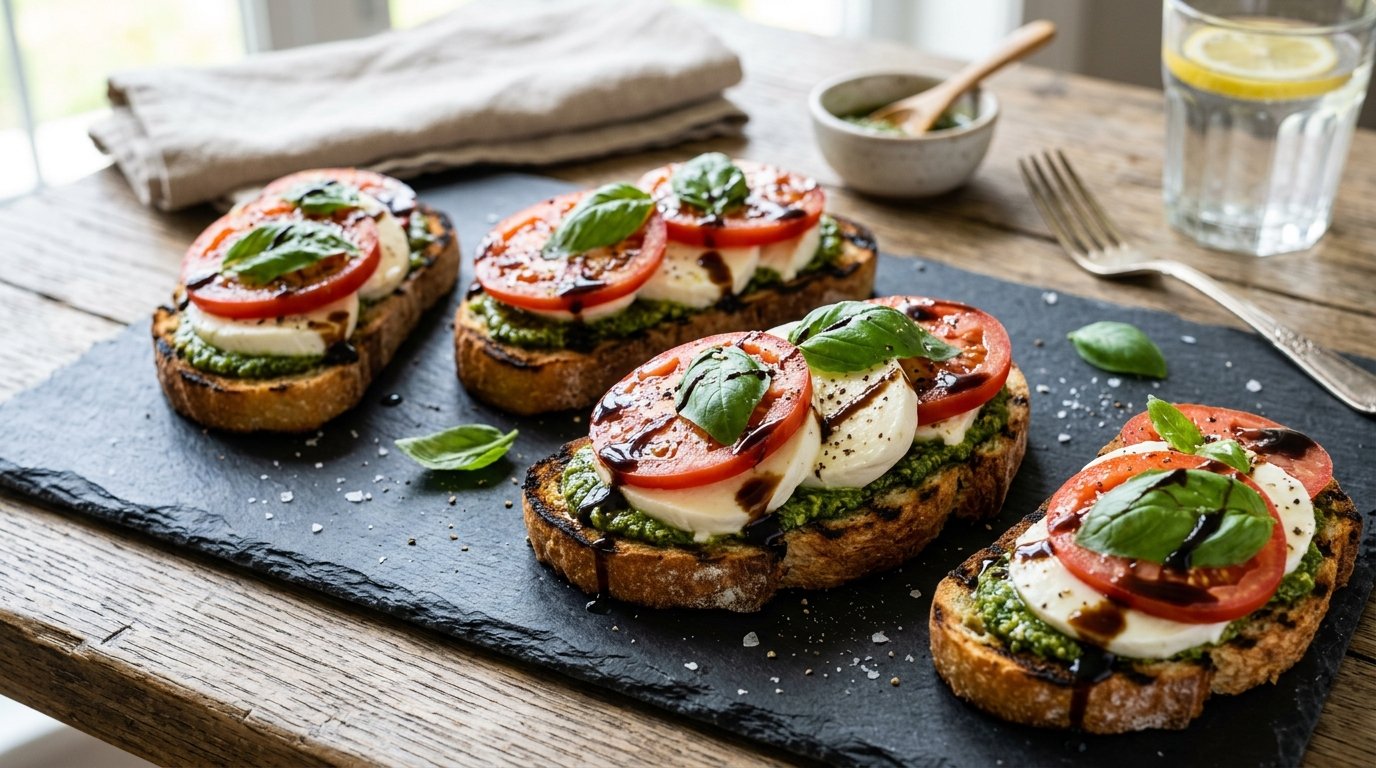
This recipe relies entirely on the quality of its components rather than complex cooking techniques. The foundation is a traditional Genovese-style pesto made from scratch using a mortar and pestle, which releases essential oils from the basil that blenders often destroy through heat and oxidation. Paired with ripe heirloom tomatoes, fresh mozzarella, and artisanal sourdough, this bruschetta offers a restaurant-quality experience at home. It is naturally vegetarian and can be easily adapted for vegan diets, making it an inclusive choice for any gathering.
Table of Contents
- Introduction
- Why This Recipe Works
- Why You’ll Love This Recipe
- Ingredient Notes
- Kitchen Equipment
- Preparation Information
- Step-by-Step Instructions
- Expert Tips
- Common Mistakes
- Recipe Variations
- What to Serve With This Recipe
- Make Ahead & Meal Prep Tips
- Storage Instructions
- Reheating Instructions
- Nutritional Information
- Troubleshooting Guide
- Frequently Asked Questions
- Final Thoughts
Introduction
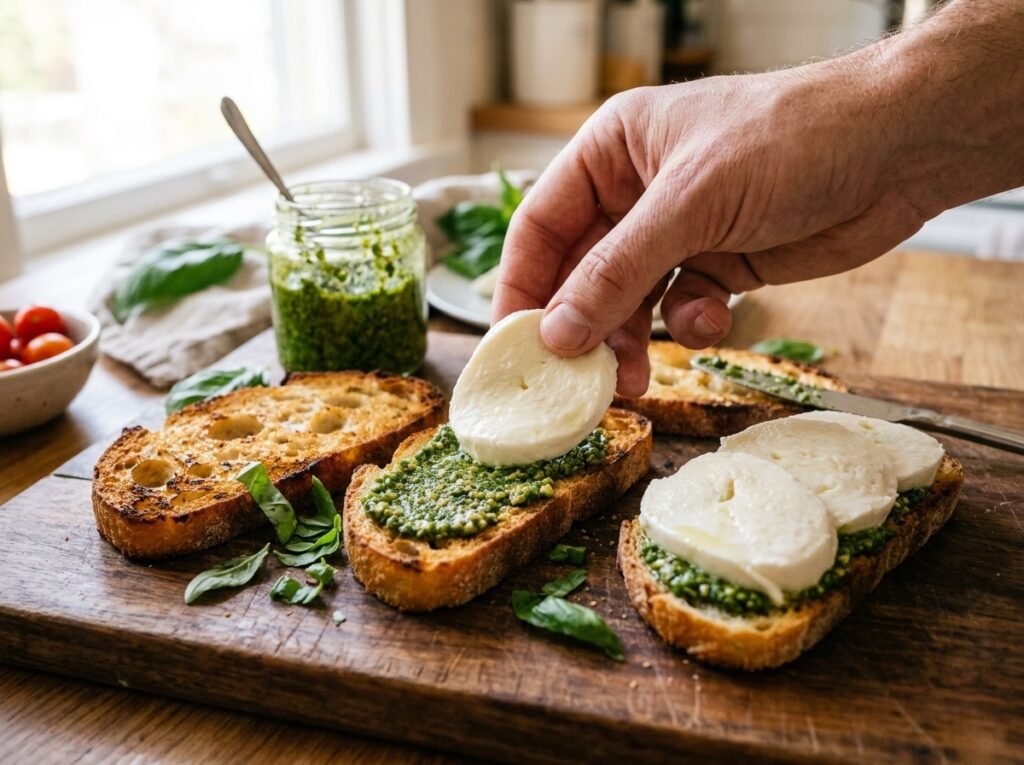
If you have ever been disappointed by soggy bread or bland toppings at a party, you know exactly why technique matters as much as ingredients in Italian antipasti. This Caprese Pesto Bruschetta solves both problems by focusing on structural integrity and flavor balance. The video demonstration highlights the critical importance of assembly order: pesto first creates a moisture barrier that protects the bread from the juicy tomatoes, while the final drizzle of olive oil ties all the elements together with a glossy, rich finish.
Unlike standard bruschetta that relies solely on diced tomato salad, adding pesto introduces a savory, nutty depth that complements the sweetness of ripe tomatoes and the mild creaminess of fresh mozzarella. The use of a mortar and pestle for the sauce isn’t just aesthetic; it produces a superior texture and brighter green color that speaks to authenticity. This dish is more than just an appetizer; it is a celebration of seasonal produce and the timeless Italian philosophy of cucina povera—making the most of simple, honest ingredients.
Why This Recipe Works
From a culinary science perspective, this recipe succeeds because of fat distribution and moisture management. Bread is essentially a sponge; without protection, tomato juice will wick into the crumb within minutes, creating a mushy mess. The pesto, being an emulsion of oil, nuts, and cheese, acts as a hydrophobic barrier. When spread generously on toasted bread, it seals the surface pores, allowing the tomatoes to rest directly on top without compromising the crunch.
Furthermore, the mechanical action of grinding basil in a marble mortar crushes cell walls gently, releasing volatile aromatic compounds like eugenol and linalool without generating the friction heat that turns basil black and bitter in a food processor. This preservation of chlorophyll ensures the pesto remains vibrantly green and intensely fragrant. The layering of fats—olive oil in the pesto, milk fat in the mozzarella, and fruit lipids in the tomato—creates a mouthfeel that is rich yet refreshing, preventing palate fatigue even after multiple bites.
Why You’ll Love This Recipe
- Superior Texture: The pesto barrier keeps bread crispy while tomatoes stay juicy, solving the #1 bruschetta complaint.
- Authentic Flavor: Hand-ground pesto tastes significantly brighter and more complex than blended versions.
- Visual Stunner: The layered colors of red tomato, white mozzarella, and green pesto/basil are inherently photogenic.
- Versatile Dietary Options: Naturally vegetarian and easily adaptable to vegan or gluten-free diets.
- Quick Assembly: Once components are prepped, assembly takes less than 5 minutes, perfect for last-minute entertaining.
- Seasonal Celebration: Highlights peak summer produce when tomatoes are sweetest and basil is most aromatic.
Ingredient Notes
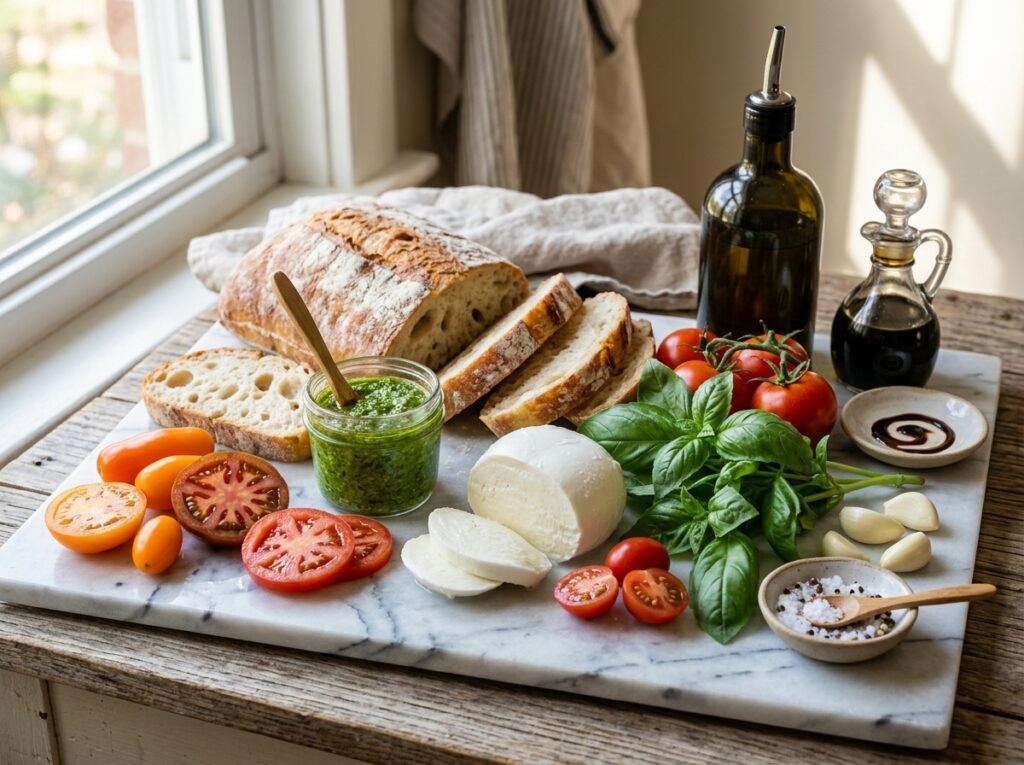
Fresh Basil Leaves
- Purpose: Primary aromatic component of pesto and garnish. Provides signature peppery-sweet flavor.
- Substitutions: None for authentic pesto. For garnish only: microgreens or arugula (different flavor profile).
- Buying Tips: Choose small-leaf Genovese basil if possible; it has higher essential oil content than large-leaf varieties. Look for perky, unbruised leaves with no black spots. Smell should be intense and sweet.
- Storage Tips: Treat like flowers: trim stems, place in glass of water at room temperature, cover loosely with bag. Never refrigerate; cold damages cell structure causing rapid blackening. Use within 3-4 days.
Pine Nuts (Pignoli)
- Purpose: Provides creamy texture, richness, and nutty backbone to pesto. Emulsifies with oil.
- Substitutions: Walnuts (earthier), almonds (crunchier), pistachios (sweeter), or sunflower seeds (budget-friendly/nut-free).
- Buying Tips: Buy raw, unsalted nuts. Toast lightly in dry pan before use to enhance flavor and remove raw bitterness. Check for rancidity; pine nuts have high oil content and spoil quickly.
- Storage Tips: Store in airtight container in freezer up to 6 months. Room temp storage leads to rancidity within weeks. Always toast just before use for maximum aroma.
Extra Virgin Olive Oil
- Purpose: Liquid gold that binds pesto, adds fruitiness, and finishes dish. Carries fat-soluble flavors.
- Substitutions: High-quality avocado oil (milder) if EVOO is too strong. Avoid “light” or refined oils; they lack flavor complexity.
- Buying Tips: Dark glass bottle protects from light degradation. Harvest date within 18 months. Taste should be grassy, peppery, not rancid. Cold-pressed preferred.
- Storage Tips: Store cool, dark place. Never refrigerate (clouds/solidifies). Use within 6 months of opening. Rancid oil ruins delicate dishes.
Fresh Mozzarella (Fior di Latte or Bufala)
- Purpose: Creamy, mild counterpoint to acidic tomatoes and pungent pesto. Adds protein and richness.
- Substitutions: Burrata (creamier center), Bocconcini (smaller balls), or vegan mozzarella (coconut oil-based).
- Buying Tips: Buy packed in liquid/whey, not vacuum-sealed blocks (which are rubbery). Check expiration; fresher is better. Should smell milky/sweet, not sour.
- Storage Tips: Keep submerged in original liquid in fridge up to 3 days. Bring to room temp 30 mins before serving; cold cheese lacks flavor/texture.
Heirloom Tomatoes
- Purpose: Juicy, sweet-acidic core of Caprese layer. Provides color and freshness.
- Substitutions: Roma/plum tomatoes (less juicy, firmer), cherry tomatoes (sweeter, smaller), or beefsteak (classic).
- Buying Tips: Choose heavy-for-size tomatoes with taut skin. Smell stem end; should smell earthy/tomatoey. Avoid refrigerated supermarket tomatoes; they lose flavor/texture permanently.
- Storage Tips: Store stem-side down at room temperature away from direct sun. Never refrigerate unless overripe. Use within 2-3 days of ripeness.
Rustic Sourdough or Ciabatta
- Purpose: Structural base. Needs sturdy crumb and crisp crust to hold wet toppings.
- Substitutions: Baguette (thinner slices), focaccia (softer, oilier), or gluten-free artisan loaf.
- Buying Tips: Look for open crumb structure (holes) and thick, blistered crust. Avoid soft sandwich bread; it collapses under moisture. Day-old bread toasts better than fresh.
- Storage Tips: Store cut-side down on board or in paper bag. Freeze sliced for later use. Revive stale bread by sprinkling with water and baking 5 mins at 350°F.
Kitchen Equipment
- Marble Mortar & Pestle: Essential for authentic pesto texture/color. Marble’s weight and cool surface aid grinding without heating.
- Sharp Serrated Bread Knife: For clean slicing without crushing delicate crumb. Dull knives tear bread, creating uneven surfaces.
- Cutting Board: Stable surface for slicing tomatoes/mozzarella. Wood preferred; plastic can harbor odors.
- Small Offset Spatula or Butter Knife: For spreading pesto evenly without tearing bread surface.
- Toaster Oven or Broiler: For achieving crisp bread without drying out interior. Standard toaster works but may be too narrow.
- Cheese Wire or Sharp Chef’s Knife: For clean mozzarella slices without squishing. Wire gives smoothest cut.
- Serving Platter: Large enough to arrange bruschetta without crowding. Ceramic/wood complements rustic aesthetic.
- Citrus Zester/Microplane (Optional): For finishing touch of lemon zest if desired (not in video but common enhancement).
Preparation Information
- Prep Time: 20 Minutes
- Cook Time: 5 Minutes (Toasting)
- Total Time: 25 Minutes
- Servings: 4-6 (8-12 Slices)
Step-by-Step Instructions
H3: Make Homemade Pesto
Wash and thoroughly dry basil leaves (moisture = gray pesto). In marble mortar, combine pine nuts, garlic clove, pinch of coarse salt. Grind with pestle using circular motion until paste forms. Add basil leaves gradually, pounding/grinding to release oils. Drizzle in olive oil slowly while continuing to grind until emulsified. Stir in grated Parmigiano-Reggiano (if using traditional recipe; video shows vegan-style without cheese).
- Why it matters: Dry leaves prevent oxidation. Salt aids grinding by breaking down fibers. Circular motion preserves chlorophyll. Slow oil addition creates stable emulsion. No cheese version relies on nuts/oil for creaminess.
- Visual Cue: Vibrant emerald green, not brown/black. Texture coarse-chunky, not smooth puree. Oil glistens on surface.
- Aroma Cue: Intense fresh basil, garlicky, nutty. No metallic/bitter smell indicates proper technique.
- Common Mistake: Over-processing = heat generation = black pesto. Work patiently. If too thick, add oil tsp by tsp. Too thin = add more nuts/basil.
- Pro Tip: Chill mortar/pestle 10 mins before use. Cold stone slows oxidation. Make pesto last to preserve color/flavor.
H3: Toast the Bread
Slice bread into 1/2-inch thick pieces. Brush lightly with olive oil (optional). Toast in oven/broiler 2-3 mins per side until golden/crisp edges but soft interior. Cool slightly on rack.
- Why it matters: Toasting creates structural integrity and flavor via Maillard reaction. Cooling on rack prevents steam sogginess. Light oil brush enhances crispness/flavor without greasiness.
- Visual Cue: Golden-brown surface, not pale or burnt. Edges slightly darker. Crumb looks set, not doughy.
- Texture Cue: Crisp exterior yields to gentle pressure. Interior warm, not hot. No hard/sharp edges.
- Mistake to Avoid: Over-toasting = rock-hard bread that cuts mouth. Under-toasting = soggy base. Watch closely; bread burns fast under broiler.
H3: Assemble Layers
Spread generous layer of pesto on each toast slice, covering edge-to-edge. Top with alternating slices of tomato and mozzarella, overlapping slightly. Press gently to adhere.
- Why it matters: Full pesto coverage = complete moisture barrier. Alternating layers ensure balanced bite. Gentle pressing integrates layers without squishing cheese/tomato.
- Visual Cue: Green pesto visible at edges. Red/white layers distinct but cohesive. No gaps between toppings.
- Texture Cue: Toppings sit firmly, not sliding. Bread feels substantial under hand.
- Tip: Slice tomato/mozzarella same thickness (~1/4 inch) for even eating experience. Pat tomato slices dry with paper towel if very juicy.
H3: Season & Drizzle
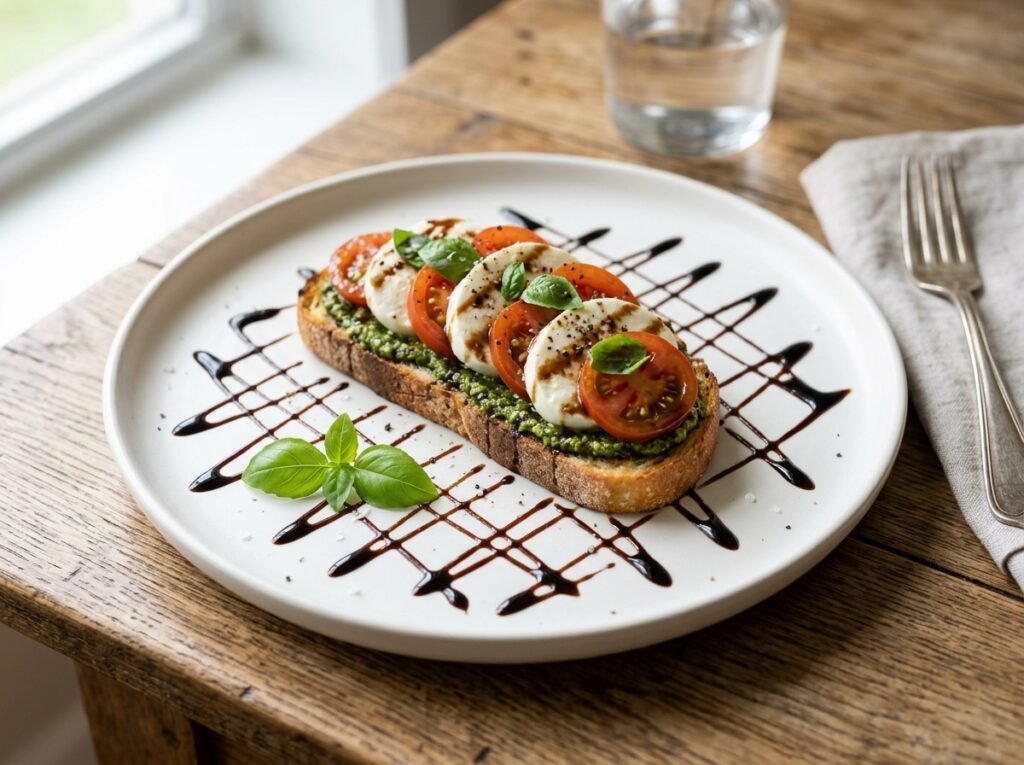
Finish with flaky sea salt, freshly cracked black pepper, and generous drizzle of extra virgin olive oil. Garnish with whole basil leaf. Serve immediately.
- Why it matters: Salt enhances tomato sweetness/cheese creaminess. Pepper adds warmth. Final oil drizzle adds gloss/richness/aroma. Basil garnish signals freshness. Immediate service preserves crunch.
- Visual Cue: Oil pools slightly in crevices. Salt crystals glisten. Basil leaf vibrant green, not wilted.
- Aroma Cue: Fresh basil, fruity oil, peppery spice. Appetizing, complex fragrance.
- Critical Tip: DO NOT assemble ahead. Moisture migration begins instantly. Have components prepped; assemble à la minute for guests.
Expert Tips
- Basil Handling is Everything: Never chop basil with knife for pesto; bruising oxidizes it. Always grind/pound. Wash/dry THOROUGHLY; water is enemy of green pesto. Spin-dryer essential.
- Tomato Selection Dictates Success: Only use peak-season tomatoes. Off-season/winter tomatoes lack sugar/acidity balance, making bruschetta bland. If unavailable, use high-quality canned San Marzano (drained) instead of sad fresh ones.
- Mozzarella Temperature Matters: Cold mozzarella = waxy, flavorless. Always bring to room temp 30 mins before serving. Pat dry excess liquid; watery cheese = soggy bread.
- Oil Quality Non-Negotiable: Since oil is featured prominently (in pesto AND finishing), use BEST EVOO you can afford. Cheap oil tastes metallic/rancid when uncooked. Finish with different oil than cooking oil for complexity.
- Salt Timing Strategy: Salt tomatoes JUST before serving. Salting early draws out moisture prematurely. Salt pesto during grinding. Salt bread lightly when toasting. Layered salting builds depth.
Common Mistakes
- Soggy Bread: Assembled too early or insufficient pesto barrier. Fix: Assemble à la minute. Spread pesto edge-to-edge. Pat tomatoes dry. Toast bread thoroughly.
- Brown/Black Pesto: Oxidized basil from heat/water/knife. Fix: Dry leaves completely. Use mortar/pestle. Chill tools. Add oil slowly. Make last.
- Bland Flavor: Poor-quality ingredients or underseasoning. Fix: Use peak-season tomatoes. Good EVOO. Flaky salt + fresh pepper. Taste each component before assembling.
- Hard/Crumbly Bread: Over-toasted or wrong bread type. Fix: Toast just until golden. Use rustic loaf with sturdy crumb. Brush with oil before toasting.
- Sliding Toppings: Insufficient pesto adhesion or wet cheese. Fix: Generous pesto layer. Pat mozzarella dry. Press gently during assembly. Serve immediately.
Recipe Variations
- Vegan Adaptation: Omit mozzarella; use marinated tofu slices or cashew ricotta. Ensure pesto has no Parmesan (video version is already vegan-friendly). Equally delicious.
- Spicy Calabrian Twist: Add 1 tsp Calabrian chili paste to pesto. Top with chili oil drizzle instead of plain EVOO. Heat contrasts beautifully with sweet tomatoes.
- Prosciutto & Melon Fusion: Replace mozzarella with prosciutto-wrapped cantaloupe. Pesto bridges sweet/salty. Elegant summer variation.
- Grilled Vegetable Upgrade: Add grilled zucchini/eggplant slices under tomato. Smoky depth complements pesto. Heartier option.
- Low-Carb/Keto Base: Use portobello mushroom caps or thick cucumber rounds instead of bread. Same toppings. Gluten-free, grain-free alternative.
- Extra Cheesy Indulgence: Add dollop of burrata on top post-assembly. Let cream spill over. Rich, decadent version for special occasions.
- Herb Garden Mix: Substitute 1/3 basil with mint/parsley/chervil. Brighter, more complex herbal profile. Refreshing twist.
What to Serve With This Recipe
- Antipasti Spread: Marinated olives, artichoke hearts, roasted peppers, cured meats (if not vegetarian). Creates full Italian experience.
- Soups: Minestrone, tomato basil bisque, or white bean soup. Bruschetta acts as edible spoon/garnish.
- Salads: Simple arugula with lemon vinaigrette. Peppery greens cut richness of cheese/oil.
- Drinks: Crisp white wine (Pinot Grigio/Vermentino), Prosecco, Aperol Spritz, or sparkling water with citrus.
- Desserts: Lemon sorbet, panna cotta, or fresh berries. Light, acidic finish balances rich appetizer.
- Garnishes: Balsamic glaze reduction, flaky Maldon salt, microgreens, or edible flowers for elevation.
Make Ahead & Meal Prep Tips
- Pesto Ahead: Make pesto up to 2 days ahead. Store in jar, cover surface with thin oil layer to prevent oxidation. Refrigerate. Bring to room temp before use. Color may darken slightly; flavor improves.
- Component Prep: Slice tomatoes/mozzarella up to 4 hours ahead. Store separately in fridge. Pat dry before assembly. Toast bread 2 hours ahead; store in airtight container at room temp. Re-crisp in oven 2 mins if needed.
- Assembly Line: Set up stations: bread, pesto, tomatoes, cheese, oil, salt. Assemble à la minute during party. Keeps workflow smooth and product fresh.
- Freezing Not Recommended: Pesto freezes okay (without cheese); bread/toasted components do not. Fresh assembly always superior.
Storage Instructions
- Refrigerator: Store leftover pesto covered with oil layer up to 5 days. Unused tomato/mozzarella slices keep 2 days separately. Do NOT store assembled bruschetta; bread becomes inedible.
- Freezer: Pesto freezes up to 3 months in ice cube trays (portion control). Thaw overnight in fridge. Bread freezes well untoasted; toast from frozen. Assembled bruschetta does not freeze.
- Avoid: Storing basil leaves wet or cold. Keeping mozzarella in water >3 days (sourness develops). Leaving assembled bruschetta at room temp >2 hours (food safety/sogginess).
- Safety: Discard pesto if mold/off-smell develops. Tomato/mozzarella left out >2 hours in danger zone. When in doubt, throw out.
Reheating Instructions
- Oven (Best for Bread Only): 350°F for 3-5 mins to re-crisp toasted bread. Do NOT reheat assembled bruschetta; cheese melts messily, tomatoes cook, basil wilts.
- Air Fryer: 320°F for 2-3 mins for bread revival. Quick effective method. Monitor closely to prevent burning.
- Microwave (Avoid): Makes bread chewy/soggy. Only if desperate for bread component. 10-sec bursts. Expect texture loss.
- Stovetop: Dry skillet medium-low heat 1-2 mins per side for bread. Restores some crispness. Not ideal for delicate toast.
- Note: Assembled bruschetta CANNOT be reheated successfully. Components must be stored separately and reassembled fresh. Accept this limitation for quality.
Nutritional Information
Per serving (2 slices, approximate):
- Calories: 280
- Protein: 8g
- Carbohydrates: 24g
- Fat: 18g
- Fiber: 2g
- Sugar: 4g
- Sodium: 320mg
Note: Values vary based on bread size, oil amount, and cheese portion. High healthy fat content from EVOO/nuts. Naturally vegetarian.
Troubleshooting Guide
| Problem | Cause | Solution |
|---|---|---|
| Soggy bread | Assembled early / Wet toppings | Assemble à la minute. Pat tomatoes/cheese dry. Full pesto barrier. |
| Brown pesto | Oxidation / Heat / Water | Dry leaves completely. Use mortar/pestle. Chill tools. Make last. |
| Bland flavor | Poor ingredients / Underseasoning | Peak-season tomatoes. Good EVOO. Flaky salt + pepper. Taste components. |
| Hard bread | Over-toasted / Wrong type | Toast just golden. Use rustic loaf. Brush with oil. |
| Sliding toppings | Insufficient adhesion / Wet cheese | Generous pesto. Pat mozzarella dry. Press gently. Serve immediately. |
| Bitter pesto | Old basil / Burnt nuts / Rancid oil | Fresh basil only. Toast nuts lightly. Use fresh EVOO. |
Frequently Asked Questions
1. Can I use a food processor for pesto? You can, but results differ significantly. Blades generate heat/oxidation = darker, less vibrant pesto. Pulse briefly, scrape sides often. Add oil LAST. Mortar/pestle always superior for texture/color/flavor. Worth the effort.
2. Why did my mozzarella make the bread soggy? Fresh mozzarella contains whey/water. Always pat dry thoroughly with paper towels before slicing. Let sit on rack 10 mins after slicing to drain further. Use low-moisture mozzarella if sogginess persists (though less authentic).
3. Can I make this vegan? Absolutely! Video pesto appears vegan (no cheese shown). Use vegan mozzarella or omit cheese entirely; pesto + tomato is still delicious. Ensure bread is vegan (some contain dairy/honey).
4. How do I keep basil from turning black in pesto? Dry leaves COMPLETELY. Use mortar/pestle (not blender). Chill tools. Add oil slowly. Make pesto LAST before serving. Cover surface with oil layer if storing. Black basil = oxidized; safe but less appealing.
5. What bread works best? Rustic sourdough, ciabatta, or Pugliese. Needs sturdy crumb and crisp crust. Avoid soft sandwich bread, brioche, or overly dense loaves. Day-old bread toasts better than fresh. Slice 1/2-inch thick minimum.
6. Can I use dried basil for pesto? No. Dried basil lacks volatile oils/freshness essential for pesto. Results in dusty, bitter paste. Only fresh basil works. If unavailable, skip pesto; use good EVOO + balsamic instead.
7. How long can assembled bruschetta sit out? Max 30 minutes at room temp. Beyond that, bread sogs, cheese sweats, basil wilts. For parties, prep components; assemble à la minute. Hold toast/pesto separate; add tomatoes/cheese/oil just before serving.
8. Can I use bottled pesto? You can, but quality varies wildly. Many contain fillers/preservatives/lack freshness. If using, choose premium brand with simple ingredients. Taste first; adjust seasoning. Homemade always superior for this application.
Final Thoughts
Creating Caprese Pesto Bruschetta is a reminder that exceptional food often lies in simplicity executed with care. The ritual of grinding basil, selecting perfect tomatoes, and assembling each piece with intention transforms humble ingredients into something that nourishes both body and spirit. This recipe celebrates the beauty of seasonal eating and the joy of sharing beautiful food with others. We encourage you to seek out the best local ingredients your market offers, experiment with variations, and embrace the imperfections that come with handmade cooking. Share your creations, ask questions, and rate the recipe below—your feedback helps our community grow and inspires fellow home cooks to explore the wonders of Italian cuisine. Buon appetito!