
Quick Recipe Summary
| Feature | Details |
|---|---|
| Prep Time | 20 Minutes |
| Cook Time | 15-20 Minutes |
| Total Time | 40 Minutes |
| Servings | 2-4 (depending on steak size) |
| Cuisine | Mediterranean / Modern American |
| Course | Main Course |
| Difficulty | Intermediate |
| Calories | ~380 kcal per serving |
This recipe highlights the importance of preparation in seafood cookery. By taking the extra time to debone and truss the salmon steaks, you create a more refined presentation and a superior texture. The citrus marinade penetrates the flesh during roasting, while the fresh rosemary adds a piney, savory depth that complements the sweetness of the orange. Served alongside roasted vegetables or a light grain salad, this Citrus Herb Salmon is a wholesome, impressive meal that comes together faster than you might expect.
Table of Contents
- Introduction
- Why This Recipe Works
- Why You’ll Love This Recipe
- Ingredient Notes
- Kitchen Equipment
- Preparation Information
- Step-by-Step Instructions
- Expert Tips
- Common Mistakes
- Recipe Variations
- What to Serve With This Recipe
- Make Ahead & Meal Prep Tips
- Storage Instructions
- Reheating Instructions
- Nutritional Information
- Troubleshooting Guide
- Frequently Asked Questions
- Final Thoughts
Introduction
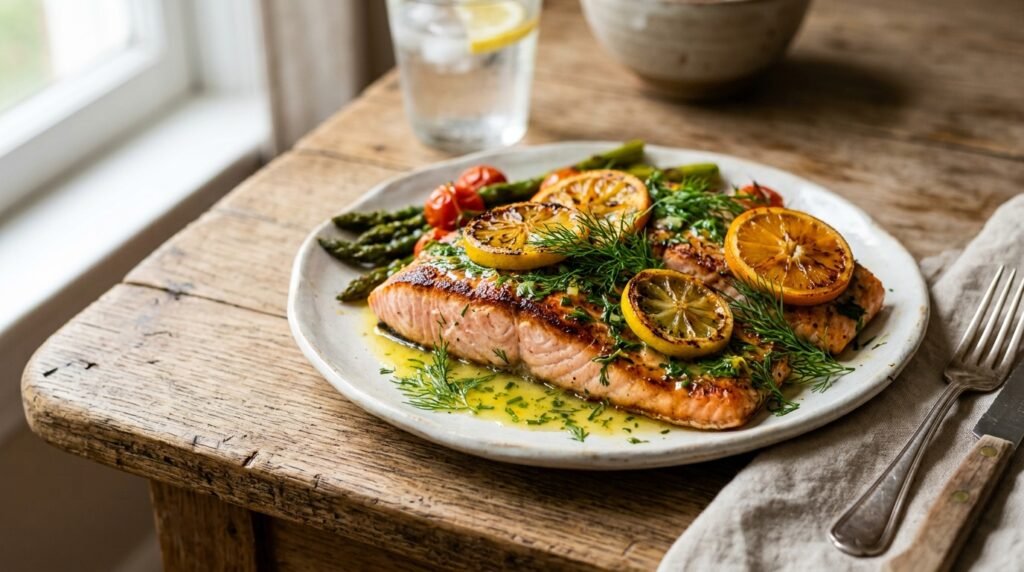
If you have ever been intimidated by cooking whole fish or frustrated by navigating around bones at the dinner table, this Citrus Herb Salmon recipe is your solution. Salmon steaks offer the best of both worlds: the structural integrity and skin-on crispness of a cross-cut slice, with the convenience of individual portions. However, the secret to elevating them lies in the prep work shown in the video. Carefully snipping out the central backbone and pin bones transforms a rustic cut into something elegant and easy to eat.
The flavor profile here is designed to be bright and aromatic rather than heavy. Orange zest provides essential oils that perfume the fish without adding excessive acid, while fresh lemon slices and rosemary sprigs create a fragrant steam environment as they roast. This method keeps the salmon incredibly moist while infusing it with complex layers of flavor. Whether you are hosting a date night or simply want to treat yourself to a nutritious, gourmet meal, this technique-driven approach guarantees results that look and taste professional.
Why This Recipe Works
From a culinary science perspective, this recipe succeeds because of how it manages heat distribution and flavor infusion. Salmon steaks are thicker and more irregular than fillets due to the bone structure. By removing the bone and tying the steak, you create a more uniform cylinder of protein. This allows heat to penetrate evenly from all sides, preventing the common issue of overcooked edges and undercooked centers often found in un-trussed steaks. The twine also helps the steak maintain its shape, preventing it from splaying open and drying out during roasting.
The use of citrus zest rather than just juice is equally important. Zest contains volatile aromatic compounds that provide intense fragrance and flavor without the curdling risk or excessive moisture of raw juice. When combined with the fat-rendering properties of the salmon skin and the earthy notes of rosemary, these elements create a self-basting effect. As the fish roasts, the citrus oils and herb aromatics circulate within the tied steak, ensuring every bite is infused with brightness that perfectly balances the rich, oily texture of the salmon.
Why You’ll Love This Recipe
- Bone-Free Eating: Deboning the steak beforehand means no awkward maneuvering at the table—just pure, uninterrupted enjoyment.
- Even Cooking: Trussing creates a uniform shape, ensuring the thickest parts cook at the same rate as the thinner edges.
- Vibrant Flavor: Fresh orange zest and rosemary provide a sophisticated aroma that elevates simple salmon beyond basic seasoning.
- Impressive Presentation: Tied salmon steaks look intentional and chef-prepared, making them perfect for entertaining.
- Nutrient Dense: Packed with heart-healthy omega-3 fatty acids, high-quality protein, and vitamin C from the citrus.
- Quick & Efficient: Despite the fancy technique, the entire process from prep to plate takes under 45 minutes.
Ingredient Notes
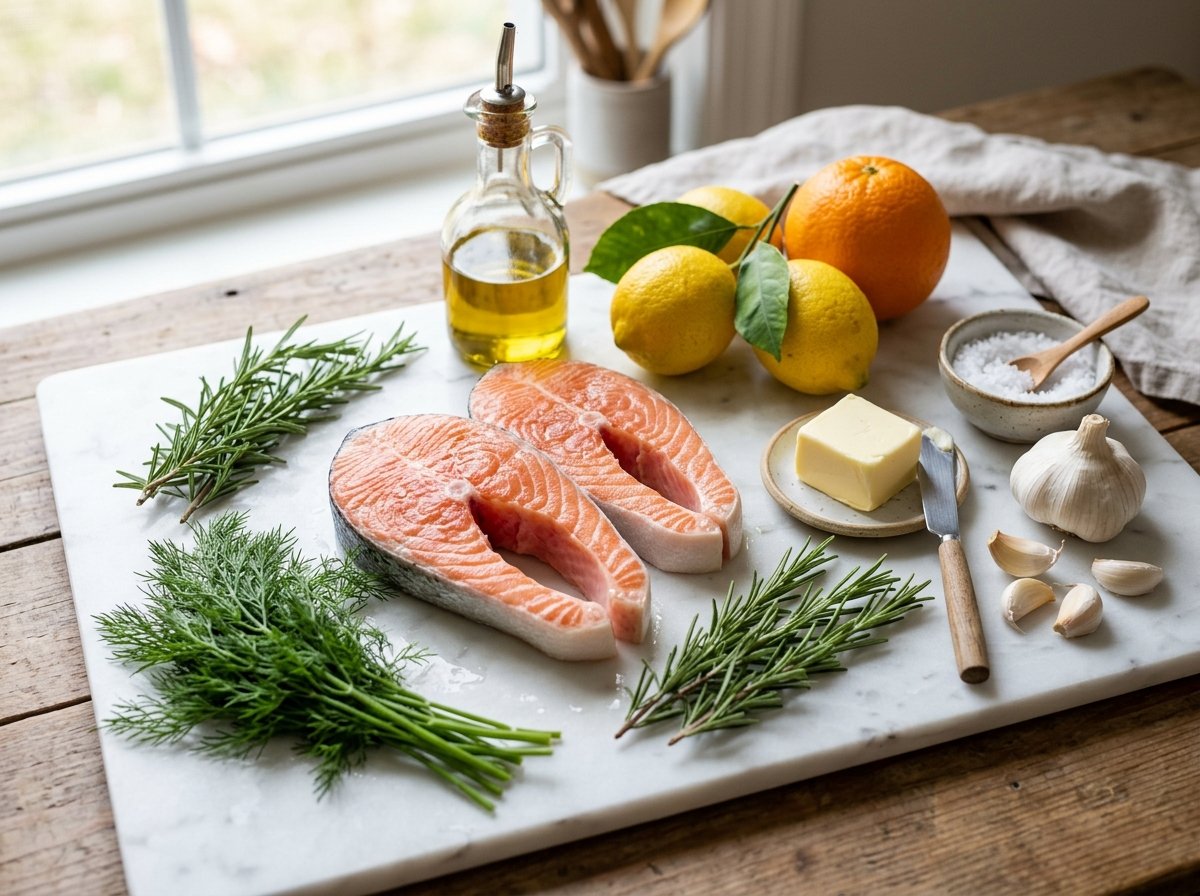
Salmon Steaks (Cross-Cut)
- Purpose: The main protein. Cross-cut steaks include skin, belly, and back meat, offering varied textures and rich flavor.
- Substitutions: Salmon fillets (skin-on preferred), trout steaks, or swordfish steaks. Adjust cooking time based on thickness.
- Buying Tips: Look for bright orange/pink flesh with firm texture and no brown spots. Skin should be shiny and silver, not dull. Ask your fishmonger for “center-cut” steaks of uniform thickness (1-1.5 inches) for even cooking.
- Storage Tips: Use within 1-2 days of purchase. Store in the coldest part of the fridge, ideally on ice or in a perforated container to prevent sogginess. Pat dry before prepping.
Fresh Oranges & Lemons
- Purpose: Acid and aroma. Orange zest adds sweet fragrance; lemon slices provide tart steam and garnish.
- Substitutions: Limes or grapefruit for different citrus profiles. Bottled zest (less potent) if fresh unavailable.
- Buying Tips: Choose heavy fruit with smooth, unblemished skin. Heavy = juicy. Avoid soft spots or mold. Organic is preferred for zesting to avoid pesticide residue.
- Storage Tips: Store at room temperature for up to a week or refrigerate for longer life. Zest before juicing/slicing for maximum oil retention.
Fresh Rosemary
- Purpose: Woody herb that withstands high heat. Adds piney, savory depth that pairs classically with citrus and fish.
- Substitutions: Thyme (milder), oregano (earthier), or dill (classic salmon pairing). Dried rosemary (use 1/3 amount, crush first).
- Buying Tips: Look for vibrant green needles with no yellowing or wilting. Smell should be strong and aromatic. Avoid bundled herbs tied tightly (promotes decay).
- Storage Tips: Wrap in damp paper towel, store in bag in fridge up to 1 week. Freeze sprigs in oil for long-term storage. Add woody herbs early; delicate herbs late.
Olive Oil & Salt/Pepper
- Purpose: Fat carrier for flavor, moisture barrier, and basic seasoning.
- Substitutions: Avocado oil (neutral, high heat), melted butter (richer). Kosher salt preferred for even distribution.
- Buying Tips: Extra virgin olive oil for finishing/flavor; regular olive oil for roasting. Check harvest date on EVOO.
- Storage Tips: Store oil cool/dark. Salt/pepper indefinitely. Always season just before cooking to prevent drawing out moisture prematurely.
Kitchen Equipment
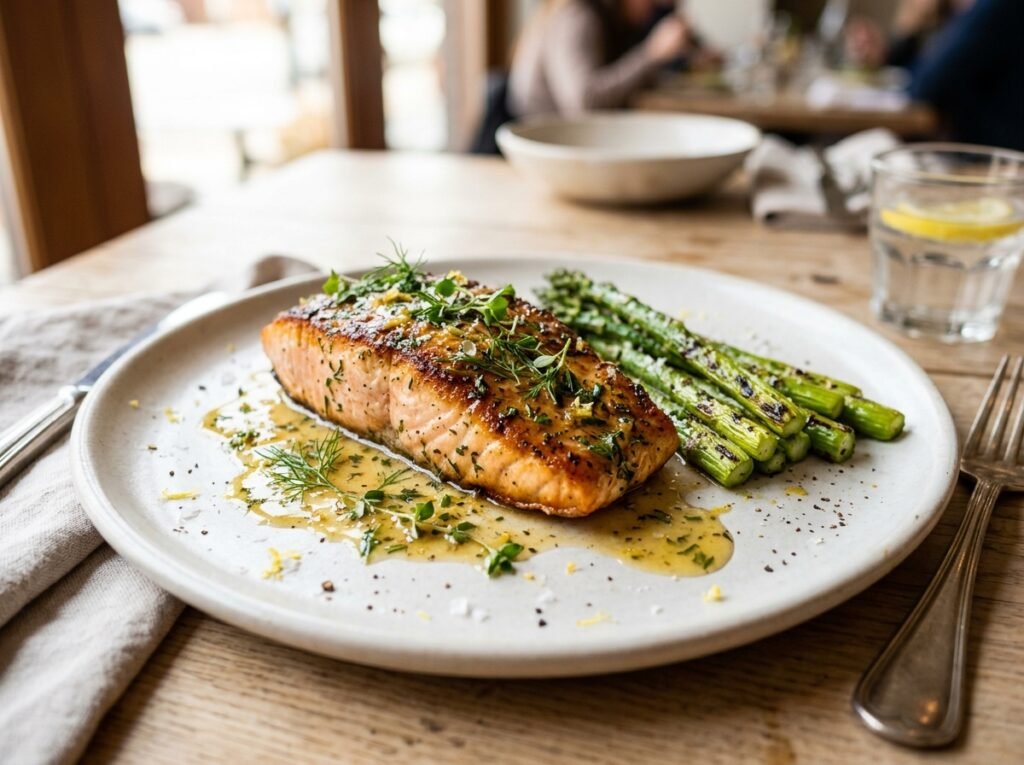
- Kitchen Shears: Essential for cleanly cutting through cartilage and bone without tearing delicate flesh. Sharp, sturdy scissors are key.
- Tweezers/Fish Bone Pliers: For pulling out small pin bones after deboning. Ensures completely bone-free eating experience.
- Kitchen Twine (Cotton): Food-safe string for trussing. Synthetic twine can melt/burn. Pre-cut 12-inch lengths for efficiency.
- Microplane/Zester: For fine orange zest without bitter white pith. Coarse graters tear flesh and yield less aroma.
- Rimmed Baking Sheet: For roasting. Line with parchment paper for easy cleanup and to prevent sticking.
- Pastry Brush: For applying oil/marinade evenly without disturbing the tied shape.
- Instant-Read Thermometer: Crucial for checking doneness without cutting into the tied steak. Target 125°F-130°F (52°C-54°C) for medium-rare.
- Sharp Chef’s Knife: For slicing citrus uniformly. Uniform slices ensure even steaming/garnish.
Preparation Information
- Prep Time: 20 Minutes
- Cook Time: 15-20 Minutes
- Total Time: 40 Minutes
- Servings: 2-4
Step-by-Step Instructions
H3: Debone the Salmon
Place steak flat on cutting board. Using kitchen shears, carefully cut along both sides of the central backbone/cartilage. Snip through connective tissue at top/bottom to remove bone entirely. Use tweezers to pull any remaining pin bones from flesh. Rinse briefly if needed; pat VERY dry.
- Why it matters: Removes obstruction for even eating/cooking. Prevents uneven heat conduction around bone. Dry surface = better sear/roast. Tweezers ensure safety/comfort.
- Visual Cue: Clean cavity where bone was. Flesh intact, not shredded. No visible white bone fragments. Surface matte/dry after patting.
- Texture Cue: Flesh firm, not mushy. Cavity edges clean, not ragged.
- Common Mistake: Cutting too deep into flesh, creating holes. Follow bone contour closely. If hole occurs, tie tightly to close during trussing. Don’t skip tweezers; pin bones are sharp/unpleasant.
- Pro Tip: Chill salmon 10 mins before deboning. Cold flesh is firmer, easier to manipulate without tearing. Work slowly; patience prevents waste.
H3: Reshape & Tie
Fold steak gently to close cavity, reforming original oval/circular shape. Wrap kitchen twine around circumference, crossing at top. Tie secure knot (square knot). Trim excess string. Repeat for all steaks.
- Why it matters: Restores uniform shape for even cooking. Prevents splaying/drying. Holds stuffing/aromatics inside if used. Professional presentation. Secure knot prevents unraveling during cook.
- Visual Cue: Steak looks neat, symmetrical. Twine snug but not crushing flesh. No gaps in closure.
- Texture Cue: Firm, held together. Not squished/deformed.
- Mistake to Avoid: Tying too tight = squeezes out juices, distorts shape. Too loose = falls apart. Aim for snug hug. Use cotton twine only; synthetic melts/burns.
H3: Season & Aromatize
Brush tied steaks lightly with olive oil. Grate fresh orange zest generously over top/sides. Place on parchment-lined baking sheet. Arrange lemon slices and rosemary sprigs around/on top of steaks. Season with salt/pepper.
- Why it matters: Oil conducts heat, prevents sticking. Zest adds aroma without acid burn. Lemon/rosemary create fragrant steam environment. Salt enhances flavor; pepper adds warmth. Parchment prevents sticking/cleanup ease.
- Visual Cue: Zest distributed evenly, not clumped. Lemon slices vibrant yellow/orange. Rosemary fresh green. Oil glistens lightly.
- Aroma Cue: Bright citrus, piney rosemary, fresh fish. No ammonia/fishy smell indicates freshness.
- Tip: Don’t oversoil; excess oil pools/burns. Light brush sufficient. Place aromatics UNDER steaks too for infused steam from below.
H3: Roast Until Perfect
Roast in preheated 400°F (200°C) oven for 12-15 minutes (depending on thickness). Check temp at thickest part; aim for 125°F-130°F (52°C-54°C) for medium-rare. Remove when opaque but still translucent center. Rest 3-5 mins before untying/serving.
- Why it matters: High heat renders fat, crisps skin slightly, cooks quickly to retain moisture. Resting allows carryover cooking (temp rises 5-10°F) and juice redistribution. Untying after rest preserves shape/juices.
- Visual Cue: Flesh turns opaque pink/orange from edges inward. Center still slightly translucent/glossy. Skin may blister slightly. Aromatics wilted/fragrant.
- Texture Cue: Flakes easily with fork but still moist. Not dry/chalky. Juices run clear/pink, not milky.
- Doneness Test: Thermometer is king. Visual cue: flesh separates slightly at natural seams. Overcooking = dry/tough. Better slightly underdone; residual heat finishes it.
Expert Tips
- Fishmonger Relationship: Ask for “steaks cut 1.5 inches thick, center-cut.” Uniformity is critical for even roasting. Request they remove backbone if uncomfortable doing it yourself (many will for free). Build rapport for best cuts/tips.
- Twine Technique Mastery: Practice square knots on scrap string first. Wet twine slightly before tying; prevents burning/fraying. Leave 2-inch tails for easy untie post-cook. Never use dental floss/synthetic string; unsafe/toxic when heated.
- Zest Timing Matters: Zest JUST before roasting. Volatile oils evaporate quickly. Pre-zested hours ahead loses 50%+ aroma. Use microplane; coarse grater includes bitter pith. Only outer colored layer counts.
- Skin-On Advantage: Always keep skin on for steaks. Protects flesh from direct heat, adds flavor/fat, helps hold shape during tying. Crisps beautifully if oiled well. Eat or discard; flesh underneath stays moist.
- Thermometer Placement: Insert probe horizontally into thickest part, avoiding bone cavity/twine. Bone conducts heat differently, giving false readings. Calibrate thermometer annually; inaccurate tools ruin perfect fish.
Common Mistakes
- Dry/Tough Salmon: Overcooked or tied too tight. Fix: Pull at 125°F. Rest 5 mins. Tie snug, not crushing. Use thermometer religiously.
- Falling Apart Steak: Loose twine or poor debone. Fix: Square knot securely. Close cavity fully before tying. Chill before tying firms flesh.
- Bitter Citrus Flavor: Included white pith in zest or burned lemon slices. Fix: Microplane only colored zest. Place lemon slices UNDER fish or remove last 5 mins of cook.
- Uneven Cooking: Variable steak thickness or crowded pan. Fix: Select uniform steaks. Space apart on sheet. Rotate pan halfway if hot spots.
- Fishy Odor/Taste: Old fish or insufficient acid. Fix: Buy fresh/smell-clean fish. Use ample citrus/zest. Proper storage/prep prevents oxidation.
Recipe Variations
- Spicy Chili-Lime Twist: Replace orange with lime zest. Add chili flakes/cayenne to oil brush. Top with sliced jalapeños. Heat contrasts citrus beautifully.
- Mediterranean Olive-Caper Boost: Add chopped Kalamata olives + capers to cavity before tying. Briny/salty complexity enhances richness. Classic pairing.
- Asian Ginger-Soy Fusion: Replace rosemary with ginger slices. Brush with soy-sesame oil mix. Garnish with scallions. Umami-rich alternative.
- Butter-Basted Finish: Melt butter with garlic/thyme last 3 mins of cook. Baste steaks repeatedly. Richer, glossier finish. Indulgent variation.
- Low-Carb/Keto Friendly: Naturally compliant! Serve with cauliflower mash/zoodles. Increase herb/oil ratio. High-fat, nutrient-dense meal.
- Stuffed Steak Upgrade: Fill cavity with spinach/feta mixture before tying. Adds veggie/protein boost. Elegant surf variation.
- Maple-Glazed Sweetness: Brush with maple-mustard glaze last 5 mins. Caramelizes beautifully. Sweet/savory contrast popular with kids.
What to Serve With This Recipe
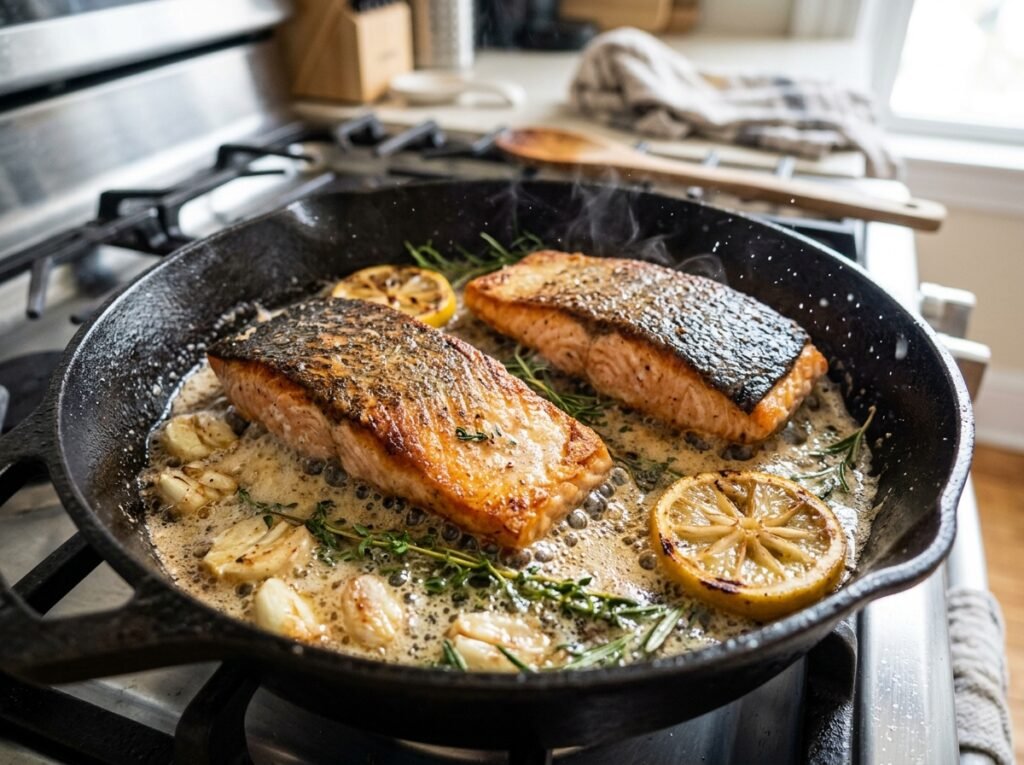
- Grains: Quinoa pilaf, wild rice, couscous, or crusty sourdough bread. Absorbs citrus juices wonderfully.
- Vegetables: Roasted asparagus, sautéed green beans, or grilled broccolini. Green veg complements citrus palette.
- Salads: Arugula with shaved parmesan/lemon vinaigrette. Fennel-orange salad echoes flavors. Light, acidic contrast.
- Sauces: Hollandaise, tzatziki, or chimichurri. Creamy/herbal options enhance without overwhelming.
- Drinks: Sauvignon Blanc, Pinot Gris, sparkling water with citrus, or iced herbal tea. Crisp whites complement fish.
- Desserts: Lemon sorbet, berry compote, or dark chocolate. Light/citrusy finish cleanses palate after rich main.
Make Ahead & Meal Prep Tips
- Debone/Tie Ahead: Prep steaks up to 24 hours ahead. Store covered in fridge. Bring to room temp 20 mins before roasting. Saves active cooking time.
- Zest/Marinade Prep: Zest oranges, chop herbs up to 4 hours ahead. Store separately in airtight containers. Assemble/season day-of for peak aroma.
- Partial Cook Option: Roast 80% done, cool rapidly. Refrigerate. Finish in oven 3-5 mins when ready. Riskier for texture; best fresh.
- Leftover Repurpose: Flake cold salmon into salads, pasta, or tacos. Citrus flavor holds up well chilled. Transform yesterday’s dinner creatively.
Storage Instructions
- Refrigerator: Store cooked salmon in airtight container up to 3 days. Keep twine on until reheating/serving to maintain shape.
- Freezer: Cooked salmon freezes well up to 2 months. Wrap individually in foil/plastic. Thaw in fridge overnight. Texture softens slightly; still good for salads/pastas.
- Avoid: Storing hot salmon sealed (condensation = sogginess). Cool completely first. Don’t store with fresh herb garnish; add post-reheat. Discard if sour/ammonia smell develops.
- Safety: Reheat to 145°F (63°C) internal temp before consuming. Never refreeze thawed leftovers. Label containers with date.
Reheating Instructions
- Oven (Best): 275°F covered with foil 10-12 mins. Gentle heat preserves moisture. Uncover last 2 mins to crisp skin. Restores texture closest to fresh.
- Air Fryer: 275°F 4-6 mins. Quick, efficient. Prevents sogginess better than microwave. Spray lightly with oil if dried out.
- Microwave (Last Resort): Medium power 1-min intervals. Adds splash of water. Expect softer texture. Only if speed > quality. Cover loosely.
- Stovetop: Skillet over low heat with splash of water/broth. Covered 3-5 mins. Gentle reheating preserves integrity. Flip carefully.
- Note: Reheated salmon won’t match fresh vibrancy. Accept slight softening. Always check internal temp reaches 145°F. Refresh with pinch of salt/herbs/lemon post-reheat.
Nutritional Information
Per serving (approximate, based on 6oz steak):
- Calories: 380
- Protein: 34g
- Carbohydrates: 4g
- Fat: 26g
- Fiber: 1g
- Sugar: 2g
- Sodium: 320mg
Note: Values vary based on steak size, oil amount, and specific salmon type. High healthy fat content from omega-3s/EVOO. Naturally gluten-free.
Troubleshooting Guide
| Problem | Cause | Solution |
|---|---|---|
| Dry/tough salmon | Overcooked / Tight twine | Pull at 125°F. Rest 5 mins. Tie snug, not crushing. Use thermometer. |
| Falling apart steak | Loose twine / Poor debone | Square knot securely. Close cavity fully. Chill before tying. |
| Bitter citrus flavor | White pith in zest / Burnt lemon | Microplane only colored zest. Place lemon under fish or remove early. |
| Uneven cooking | Variable thickness / Crowded pan | Select uniform steaks. Space apart. Rotate pan halfway. |
| Fishy odor/taste | Old fish / Insufficient acid | Buy fresh/smell-clean fish. Use ample citrus/zest. Proper storage. |
| Twine burns/melts | Synthetic string / Too close to element | Use 100% cotton twine. Position rack middle/lower. Tent with foil if needed. |
Frequently Asked Questions
1. Can I skip deboning/tying? You can, but results differ significantly. Bone conducts heat unevenly; steak may splay/dry. Eating around bone is inconvenient. Deboning/tying ensures even cook, professional presentation, bone-free enjoyment. Worth the 5-minute effort.
2. How do I know when salmon is done without thermometer? Visual/tactile cues: Flesh turns opaque pink/orange from edges inward. Center still slightly translucent/glossy. Press gently; should feel firm but yielding, not hard. Flakes easily at natural seams. Thermometer always safest/most accurate.
3. Can I use frozen salmon steaks? Yes, but thaw COMPLETELY in fridge overnight first. Pat VERY dry before prepping. Frozen fish releases more water; may need extra cook time 2-3 mins. Texture slightly less firm than fresh. Ensure no ice crystals remain.
4. Why did my twine burn/melt? Used synthetic string or placed too close to heating element. ALWAYS use 100% cotton kitchen twine. Position rack in middle/lower third. Tent loosely with foil if browning too fast. Synthetic twine releases toxins when heated; never use.
5. Can I marinate salmon steaks overnight? Not recommended. Citrus acid “cooks” fish (ceviche-style), changing texture to mushy/grainy. Max 30 mins marinate. For deeper flavor, use zest/oil/herbs without acid; apply just before cooking. Acid added post-cook via squeeze.
6. What if I don’t have kitchen shears? Use sharp boning knife. Cut along bone contour carefully. More challenging than shears; higher risk of tearing flesh. Practice on cheap fish first. Alternatively, ask fishmonger to debone for you. Many will do it free with purchase.
7. Can I grill instead of roast? Absolutely! Preheat grill to medium-high. Oil grates well. Grill skin-side down 4-5 mins, flip 3-4 mins. Lid closed. Smoky flavor bonus! Monitor closely; grills run hotter. Use foil packet if concerned about falling apart.
8. How do I prevent salmon from sticking to pan? Ensure pan/sheet is clean/dry. Line with parchment/silicone mat. Oil fish lightly, not pan. Don’t move fish prematurely; proteins release naturally when seared/roasted properly. Let rest 2 mins before lifting if pan-roasting.
Final Thoughts
Mastering Citrus Herb Salmon is more than learning a recipe—it’s embracing the art of thoughtful preparation. The simple acts of deboning, tying, and zesting transform humble ingredients into something extraordinary, proving that technique matters as much as quality. This dish celebrates the natural beauty of seafood while offering practical solutions for everyday cooking challenges. We encourage you to seek out the freshest salmon your market offers, experiment with different citrus/herb combinations, and share your creations. Tag us, leave comments, rate the recipe—your feedback inspires our community and helps fellow home cooks discover the joy of elevated seafood. Now grab those shears and start prepping; your taste buds (and dinner guests) will thank you profoundly.