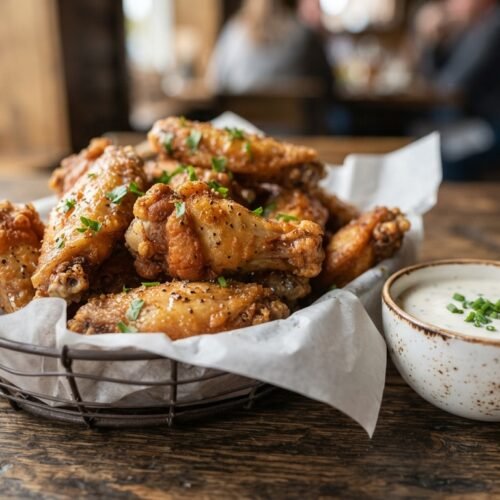
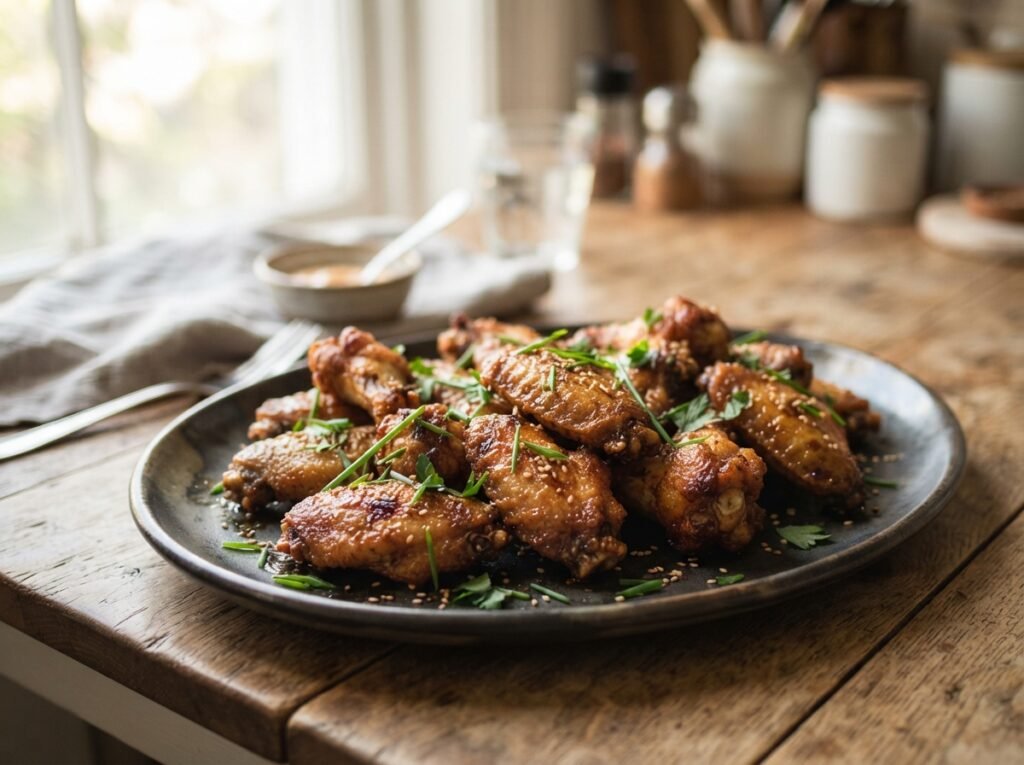
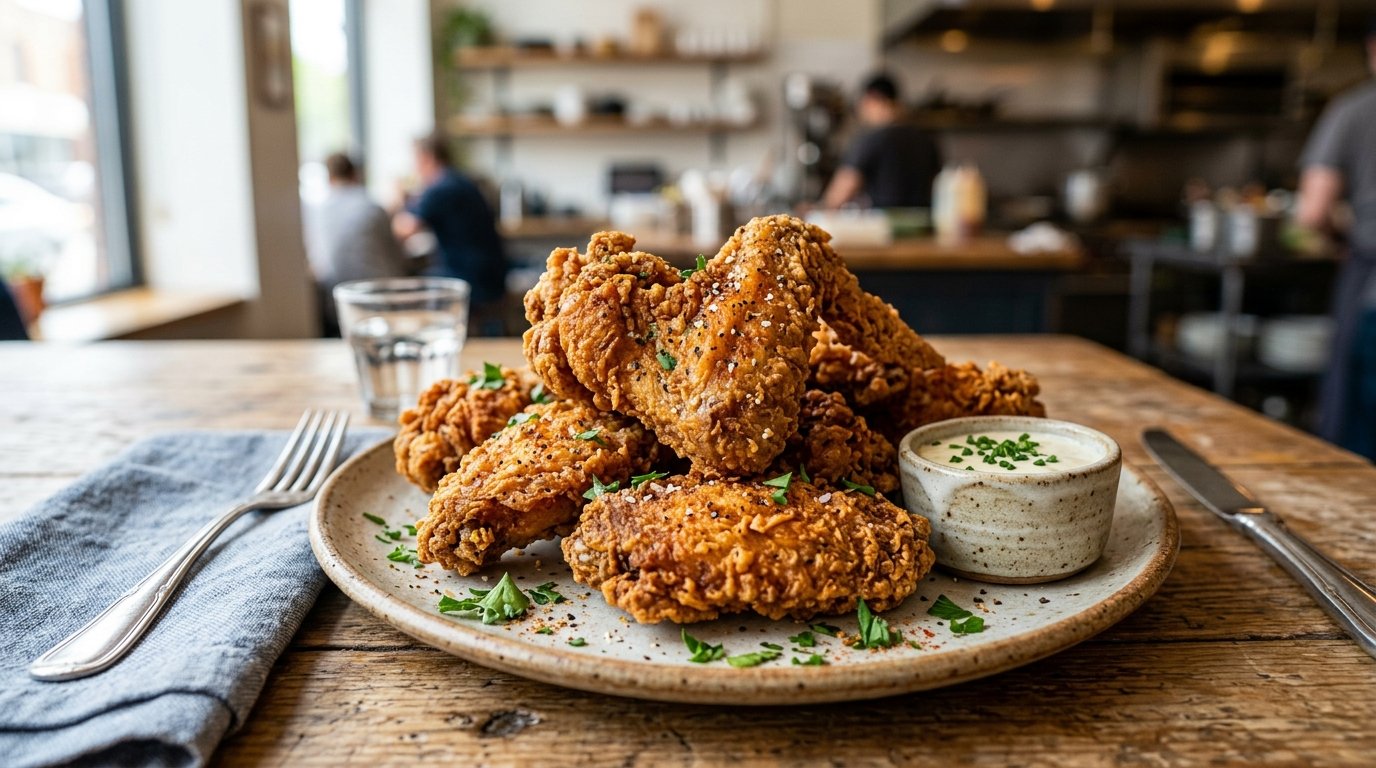
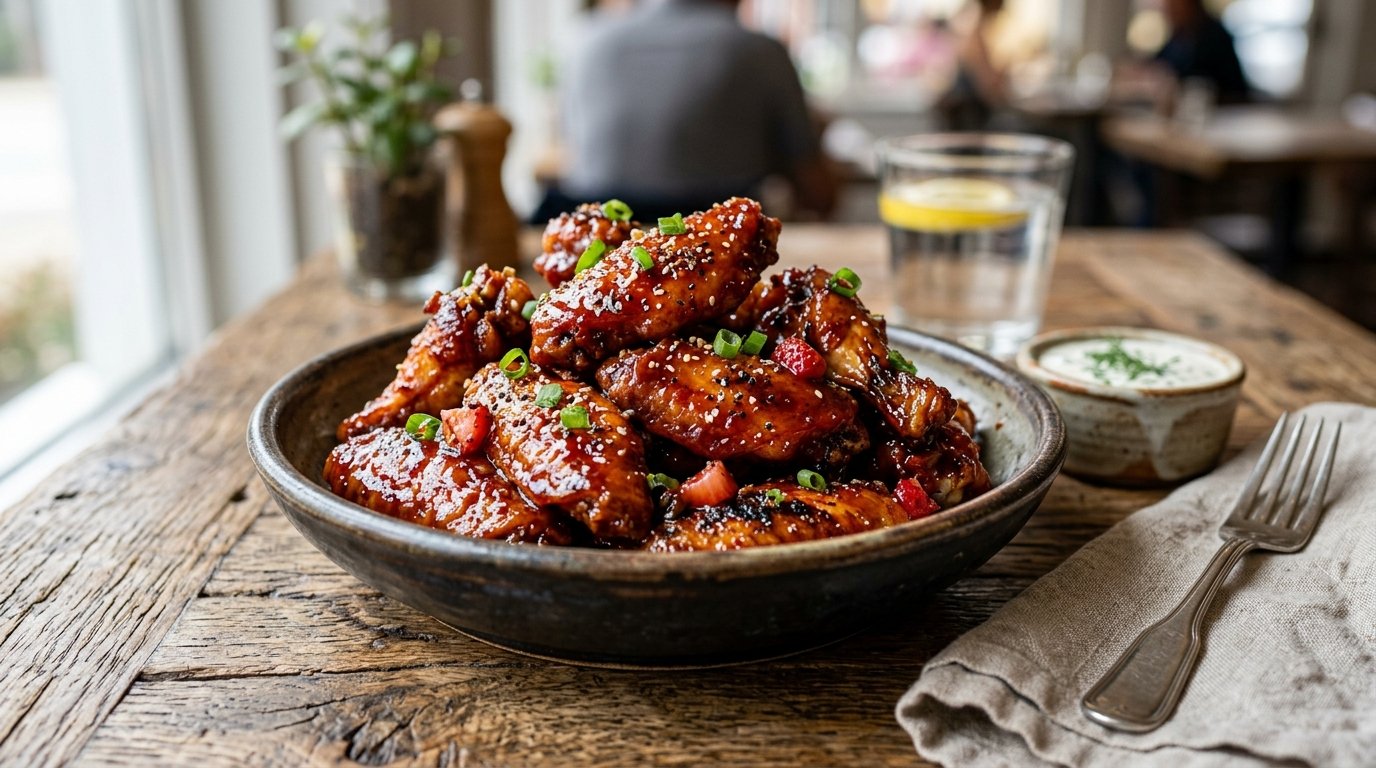
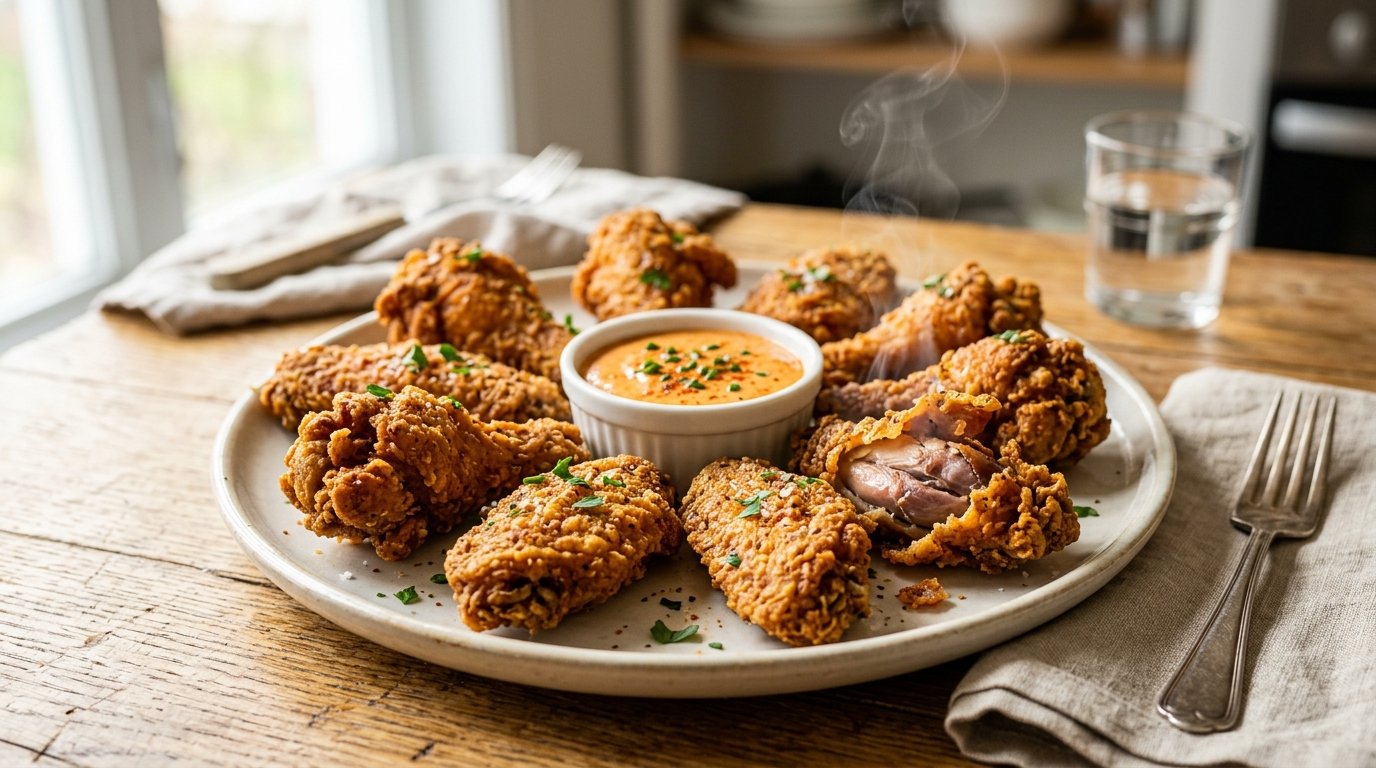
I first tried the bag method on a busy weeknight when I wanted restaurant-level wings without the usual floury mess. Cracking an egg straight into a bag of raw wings felt odd at first, yet the sticky coating that formed after a hard shake delivered the crispiest crust I had ever made at home. This technique turns ordinary chicken wings into golden, craggy bites that stay crunchy even after dipping. Once you taste the difference, regular dredging feels outdated.
This method delivers maximum crunch with almost zero cleanup required afterward.
One bag handles coating without extra bowls or mess.
Egg and starch create an ultra-craggy fried crust.
Ready from bag to plate in under thirty minutes total.
Perfect for game day, parties, or casual weeknight dinners.
Ingredients
Gather these simple pantry staples and fresh wings for the easiest crispy coating.
1.5 lbs chicken wings
1 large egg
3 tbsp cornstarch
1 tsp paprika
½ tsp black pepper
1 tsp salt
Neutral oil for frying
Creamy dipping sauce
If you lack cornstarch, potato starch or a light flour blend works well and still yields good crunch. Smoked paprika can replace regular for deeper flavor, and any mild oil with a high smoke point keeps the frying clean and consistent.
Follow these eight clear steps to achieve golden, shatteringly crisp wings every single time.
Step 1: Prep the wings
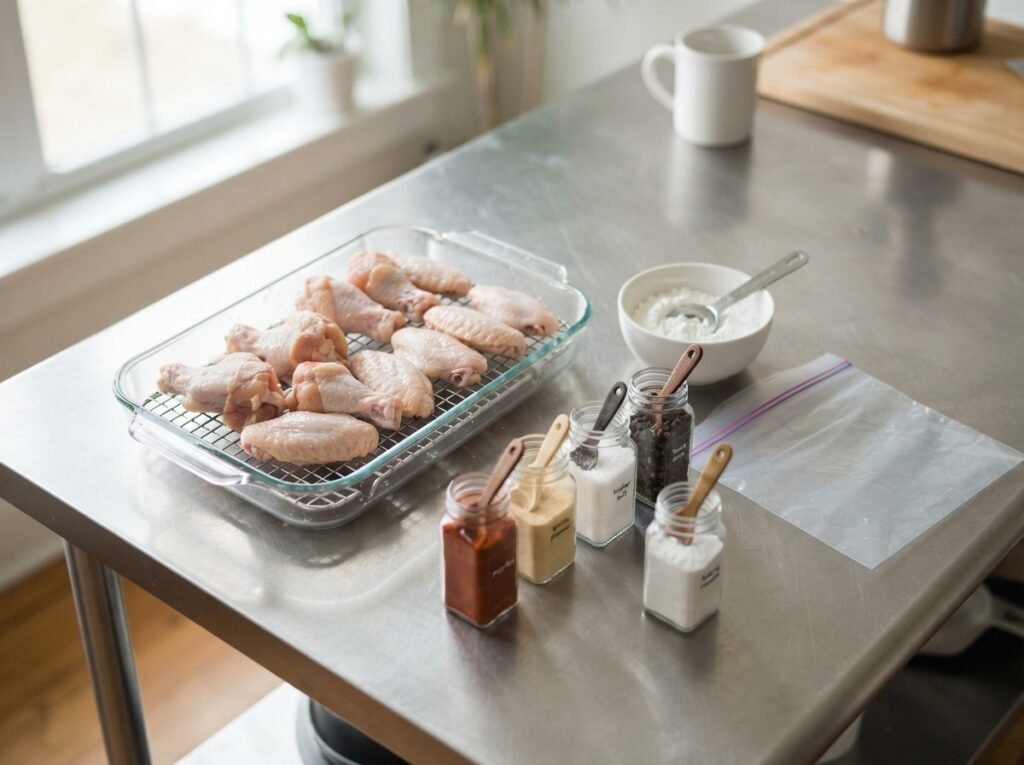
Pat the chicken wings completely dry with paper towels. Place them in a large resealable plastic bag so they sit in a single layer ready for coating.
Step 2: Add the egg
Crack the egg directly into the bag over the wings. Let the yolk drop into the center so it mixes easily during the shake.
Step 3: Season the bag
Sprinkle the cornstarch, paprika, black pepper, and salt over the wings and egg. Keep the bag open wide to catch every bit of powder.
Step 4: Seal and shake
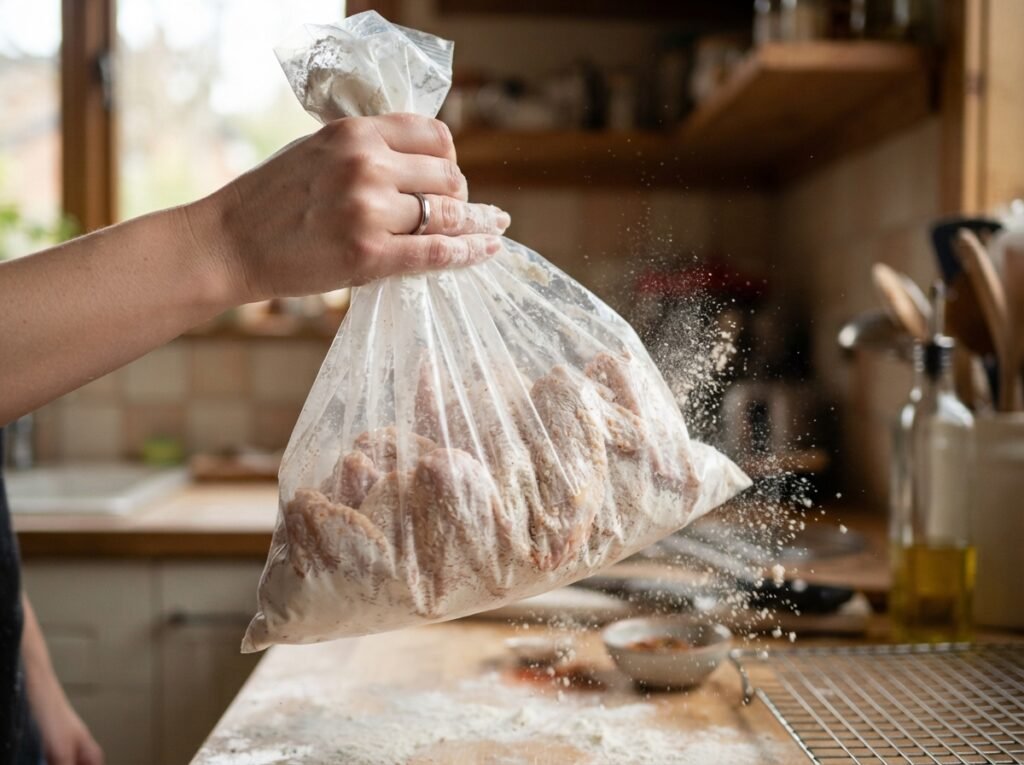
Twist the top of the bag closed, trapping a little air inside. Shake vigorously for twenty to thirty seconds until every wing is evenly coated.
Step 5: Heat the oil
Pour neutral oil into a deep skillet until it reaches about one inch deep. Heat over medium-high until it reaches 350 to 375 degrees Fahrenheit.
Step 6: Fry the first batch
Carefully lower several coated wings into the hot oil. Fry without crowding so the temperature stays steady and the crust sets quickly.
Step 7: Cook until golden
Turn the wings once after four to five minutes. Continue frying until the coating turns deep golden and the edges look craggy and crisp.
Step 8: Drain and serve
Crispy Bag-Shaken Chicken Wings
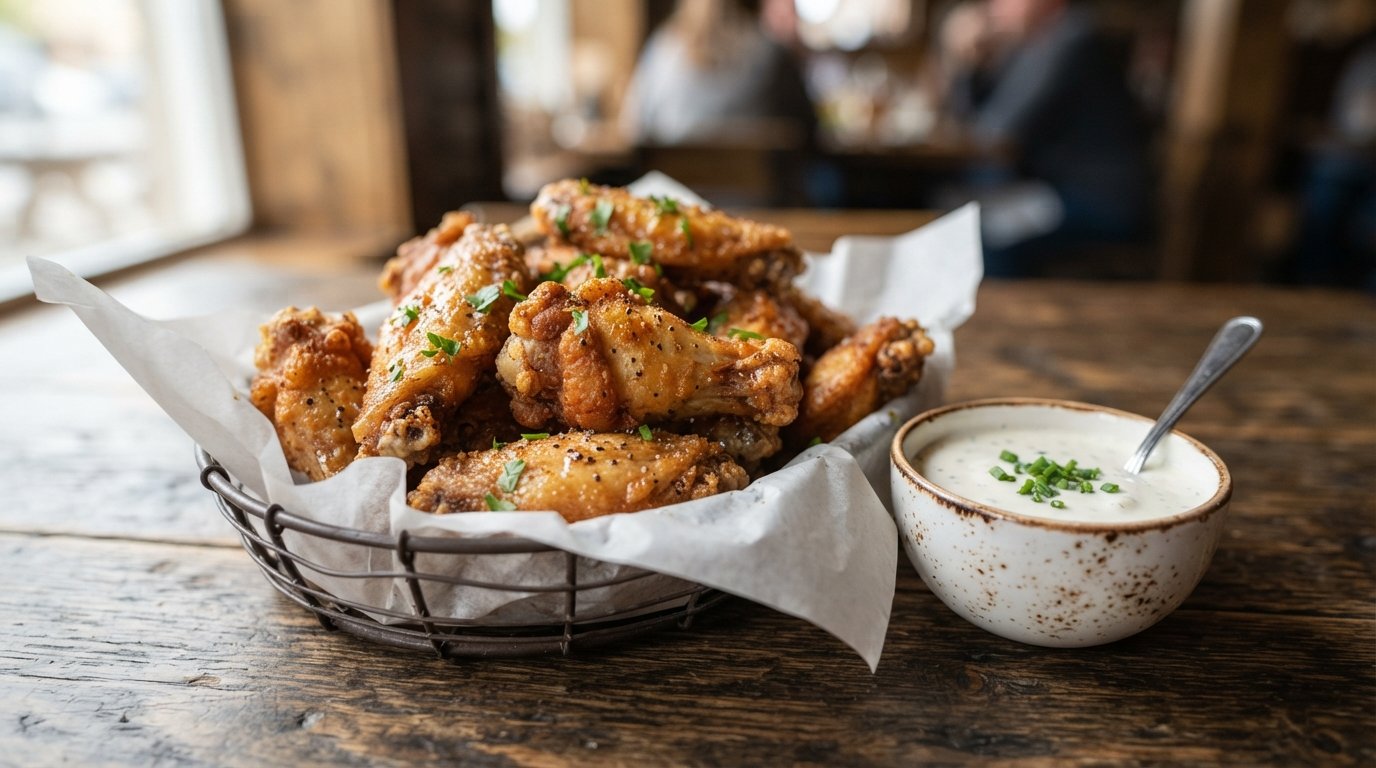
These crispy bag-shaken chicken wings use a simple egg-and-starch coating shaken in a plastic bag for maximum crunch with almost no mess. Fried until golden and served with creamy dipping sauce, they deliver
Pat the chicken wings dry with paper towels and place them in a large resealable plastic bag.
Crack the egg directly into the bag over the wings.
Add the cornstarch, paprika, black pepper, and salt to the bag.
Seal the bag, trapping a little air, and shake hard for 20–30 seconds until evenly coated.
Heat about 1 inch of neutral oil in a deep skillet to 350–375°F.
Carefully lower the coated wings into the hot oil in batches, without overcrowding.
Fry for 8–12 minutes total, turning once, until deep golden and crispy.
Remove with tongs, drain on a wire rack, and serve hot with creamy dipping sauce.
Tip: Keep the oil temperature steady by frying in smaller batches if needed.
Notes
Store leftover wings in an airtight container in the refrigerator for up to 3 days. Reheat in a 375°F oven or air fryer for 5–8 minutes to restore crispness. Potato starch can replace cornstarch for a similar crunchy result. Double the seasoning amounts if cooking a larger batch of wings.
Remove the wings with tongs and drain on a wire rack. Serve immediately around a bowl of creamy dipping sauce while still hot.
Tips & common mistakes
A few small details make the difference between good wings and great ones.
Always dry the wings thoroughly before bagging them.
Do not overcrowd the pan or the oil temperature drops.
Shake the bag hard enough to create a sticky paste coating.
Let excess oil drip off so the crust stays light and crisp.
Recipe variations
Simple swaps keep this bag method exciting for different tastes and diets.
Add cayenne or chili powder for a spicier heat level.
Use boneless thighs for a lighter, easier-to-eat version.
Swap wings for drumsticks and adjust frying time slightly.
Air-fry the coated wings for a lower-oil alternative method.
What to serve with this recipe
Pair these crispy wings with cool and refreshing sides that balance the richness.
Crisp celery sticks and carrot batons for classic contrast.
Here are quick answers to the questions cooks ask most often about this method.
Can I make these wings ahead of time?
Coat the wings and refrigerate them in the bag for up to four hours. Fry just before serving so the crust stays at peak crispness.
What oil works best for frying?
Use a neutral oil with a high smoke point such as canola, vegetable, or peanut. These keep the flavor clean and the temperature steady.
How do I know the oil is hot enough?
Drop a small piece of coating into the oil; it should sizzle immediately. A thermometer reading of 350 to 375 degrees is ideal.
Can I bake instead of fry?
Yes, place coated wings on a rack over a sheet pan and bake at 425 degrees until golden, flipping once for even browning.
Final thoughts
This bag-shaken method has become my go-to for crispy chicken wings because it is fast, reliable, and surprisingly low-mess. The egg and starch create a coating that fries up with real restaurant texture, and the process feels almost like a kitchen hack. Give the recipe a try the next time wings sound good, then let me know how they turned out in the comments. A quick rating also helps other readers find the method.