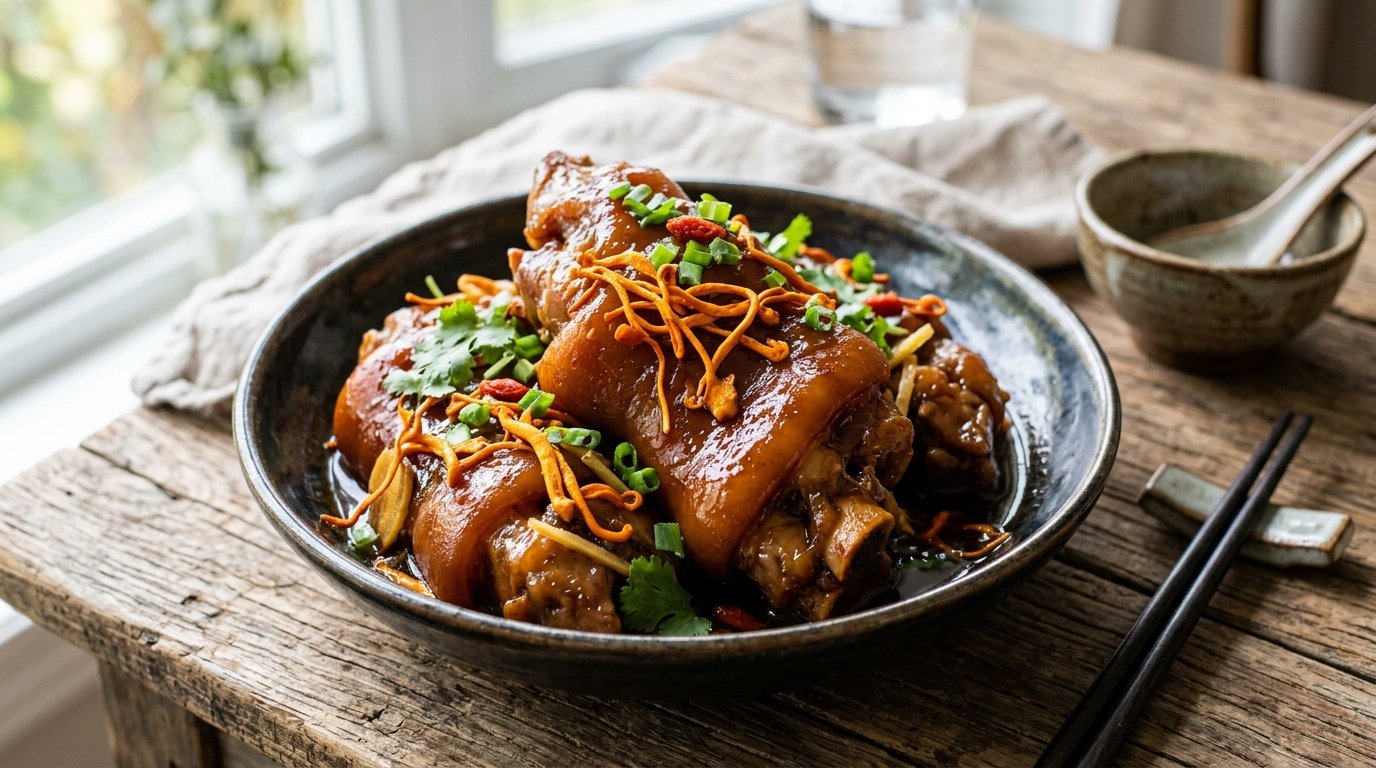
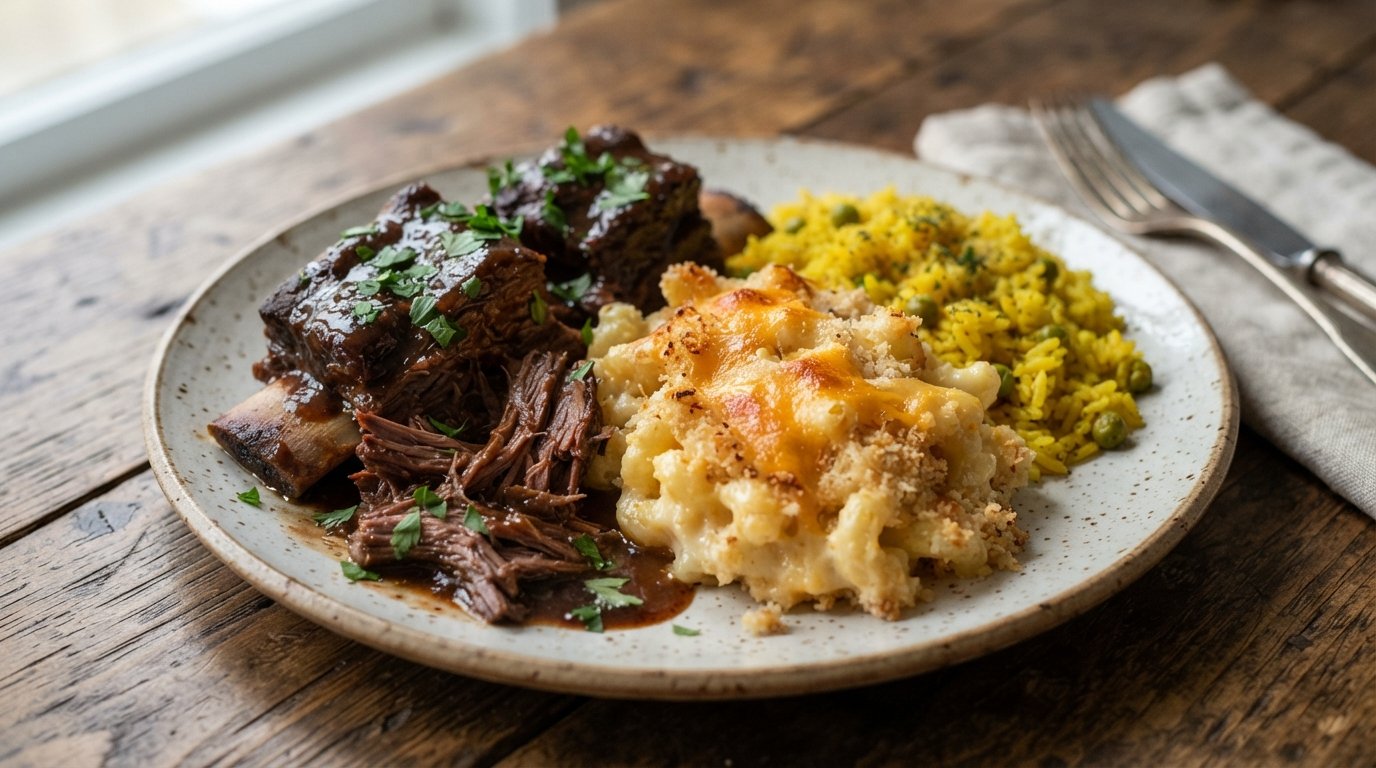
There is a profound comfort in a bowl of slow-cooked meat that melts off the bone, especially when it’s served over a mound of steaming white rice. This recipe for braised pork trotters with cordyceps flower is exactly that kind of soul-warming dish. Often overlooked in Western cooking, pork trotters (pig’s feet) are a delicacy in many Asian cuisines, prized not just for their rich flavor but for their incredible collagen content. When braised low and slow, the tough connective tissues break down into gelatin, creating a sauce that is luxuriously sticky and coats your lips with every bite.
The addition of cordyceps flower (Cordyceps militaris) elevates this dish from simple comfort food to a nourishing tonic. These vibrant orange mushrooms add an earthy, slightly nutty depth to the broth and are traditionally believed to support energy and immunity. Combined with aromatic ginger, garlic, red onion, and bay leaves, the resulting braise is complex, savory, and deeply satisfying. If you have ever been hesitant to try pork trotters, let this be your gateway. The texture is unlike any other cut of meat—tender, gelatinous, and utterly addictive. Let’s explore how to make these braised pork trotters perfectly at home.
Why This Recipe Works
This recipe succeeds because it respects the unique anatomy of the ingredient. Pork trotters are mostly skin, tendon, and bone; they lack the muscle fiber of a roast or steak. Therefore, high-heat dry cooking methods would render them tough and chewy. Instead, we use a two-stage wet cooking process. First, a vigorous boil (blanching) removes impurities and the distinct “porky” odor that can sometimes deter newcomers. Second, a gentle, long simmer in an aromatic broth allows the collagen to hydrolyze into gelatin without tightening the proteins.
The inclusion of cordyceps flower isn’t just for health benefits; it acts as a flavor sponge. Dried cordyceps rehydrate during the braise, absorbing the soy-based savory notes while releasing their own umami compounds. The balance of salty (soy sauce), aromatic (ginger, garlic, onion), and herbal (bay leaf, cordyceps) creates a multi-layered flavor profile that penetrates deep into the meat and skin. Serving it over plain jasmine rice provides the perfect neutral canvas to soak up that glossy, collagen-rich sauce.
Why You’ll Love This Recipe
Beauty Food: Pork trotters are famously known as “beauty food” due to their high natural collagen content, which supports skin elasticity and joint health.
Budget-Friendly Luxury: While the result tastes like a premium restaurant dish, pork trotters are often one of the most affordable cuts of meat at the butcher.
Gut Health Support: The gelatin derived from the bones and connective tissue is excellent for gut lining health and digestion.
Zero Waste Cooking: Utilizing nose-to-tail ingredients is sustainable and honors the animal by using parts that are often discarded.
Meal Prep Champion: Like many braises, this dish actually tastes better the next day as the flavors continue to meld and the texture settles.
Ingredient Notes
Pork Trotters (Pig’s Feet)
Purpose: The star protein. Provides structure, gelatin, and rich mouthfeel.
Substitutions: Pork hocks (knuckles) can be used if trotters are unavailable; they have similar connective tissue but more bone. Beef shanks work for a different flavor profile but require longer cooking.
Buying Tips: Ask your butcher to chop them into manageable 2-3 inch pieces. Ensure they are fresh, pinkish-white, and smell clean (not sour). Some markets sell them pre-cleaned and singed; if buying whole, you may need to ask the butcher to split them.
Storage Tips: Freeze immediately if not using within 2 days. Thaw in the fridge overnight before blanching.
Cordyceps Flower (Cordyceps militaris)
Purpose: Adds earthy umami, vibrant color, and nutritional value. Distinct from wild Cordyceps sinensis, these are cultivated and affordable.
Substitutions: Dried shiitake mushrooms or dried lily flowers can substitute for texture and umami, though the flavor will differ. If unavailable, simply omit and increase ginger/garlic slightly.
Buying Tips: Look for bright orange/yellow strands. Avoid dull brown ones which may be old. Available at Asian grocers or online health stores.
Storage Tips: Store dried cordyceps in an airtight container in a cool, dark place. They last indefinitely but are best used within a year for peak potency.
Aromatics (Ginger, Garlic, Red Onion, Bay Leaves)
Purpose: Builds the flavor foundation and neutralizes any gamey odors from the trotters.
Substitutions: Shallots can replace red onion. Green cardamom pods or star anise can complement the bay leaves for a warmer spice note.
Buying Tips: Use fresh ginger (firm, smooth skin) rather than powdered for the best aroma. Smash garlic cloves rather than mincing them so they infuse without burning.
Storage Tips: Keep ginger in the crisper drawer or freeze peeled chunks. Garlic keeps well in a cool, ventilated spot.
Soy Sauce & Seasoning Liquid
Purpose: Provides salinity, color, and savory depth (umami).
Substitutions: Tamari for gluten-free. Coconut aminos for a lower-sodium, sweeter alternative. Dark soy sauce can be added (1 tsp) specifically for deeper color if desired.
Buying Tips: Use a naturally brewed soy sauce for cleaner flavor. Avoid “chemically brewed” varieties which can taste metallic.
Storage Tips: Refrigerate after opening to preserve freshness and prevent mold.
Kitchen Equipment
Large Stockpot or Dutch Oven: Essential for blanching and braising. Must be large enough to hold trotters submerged in liquid. A heavy-bottomed pot distributes heat evenly.
Wok or Deep Skillet: Used for the initial searing/blanching step shown in the video, though a pot works fine too.
Tongs: For safely handling hot trotters during blanching and transferring.
Fine Mesh Strainer: Useful if you want to strain the braising liquid into a smooth sauce (optional).
Rice Cooker or Steamer: For preparing the fluffy white rice base.
Sharp Knife & Cutting Board: For prepping aromatics.
Ladle: For serving the glossy sauce over rice.
Preparation Information
Prep Time: 20 minutes
Cook Time: 2 hours 30 minutes
Total Time: 2 hours 50 minutes
Servings: 4
Step-by-Step Instructions
H3: Blanch the Pork Trotters
Place the chopped pork trotters in a large pot or wok. Cover completely with cold water. Bring to a rolling boil over high heat. As the water heats, grayish-brown foam (scum) will rise to the surface; this consists of coagulated proteins and impurities. Boil vigorously for 5-8 minutes. Drain the trotters and rinse them thoroughly under cold running water. Scrub each piece gently to remove any stubborn residue. Why this matters: This step is non-negotiable for pork trotters. It ensures a clean, pure flavor and prevents the final braise from becoming cloudy or funky-smelling. Visual Cue: The water should turn murky gray, and the meat will look pale and firm.
H3: Sear and Assemble Aromatics
Return the cleaned trotters to the clean pot (or a fresh wok). Add quartered red onions, smashed garlic cloves, sliced ginger rounds, and dried bay leaves. Pour in enough fresh water to just cover the ingredients. Why this matters: Adding aromatics now allows them to infuse directly into the meat as it begins to heat up again. The residual heat helps release volatile oils from the ginger and garlic. Aroma Cue: You should immediately smell the pungent, spicy scent of raw ginger and garlic hitting the warm pot.
H3: Add Cordyceps and Seasoning
Scatter the dried cordyceps flowers over the top of the trotters and aromatics. They will float initially but will sink as they hydrate. Pour in the soy sauce (approx. ½ cup for this quantity, adjust to taste). Stir gently to combine. Bring the liquid back to a boil, then immediately reduce the heat to the lowest possible setting. Cover the pot with a tight-fitting lid. Why this matters: Cordyceps need time to rehydrate and release flavor. Starting with boiling water jumpstarts this process. Lowering the heat instantly prevents the meat from toughening.
H3: The Low and Slow Braise
Simmer covered for 2 to 2.5 hours. Check occasionally to ensure there is still enough liquid; add small amounts of hot water if it reduces too much (never cold water, as it shocks the meat). The trotters are done when the skin is translucent and gelatinous, and the meat pulls away easily from the bone with a fork. Texture Cue: The sauce should thicken noticeably due to released collagen. It should coat the back of a spoon. Color Cue: The trotters will transform from pale pink to a rich, glossy amber-brown. The cordyceps will soften and darken slightly.
H3: Reduce and Serve
If the sauce is too thin after braising, remove the lid and simmer uncovered on medium-high heat for 10-15 minutes to reduce and glaze. Taste and adjust seasoning with salt or more soy sauce if needed. To serve, scoop a generous portion of steaming jasmine rice into a bowl. Place 2-3 pieces of braised trotter on top. Ladle the thick, glossy sauce and some cordyceps/aromatics over the rice. Garnish with fresh scallions or cilantro if desired. Why this matters: Reducing concentrates the flavor and creates that signature sticky texture that clings to the rice.
Expert Tips
The Cold Water Start: Always start blanching in cold water. Placing trotters directly into boiling water seals the surface proteins instantly, trapping impurities inside. Cold water allows impurities to dissolve and rise out as the temperature gradually increases.
Don’t Rush the Simmer: A rolling boil during the braising phase will emulsify fat into the sauce, making it greasy, and will shred the meat fibers, making them stringy. A bare simmer (just a few bubbles breaking the surface) yields silky, intact gelatin.
Salt Timing: While soy sauce is added early, hold off on adding extra salt until the end. Reduction intensifies saltiness significantly. What tastes mild at hour 1 might be perfectly seasoned at hour 2.5.
Skim the Fat: If you prefer a lighter sauce, skim excess oil from the surface halfway through cooking. However, leaving some fat adds richness and carries flavor.
Reuse the Master Stock: Don’t throw away the leftover braising liquid! Strain it, freeze it, and use it as a base for future noodle soups or stews. It’s essentially a concentrated pork bone broth.
Common Mistakes
Skipping the Blanch: Result: Cloudy, smelly sauce. Fix: There is no fix once cooked. Always blanch first.
Overcooking Until Disintegration: Result: Mushy skin that falls apart completely. Fix: Check tenderness at the 2-hour mark. You want “jiggly,” not “liquid.”
Using Too Much Water: Result: Diluted flavor, weak gelatin texture. Fix: Use just enough water to cover. The trotters release their own moisture.
Adding Cold Water During Braise: Result: Meat tightens up and becomes tough. Fix: Only add boiling water if replenishing liquid.
Ignoring the Cordyceps Texture: Result: Chewy, unpleasant mushroom bits. Fix: Ensure they are fully submerged and cooked for the full duration. They should be soft, not rubbery.
Recipe Variations
Spicy Sichuan Style: Add 2 tbsp doubanjiang (fermented broad bean paste) and a handful of dried chili peppers during the braise. Finish with Sichuan peppercorns for numbing heat.
Sweet & Savory (Hong Shao Style): Increase sugar (rock sugar preferred) to ¼ cup and add dark soy sauce. This creates the classic red-braised glossy finish.
Herbal Tonic Version: Add goji berries, red dates (jujubes), and angelica root (dang gui) alongside the cordyceps for a traditional medicinal soup variation.
Pressure Cooker Method: Reduce cook time to 45 minutes at high pressure. Natural release for 15 minutes. Note: Sauce won’t reduce as much, so thicken on sauté mode afterward.
Vegetarian Alternative: Use king oyster mushroom stems cut into chunks to mimic the texture of trotters. Braise in vegetable broth with the same aromatics and cordyceps.
Vinegar-Pickled Style: After braising, cool the trotters and submerge in a mixture of black vinegar, sugar, and ginger for 24 hours. Serve cold as an appetizer.
Crispy Skin Variation: After braising, air-fry or broil the trotters for 5-7 minutes to crisp the skin before serving. Contrast textures are amazing.
Noodle Soup Base: Use the braising liquid as ramen or pho broth. Add noodles, bok choy, and a soft-boiled egg.
What to Serve With This Recipe
Steamed Greens: Blanched choy sum, gai lan, or broccoli with oyster sauce cuts through the richness.
Pickled Vegetables: Quick-pickled daikon radish or cucumber provides acidic crunch to cleanse the palate.
Fermented Bean Curd: A small side of fermented tofu adds a funky, salty contrast.
Tea: Pu-erh or Oolong tea aids digestion of fatty meats.
Dessert: Light fruit like pear or lychee. Avoid heavy creams after such a rich meal.
Make Ahead Tips
Flavor Development: Make this 1-2 days ahead. The gelatin sets when cold, making reheating easier, and the flavors deepen significantly overnight.
Portioning: Divide into individual containers with rice for easy grab-and-go lunches.
Freezing: Freeze trotters and sauce separately from rice. Rice can get mushy when frozen/thawed.
Meal Prep Tips
Batch Blanching: Blanch a large batch of trotters on Sunday. Freeze them flat in bags. Ready to braise anytime.
Aromatic Packs: Pre-chop ginger, garlic, and onions. Store in a jar in the fridge for up to 5 days.
Rice Prep: Cook a large batch of rice. Portion and freeze. Reheat with a sprinkle of water to restore fluffiness.
Storage Instructions
Refrigerator: Store in airtight containers for up to 4-5 days. The sauce will gel when cold; this is normal and desirable.
Freezer: Freeze for up to 3 months. Leave headspace for expansion. Thaw in fridge overnight.
Safety: Cool to room temperature within 2 hours before refrigerating. Do not leave out overnight.
Reheating Instructions
Stovetop (Best): Place trotters and sauce in a pot. Add a splash of water. Heat gently over medium-low, stirring occasionally, until gelatin melts and sauce is fluid again (~10 mins).
Microwave: Cover loosely. Heat in 1-minute intervals, stirring between each, to prevent exploding sauce spots.
Steam: Place in a heatproof bowl over boiling water. Steam for 15-20 minutes. Preserves texture best.
Oven: Cover tightly with foil. Bake at 300°F for 20-30 minutes. Good for larger batches.
Nutritional Information
Approximate values per serving:
Calories: 480 kcal
Protein: 32g
Carbohydrates: 18g (mostly from rice/sauce)
Fat: 28g
Fiber: 2g
Sugar: 4g
Sodium: 950mg
Collagen: High (exact mg varies)
Note: Values depend on specific trotter size and soy sauce brand. Sodium can be reduced by using low-sodium soy sauce.
Troubleshooting Guide
Sauce Too Salty: Add unsalted stock or water and a pinch of sugar. Serve with extra plain rice to balance.
Meat Still Tough: Undercooked. Continue simmering. Check every 30 mins. Ensure heat is truly low.
Sauce Not Gelatinous: Didn’t cook long enough or too much water. Reduce uncovered to concentrate. Next time, use less water.
Bitter Taste: Burnt aromatics or old cordyceps. Remove burnt bits immediately. Toast cordyceps lightly before use if they smell musty.
Greasy Mouthfeel: Too much rendered fat. Skim surface. Chill and remove solidified fat layer before reheating.
Frequently Asked Questions
Q: Where can I buy pork trotters? A: Most Asian grocery stores carry them fresh or frozen. Some mainstream butchers can order them upon request. Call ahead to confirm availability.
Q: Are cordyceps flowers safe to eat? A: Yes, Cordyceps militaris is a culinary mushroom widely consumed in Asia. It is distinct from parasitic wild cordyceps. Always source from reputable suppliers.
Q: Can I use fresh cordyceps instead of dried? A: Yes, but use 3x the amount. Add them in the last 30 minutes of cooking as they cook faster. Dried are preferred for deeper flavor concentration.
Q: Why is my sauce watery even after 2 hours? A: Likely too much water was added initially, or the lid wasn’t tight enough allowing steam escape. Reduce uncovered at the end. Collagen needs time and concentration to gel.
Q: Is this recipe gluten-free? A: Traditional soy sauce contains wheat. Use tamari or certified GF soy sauce to make it gluten-free. Check cordyceps packaging for cross-contamination warnings.
Q: Can I make this in a slow cooker? A: Absolutely. Blanch first. Transfer to slow cooker with aromatics/liquid. Cook on LOW for 6-8 hours or HIGH for 3-4 hours. Finish by reducing sauce on stovetop.
Q: How do I clean pork trotters properly? A: After blanching, inspect closely. Use a knife to scrape away any remaining hair follicles or dark spots. Rinse under strong cold water. Some cooks singe skin with a torch first, but blanching usually suffices.
Q: What wine pairs with braised pork trotters? A: An off-dry Riesling or Gewürztraminer complements the sweetness and fat. For reds, a fruity Pinot Noir or Gamay works well. Avoid heavy tannins which clash with gelatin.
Final Thoughts
Mastering braised pork trotters with cordyceps flower is a rewarding journey into the heart of comforting, nourishing cuisine. It challenges us to appreciate textures and ingredients beyond the standard steak or chicken breast. The patience required for the long braid is repaid tenfold in the first bite—that moment when the skin yields effortlessly and the rich, savory sauce mingles with fluffy rice. Whether you’re seeking collagen benefits, exploring nose-to-tail cooking, or simply craving something deeply satisfying, this recipe delivers