Quick Recipe Summary
| Detail | Information |
|---|---|
| Prep Time | 20 minutes |
| Cook Time | 15 minutes |
| Total Time | 35 minutes |
| Servings | 4 (approx. 16 bites) |
| Cuisine | French / American Fusion |
| Course | Appetizer, Brunch, Snack |
| Difficulty | Easy / Intermediate |
| Calories | ~280 per serving (4 bites) |
Table of Contents
| Section | Heading Level |
|---|---|
| Introduction | H2 |
| Why This Recipe Works | H2 |
| Why You’ll Love This Recipe | H2 |
| Ingredient Notes | H2 |
| Kitchen Equipment | H2 |
| Preparation Information | H2 |
| Step-by-Step Instructions | H2 |
| Expert Tips | H2 |
| Common Mistakes | H2 |
| Recipe Variations | H2 |
| What to Serve With This Recipe | H2 |
| Make Ahead & Meal Prep Tips | H2 |
| Storage & Reheating Instructions | H2 |
| Nutritional Information | H2 |
| Troubleshooting Guide | H2 |
| Frequently Asked Questions | H2 |
| Final Thoughts | H2 |
Introduction
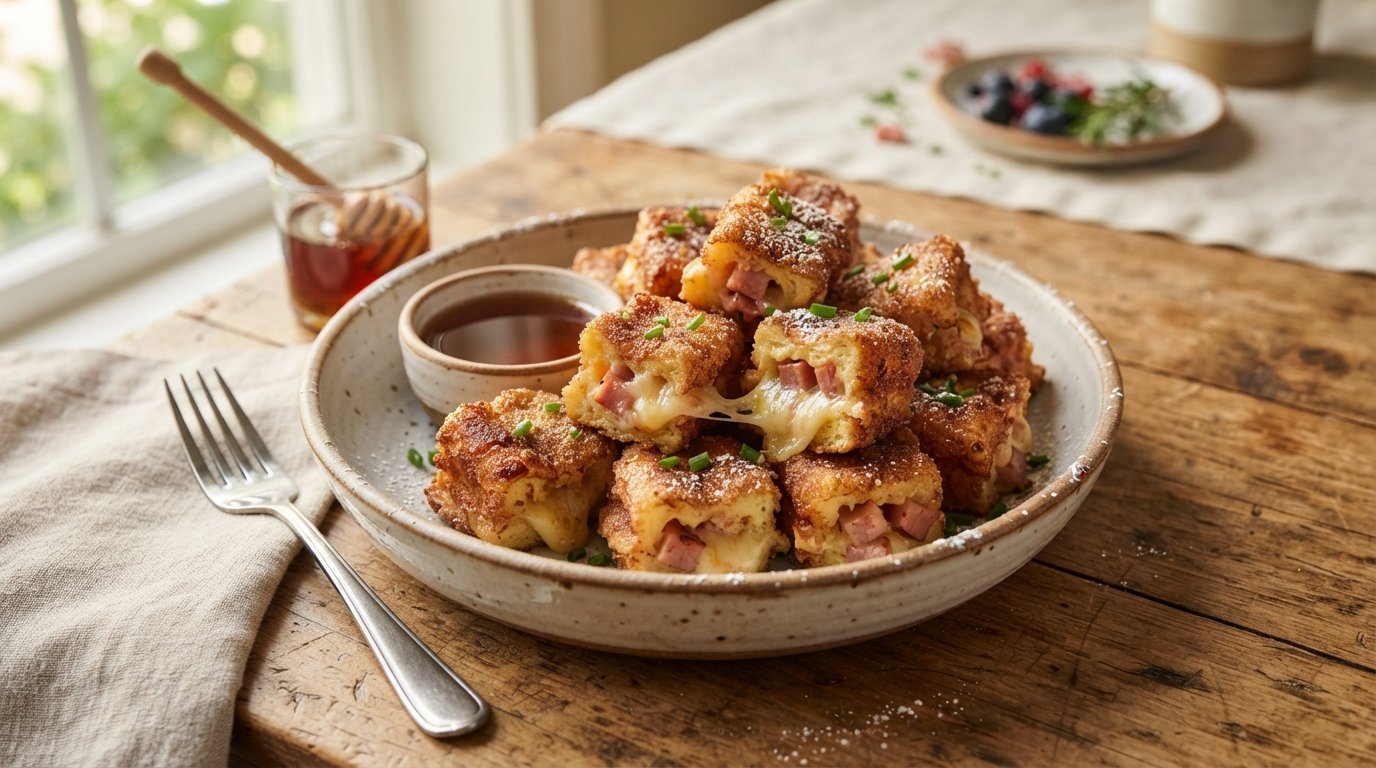
If you are looking for an appetizer that perfectly bridges the gap between savory comfort food and elegant brunch fare, these crispy French toast ham and cheese bites are exactly what your table needs. Imagine the nostalgic satisfaction of a classic grilled cheese sandwich, transformed into bite-sized, golden-brown cubes that shatter when you bite into them, revealing a molten core of melted cheese and savory ham. Dipped into a rich, velvety Mornay sauce, they offer a texture contrast that is simply irresistible.
This recipe takes the humble sandwich and elevates it through technique. By stacking multiple layers of bread, ham, and cheese, we create a dense, substantial cube that holds its shape during frying. The egg wash creates a custardy barrier that prevents sogginess while promoting that signature deep-golden crust. Whether you are hosting a holiday party, planning a sophisticated game-day spread, or simply treating yourself to a decadent weekend breakfast, this dish delivers restaurant-quality results in your own kitchen. Let’s dive into how to make these irresistible bites from scratch.
Why This Recipe Works
The success of this recipe lies in the structural integrity of the sandwich stack and the chemistry of the fry. Unlike a standard sandwich where ingredients might slide apart, compressing three slices of bread with fillings creates a unified “brick” that can be cut cleanly. When dipped in the egg mixture, the porous bread absorbs just enough liquid to cook through without becoming mushy, thanks to the fat in the yolk and the protein coagulation during frying.
Furthermore, the Mornay sauce isn’t just a condiment; it’s a flavor amplifier. A simple béchamel base enriched with cheese mirrors the interior of the bite, creating a harmonious flavor profile. The sauce adds moisture and acidity (from the mustard or nutmeg often used) that cuts through the richness of the fried bread and fatty ham, balancing every bite perfectly.
Why You’ll Love This Recipe
- Texture Perfection: Achieves a shatteringly crisp exterior with a soft, gooey, steam-filled interior.
- Crowd-Pleasing Appeal: The combination of ham, cheese, and creamy sauce is universally loved by adults and children alike.
- Versatile Serving: Works equally well as a passed hors d’oeuvre, a brunch main, or a late-night snack.
- Customizable Fillings: While ham and cheese is classic, the base technique works with turkey, bacon, spinach, or even sweet fillings.
- Make-Ahead Friendly: The sandwiches can be assembled and frozen before the final fry, making party prep stress-free.
- Elegant Presentation: The uniform cubes and smooth dipping sauce look professional and intentional on any platter.
Ingredient Notes
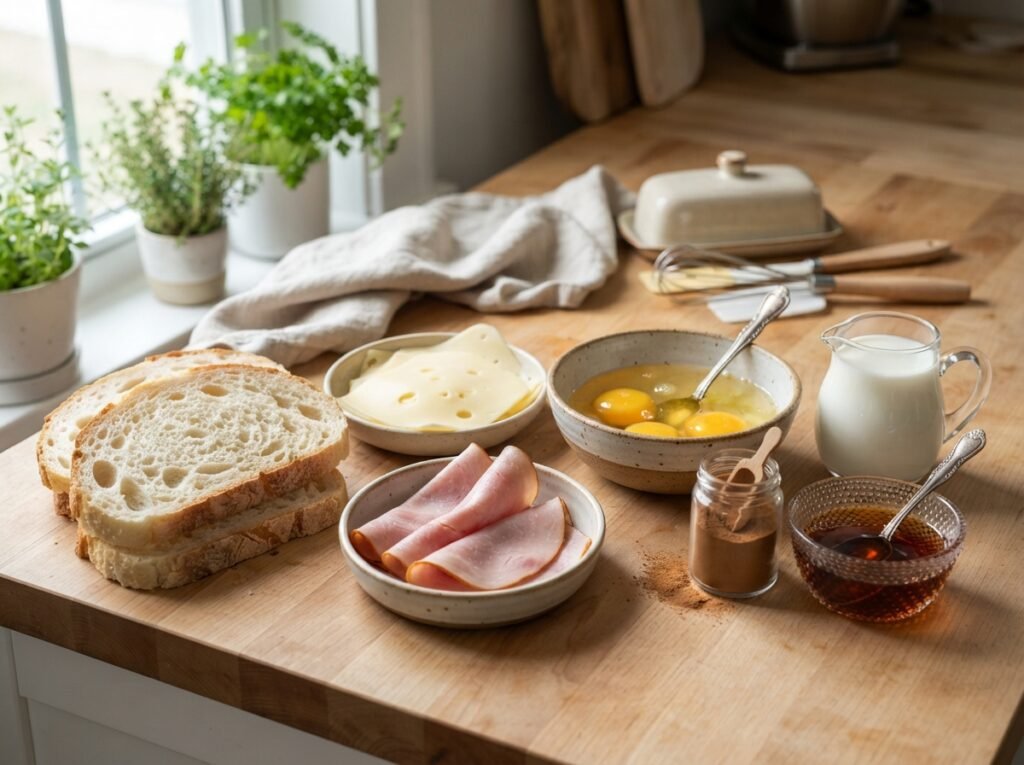
Bread
- Purpose: Provides structure and the canvas for the French toast effect.
- Best Choice: Use sturdy, thick-sliced white bread, brioche, or Texas toast. Avoid thin, airy sandwich bread as it will collapse when stacked and fried.
- Substitutions: Sourdough works beautifully for a tangier bite. Gluten-free bread can be used but may require a slightly lower frying temperature to prevent burning before the center heats through.
- Buying Tip: Look for bread labeled “sandwich loaf” with a tight crumb structure rather than artisan loaves with large holes.
Ham
- Purpose: Adds saltiness, umami, and protein.
- Best Choice: Deli-style honey ham or Black Forest ham. These are thin enough to layer easily but flavorful enough to stand up to the bread.
- Substitutions: Prosciutto (for a saltier, cured note), turkey breast, or crispy bacon bits.
- Tip: Pat the ham dry with a paper towel if it seems wet; excess moisture can make the bread soggy before frying.
Cheese
- Purpose: The binding agent and primary source of “goo.”
- Best Choice: Swiss, Gruyère, or mild Cheddar. Swiss melts exceptionally well and has a nutty flavor that pairs classically with ham.
- Substitutions: Mozzarella for maximum stretch, Pepper Jack for heat, or Gouda for smokiness.
- Buying Tip: Buy block cheese and slice it yourself. Pre-sliced cheese often contains anti-caking agents that can inhibit melting and create a waxy texture.
Egg Wash
- Purpose: Creates the golden crust and custard-like interior.
- Ratio: 2 large eggs to ½ cup whole milk or heavy cream. Heavy cream yields a richer, more tender interior.
- Seasoning: Always add a pinch of salt and white pepper to the wash. This seasons the bread itself, not just the filling.
Mornay Sauce Ingredients
- Butter & Flour: Equal parts (usually 2 tbsp each) to create the roux thickener. Unsalted butter allows you to control sodium.
- Milk: Whole milk is essential for a silky sauce. Skim milk will result in a thin, watery consistency.
- Cheese: Finely grated Parmesan or sharp cheddar stirred in at the end.
- Nutmeg: A tiny pinch is traditional in Mornay sauce; it enhances the dairy flavor without tasting like spice.
Kitchen Equipment
- Sharp Chef’s Knife: Essential for trimming crusts and cutting clean, uniform cubes. A serrated knife can also work well for slicing through the stacked sandwich without squishing it.
- Cutting Board: Large, stable surface for assembly and cutting.
- Shallow Bowls (2): One for the egg wash, one for the finished sauce. Wide rims make dipping easier.
- Non-Stick Skillet or Cast Iron Pan: 10-12 inches wide. Non-stick is forgiving for beginners; cast iron retains heat better for consistent browning.
- Tongs: For flipping the bites safely without breaking them.
- Small Saucepan: For making the Mornay sauce.
- Whisk: Crucial for a lump-free sauce.
- Wire Rack: For draining fried bites. Paper towels can trap steam and soften the crust; a rack keeps them crisp.
- Spatula: Heat-resistant silicone or wood for stirring the sauce.
Preparation Information
- Prep Time: 20 minutes
- Cook Time: 15 minutes
- Total Time: 35 minutes
- Servings: 4 (makes approx. 16 bites)
Step-by-Step Instructions
1. Assemble the Sandwich Stack
Lay out your bread slices. If using very thick bread, you may want to gently press down on each slice with your palm to compact the crumb slightly—this helps the layers adhere. Place a slice of ham on the first piece of bread, followed by a slice of cheese. Top with a second slice of bread, then repeat the ham and cheese layer. Finish with the third slice of bread. Press down firmly but gently on the entire stack. This compression is vital; it eliminates air pockets that could cause the bite to fall apart in the pan.
2. Trim and Cube
Using your sharp knife, trim off all four crusts from the stacked sandwich. Save the crusts for croutons or breadcrumbs later—they are too tough for these delicate bites. Cut the crustless stack in half horizontally, then in half vertically, creating four equal squares. If your bread was particularly large, you can cut each square in half again diagonally for triangles, though squares are traditional and easier to dip.
3. Prepare the Egg Wash
In a shallow bowl, whisk together the eggs, milk (or cream), salt, and pepper until completely uniform. No streaks of egg white should remain. The mixture should be pale yellow and slightly frothy. Let it sit for 5 minutes; this allows the proteins to relax, resulting in a smoother coating.
4. Dip the Bites
Heat your skillet over medium heat and add enough oil or butter to coat the bottom generously (about 2-3 tablespoons). While the pan heats, dip each sandwich cube into the egg wash. Submerge it fully, turning it to coat all six sides. Hold it over the bowl for a second to let excess drip off—you want a thin, even film, not a gloopy batter. Too much egg wash will burn before the bread cooks; too little will leave dry spots.

5. Pan-Fry to Golden Perfection
Place the coated cubes in the hot skillet, leaving space between them. Do not crowd the pan; overcrowding drops the temperature and leads to greasy, pale bites. Fry for 2-3 minutes per side, including the edges. Use tongs to hold the cubes on their sides briefly to ensure the edges seal and brown. The goal is a deep, even golden-brown color on all surfaces. The cheese inside should be visibly melting through the sides. Transfer to a wire rack immediately.
6. Make the Mornay Sauce
While the bites fry (or just after), melt butter in a small saucepan over medium-low heat. Add flour and whisk constantly for 1-2 minutes to cook out the raw flour taste—the roux should bubble gently but not brown. Gradually pour in the milk, whisking vigorously to prevent lumps. Continue cooking and whisking until the sauce thickens enough to coat the back of a spoon (about 3-5 minutes). Remove from heat. Stir in the grated cheese, nutmeg, salt, and pepper until smooth. If the sauce is too thick, whisk in a splash of warm milk. Keep warm until serving.
7. Serve Immediately
Arrange the hot bites on a platter with the Mornay sauce in a ramekin or shallow bowl for dipping. Garnish the sauce with freshly chopped parsley or chives and a crack of black pepper. These bites are best enjoyed within 5-10 minutes of frying, while the crust is still crisp and the cheese is molten.
Expert Tips
- Chill Before Frying: After assembling and cutting the sandwiches, refrigerate them for 15-20 minutes before dipping. Cold cheese melts more slowly, giving the bread time to crisp up before the filling leaks out. This is the single most effective trick for preventing messy, deflated bites.
- Clarified Butter or Oil Blend: Pure butter burns at the temperatures needed for crisp bread. Use a 50/50 blend of butter and neutral oil (like avocado or grapeseed), or use clarified butter/ghee. You get the buttery flavor without the scorched milk solids.
- Double-Dip for Extra Custard: For an ultra-rich interior, dip the cubes in egg wash, let them rest on a rack for 2 minutes to absorb, then dip a second time quickly before frying. This creates a thicker custard layer between the bread and crust.
- Sauce Consistency Test: Your Mornay sauce should be the consistency of heavy cream when warm. It will thicken further as it cools. If it becomes gluey upon standing, whisk in a teaspoon of hot water or milk to revive it.
- Use Day-Old Bread: Fresh bread is too moist and will become gummy. Bread that is 1-2 days old has lost some surface moisture, allowing it to absorb the egg wash evenly without disintegrating.
Common Mistakes
Soggy Interior
- Why it happens: Bread was too fresh, egg wash was excessive, or pan temperature was too low.
- Fix: Use day-old bread, shake off excess egg wash, and ensure oil shimmers before adding bites. If bites are already soggy, finish them in a 400°F oven for 3-4 minutes to crisp the exterior.
Cheese Leakage
- Why it happens: Cheese melted faster than bread cooked, or sandwich wasn’t compressed enough.
- Fix: Chill assembled sandwiches before frying. Use cheeses with higher melting points (Swiss, Gruyère) rather than low-moisture mozzarella. Ensure pan is at true medium heat—not too hot.
Burnt Exterior, Raw Interior
- Why it happens: Heat too high, or bites were too thick.
- Fix: Reduce heat to medium-low and extend cooking time. If using thick brioche, consider covering the pan loosely with a lid for the first minute of frying to trap steam and cook the center, then uncover to crisp.
Lumpy Mornay Sauce
- Why it happens: Milk added too fast, or roux wasn’t whisked properly.
- Fix: Add milk in a slow stream while whisking constantly. If lumps form, strain the sauce through a fine-mesh sieve—it will still be delicious and smooth.
Recipe Variations
Spicy Jalapeño Popper Bites
Replace ham with diced jalapeños and cream cheese. Add cayenne to the egg wash. Serve with ranch dipping sauce instead of Mornay.
Vegetarian Spinach & Artichoke
Layer sautéed spinach, artichoke hearts, and fontina cheese. Skip the ham entirely. The earthy vegetables pair beautifully with the creamy sauce.
Turkey & Cranberry Thanksgiving Bites
Use leftover turkey, sliced cranberry sauce, and brie cheese. The sweet-tart cranberry cuts through the richness perfectly. Serve with gravy for dipping.
Bacon & Maple Breakfast Bites
Add crispy bacon strips and a drizzle of maple syrup inside the stack. Dust finished bites with powdered sugar. Serve with warm maple syrup for dipping instead of Mornay.
Vegan Version
Use vegan bread, plant-based ham alternatives, and vegan cheese slices. Replace egg wash with aquafaba (chickpea brine) whisked with plant milk. Make Mornay with oat milk, vegan butter, and nutritional yeast.
Extra Cheesy Four-Cheese Blend
Use a mix of Gruyère, fontina, mozzarella, and Parmesan inside the sandwich. The different melting points create complex texture—stretchy, creamy, and sharp all at once.
Low-Carb Cloud Bread Bites
Replace bread with cloud bread (egg whites, cream cheese, baking powder). The texture is lighter and airier, significantly reducing carbs while maintaining the French toast concept.
What to Serve With This Recipe
Side Dishes
- Mixed Greens Salad: A simple arugula salad with lemon vinaigrette provides acidic contrast to cut the richness.
- Roasted Tomatoes: Halved cherry tomatoes roasted with balsamic add brightness and juiciness.
- Fresh Fruit Platter: Berries, melon, and citrus segments offer a refreshing palate cleanser.
Sauces & Dips
- Spicy Mustard Aioli: For those who prefer tang over creaminess.
- Marinara Sauce: Transforms the bites into mini Italian-inspired appetizers.
- Maple Sriracha: Sweet heat that complements the ham beautifully.
Drinks
- Mimosas or Bellinis: Classic brunch pairings that echo the celebratory nature of the dish.
- Iced Tea with Lemon: The tannins and acidity cleanse the palate between rich bites.
- Dry Sparkling Wine: Bubbles cut through fat and refresh the mouth effectively.
Desserts
- Lemon Sorbet: A light, icy finish that resets the palate after savory richness.
- Fresh Berries with Whipped Cream: Simple, elegant, and not overly heavy.

Make Ahead & Meal Prep Tips
- Assemble & Freeze: Build the full sandwich stacks, trim crusts, and cut into cubes. Wrap each cube individually in plastic wrap, then place in a freezer bag. Freeze for up to 1 month. When ready to serve, thaw in refrigerator overnight, then dip and fry as directed. No need to adjust cooking time.
- Sauce Ahead: Mornay sauce can be made up to 2 days ahead. Store covered in refrigerator. Reheat gently over low heat, whisking constantly. If separated, blend with immersion blender to re-emulsify.
- Egg Wash Prep: Whisk egg wash up to 24 hours ahead. Store covered in refrigerator. Bring to room temperature before using for even coating.
- Party Timeline: For gatherings, fry bites in batches 30 minutes before serving. Keep warm in a 200°F oven on a wire rack. They retain crispness remarkably well at this temperature.
Storage & Reheating Instructions
Refrigerator
Store leftover bites in an airtight container for up to 2 days. Place parchment paper between layers to prevent sticking. Note: they will lose crispness in storage.
Freezer
Freeze cooked bites on a baking sheet until solid, then transfer to freezer bags. Good for up to 2 months. Thaw in refrigerator before reheating.
Reheating Methods
| Method | Temperature | Time | Result |
|---|---|---|---|
| Air Fryer | 375°F | 3-4 minutes | Best crispness restoration; closest to fresh-fried |
| Oven | 400°F | 5-7 minutes | Even heating; good crispness; ideal for batches |
| Stovetop | Medium-low | 2-3 min/side | Restores some crispness; watch carefully to avoid burning |
| Microwave | High | 30-45 seconds | Fastest but softest result; use only if crispness isn’t priority |
Pro Reheating Tip: Always reheat on a wire rack, not directly on a plate. This allows air circulation underneath and prevents the bottom from steaming and becoming soggy.
Nutritional Information
Per serving (4 bites + 2 tbsp sauce)
- Calories: ~280
- Protein: 14g
- Carbohydrates: 22g
- Fat: 16g
- Fiber: 1g
- Sugar: 3g
- Sodium: 620mg
Note: Values are approximate and vary based on specific brands, bread thickness, and oil absorption. For precise tracking, input your exact ingredients into a nutrition calculator.
Troubleshooting Guide
| Problem | Cause | Solution |
|---|---|---|
| Bites falling apart in pan | Insufficient compression; wet ham | Press stack firmly; pat ham dry; chill before frying |
| Pale, uneven color | Pan too cool; overcrowded | Increase heat to medium; cook in batches; ensure oil shimmers |
| Sauce grainy or broken | Heat too high; cheese added off-heat | Cook roux gently; remove saucepan from heat before adding cheese; whisk vigorously |
| Breads tastes eggy | Too much egg wash; under-seasoned wash | Shake off excess; add salt/pepper/nutmeg to wash; double-dip only if desired |
| Cheese not melting | Cheese type; insufficient cook time | Use good-melting cheeses; reduce heat and extend time; cover pan briefly |
| Greasy bites | Oil too cool; drained on paper towels | Ensure proper frying temp; drain on wire rack instead |
Frequently Asked Questions
Can I use gluten-free bread for these bites? Yes, but choose a dense, sturdy GF loaf. GF bread tends to be more fragile, so handle gently during assembly. Fry at slightly lower heat (medium-low) to allow the interior to cook without scorching the exterior.
Why did my Mornay sauce turn out thin? Likely causes: insufficient roux cooking time, skim milk used, or sauce not simmered long enough. Next time, cook the roux-flour mixture for a full 2 minutes, use whole milk, and simmer until it coats a spoon thickly. You can always rescue a thin sauce by making a slurry of 1 tsp cornstarch + 1 tbsp cold water and whisking it in.
Can I bake these instead of frying? You can, but the texture will differ significantly. Bake at 400°F on a parchment-lined sheet, brushed generously with melted butter, for 12-15 minutes, flipping halfway. They’ll be softer and less crisp than fried versions. For best baked results, broil the last 1-2 minutes while watching closely.
What cheese melts best for this recipe? Gruyère and Swiss are top choices for their excellent melt and complementary flavor with ham. Fontina and young Gouda are also superb. Avoid aged hard cheeses (like aged Parmesan) as the sole cheese—they don’t melt smoothly. Combine a melty cheese with a flavorful aged cheese for best results.
How do I keep the bites warm for a party without getting soggy? Arrange on a wire rack set over a baking sheet in a 200°F oven. The wire rack is critical—it allows steam to escape underneath. Do not cover or wrap them; trapped steam destroys crispness. They’ll stay acceptably crisp for 30-45 minutes this way.
Can I make these ahead and reheat for a brunch? Absolutely. Follow the freeze-ahead method in the Make Ahead section. Fry from thawed state just before guests arrive. Alternatively, fry fully, cool, and reheat in air fryer at 375°F for 3-4 minutes right before serving. Air fryer reheating restores near-fresh crispness.
Is there a way to make this recipe lower in sodium? Use low-sodium ham or substitute with roasted chicken breast. Choose reduced-sodium cheese. Make homemade Mornay so you control salt content. Season the egg wash lightly and rely on herbs (thyme, chives) for flavor instead of salt.
Why does my egg wash pool at the bottom of the bowl? Eggs settle; always re-whisk immediately before dipping each batch. Also, ensure your bowl is truly shallow—a deep bowl causes pooling at the bottom where bites can’t reach evenly. A pie plate or pasta bowl works better than a cereal bowl.
Final Thoughts
These crispy French toast ham and cheese bites with Mornay sauce represent everything wonderful about elevated comfort food: familiar flavors executed with care, texture contrasts that delight the senses, and presentation that shows your guests you went the extra mile. They’re approachable enough for casual gatherings yet refined enough for special occasions. The beauty of this recipe is its adaptability—once you master the core technique, endless variations await. I encourage you to try the classic version first, then experiment with your favorite fillings and sauces. Don’t forget to leave a comment below sharing which variation you tried or any tips you discovered along the way. Your insights help fellow cooks succeed, and I’d love to hear how these bites turned out in your kitchen!