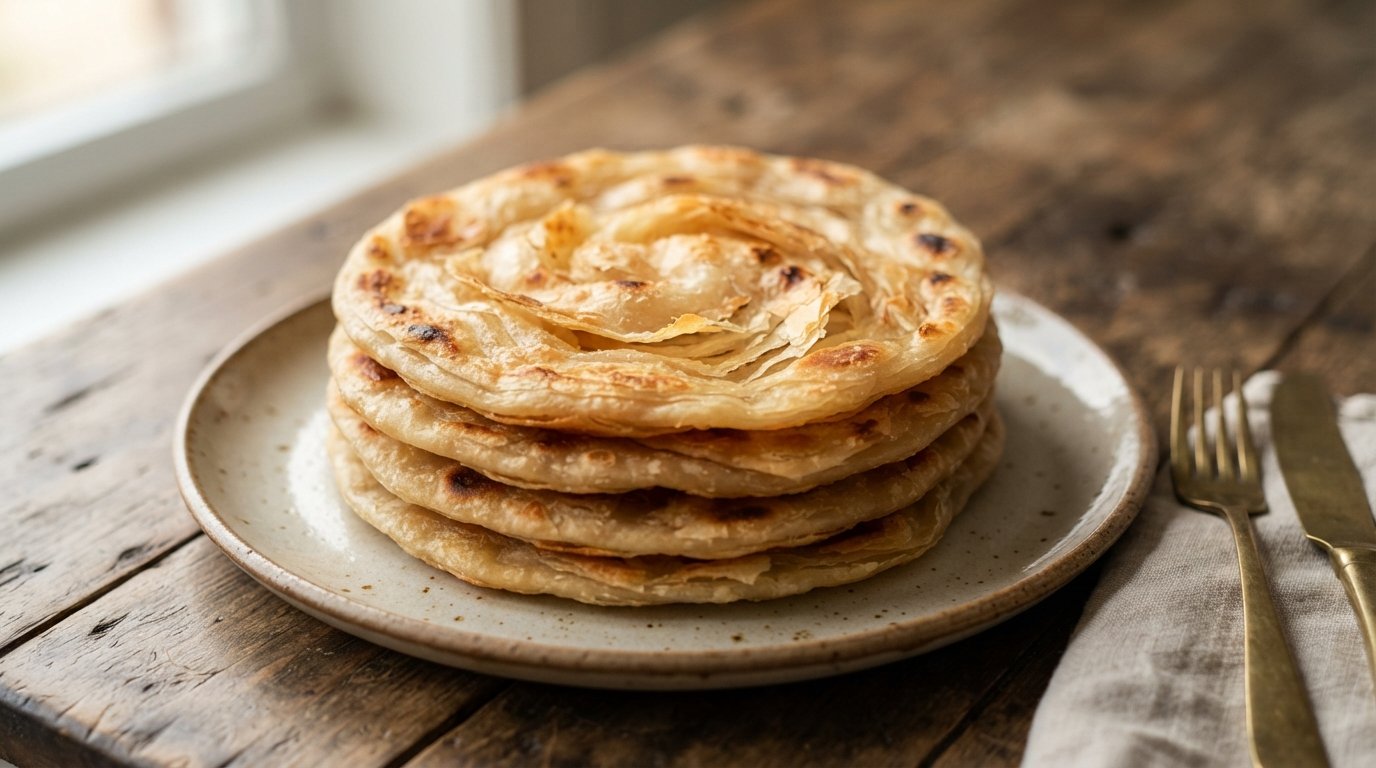
There is nothing quite like pulling apart a warm flatbread and watching the thin layers separate with a soft steam. This homemade flaky layered flatbread delivers that satisfying pull every time. A simple dough is brushed with oil, rolled, coiled, and rolled again to create dozens of delicate layers that crisp beautifully in the pan. Soft inside and golden outside, it turns any meal into something special with almost no extra effort.
This flaky layered flatbread is simple, impressive, and endlessly versatile at the table.
Creates dozens of delicate, pull-apart layers every time
Uses basic pantry ingredients you already have
Cooks quickly in a regular skillet with no special tools
Pairs perfectly with curries, stews, or simple dips
Ingredients
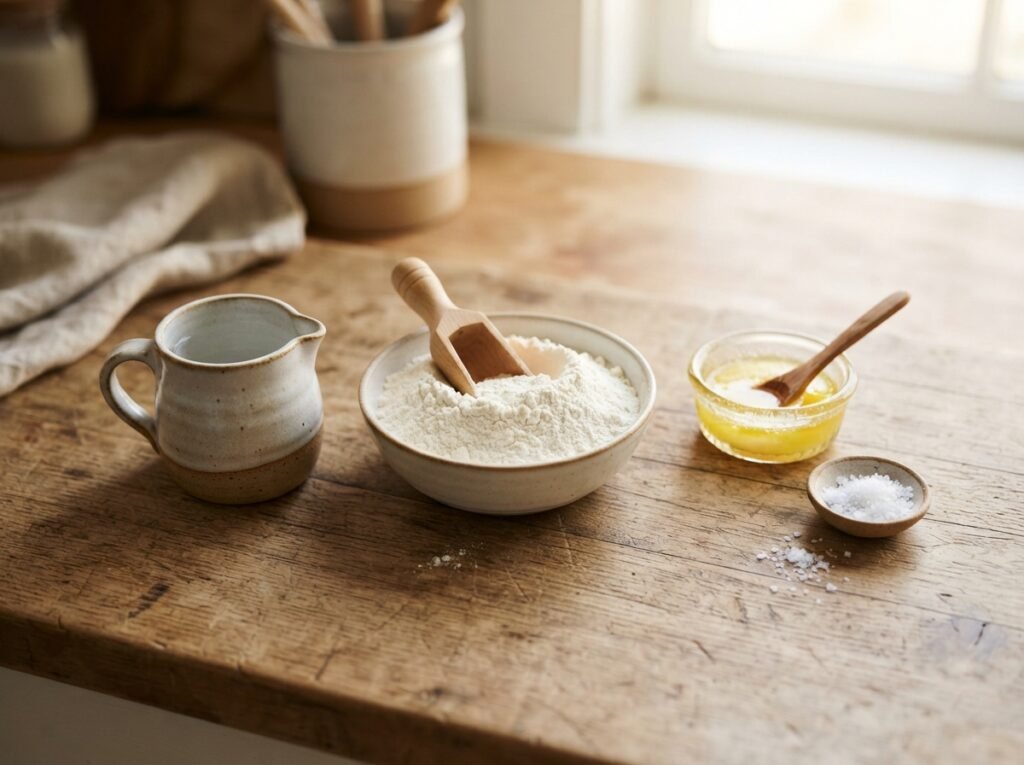
These everyday ingredients are all you need to make soft, flaky layered flatbread at home.
2 cups all-purpose flour
¾ cup warm water
1 teaspoon salt
4 tablespoons neutral oil
Extra flour for dusting
Extra oil for cooking
All-purpose flour can be swapped for a mix of all-purpose and whole wheat for a nuttier flavor. Melted butter or ghee works beautifully in place of oil for richer layers. If the dough feels dry, add water one teaspoon at a time until it becomes soft and smooth. Keep the oil generous when brushing so the layers separate cleanly.
Follow these clear steps to create beautifully layered flatbread with a tender, flaky texture.
Step 1: Make the dough
Combine the flour and salt in a bowl, then slowly add the warm water. Mix until a soft dough forms and knead for five minutes until smooth and elastic.
Step 2: Rest the dough
Cover the dough with a damp cloth or plastic wrap. Let it rest for twenty minutes so the gluten relaxes and the dough becomes easier to roll thin.
Step 3: Divide and roll
Divide the dough into six equal balls. On a lightly floured surface, roll one ball into a thin circle about eight inches wide.
Step 4: Brush with oil
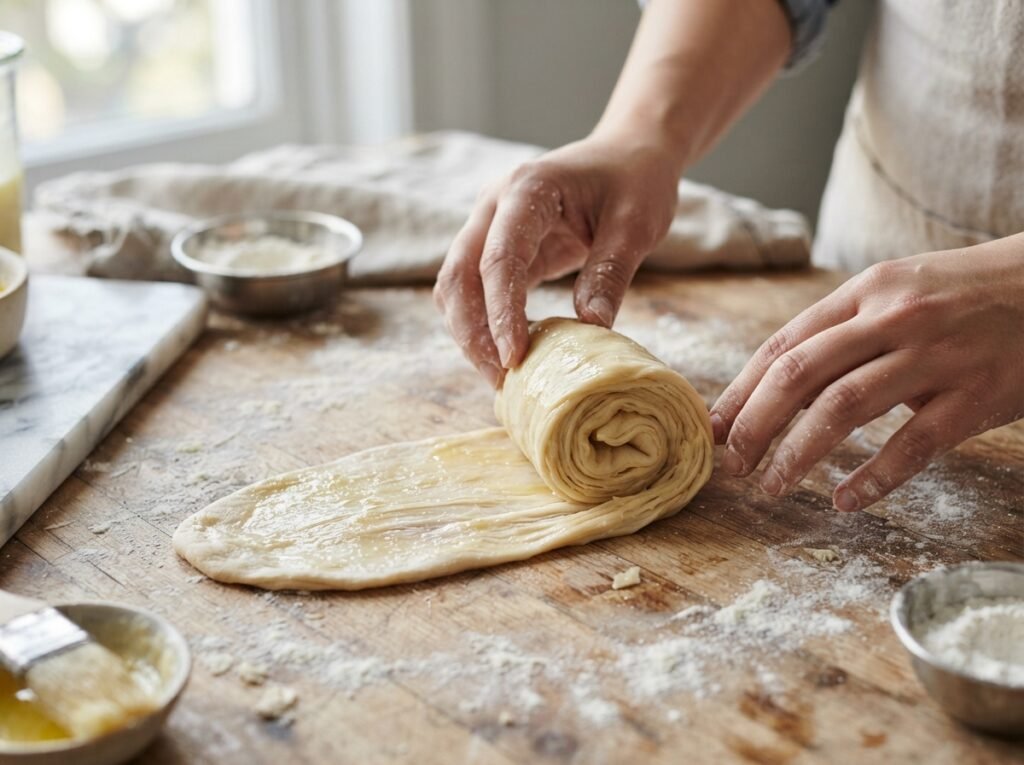
Brush the entire surface of the rolled circle generously with oil. This layer of fat is what creates the distinct flaky separation when cooked.
Step 5: Roll into a log
Starting from one edge, tightly roll the oiled dough into a long log. Press the seam gently so it stays closed during the next step.
Step 6: Coil into a spiral
Coil the log into a tight spiral, tucking the end underneath. Gently press the spiral flat with your palm to prepare it for the final roll.
Step 7: Roll flat again
Dust the spiral lightly with flour and roll it into a circle about six to seven inches wide. Keep the pressure even so the layers stay intact.
Step 8: Cook the flatbread
Heat a skillet over medium heat and place the flatbread in the dry pan. Cook two to three minutes per side until golden spots appear, brushing lightly with oil if desired.
Tips & common mistakes
A few careful habits help the layers stay distinct and the flatbread turn out tender.
Rest the dough fully so it rolls thin without shrinking back
Brush the oil evenly and generously for clear layer separation
Roll the spiral gently to avoid pressing the layers together
Cook over medium heat so the inside steams while the outside browns
Flaky Layered Flatbread
Soft homemade flatbread with dozens of delicate pull-apart layers. Brushed with oil, rolled, coiled, and pan-cooked until golden. Perfect alongside curries, stews, or dips.
Mix flour, salt, and warm water into a soft dough; knead 5 minutes until smooth.
Cover and rest the dough for 20 minutes.
Divide into 6 equal balls and roll one into a thin circle.
Brush the surface generously with oil.
Roll the oiled dough tightly into a log.
Coil the log into a spiral and tuck the end underneath.
Roll the spiral into a 6–7 inch circle.
Cook in a medium-hot skillet 2–3 minutes per side until golden.
Tip: Brush oil generously between layers for the best flaky separation.
Notes
Store cooled flatbreads in an airtight container up to 2 days. Reheat in a dry skillet to restore flakiness. Dough can be refrigerated overnight; bring to room temperature before rolling. Ghee or melted butter can replace oil for richer flavor.
Recipe variations
Small changes create new versions while keeping the same flaky layered technique.
Sprinkle chopped green onions or cilantro before rolling the log
Add a pinch of cumin or chili flakes to the oil for mild heat
Use ghee instead of oil for a richer, more aromatic result
Make smaller versions and serve as appetizer-style flatbreads
What to serve with this recipe
This flaky flatbread shines alongside both simple and bold flavors.
Creamy curries or lentil dals for soaking up the sauce
Grilled meats or kebabs with a side of yogurt dip
Fresh salads and hummus for a light Mediterranean plate
Soft scrambled eggs and avocado for a satisfying breakfast
Here are answers to the questions people ask most about this flatbread.
Why are my layers not separating?
The most common reason is not enough oil between the layers. Brush generously and roll the log tightly so the fat creates clear separation when cooked.
Can I make the dough ahead of time?
Yes, the dough can rest in the refrigerator for up to twenty-four hours. Bring it back to room temperature before rolling for best results.
How do I keep the flatbread soft after cooking?
Stack the cooked flatbreads and wrap them in a clean kitchen towel. The trapped steam keeps them soft and pliable for serving.
Can I freeze these flatbreads?
Yes, freeze the cooked flatbreads in a sealed bag with parchment between each one. Reheat in a dry skillet until warm and flaky again.
Final thoughts
This homemade flaky layered flatbread is the kind of everyday bread that feels special the moment you pull the layers apart. Soft, golden, and full of delicate texture, it elevates any meal without demanding complicated technique. Once you try it, you may find yourself making a batch every week. If you give the recipe a go, leave a rating and tell me how the layers turned out—I always love seeing your results and any creative twists you added.