Quick Recipe Summary
| Prep Time | 20 Minutes |
|---|---|
| Cook Time | 25 Minutes |
| Total Time | 45 Minutes |
| Servings | 4 |
| Cuisine | Italian-American Fusion |
| Course | Main Course / Dinner |
| Difficulty | Medium |
| Calories | ~680 kcal per serving |
Table of Contents
- Introduction
- Why This Recipe Works
- Why You’ll Love This Recipe
- Ingredient Notes
- Kitchen Equipment
- Step-by-Step Instructions
- Expert Tips for the Perfect Sauce & Grill Marks
- Common Mistakes to Avoid
- Recipe Variations
- What to Serve With This Recipe
- Make Ahead & Meal Prep Tips
- Storage & Reheating Instructions
- Nutritional Information
- Troubleshooting Guide
- Frequently Asked Questions
- Final Thoughts
Introduction

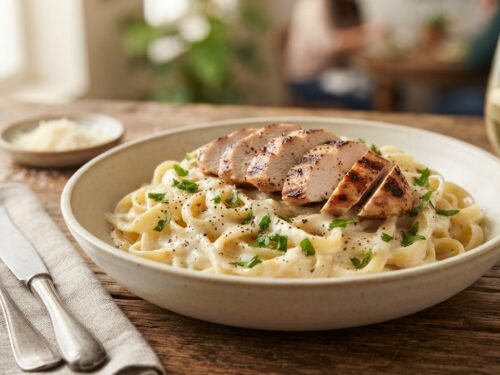
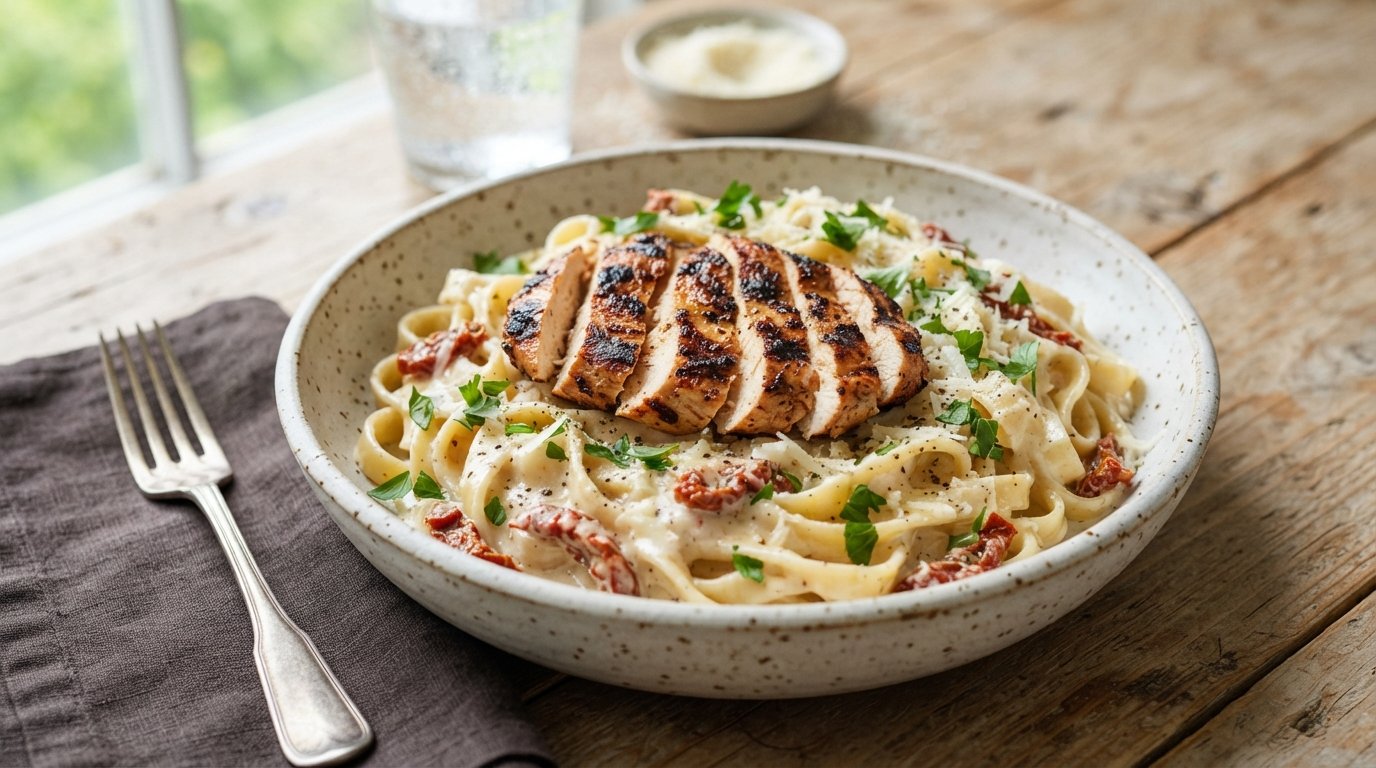
There is a distinct moment in cooking when you realize you’ve created something truly special. For me, it’s lifting a perfectly grilled chicken breast from a cast-iron skillet, watching a ribbon of creamy, sun-dried tomato alfredo sauce cascade back into the pan. This Grilled Chicken Fettuccine Alfredo isn’t just pasta; it’s a symphony of textures and flavors that elevates a weeknight staple into a restaurant-worthy experience.
The magic here lies in the contrast. We aren’t boiling chicken in water or baking it blandly in the oven. We are charring seasoned breasts over open flame (or a screaming hot grill pan) to lock in smoky juices, then finishing them in a velvety emulsion of parmesan, cream, and tangy sun-dried tomatoes. The result is a dish where every bite offers the char of the grill, the silkiness of fresh pasta, and the rich, savory depth of a well-executed alfredo. If you have ever felt that homemade alfredo lacks “oomph” compared to your favorite Italian bistro, this recipe is the answer.
Why This Recipe Works
This recipe succeeds because it treats the protein and the starch as equal partners rather than an afterthought. Traditional alfredo often suffers from being one-note—rich but heavy. By introducing grilled chicken, we add a necessary textural counterpoint and a layer of Maillard reaction complexity that cuts through the dairy fat.
Furthermore, the inclusion of sun-dried tomatoes is not merely decorative; it is functional. Their concentrated acidity and umami balance the richness of the heavy cream and cheese, preventing the sauce from becoming cloying. Cooking the pasta directly in the sauce (or finishing it there) allows the starches to release and thicken the emulsion naturally, creating a glossier, more cohesive coating than simply tossing drained noodles with sauce ever could.
Why You’ll Love This Recipe
- Restaurant-Quality Flavor at Home: The combination of smoke, char, and cream mimics high-end dining without the price tag.
- One-Pan Sauce Efficiency: While the chicken grills separately, the sauce comes together in a single skillet, minimizing cleanup.
- Texture Perfection: Al dente fettuccine holds up beautifully against the robust grilled chicken, avoiding the mushiness common in lesser pasta dishes.
- Versatile Protein: The grilling technique ensures juicy chicken every time, solving the eternal problem of dry breast meat.
- Visual Stunner: The vibrant red of the sun-dried tomatoes against the white sauce and golden-brown grill marks makes this dish as beautiful as it is delicious.
- Customizable Heat: The base recipe is mild and creamy, but it serves as a perfect canvas for adding red pepper flakes or Cajun seasoning to suit your palate.
Ingredient Notes
Understanding the role of each ingredient will help you troubleshoot and substitute effectively.
For the Chicken & Marinade
- Chicken Breasts: Boneless, skinless breasts are ideal for even grilling. Look for pieces that are uniform in thickness to ensure they cook at the same rate.
- Olive Oil: Acts as a conductor for heat and helps the spices adhere. Extra virgin is fine here since we aren’t frying at extreme temperatures, but regular olive oil works too.
- Dried Herbs (Oregano/Italian Seasoning): Dried herbs are actually superior for grilling marinades because they don’t burn as quickly as fresh herbs and release their oils slowly under high heat.
- Red Pepper Flakes: Adds a subtle background warmth. Don’t skip these; they wake up the palate.
For the Sun-Dried Tomato Alfredo

- Sun-Dried Tomatoes: Use the kind packed in oil, not the dry-packed variety. The oil they are packed in is liquid gold—use a tablespoon of it in your sauce for extra flavor. Chop them roughly so you get bursts of tartness in every bite.
- Heavy Cream: Essential for the structure of alfredo. Half-and-half will result in a thinner sauce that may break. Do not substitute with milk unless you are using a roux-based method (which this is not).
- Parmesan Cheese: Crucial Tip: Buy a block and grate it yourself. Pre-shredded cheese is coated in cellulose (wood pulp) to prevent clumping, which prevents it from melting smoothly. Your sauce will be grainy if you use bagged cheese.
- Fettuccine: Fresh egg fettuccine is luxurious, but dried bronze-die cut pasta is excellent because its rough surface grabs onto the creamy sauce better than smooth extruded pasta.
- Garlic: Fresh is non-negotiable. Jarred garlic lacks the pungency needed to stand up to cream and cheese.
Kitchen Equipment
- Outdoor Grill or Cast-Iron Grill Pan: Essential for achieving those signature char marks. A standard non-stick pan won’t give you the same sear.
- Large Skillet (Cast Iron or Stainless Steel): For building the sauce. Cast iron retains heat beautifully for maintaining a simmer.
- Tongs: For flipping chicken safely on the grill.
- Whisk: Vital for emulsifying the cheese into the cream without clumping.
- Pasta Pot: Large enough to boil water rapidly.
- Microplane or Box Grater: For fresh parmesan.
- Meat Thermometer: The only surefire way to guarantee juicy chicken without guessing.
Step-by-Step Instructions
H3: Step 1 – Season and Prep the Chicken
Pat the chicken breasts completely dry with paper towels. Drizzle generously with olive oil and rub with salt, black pepper, dried oregano, and red pepper flakes. Let them sit at room temperature for 15–20 minutes while you prep other ingredients.
- Why this matters: Moisture is the enemy of a good sear. Wet chicken steams; dry chicken chars. Bringing chicken to room temp ensures even cooking, preventing a raw center and burnt exterior.
- Visual Cue: The chicken should look glossy from the oil, not wet from moisture.
H3: Step 2 – Grill the Chicken to Perfection
Preheat your grill or grill pan to medium-high heat. Place chicken on the grates and cook undisturbed for 5–7 minutes per side, depending on thickness. You want deep, dark grill marks. Remove when internal temperature reaches 160°F (71°C); carryover cooking will bring it to the safe 165°F (74°C). Rest for 5 minutes before slicing.
- Why this matters: High heat creates the Maillard reaction (browning), which equals flavor. Resting allows muscle fibers to relax and reabsorb juices. Cutting immediately releases all that moisture onto the cutting board.
- Aroma Cue: You should smell toasted spices and caramelized protein. If it smells like burning sugar, lower the heat.
H3: Step 3 – Build the Sauce Base
While chicken rests, melt butter in your large skillet over medium heat. Add minced garlic and chopped sun-dried tomatoes (plus a spoonful of their oil). Sauté for 1–2 minutes until fragrant but not browned. Pour in heavy cream and bring to a gentle simmer.
- Why this matters: Blooming the garlic and tomatoes in fat extracts their fat-soluble flavor compounds. Simmering reduces the cream slightly, concentrating its richness before adding cheese.
- Visual Cue: Small bubbles should form around the edges of the pan. Do not let it reach a rolling boil, or the cream may scorch.
H3: Step 4 – Emulsify the Cheese
Reduce heat to low. Gradually whisk in freshly grated parmesan cheese, a handful at a time. Wait for each addition to melt completely before adding the next. Whisk constantly to create a smooth, glossy emulsion.
- Why this matters: Adding cheese too fast or at too high a heat causes the proteins to seize and separate from the fat, resulting in a gritty, oily mess. Low and slow is the mantra of alfredo.
- Texture Cue: The sauce should coat the back of a spoon thickly and look silky, not curdled.
H3: Step 5 – Marry Pasta and Sauce
Cook fettuccine in salted boiling water until just al dente. Reserve ½ cup of starchy pasta water. Drain pasta and add it directly to the skillet with the sauce. Toss vigorously over low heat, adding splashes of pasta water as needed to loosen the sauce and help it cling to the noodles.
- Why this matters: Pasta water contains starch and salt, acting as a binding agent that integrates the sauce and noodle into a unified dish rather than two separate components.
- Visual Cue: The sauce should wrap around each strand evenly. There should be no pool of liquid at the bottom of the pan.
H3: Step 6 – Slice and Plate
Slice the rested grilled chicken against the grain into ½-inch strips. Arrange a bed of sauced fettuccine on warm plates. Fan the chicken slices over the top. Garnish with fresh basil or parsley and a crack of black pepper.
- Why this matters: Slicing against the grain shortens muscle fibers, making each bite tender. Warm plates prevent the alfredo from seizing upon contact.
Expert Tips for the Perfect Sauce & Grill Marks
- The “Swoosh” Test: When testing your sauce consistency, drag a spatula through the center. It should leave a clean trail that slowly fills back in. If it fills instantly, reduce longer. If it never fills, add pasta water.
- Don’t Wash the Grill Grates Too Well: A little carbon buildup (seasoning) on your grill grates actually helps with non-stick performance and adds flavor. Just brush off loose debris.
- Cheese Temperature Matters: Cold cheese shocks hot cream. Let your grated parmesan sit out for 10 minutes before adding it to the pan. It melts more evenly.
- Salt Your Pasta Water Like the Sea: Since alfredo is mild, your pasta needs to be well-seasoned from the inside out. Use at least 1 tablespoon of kosher salt per quart of water.
- Use the Tomato Oil: That jar of sun-dried tomatoes is essentially infused garlic-herb oil. Using it in the sauce adds a depth that plain olive oil cannot replicate.
Common Mistakes to Avoid
- Boiling the Sauce After Adding Cheese: High heat breaks the emulsion. Always finish alfredo over low or no heat.
- Fix: If it breaks, remove from heat and whisk in a tablespoon of cold cream or pasta water vigorously to bring it back.
- Overcooking the Chicken: Chicken breast has zero margin for error. 165°F is the limit.
- Fix: Pull at 160°F. Trust the thermometer, not the clock.
- Using Pre-Shredded Cheese: As mentioned, anti-caking agents ruin texture.
- Fix: Invest 30 seconds to grate a block. It changes everything.
- Draining Pasta Completely Dry: Without starch water, the sauce slides off.
- Fix: Always reserve a mug of pasta water before draining.
- Crowding the Grill: Placing too much chicken lowers the grill temp, causing steaming instead of searing.
- Fix: Cook in batches if necessary. Space is flavor.
Recipe Variations

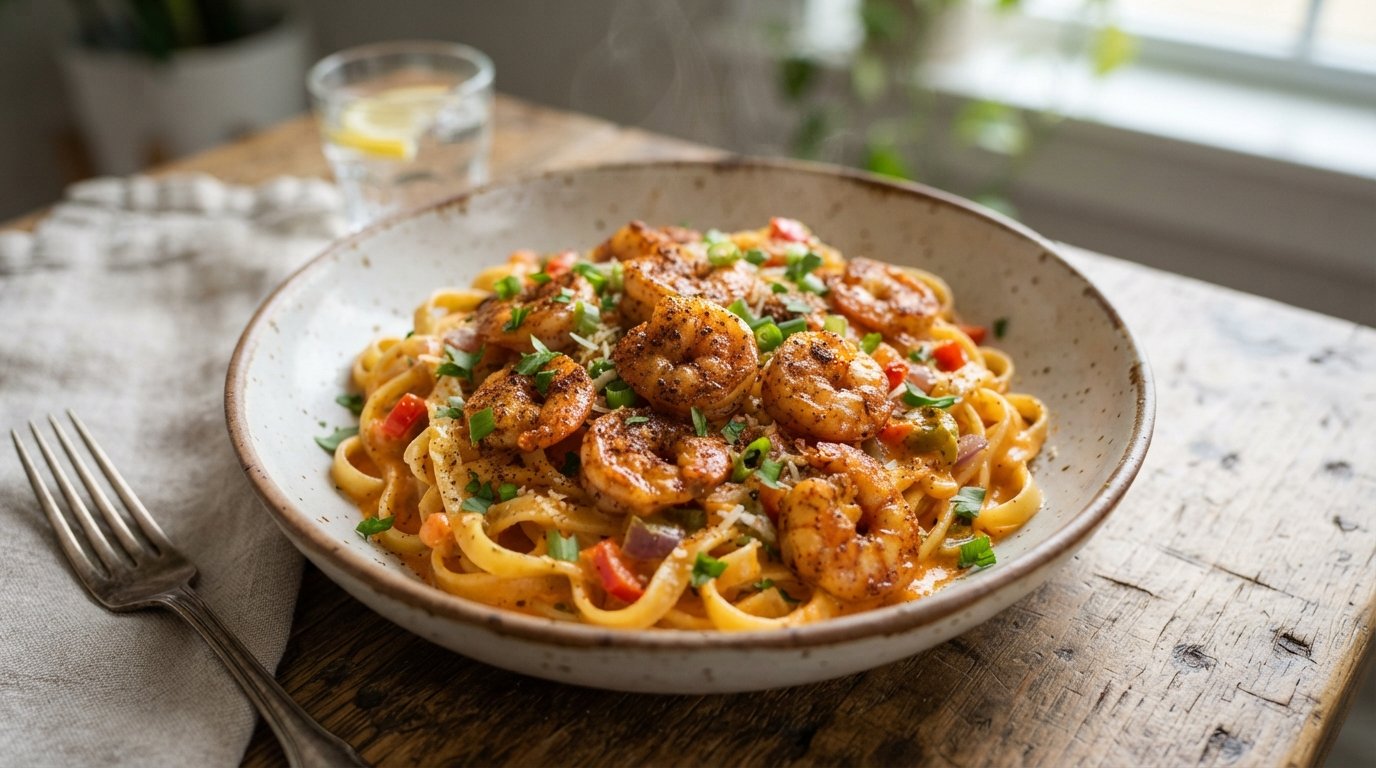
- Spicy Cajun Twist: Coat chicken in Cajun seasoning before grilling. Add cayenne pepper to the alfredo sauce for a kick that pairs beautifully with the creamy base.
- Low-Carb / Keto: Swap fettuccine for zucchini noodles (zoodles) or shirataki noodles. Sauté zoodles briefly in the sauce rather than boiling. Use full-fat cream and avoid thickeners.
- Gluten-Free: Use brown rice or chickpea fettuccine. These hold up well to heavy sauces. Ensure your sun-dried tomatoes are certified GF.
- Protein Swap: Replace chicken with grilled shrimp (cook 2 mins per side) or seared scallops. Both pair elegantly with sun-dried tomato alfredo.
- Vegetarian Option: Omit chicken and add grilled portobello mushrooms or roasted broccoli florets tossed in the sauce. Mushrooms provide a meaty umami texture.
- Extra Cheesy: Stir in ¼ cup of mascarpone or fontina along with the parmesan for an ultra-decadent, stretchier sauce.
- Fresh Herb Finish: Stir in torn fresh basil or spinach right at the end of tossing. The residual heat wilts it perfectly without turning it slimy.
What to Serve With This Recipe
Since this dish is rich and carb-heavy, balance it with freshness and acidity:
- Garlic Bread or Focaccia: Essential for mopping up leftover sauce.
- Arugula Salad with Lemon Vinaigrette: The peppery greens and sharp acid cut through the creaminess perfectly.
- Roasted Asparagus or Broccolini: Charred green vegetables add color and fiber without competing with the main flavors.
- Caprese Salad: Fresh mozzarella, tomato, and basil echo the Italian profile while providing a cool, refreshing contrast.
- Sparkling Water with Lime: Cleanses the palate between rich bites better than still water or sweet soda.
- Pinot Grigio or Chardonnay: A crisp white wine with good acidity complements the cream and cheese.
Make Ahead & Meal Prep Tips
- Chicken: Grill chicken up to 2 days ahead. Store sliced in an airtight container. Reheat gently or serve cold in salads.
- Sauce: Make alfredo sauce up to 24 hours ahead. Store in fridge. Reheat very slowly over low heat with a splash of milk or water, whisking constantly to restore emulsion. Do not boil.
- Pasta: Do not pre-cook pasta for meal prep; it becomes gummy. Cook fresh when ready to eat. Alternatively, undercook by 2 minutes, toss with oil, and refrigerate for up to 2 days, then finish in sauce.
- Mise en Place: Chop tomatoes, grate cheese, and mince garlic ahead of time. Sauce assembly takes only 10 minutes once prep is done.
Storage & Reheating Instructions
Storage
- Refrigerator: Store leftovers in airtight containers for up to 3 days. Keep chicken and pasta together to maintain moisture.
- Freezer: Not recommended. Dairy-based alfredo separates and becomes grainy when frozen and thawed. Pasta also degrades in texture.
Reheating
- Stovetop (Best): Place pasta and chicken in a skillet over low heat. Add 1-2 tbsp water or cream. Cover and steam gently, stirring occasionally until warmed through. This restores creaminess.
- Microwave (Convenient): Place in microwave-safe dish. Sprinkle with water. Cover loosely. Heat in 30-second intervals, stirring between each, to prevent hot spots and separation.
- Oven: Transfer to baking dish, cover tightly with foil. Bake at 350°F for 15-20 minutes. Add a splash of liquid before covering to prevent drying.
- Air Fryer: Not recommended for sauced pasta. Use only for reheating plain grilled chicken (350°F for 3-4 mins).
Nutritional Information
Estimates per serving (based on 6oz chicken, 2oz pasta, ½ cup sauce):
- Calories: 680 kcal
- Protein: 42g
- Carbohydrates: 48g
- Fat: 36g
- Fiber: 3g
- Sugar: 4g
- Sodium: 820mg
Note: Values vary based on specific brands, cheese fat content, and portion sizes.
Troubleshooting Guide
| Problem | Cause | Solution |
|---|---|---|
| Sauce is Grainy/Curdled | Heat too high or cheese added too fast. | Remove from heat. Whisk in cold cream/pasta water. Strain if necessary. |
| Sauce Too Thick | Reduced too much or cheese ratio high. | Whisk in warm pasta water or cream, 1 tbsp at a time. |
| Sauce Too Thin | Not reduced enough or too much pasta water. | Simmer gently to reduce. Add more grated cheese off-heat. |
| Chicken Dry/Tough | Overcooked or not rested. | Use thermometer. Pull at 160°F. Rest 5 mins minimum. |
| Pasta Sticky/Clumped | Not tossed immediately or insufficient sauce. | Toss with sauce immediately after draining. Use pasta water to loosen. |
| Bitter Taste | Garlic burned or cheese rind included. | Start garlic in cool pan. Use only grated cheese flesh, no hard rind. |
Frequently Asked Questions
1. Can I make this alfredo without heavy cream? You can use half-and-half for a lighter version, but the sauce will be thinner and less stable. To compensate, create a slurry with cornstarch and cold milk, or use a roux (butter + flour) base before adding liquid. However, for authentic texture, heavy cream is best.
2. Why is my grilled chicken sticking to the grates? Your grill wasn’t hot enough, or the grates weren’t oiled. Preheat thoroughly. Oil the grates (not just the chicken) with a high-smoke-point oil using tongs and a paper towel. Don’t move the chicken until it releases naturally.
3. Can I use sun-dried tomatoes packed in water? Technically yes, but you lose significant flavor and fat. If using water-packed, rehydrate in warm water first, then sauté in extra olive oil and garlic to build flavor before adding cream. Oil-packed is strongly preferred.
4. How do I prevent the sauce from separating when reheating? Dairy emulsions are fragile. Always reheat gently over low heat. Never microwave on high. Adding a fresh splash of liquid (water, milk, cream) before reheating helps rebuild the emulsion.
5. Is this recipe suitable for gluten-free diets? Yes, if you use gluten-free pasta. Check sun-dried tomato labels for cross-contamination warnings. The sauce itself (cream, cheese, tomatoes) is naturally GF.
6. Can I add vegetables directly to the sauce? Absolutely. Spinach, peas, or roasted red peppers work beautifully. Add delicate greens like spinach at the very end; harder veggies like broccoli should be blanched first.
7. Why does my homemade alfredo taste bland compared to restaurants? Restaurants often use aged parmesan (more umami), reduce cream significantly (concentration), and finish with butter mounting (monter au beurre). Ensure you’re using quality cheese, reducing adequately, and finishing with a knob of cold butter for gloss and flavor.
8. Can I prepare this entirely in one pot? You can cook pasta, then set aside. Make sauce in same pot. But grilling chicken requires separate equipment for proper char. One-pot versions exist but sacrifice the grilled element that defines this recipe.
Final Thoughts
Creating the perfect Grilled Chicken Fettuccine Alfredo with Sun-Dried Tomatoes is about respecting each component’s role. The grill provides soul, the cream provides comfort, and the tomatoes provide brightness. When balanced correctly, this dish transcends simple pasta and becomes a memorable culinary experience.