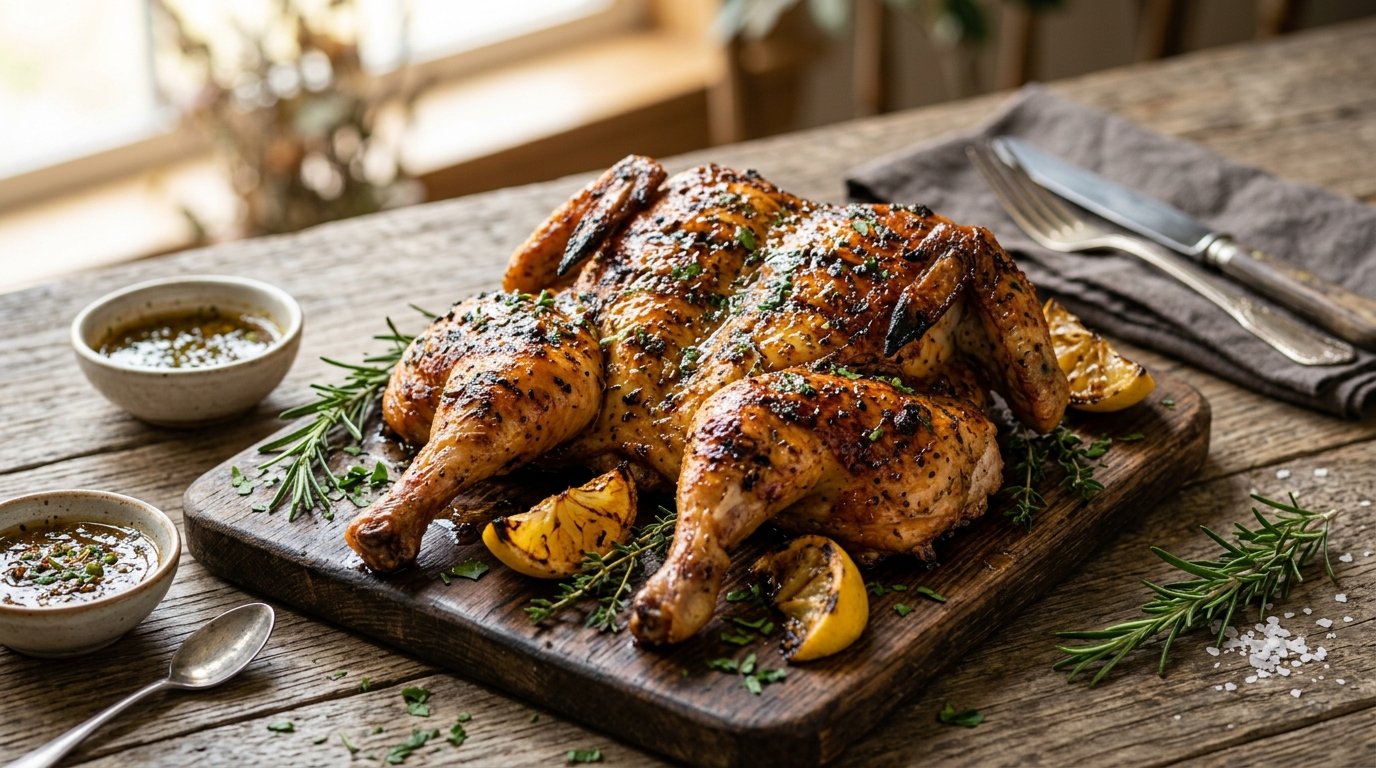
There is a distinct moment in outdoor cooking when the aroma of smoke and spice signals that something extraordinary is happening on the grill. For those who crave bold, soul-warming flavors without spending hours tending to a smoker, this grilled spatchcock chicken with Tony Chachere’s glaze is the ultimate solution. By flattening the bird—a technique known as spatchcocking—we unlock a faster, more even cook that yields crispy skin and juicy meat from breast to thigh. But the real magic lies in the marinade and finishing glaze. Infused with the iconic savory heat of Tony Chachere’s Creole Seasoning, bright lemon juice, garlic, and chili flakes, this recipe transforms a humble whole chicken into a backyard masterpiece that rivals any rotisserie stand.
This isn’t just about grilling; it’s about layering flavor at every stage. The initial marinade penetrates deep into the muscle fibers while the bird rests, ensuring seasoning isn’t just surface-level. As the chicken hits the hot coals, the rendered fat drips down, creating aromatic smoke that bastes the meat from below. Finally, a buttery, reduced glaze brushed on during the last few minutes creates a lacquered, caramelized exterior that glistens under the summer sun. Whether you are hosting a weekend cookout or simply treating your family to a restaurant-quality dinner at home, this dish delivers complexity, moisture, and that unmistakable Cajun kick in every bite.
Why This Recipe Works
The success of this spatchcock grilled chicken relies on three scientific principles: surface area, thermal conductivity, and flavor adhesion. Spatchcocking removes the backbone and flattens the bird, which serves two critical functions. First, it exposes more surface area directly to the heat source, reducing cook time by up to 50% compared to a whole roasted bird. Second, it eliminates the “cold spot” in the center of the cavity, ensuring the breast and thighs finish cooking simultaneously. This prevents the common tragedy of dry white meat paired with undercooked dark meat.
Furthermore, the use of Tony Chachere’s Creole Seasoning provides a balanced foundation of salt, pepper, garlic, and paprika that enhances rather than masks the chicken’s natural flavor. When combined with acid (lemon) and fat (butter/oil), these spices create an emulsion that clings to the protein. The finishing glaze is equally important; by reducing the marinade with butter, we create a viscous sauce that adheres to the hot skin, caramelizing instantly upon contact. This Maillard reaction creates complex, savory-sweet notes and a beautiful sheen that signals doneness to the eye and palate alike.
Why You’ll Love This Recipe
Even Cooking Guaranteed: The flattened shape ensures perfect doneness across all parts of the bird—no more guessing games.
Bold, Layered Flavor: From the penetrating marinade to the caramelized glaze, every bite is packed with savory Creole zest.
Crispy Skin Perfection: Direct heat exposure renders fat efficiently, resulting in shatteringly crisp skin that stays intact.
Impressive Presentation: A whole glazed bird on a wooden board looks stunning and feeds a crowd effortlessly.
Versatile Base: The Creole seasoning profile pairs beautifully with countless sides, making meal planning easy.
Ingredient Notes
Whole Chicken (3.5–4 lbs)
Purpose: The canvas for our flavors. A smaller bird cooks more evenly on a grill than a massive roaster.
Buying Tip: Look for air-chilled chickens if possible; they retain less water and crisp up better. Avoid “plumped” birds injected with saline solution, as they can be overly salty when combined with seasoned marinades.
Prep: Pat completely dry before marinating. Moisture is the enemy of crisp skin and proper browning.
Storage: Keep refrigerated until ready to prep. If frozen, thaw in the fridge for 24-48 hours. Never thaw at room temperature.
Tony Chachere’s Creole Seasoning
Purpose: The primary flavor driver. Provides salt, heat, garlic, and herbal notes essential to this profile.
Note: This blend contains salt. Adjust additional salt in the marinade accordingly to avoid over-seasoning.
Substitution: If unavailable, mix 1 tsp salt, ½ tsp black pepper, ½ tsp garlic powder, ½ tsp onion powder, ¼ tsp cayenne, and ¼ tsp dried thyme.
Storage: Store in a cool, dry place. Clumping indicates moisture exposure; shake well before use.
Lemon Juice & Zest
Purpose: Acid tenderizes proteins and balances richness. Zest adds aromatic oils without extra liquid.
Freshness Matters: Always use fresh lemons. Bottled juice lacks volatile compounds and tastes metallic.
Technique: Zest before juicing. Squeeze gently to avoid bitter pith oils. Strain seeds to prevent burning on the grill.
Substitution: Lime juice works for a brighter, more tropical twist. White wine vinegar can substitute in a pinch but lacks citrus aroma.
Garlic & Red Pepper Flakes
Garlic: Fresh minced garlic provides pungency and depth. Powdered garlic burns easily over direct flame; fresh is superior here.
Red Pepper Flakes: Adds adjustable heat. Toast lightly in a dry pan before adding to marinade to bloom flavor and reduce raw bitterness.
Ratio: Start with 1 tbsp flakes for moderate heat. Increase to 2 tbsp for spicy lovers. Remove seeds for milder warmth.
Storage: Minced garlic oxidizes quickly; prepare just before mixing. Dried flakes keep indefinitely in airtight containers.
Butter (Unsalted)
Purpose: Emulsifier for glaze. Adds richness, promotes browning, and carries fat-soluble flavors.
Why Unsalted? Allows precise control over sodium levels, especially since Tony Chachere’s is already salty.
Technique: Melt gently; do not brown unless desired. Browned butter adds nuttiness but changes the glaze character.
Substitution: Ghee or clarified butter has a higher smoke point and won’t burn as easily during glazing. Olive oil works for dairy-free but lacks creamy texture.
Kitchen Equipment
Charcoal or Gas Grill: Charcoal preferred for authentic smoky flavor; gas offers easier temp control. Both work.
Heavy-Duty Kitchen Shears: Essential for cleanly removing the backbone. Dull scissors crush bone and tear meat.
Large Mixing Bowl & Whisk: For combining marinade ingredients thoroughly.
Basting Brush (Silicone): Heat-resistant and easy to clean. Natural bristle brushes shed and burn over open flame.
Instant-Read Thermometer: Non-negotiable for food safety. Visual cues alone are unreliable for poultry.
Aluminum Foil Pan (Optional): For catching drippings if using indirect heat method to prevent flare-ups.
Cutting Board & Sharp Knife: For carving cooked chicken safely and cleanly.
Servings: 4–6 (depending on bird size and appetite)
Step-by-Step Instructions
H3: Spatchcock the Chicken
Place chicken breast-side down on cutting board. Using kitchen shears, cut along both sides of backbone to remove it entirely. Flip bird over; press firmly on breastbone with palms until it cracks and lies flat. Tuck wing tips under shoulders to prevent burning.
Why it matters: Removing backbone allows bird to lie flat for even cooking. Cracking breastbone ensures uniform thickness. Tucking wings protects delicate tips from charring.
Visual Cue: Bird should lie completely flat, no doming. Backbone removed cleanly without shredding meat.
Texture Cue: Breastbone gives way with firm pressure; cartilage snaps audibly.
Pro Tip: Save backbone! Freeze it for homemade stock. Don’t waste that flavor gold.
H3: Mix Marinade & Coat Thoroughly
In large bowl, whisk together lemon juice, zest, minced garlic, red pepper flakes, Tony Chachere’s seasoning, and ¼ cup oil. Pour over spatchcocked chicken in separate bowl or bag. Massage marinade into every crevice, under skin where possible. Seal and refrigerate minimum 2 hours, ideally overnight.
Why it matters: Massaging ensures penetration beyond surface. Acid begins breaking down proteins for tenderness. Oil coats spices for even distribution.
Aroma Cue: Bright citrus, pungent garlic, and warm spices fill kitchen. No raw chicken smell should dominate.
Common Mistake: Not getting marinade under skin. Gently loosen skin from breast/thighs with fingers; push marinade underneath for maximum flavor.
Safety Note: Discard used marinade after contact with raw chicken. Never reuse as glaze unless boiled vigorously for 5+ minutes first.
H3: Prepare Grill & Cook Indirectly
Preheat grill to medium-high (375°F–400°F / 190°C–205°C). Set up two-zone fire: coals/burners on one side only. Place chicken skin-side UP on COOL side (indirect heat). Close lid. Cook 35-45 mins, rotating halfway, until internal temp reaches 155°F (68°C) in thickest thigh part.
Why it matters: Indirect heat cooks gently without burning skin. Two-zone setup allows finishing over direct heat later. Lid traps heat for oven-like environment.
Visual Cue: Skin gradually turns golden, then amber. Juices run clear when pierced near bone. No pink visible at joints.
Temperature Cue: Thermometer reads 155°F in thigh (not breast!). Carryover heat will bring to safe 165°F during rest.
Critical Rule: NEVER cook whole spatchcock chicken over DIRECT heat entire time. Skin will char before interior is safe.
H3: Make Glaze & Finish Over Direct Heat
While chicken cooks, combine remaining marinade (reserved BEFORE adding raw chicken) OR make fresh batch with ½ cup Tony Chachere’s Chicken Marinade + 4 tbsp melted butter + 1 tbsp honey/sugar in saucepan. Simmer 5 mins to reduce slightly. When chicken hits 155°F, move to HOT side (direct heat). Brush generously with glaze. Cook 2-3 mins per side, brushing again, until skin is lacquered and temp reaches 165°F (74°C).
Why it matters: Direct heat caramelizes sugars in glaze, creating sticky, flavorful crust. Butter adds shine and richness. Honey balances heat and aids browning.
Visual Cue: Glaze bubbles and darkens to deep mahogany. Skin appears glossy, almost wet-looking. Char marks form strategically.
Aroma Cue: Sweet, savory, smoky scent intensifies. Butter sizzles on hot skin.
Watch Closely: Sugars burn FAST over direct flame. Move back to indirect zone if glaze darkens too quickly. Total direct heat time: 4-6 mins MAX.
H3: Rest & Carve Properly
Transfer chicken to cutting board. Tent loosely with foil. Rest 10-15 minutes MINIMUM. Carve along breastbone, separate legs/thighs at joint. Slice breast against grain. Serve immediately with pan juices.
Carving Tip: Use sharp knife. Follow natural seams between muscles. Save wishbone for tradition!
Expert Tips
Reserve Safe Glaze: ALWAYS set aside portion of marinade for glazing BEFORE touching raw chicken. Contaminated marinade = food poisoning risk. Better yet, make separate glaze batch.
Thermometer Placement: Insert probe into thickest part of THIGH, avoiding bone. Breast cooks faster; thigh is last to reach safe temp. Trust numbers, not timers.
Manage Flare-Ups: Fat dripping causes flames. Keep spray bottle of water handy. Move chicken to indirect zone temporarily if flare-ups persist. Never leave grill unattended.
Skin Dryness = Crispness: After marinating, pat skin DRY before grilling. Wet skin steams instead of crisping. Air-dry uncovered in fridge 1 hour pre-grill for extra crunch.
Glaze Timing is Everything: Apply glaze ONLY in last 5-7 minutes. Early application = burnt sugar, bitter taste. Late application = perfect caramelization.
Bone-In Beats Boneless: Bones conduct heat slowly, acting as insulator for even cooking. They also add immense flavor. Never debone before grilling whole.
Common Mistakes
Burnt Skin, Raw Interior: Cooked entirely over direct heat. Fix: Use two-zone method. Start indirect, finish direct. Monitor temp constantly.
Dry Breast Meat: Overcooked or not rested. Fix: Pull at 155°F thigh temp. Rest 15 mins. Brine beforehand if concerned about dryness.
Soggy Skin: Marinated too long in acidic mix or not dried pre-grill. Fix: Limit acid marinate to 12 hrs max. Pat dry thoroughly. Grill skin-side up initially.
Bitter Glaze: Applied too early or burned. Fix: Glaze only last 5 mins. Watch like hawk. Reduce heat if browning too fast.
Uneven Cooking: Bird not properly spatchcocked. Fix: Ensure breastbone cracked fully flat. Rotate bird halfway through cook. Check multiple temps.
Underseasoned Meat: Marinade didn’t penetrate. Fix: Get marinade UNDER skin. Massage aggressively. Marinate minimum 4 hours.
Recipe Variations
Spicy Habanero Kick: Replace red pepper flakes with minced habanero. Add 1 tbsp hot sauce to glaze. Warning: EXTREME heat. Wear gloves when handling peppers.
Honey Sriracha Twist: Swap Tony Chachere’s for Asian-inspired glaze: sriracha, honey, soy sauce, ginger. Same spatchcock method. Fusion deliciousness.
Herb Garden Fresh: Add chopped rosemary, thyme, sage to marinade. Use olive oil-based glaze with lemon zest. Earthy, aromatic alternative.
Beer Can Chicken Style: Stand spatchcocked bird upright on half-full beer can. Creates steam chamber inside. Different presentation, similar flavor profile.
Low-Sodium Option: Use low-sodium Tony Chachere’s. Reduce added salt. Increase herbs/spices for flavor compensation. Heart-healthier without sacrificing taste.
Smoked Paprika Depth: Add 1 tbsp smoked paprika to marinade. Enhances smoky grill flavor. Pairs beautifully with bourbon-glazed version.
Vegan Adaptation: Substitute chicken with cauliflower steaks or tofu blocks. Same marinade/glaze technique. Grill until charred and tender. Surprisingly satisfying.
What to Serve With This Recipe
Creamy Coleslaw: Tangy crunch cuts through rich, spicy chicken. Classic Southern pairing that never fails.
Cornbread Muffins: Sweet, crumbly contrast to savory heat. Perfect for soaking up glaze and juices.
Grilled Corn on Cob: Charred sweetness complements smoky chicken. Brush with same glaze for cohesion.
Red Beans & Rice: Hearty, traditional Cajun side. Completes the cultural experience authentically.
Macaroni & Cheese: Creamy, cheesy comfort balances spice. Crowd-pleaser that appeals to all ages.
Iced Tea or Lemonade: Refreshing, slightly sweet beverages cleanse palate between bites. Essential for spicy meals.
Make Ahead & Meal Prep Tips
Spatchcock Ahead: Remove backbone and flatten chicken up to 24 hours ahead. Store covered in fridge. Saves active prep time day-of.
Marinade Batch: Make double batch marinade. Use half for chicken, reserve other half (untouched by raw meat) for glaze. Efficient and safe.
Glaze Prep: Prepare glaze base (marinade + butter + honey) up to 3 days ahead. Refrigerate. Reheat gently before brushing. Flavors meld beautifully.
Side Dish Sync: Prep coleslaw, cornbread batter, bean soak ahead. Grill chicken last so everything finishes together. Timing is key for hot service.
Leftover Planning: Intentionally cook extra. Shredded chicken makes amazing tacos, salads, sandwiches next day. Zero waste strategy.
Storage & Reheating Instructions
Storage
Refrigerator: Store carved chicken in airtight container up to 4 days. Keep skin separate if possible to maintain crispness.
Freezer: Freeze cooked chicken portions up to 3 months. Wrap tightly in foil, then plastic. Label with date. Thaw overnight in fridge.
Glaze Leftovers: Store unused glaze in jar up to 1 week. Reheat gently before reusing. Do NOT reuse glaze that touched raw chicken.
Reheating
Oven (Best): 350°F (175°C) on wire rack 10-15 mins. Restores crisp skin without drying meat. Cover loosely with foil if browning too fast.
Air Fryer: 375°F (190°C) for 5-7 mins. Excellent for single portions. Crisps skin remarkably well. Shake basket halfway.
Stovetop: Skillet over medium-low heat, skin-side down 3-4 mins. Flip briefly. Good for retaining moisture. Cover if needed.
Microwave (Avoid): Makes skin rubbery and meat tough. Only use if no other option. 30-sec bursts. Cover with damp paper towel.
Nutritional Information
Estimates per serving (based on 6 servings):
Calories: 380
Protein: 42g
Carbohydrates: 8g
Fat: 20g
Fiber: 1g
Sugar: 4g
Sodium: 680mg
Note: Values vary based on chicken size, glaze quantity, and specific brand seasonings.
Troubleshooting Guide
Problem
Cause
Solution
Skin soggy/not crisp
Wet skin or low grill temp
Pat skin DRY pre-grill. Ensure grill >375°F. Finish over direct heat briefly.
Chicken dry/tough
Overcooked or no rest
Pull at 155°F thigh temp. REST 15 mins min. Brine beforehand if prone to dryness.
Glaze burnt/bitter
Applied too early or high heat
Glaze ONLY last 5 mins. Move to indirect heat if browning too fast. Reduce sugar content.
Undercooked interior
Grill too cool or bird too big
Verify grill temp. Use thermometer. Spatchcock properly for even thickness. Extend cook time.
Flare-ups constant
Too much fat dripping
Trim excess fat. Use drip pan. Move to indirect zone. Have water spray ready.
Seasoning bland
Marinade didn’t penetrate
Get marinade UNDER skin. Massage thoroughly. Marinate longer (4-12 hrs).
Frequently Asked Questions
1. Can I spatchcock a frozen chicken? NO. Frozen chicken cannot be spatchcocked safely or effectively. Bones are too hard; shears will slip and cause injury. Thaw completely in refrigerator 24-48 hours first. Pat very dry before proceeding. Safety first, always.
2. How do I know when the chicken is done without a thermometer? You DON’T. Guesswork leads to foodborne illness or dry meat. Invest in $15 instant-read thermometer. It pays for itself in safety and quality. Visual cues (clear juices, loose joints) are secondary indicators only.
3. Can I use a gas grill instead of charcoal? Absolutely. Gas grills offer superior temperature control. For smoky flavor, add wood chips in smoker box or foil pouch. Soak chips 30 mins first. Place over lit burner. Gas achieves same results with convenience.
4. Why did my skin stick to the grill grates? Grates weren’t hot enough or weren’t oiled. Preheat grill 15 mins minimum. Scrub grates clean. Oil grates with high-smoke-point oil (avocado/grapeseed) using tongs-held paper towel. Hot, oiled grates release food naturally.
5. Can I make this recipe ahead of time and reheat? Yes, but texture suffers. Best served fresh off grill. If necessary, reheat in oven/air fryer to restore crispness. Microwave ruins texture. Plan timing so chicken finishes as guests arrive.
6. Is Tony Chachere’s very salty? Should I reduce salt elsewhere? Yes, it contains significant salt. Taste marinade before adding extra salt. Often, none is needed. If using low-sodium version, adjust accordingly. Always balance seasoning carefully.
7. Can I use chicken breasts instead of whole bird? Not recommended for this method. Breasts cook too fast and dry out before glaze caramelizes. Whole bird benefits from varied cooking times of dark/white meat. For breasts, reduce cook time drastically and monitor closely.
8. What if I don’t have kitchen shears? Use sharp chef’s knife. Place chicken breast-down. Cut along backbone with firm, controlled strokes. More challenging than shears but achievable. Safety caution: secure chicken firmly. Consider investing in good shears—they’re invaluable.
9. Can I add vegetables to the grill alongside chicken? Yes! Potatoes, onions, peppers grill beautifully over indirect heat. Toss in oil, salt, pepper. Place on cool side of grill. They absorb smoky flavors while chicken cooks. Perfect one-grill meal solution.
10. How do I prevent the glaze from burning during final sear? Apply glaze ONLY in last 3-5 minutes. Move chicken to INDIRECT heat if browning too fast. Reduce sugar/honey content in glaze. Have water spray ready for minor flare-ups. Vigilance prevents disaster.
Final Thoughts
This grilled spatchcock chicken with Tony Chachere’s glaze