Quick Recipe Summary
| Feature | Details |
|---|---|
| Prep Time | 30 Minutes |
| Cook Time | 10 Minutes |
| Total Time | 40 Minutes |
| Servings | 8-10 Pieces |
| Cuisine | American / Cajun Fusion |
| Course | Appetizer / Main Course |
| Difficulty | Intermediate |
| Calories | ~280 kcal per piece |
Table of Contents
- Introduction
- Why This Recipe Works
- Why You’ll Love This Recipe
- Ingredient Notes
- Kitchen Equipment
- Step-by-Step Instructions
- Expert Tips
- Common Mistakes
- Recipe Variations
- What to Serve With This Recipe
- Make Ahead & Meal Prep Tips
- Storage & Reheating Instructions
- Nutritional Information
- Troubleshooting Guide
- Frequently Asked Questions
- Final Thoughts
Introduction
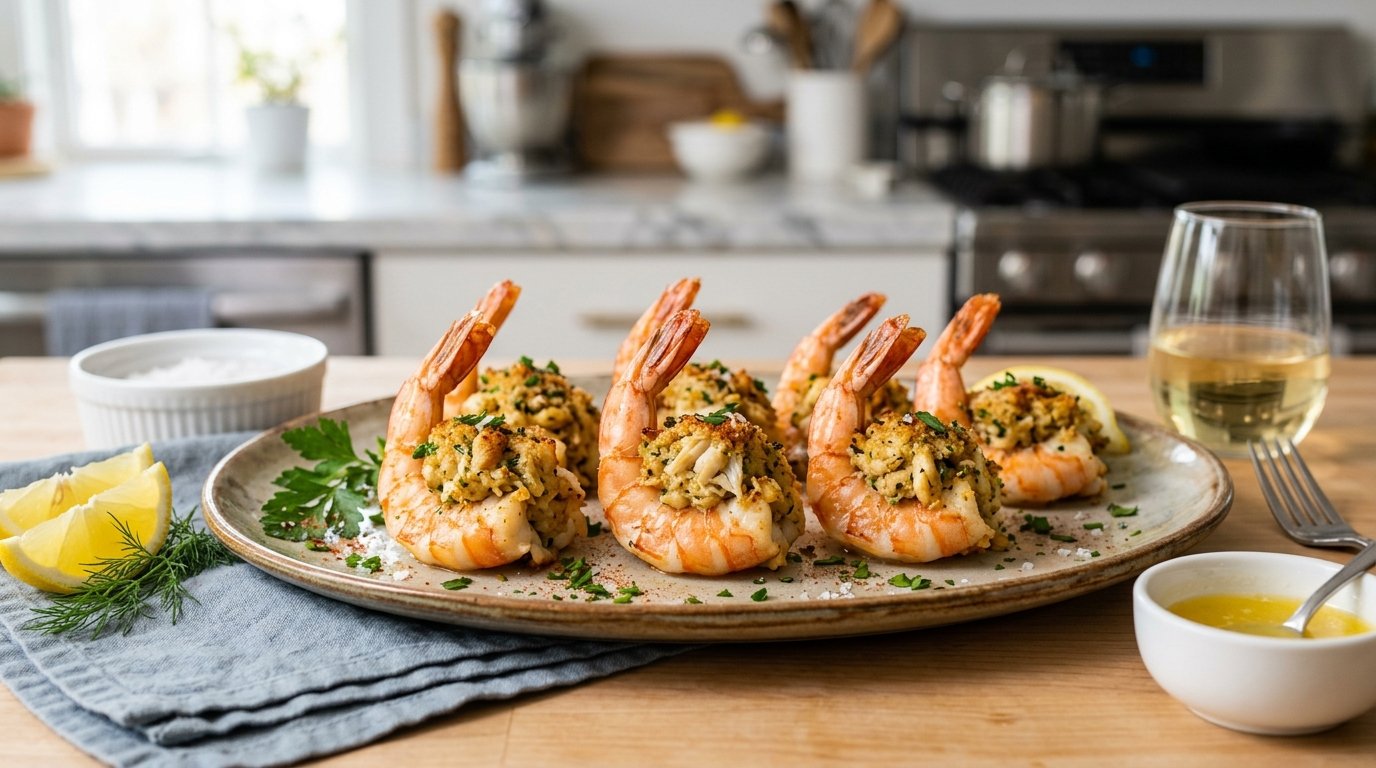
There is a moment in every seafood lover’s life when they realize that shrimp and crab don’t have to compete—they can collaborate. These stuffed crab shrimp are the ultimate expression of that harmony, combining the sweet, firm bite of jumbo shrimp with the delicate, savory richness of lump crab meat. Wrapped in a golden, crispy crust and served with a creamy herb dipping sauce, this dish transforms a simple appetizer into a show-stopping centerpiece.
Unlike standard fried shrimp which rely solely on batter for flavor, this recipe uses the shrimp as a vessel for a seasoned crab stuffing. The result is a dual-texture experience: a shatteringly crisp exterior giving way to tender shrimp and a moist, flavorful crab filling. Whether you are hosting a holiday party, planning a romantic dinner, or simply treating yourself to a luxury meal at home, these stuffed crab shrimp deliver restaurant-quality elegance with manageable effort. The key lies in the preparation of the stuffing and the technique of sealing the shrimp, ensuring every bite is as perfect as the last.
Why This Recipe Works
The success of this dish relies on three culinary pillars: moisture management, structural integrity, and temperature control.
First, the crab stuffing acts as an internal insulator. When deep-frying, the outer layer of the shrimp cooks rapidly, but the interior needs protection from becoming rubbery. The crab mixture, bound with mayonnaise and vegetables, retains moisture and steams gently inside the shrimp shell, keeping the flesh succulent even as the outside crisps.
Second, the “butterfly” cut is essential. By slicing the shrimp open while keeping the tail intact, we create a natural pocket. This isn’t just aesthetic; it provides surface area for the stuffing to adhere to and ensures the heat penetrates evenly. The tail also serves as a functional handle, allowing guests to eat without getting their fingers greasy.
Finally, the breading technique creates a barrier. A light dredge in flour before adding the binder (egg) and crumbs ensures the coating sticks to the moist shrimp and crab filling. Without this step, the stuffing would slip out during frying. The result is a cohesive unit where the crust, shrimp, and filling remain united from pot to plate.
Why You’ll Love This Recipe
- Double Seafood Punch: Combines two premium proteins in one bite, maximizing flavor and luxury.
- Customizable Stuffing: The crab base is a blank canvas; adjust herbs, spices, and veggies to your taste.
- Impressive Presentation: The tail-on presentation looks professional and elegant on any platter.
- Perfect Texture Contrast: Crispy panko exterior, tender shrimp middle, and creamy crab center.
- Versatile Serving: Works equally well as a passed hors d’oeuvre, a seated starter, or a light main course.
- Crowd Pleaser: Even non-seafood lovers often enjoy the mild, savory flavor profile masked by the crispy coating.
- Dipping Sauce Synergy: The creamy herb sauce cuts through the richness of the fried seafood perfectly.
Ingredient Notes
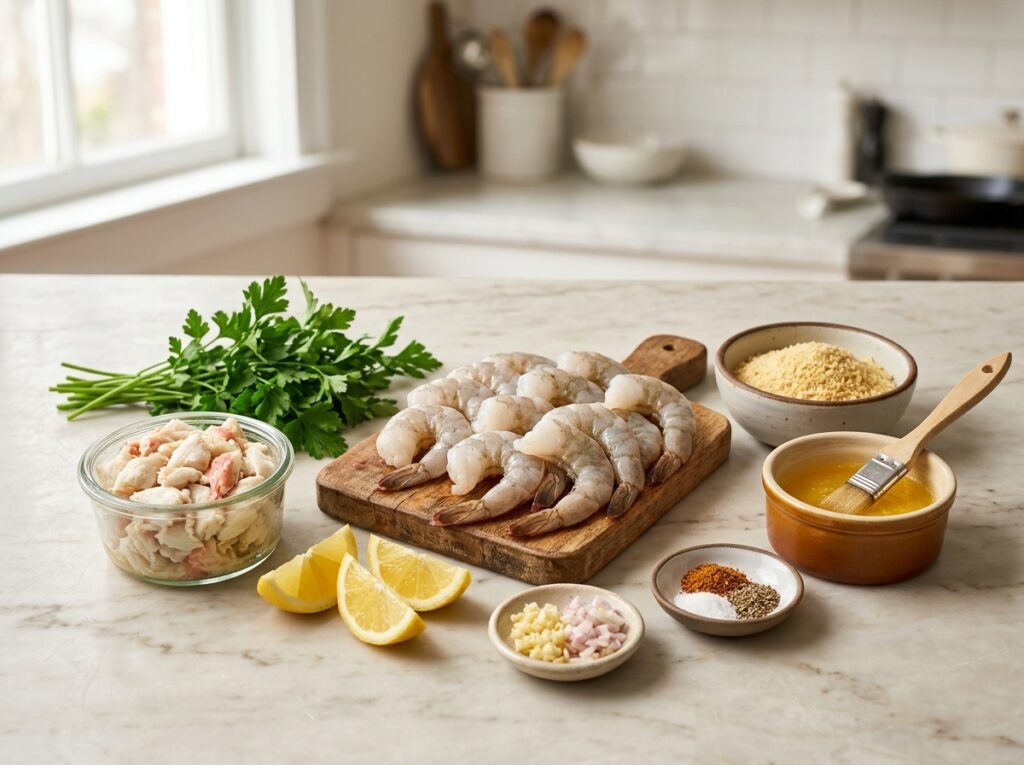
Jumbo Shrimp (16/20 count)
- Purpose: The structural base and primary protein. Size matters here; smaller shrimp cannot hold enough stuffing.
- Substitutions: Langoustines or large prawns work if available. Avoid small salad shrimp.
- Buying Tip: Buy “tail-on, shell-off” raw shrimp. Pre-cooked shrimp will be tough and dry when fried. Fresh is best, but high-quality frozen (thawed properly) works well.
- Storage Tip: Keep on ice in the coldest part of the fridge until ready to prep. Do not refreeze thawed shrimp.
Lump Crab Meat
- Purpose: The star of the stuffing. Provides texture and sweet, briny flavor.
- Substitutions: Claw meat (more flavor, less texture), imitation crab (budget option, different texture), or finely chopped lobster.
- Buying Tip: Look for “jumbo lump” or “backfin” in refrigerated cans/tubs. Avoid shelf-stable canned crab for this application; the texture is too mushy. Check for shells!
- Storage Tip: Use within 2 days of opening. Freeze leftovers immediately if not using.
Panko Breadcrumbs
- Purpose: Creates the signature airy, shattering crunch. Japanese-style flakes are larger and crispier than Western breadcrumbs.
- Substitutions: Crushed cornflakes, crushed crackers, or tempura flakes. Standard breadcrumbs will result in a dense, hard crust.
- Buying Tip: Ensure they are fresh and dry. Stale panko absorbs oil and becomes soggy.
- Storage Tip: Store in an airtight container in a cool, dark place. Toast lightly in a dry pan before use for extra crunch and color.
Mayonnaise & Binders
- Purpose: Binds the crab stuffing and adds moisture/fat. Prevents the filling from drying out during frying.
- Substitutions: Greek yogurt (lighter), cream cheese (richer), or aioli.
- Tip: Use full-fat mayo for best stability. Low-fat versions can separate under heat.
Vegetables (Red Bell Pepper, Green Onion)
- Purpose: Adds color, sweetness, and textural contrast to the soft crab.
- Substitutions: Celery, shallots, jalapeño (for heat), or roasted red peppers.
- Prep Tip: Dice very finely (brunoise). Large chunks will prevent the stuffing from packing tightly and may fall out.
Creamy Herb Dipping Sauce
- Purpose: Acidic and herbal counterpoint to the rich fried seafood.
- Base: Typically mayonnaise, sour cream, lemon juice, dill, chives, and capers.
- Tip: Make this first! It needs time to chill and let flavors meld.
Kitchen Equipment
- Sharp Chef’s Knife: Essential for butterflying shrimp and dicing vegetables precisely.
- Cutting Board: Dedicated board for raw seafood to prevent cross-contamination.
- Mixing Bowls: Three shallow bowls for breading station (flour, egg wash, panko) + one bowl for crab stuffing.
- Heavy-Bottomed Pot or Dutch Oven: For deep frying. Heavy bottom maintains stable oil temperature.
- Deep Fry Thermometer: Critical for safety and quality. Oil must stay between 350°F-375°F (175°C-190°C).
- Spider Skimmer or Slotted Spoon: For safely lowering and removing shrimp from hot oil.
- Wire Rack & Paper Towels: For draining excess oil. Wire rack prevents sogginess better than paper towels alone.
- Piping Bag (Optional): Helps stuff shrimp neatly without mess.
Step-by-Step Instructions
1. Prepare the Crab Stuffing
In a medium bowl, gently fold together the lump crab meat, diced red bell pepper, sliced green onions, mayonnaise, and seasonings (Old Bay, lemon zest, salt, pepper). Be careful not to break up the crab lumps too much. Refrigerate for at least 20 minutes.
- Why it matters: Chilling firms up the mayo binder, making the stuffing easier to handle and less likely to fall apart during assembly. Overmixing destroys the delicate crab texture.
- Visual Cue: Mixture should be cohesive but not pasty. Visible chunks of crab and veg are good.
- Aroma Cue: Should smell fresh, briny, and herbaceous. If it smells overly fishy, add more lemon.
2. Butterfly the Shrimp
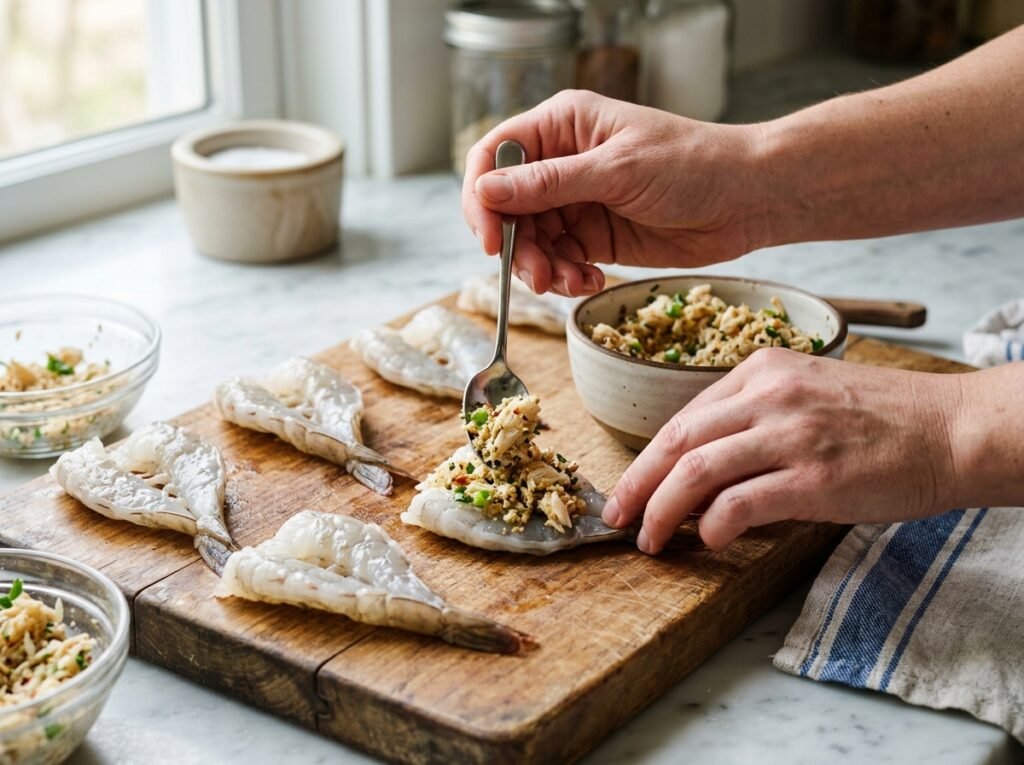
Hold a shrimp by the tail. Using a sharp knife, slice horizontally along the back curve, starting from the head end and stopping about ½ inch from the tail. Open the shrimp like a book. Remove the vein if present. Flatten slightly with your palm.
- Why it matters: Creates the pocket for stuffing. Leaving the tail attached provides a handle and helps the shrimp maintain its shape during frying.
- Texture Cue: Shrimp should lay relatively flat but still have some thickness. Don’t slice all the way through!
- Common Mistake: Cutting too close to the tail weakens the handle. Leave a solid anchor point.
3. Stuff the Shrimp
Take a generous teaspoon of chilled crab stuffing and press it firmly into the butterfly pocket of each shrimp. Smooth the top so the stuffing is level with the shrimp edges. Place stuffed shrimp on a parchment-lined tray. Freeze for 15-20 minutes.
- Why it matters: Firm packing prevents air pockets that cause bursting. Freezing solidifies the stuffing, making the next steps (breading/frying) much easier and safer.
- Visual Cue: Stuffing should be mounded slightly above the shrimp surface to account for shrinkage during cooking.
- Pro Tip: Wet your fingers slightly with water or oil to prevent sticking when pressing stuffing.
4. Set Up Breading Station
Prepare three shallow dishes: 1) All-purpose flour seasoned with salt/pepper, 2) Beaten eggs (with a splash of water/milk), 3) Panko breadcrumbs. Remove shrimp from freezer. Dredge each stuffed shrimp in flour (shake off excess), dip in egg wash (coat completely), then press firmly into panko.
- Why it matters: The flour dries the surface for egg adhesion. Egg acts as glue. Panko provides crunch. Pressing ensures crumbs stick to the moist stuffing.
- Texture Cue: Coating should be even and thick enough to cover all exposed stuffing. No bare spots!
- Safety Note: Keep one hand “wet” (egg/panko) and one hand “dry” (flour/shrimp) to avoid clumpy fingers.
5. Heat Oil & Fry
Heat 2-3 inches of neutral oil (canola, vegetable, peanut) in a heavy pot to 365°F (185°C). Carefully lower 3-4 stuffed shrimp into oil using a spider skimmer. Do not crowd. Fry for 2-3 minutes, turning once, until golden brown and internal temp reaches 145°F (63°C).
- Why it matters: Correct temperature seals the crust instantly, preventing oil absorption and stuffing leakage. Crowding drops oil temp, leading to greasy, soggy shrimp.
- Visual Cue: Bubbles should be active but not violent. Golden amber color indicates doneness.
- Aroma Cue: Smell of toasted breadcrumbs and cooking seafood. Burnt smell = oil too hot.
6. Drain & Rest
Transfer fried shrimp to a wire rack set over a baking sheet. Let rest for 2-3 minutes before serving. This allows residual heat to finish cooking the center and lets excess oil drip away.
- Why it matters: Resting prevents burning your mouth and ensures the crust stays crisp. Placing directly on paper towels traps steam and softens the bottom.
- Texture Cue: Crust should sound crisp when tapped. Shrimp should feel firm but yielding.
- Serving Tip: Serve immediately with chilled dipping sauce and lime wedges.
Expert Tips
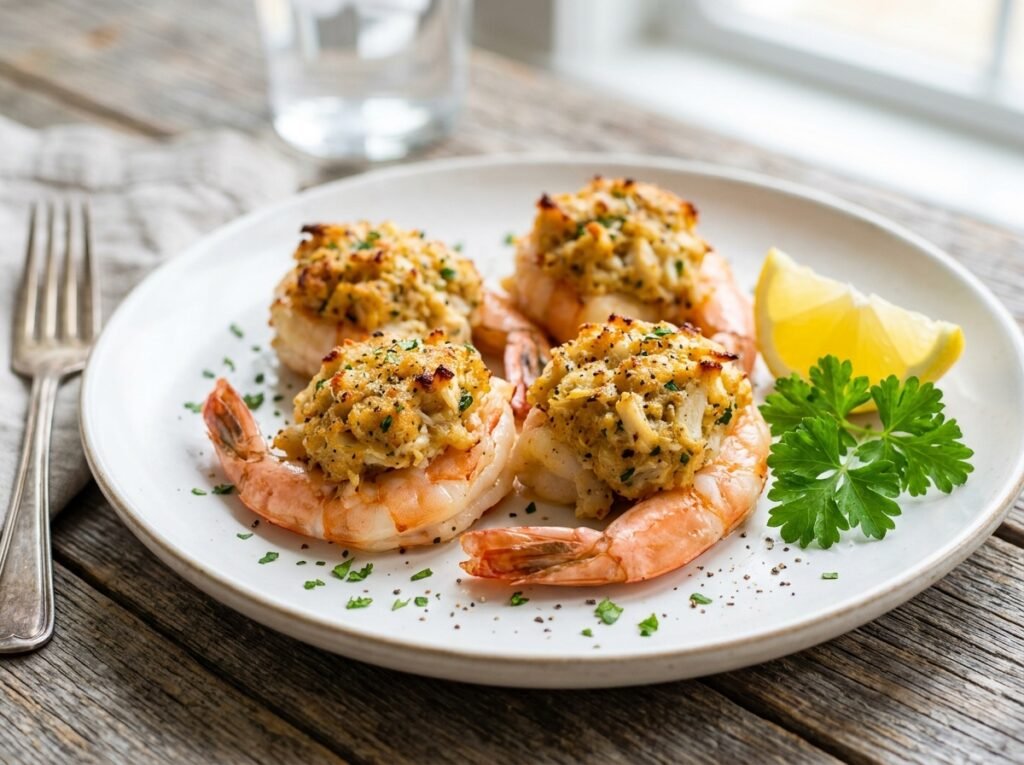
- The Freeze Step is Non-Negotiable: Skipping the 15-minute freeze after stuffing leads to disaster. The stuffing will slump, leak, and burn in the oil. Patience here guarantees perfection.
- Oil Temperature Management: Invest in a good thermometer. Oil temp drops when food enters. Wait for it to recover to 365°F before adding the next batch. Adjust heat source as needed.
- Crab Quality Dictates Success: This recipe lives or dies by the crab. Splurge on fresh-picked lump crab. Imitation crab changes the dish entirely (though still tasty, it’s a different experience).
- Season Every Layer: Season the flour, the egg wash (lightly), and the crab stuffing. Bland breading ruins the experience. Old Bay, celery salt, and white pepper are classic choices.
- Test One First: Always fry one test shrimp before committing the whole batch. Check for stuffing leakage, crust adherence, and doneness. Adjust technique if needed.
- Sauce Balance: Taste your dipping sauce before serving. It should be tangy enough to cut the fat. Add more lemon or vinegar if it tastes flat.
Common Mistakes
Stuffing Falls Out During Frying
Cause: Not packed tightly enough, skipped freezing step, or oil too cool. Fix: Pack stuffing firmly. ALWAYS freeze before breading. Maintain 365°F+ oil temp. Seal edges with a bit of egg wash if needed.
Soggy or Greasy Crust
Cause: Oil temperature too low, overcrowded pot, or drained on paper towels instead of rack. Fix: Use thermometer. Fry in small batches. Drain on wire rack. Ensure oil is hot before adding shrimp.
Rubbery Shrimp
Cause: Overcooking or using pre-cooked shrimp. Fix: Use RAW shrimp only. Cook to 145°F internal temp (2-3 mins max). Shrimp continue cooking while resting.
Breading Falls Off
Cause: Shrimp surface too wet/dry, didn’t press crumbs, or handled too roughly. Fix: Pat shrimp dry before flour. Press panko firmly. Handle gently after breading. Ensure egg wash coats completely.
Crab Stuffing Too Mushy
Cause: Overmixed, too much mayo, or low-quality crab. Fix: Fold gently. Use just enough mayo to bind. Pick through crab for shells/cartilage. Chill thoroughly before stuffing.
Recipe Variations
Spicy Cajun Stuffed Shrimp
Add 1 tsp cayenne, ½ tsp smoked paprika, and diced jalapeño to the crab stuffing. Use Creole seasoning in the flour dredge. Serve with remoulade sauce.
Cheesy Crab Shrimp
Fold ¼ cup grated Parmesan or Gruyère into the crab mixture. The cheese melts into the stuffing, adding richness and helping bind. Reduce mayo slightly.
Bacon-Wrapped Stuffed Shrimp
Wrap each stuffed shrimp with a half-slice of thin-cut bacon before breading. Secure with toothpick. Bake at 400°F for 12-15 mins instead of frying for a smoky twist.
Gluten-Free Version
Use almond flour or rice flour for dredge. Substitute panko with crushed gluten-free crackers or cornflake crumbs. Verify all other ingredients (especially crab) are GF certified.
Air Fryer Method
Spray breaded shrimp generously with oil. Air fry at 390°F for 8-10 minutes, flipping halfway. Lighter but still crispy. Best for smaller batches.
Lobster-Stuffed Shrimp
Replace crab with chopped lobster meat. Add tarragon and chives to stuffing. Elevates the dish to ultra-luxury status. Adjust cook time slightly if lobster is pre-cooked.
Vegan “Crab” Shrimp
Use hearts of palm or jackfruit mixed with nori flakes, lemon, and Old Bay as crab substitute. Use flax egg and vegan panko. Surprisingly convincing texture!
What to Serve With This Recipe
- Creamy Herb Dipping Sauce: Essential. Mix mayo, sour cream, lemon juice, dill, chives, capers, and Dijon.
- Lemon Wedges: Fresh acidity brightens the fried richness.
- Light Green Salad: Arugula with shaved fennel and citrus vinaigrette cuts through the heaviness.
- Coleslaw: Tangy, crunchy slaw provides textural contrast and palate cleansing.
- Hush Puppies: Classic Southern pairing. Cornmeal fritters complement the seafood theme.
- Sparkling Wine or Champagne: Bubbles and acidity cut fat beautifully. Sauvignon Blanc or Albariño also excellent.
- Grilled Asparagus: Simple, charred veg balances the indulgent main.
- Garlic Bread: For those who want maximum carb comfort alongside the seafood.
Make Ahead & Meal Prep Tips
- Stuffing Prep: Make crab stuffing up to 24 hours ahead. Store covered in fridge. Flavors improve overnight.
- Shrimp Prep: Butterfly and devein shrimp up to 1 day ahead. Store on parchment-lined tray, covered, in fridge.
- Assembly Line: Stuff and freeze shrimp up to 1 week ahead. Store frozen stuffed shrimp in airtight container with parchment between layers. Bread and fry from frozen (add 1 min cook time).
- Breading Station: Set up bowls ahead. Keep covered in fridge if prepping >1 hour before cooking.
- Sauce: Make dipping sauce 2-3 days ahead. Stores perfectly in fridge.
- DO NOT Pre-Fry: Fried seafood reheats poorly. Always fry fresh for best texture. Prep everything else ahead, fry just before serving.
Storage & Reheating Instructions
Refrigerator
Store leftover stuffed shrimp in airtight container for up to 2 days. Expect some loss of crispness. Store dipping sauce separately for up to 5 days.
Freezer
Freeze cooked shrimp on baking sheet until solid, then transfer to bag. Up to 1 month. Thaw in fridge overnight before reheating. Freezing unbreaded stuffed shrimp (pre-fry) works better for long-term storage.
Reheating Methods
- Oven (Best): Preheat to 375°F. Place shrimp on wire rack over baking sheet. Bake 8-10 mins until heated through and crisp. Revives texture best.
- Air Fryer: 375°F for 4-5 mins. Excellent for restoring crunch. Spray lightly with oil first.
- Stovetop: Re-crisp in skillet with minimal oil over medium heat, 2-3 mins per side. Good for single servings.
- Microwave (Avoid): Will make crust soggy and shrimp rubbery. Only use if desperate; 30 sec bursts max.
Nutritional Information
Estimates per piece (based on jumbo shrimp + 1 tbsp stuffing + breading):
- Calories: 280 kcal
- Protein: 22g
- Carbohydrates: 14g
- Fat: 16g
- Fiber: 1g
- Sugar: 1g
- Sodium: 420mg
Note: Values vary based on shrimp size, stuffing ratio, and oil absorption. Dipping sauce adds ~50 kcal/tbsp.
Troubleshooting Guide
Problem: Stuffing Leaks Into Oil
Cause: Loose packing, no freeze, oil too cool, or tear in shrimp. Fix: Pack tighter. Freeze 20 mins min. Maintain 365°F+. Patch tears with extra stuffing/egg wash before breading.
Problem: Coating Burns Before Shrimp Cooks
Cause: Oil too hot (>385°F) or panko too close to heat. Fix: Lower heat. Move pot off burner briefly if needed. Tent loosely with foil if browning too fast. Finish in oven if crust is done but center raw.
Problem: Shrimp Curl Excessively
Cause: Natural muscle contraction. Makes stuffing fall out. Fix: Make shallow cuts on underside (belly) of shrimp before stuffing to release tension. Press flat during stuffing/freezing.
Problem: Crab Tastes Fishy
Cause: Old crab, insufficient acid/seasoning, or overcooked. Fix: Use freshest crab possible. Boost lemon, herbs, Old Bay. Don’t overcook stuffing. Add pinch of sugar to balance.
Problem: Breading Too Thick/Hard
Cause: Too many dips, stale panko, or oil too cool. Fix: Single coat each layer. Use fresh panko. Maintain proper oil temp. Shake off excess flour/egg.
Frequently Asked Questions
1. Can I use canned crab meat? Technically yes, but texture suffers greatly. Canned crab is often mushy and salty. Fresh-picked lump crab is worth the investment for this recipe. If using canned, drain well and pat dry.
2. How do I know when the shrimp are done? Internal temperature should reach 145°F (63°C). Visually, shrimp turns opaque pink/white and flesh feels firm. Crust should be deep golden. Overcooked shrimp is rubbery; err on side of slight underdoneness as they carryover cook.
3. Can I bake instead of fry? Yes, but texture differs. Bake at 400°F on oiled rack for 12-15 mins. Spray generously with oil. Won’t be as crispy as fried, but lighter. Broil last 2 mins for color.
4. What oil is best for frying? Neutral oils with high smoke points: canola, vegetable, grapeseed, or peanut. Avoid olive oil (low smoke point, strong flavor) or butter (burns). Peanut oil adds subtle nuttiness that complements seafood.
5. Can I prepare these entirely ahead for a party? Prep stuffing, butterfly shrimp, stuff, and freeze up to 1 week ahead. Bread just before frying. Fry in batches as guests arrive. Nothing beats fresh-fried texture.
6. My stuffing keeps falling out. Help! Ensure shrimp are dried before stuffing. Pack stuffing FIRMLY. Freeze 20 mins minimum. Double-check oil temp (must be 365°F+). Consider adding 1 tsp cornstarch to stuffing as extra binder.
7. Is there a dairy-free option? Substitute mayo with vegan mayo or silken tofu blended with lemon. Use flax egg for wash. Verify panko is dairy-free (most are). Dipping sauce can use vegan mayo/yogurt.
8. Can I use smaller shrimp? Not recommended. Shrimp under 21/25 count lack surface area for adequate stuffing. You’ll end up with mostly breading and little filling. Stick to jumbo (16/20) or colossal (U/15).
Final Thoughts
These stuffed crab shrimp represent the pinnacle of seafood appetizers—a harmonious blend of textures and flavors that feels both indulgent and refined. Mastering this recipe opens doors to countless variations and impresses guests effortlessly. Remember, the secret lies in patience: chilling the stuffing, freezing the assembled shrimp, and maintaining precise oil temperature. Each step builds toward that perfect bite of crispy, creamy, oceanic bliss.