Quick Recipe Summary
| Feature | Details |
|---|---|
| Prep Time | 20 Minutes |
| Cook Time | 15 Minutes (under pressure) |
| Total Time | 35 Minutes |
| Servings | 2-3 Servings |
| Cuisine | Southeast Asian / Thai Fusion |
| Course | Main Course |
| Difficulty | Intermediate |
| Calories | ~480 kcal per serving |
Table of Contents
- Introduction
- Why This Recipe Works
- Why You’ll Love This Recipe
- Ingredient Notes
- Kitchen Equipment
- Step-by-Step Instructions
- Expert Tips
- Common Mistakes
- Recipe Variations
- What to Serve With This Recipe
- Make Ahead & Meal Prep Tips
- Storage & Reheating Instructions
- Nutritional Information
- Troubleshooting Guide
- Frequently Asked Questions
- Final Thoughts
Introduction

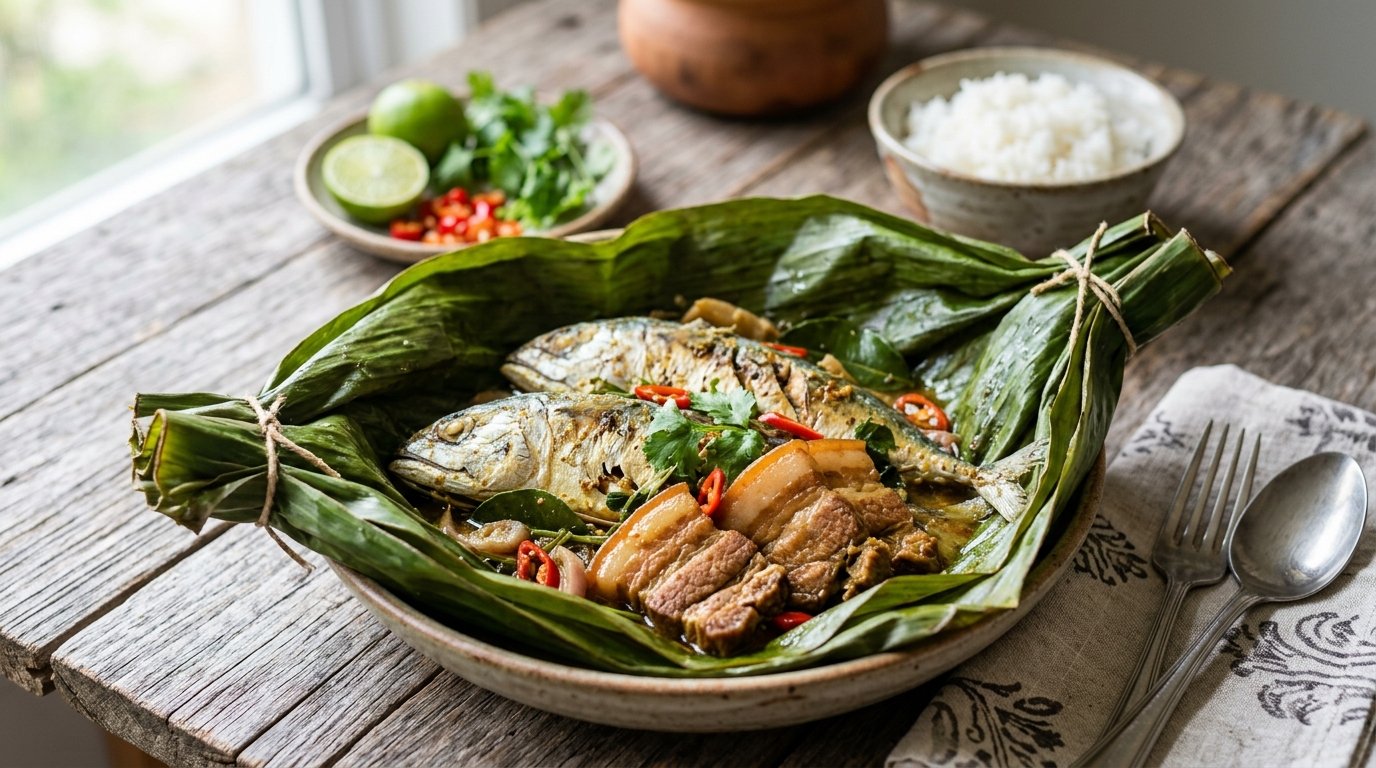
There is a distinct magic that happens when fresh fish meets the aromatic embrace of a banana leaf. This pressure cooker banana leaf steamed mackerel recipe captures that essence perfectly, transforming a simple weeknight dinner into an aromatic culinary event. By utilizing the intense steam of a pressure cooker, we achieve a texture that is impossibly tender and moist, infusing the fish with the subtle, tea-like fragrance of the leaf in a fraction of the time traditional steaming requires.
The beauty of this dish lies in its layering. We aren’t just steaming a fish; we are creating a flavor ecosystem. The fatty richness of pork belly renders down to baste the vegetables below, while the mackerel, wrapped securely in its green cocoon, steams in its own juices enhanced by chilies, garlic, and shallots. Served over fluffy jasmine rice with a zesty chili-lime dipping sauce, this meal offers a perfect balance of heat, acid, salt, and umami. Whether you are a fan of bold Thai flavors or simply looking for a healthier way to cook oily fish, this method delivers restaurant-quality results with home-cook convenience.
Why This Recipe Works
This recipe succeeds because it leverages three specific culinary principles: fat rendering, aromatic encapsulation, and pressurized hydration.
First, the placement of ingredients matters. By placing the pork belly at the bottom of the pot alongside hardy vegetables like Thai eggplant and garlic, we utilize the “pot-in-pot” or layered steaming effect. As the pressure builds, the fat from the pork belly melts and drips onto the vegetables, preventing them from drying out and adding a savory depth to the base layer.
Second, the banana leaf acts as more than just a wrapper; it is a flavor agent. When heated, the leaf releases polyphenols and volatile oils that impart a unique, grassy-sweet aroma to the fish. Crucially, it also creates a barrier that prevents the delicate fish flesh from becoming waterlogged by direct contact with boiling water or condensation.
Finally, the pressure cooker ensures that the internal temperature rises quickly and stays consistent. Mackerel is an oily fish that can become tough if overcooked, but the precise environment of a pressure cooker cooks it through gently yet rapidly, preserving its buttery texture while ensuring food safety.
Why You’ll Love This Recipe
- Incredible Aroma: The combination of heating banana leaves and fresh chilies fills your kitchen with an intoxicating, authentic Southeast Asian scent.
- Moisture Retention: Unlike grilling or baking, which can dry out lean fish, the banana leaf wrap guarantees succulent, flaky flesh every time.
- One-Pot Efficiency: The protein, aromatics, and vegetable base all cook in a single vessel, minimizing cleanup.
- Healthy Fats: Mackerel is rich in Omega-3s, and the steaming method requires no added frying oil.
- Flavor Customization: The dipping sauce allows each diner to adjust the spice and acidity levels to their personal preference.
- Impressive Presentation: Unwrapping the banana leaf at the table reveals a pristine, glistening fish that looks as good as it tastes.
Ingredient Notes
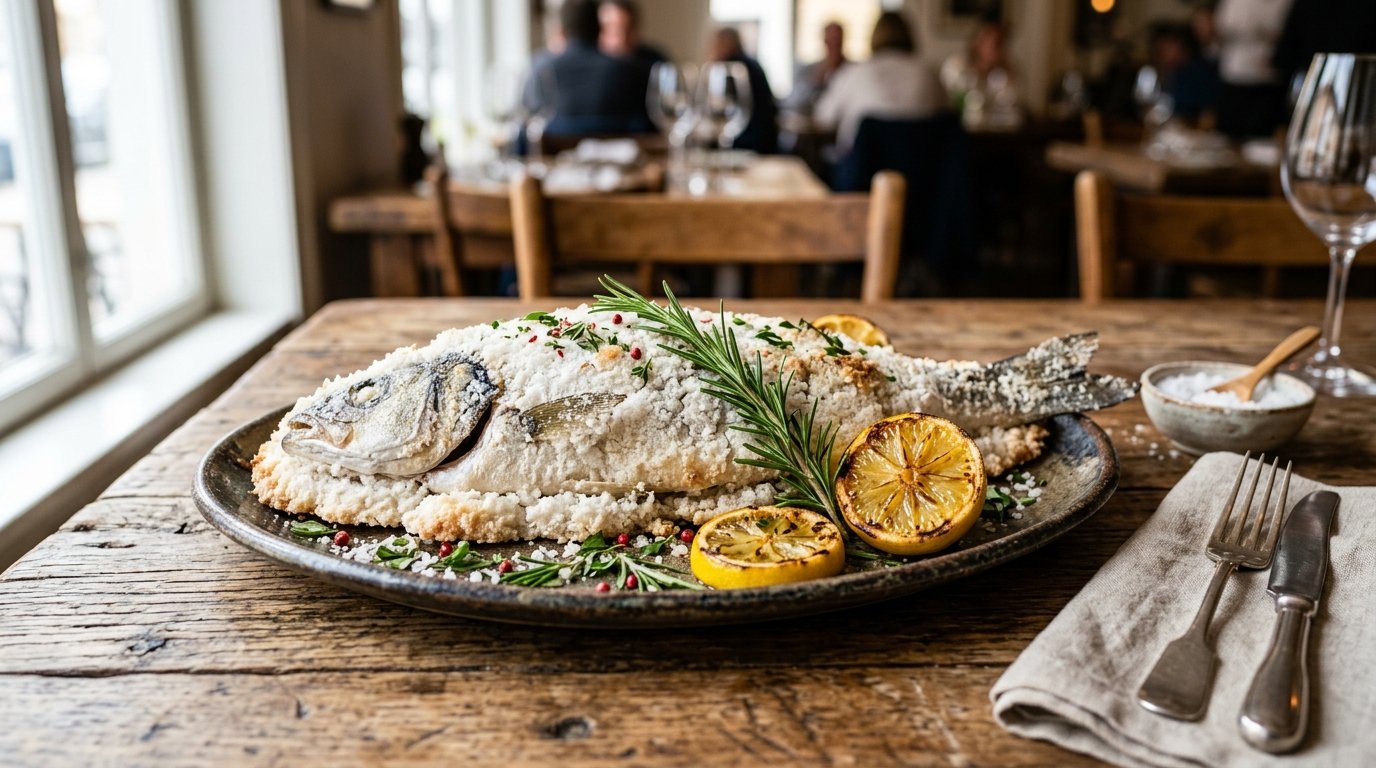
Whole Mackerel (Pla Thu)

- Purpose: The star protein. Mackerel has a firm texture and high oil content that stands up well to strong spices and steaming.
- Substitutions: If whole mackerel is unavailable, use whole sea bass, snapper, or trout. Fillets can be used but reduce cooking time significantly.
- Buying Tip: Look for clear eyes, bright red gills, and shiny skin. The fish should smell like the ocean, not “fishy.”
- Storage Tip: Keep on ice in the coldest part of your fridge and cook within 24 hours of purchase.
Banana Leaves
- Purpose: Wrapping vessel and aromatic flavor enhancer.
- Substitutions: Aluminum foil (for structure) lined with parchment paper. Note: You will lose the distinct banana leaf flavor.
- Buying Tip: Available frozen in Asian markets. Thaw completely before use. Fresh leaves are superior but harder to find outside tropical regions.
- Prep Tip: Wilt the leaves over an open flame or dip in hot water for 10 seconds before wrapping. This makes them pliable and prevents cracking.
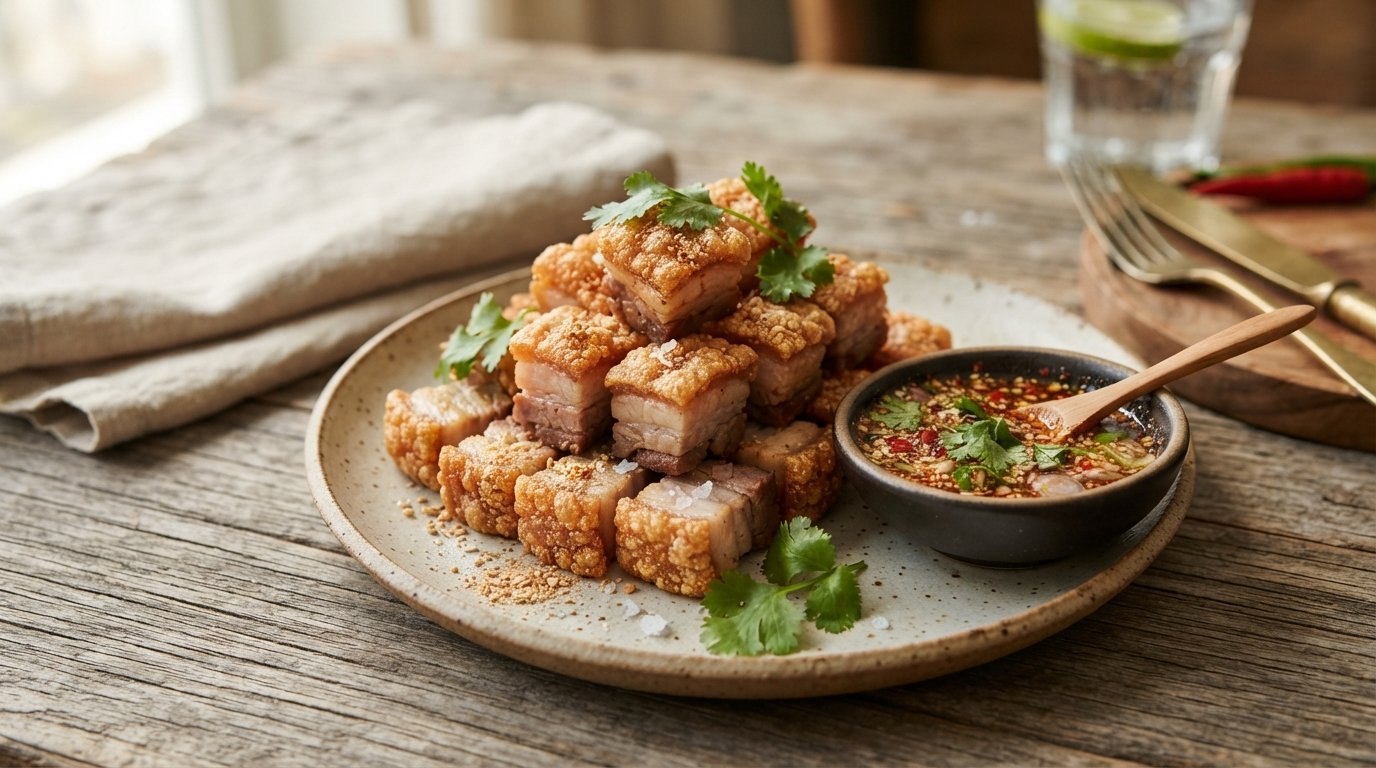
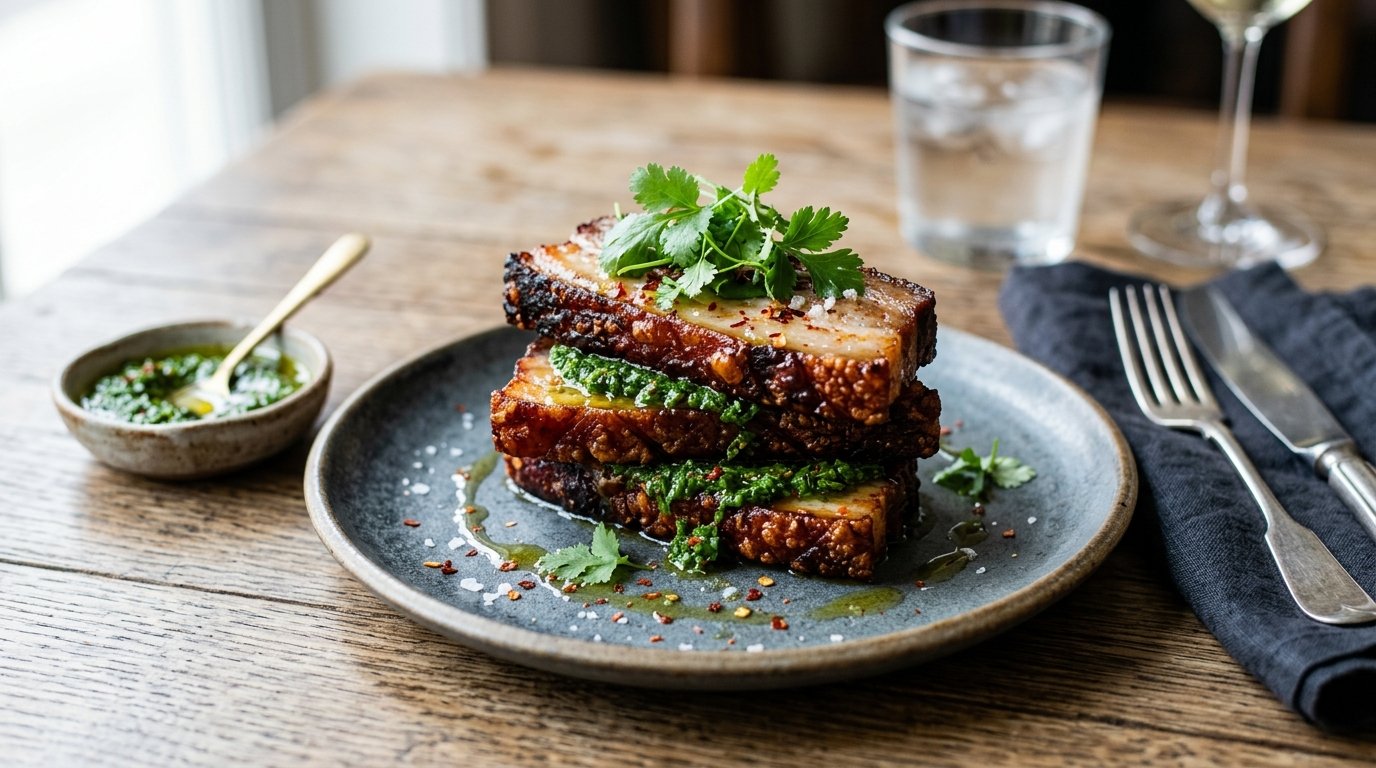
Pork Belly
- Purpose: Adds richness and fat to the steaming liquid/vegetable base.
- Substitutions: Chicken thighs (skin-on), beef short ribs, or omit for a lighter version (add 1 tbsp oil to veggies).
- Buying Tip: Choose a piece with even layers of fat and meat. Thick-cut slices work best here.
Thai Eggplant (Pea Eggplants)
- Purpose: Traditional vegetable pairing that absorbs the savory pork fat and fish steam.
- Substitutions: Regular globe eggplant (cubed), zucchini, or okra.
- Note: These small, round eggplants hold their shape better under pressure than large varieties.
Aromatics (Garlic, Shallots, Chilies)
- Purpose: Flavor foundation. Garlic and shallots provide sweetness/savory notes; bird’s eye chilies provide heat.
- Substitutions: Yellow onion for shallots; jalapeño or serrano for bird’s eye chilies (adjust quantity for heat).
- Tip: Leave chilies whole to infuse flavor without making the dish overwhelmingly spicy. Pierce them slightly to release oils.
Dipping Sauce Ingredients (Lime, Fish Sauce, Sugar, Chilies)
- Purpose: Essential condiment to cut through the richness of the fish and pork.
- Substitutions: Soy sauce + vinegar for a vegetarian alternative to fish sauce. Palm sugar can replace white sugar for deeper caramel notes.
Kitchen Equipment
- Pressure Cooker (Instant Pot or Stovetop): Essential for the rapid, moist cooking method. 6-quart size is ideal.
- Sharp Chef’s Knife: For scoring the fish and chopping vegetables.
- Cutting Board: Preferably wood or plastic dedicated to raw fish.
- Tongs: Heat-resistant tongs are crucial for safely removing the hot banana leaf packet.
- Small Mixing Bowl: For preparing the dipping sauce.
- Mortar and Pestle (Optional): For bruising chilies/garlic for the sauce, though chopping works fine.
Step-by-Step Instructions
1. Prepare the Mackerel
Rinse the whole mackerel under cold water and pat it thoroughly dry with paper towels. Using a sharp knife, score the fish diagonally on both sides, making 3-4 cuts about ½ inch deep.
- Why it matters: Scoring allows heat to penetrate the thickest part of the fish evenly and provides pockets for steam and aromatics to enter. It also helps the fish cook faster in the pressure cooker.
- Visual Cue: Cuts should reach the bone but not sever the fish in half.
- Safety Tip: Hold the fish firmly but gently to avoid slipping.
2. Wrap the Fish in Banana Leaf
Lay a large piece of wilted banana leaf flat on your work surface. Place the scored fish in the center. Fold the sides of the leaf over the fish, then roll it up tightly from head to tail to create a sealed cylinder.
- Why it matters: A tight seal traps moisture and aroma inside. If the packet is loose, steam escapes and the fish dries out.
- Texture Cue: The leaf should feel secure but not so tight that it tears under pressure expansion.
- Pro Tip: If the leaf is smaller than the fish, overlap two pieces. No need for string; the fold holds itself under pressure.
3. Layer the Base Ingredients

Place the cubed pork belly, halved Thai eggplants, whole garlic cloves, and sliced shallots directly into the inner pot of the pressure cooker. Arrange them in a relatively even layer.
- Why it matters: These ingredients form the “rack” that elevates the fish packet slightly and creates the flavorful steam environment. The pork fat needs direct contact with the pot bottom to render effectively.
- Aroma Cue: Even raw, the garlic and shallots begin to perfume the pot.
4. Add Chilies and Assemble
Scatter the whole green and red bird’s eye chilies over the vegetable/pork base. Carefully place the wrapped banana leaf fish packet on top of the bed of ingredients.
- Why it matters: Placing chilies at the bottom allows their heat to infuse the rising steam, subtly seasoning the fish from below without burning them.
- Visual Cue: Ensure the fish packet isn’t crushed; it should sit comfortably atop the other ingredients.
5. Pressure Cook
Secure the lid and set the valve to “Sealing.” Cook on High Pressure for 8-10 minutes (depending on fish size). Allow a Natural Release for 5-10 minutes, then carefully vent any remaining steam.
- Why Natural Release? Sudden depressurization can cause the delicate fish flesh to contract violently and become tough. A gradual release keeps it tender.
- Timing Note: 8 minutes for smaller fish (<1 lb), 10 minutes for larger ones.
- Safety: Never force-open the lid while pressure remains.
6. Unwrap and Serve
Using tongs, lift the hot banana leaf packet onto a serving platter. Carefully unwrap the leaf (watch for escaping steam!). Serve immediately with steamed jasmine rice and the prepared chili-lime dipping sauce.
- Visual Cue: The fish skin should be intact and silvery-gold; flesh should be opaque and flake easily.
- Aroma Cue: A burst of herbal, citrusy, and savory steam upon opening.
Expert Tips
- Wilt Your Leaves Properly: Dry banana leaves crack like glass. Passing them quickly over a gas flame or soaking in hot water for 10 seconds activates the pectin, making them flexible and releasing their aroma before cooking even begins.
- Don’t Overstuff the Pot: Pressure cookers need space for steam circulation. If your pot is too small, cook the base ingredients and fish separately or in batches. Overfilling leads to uneven cooking and potential burn errors.
- Score Deeply Enough: Shallow scores won’t help much. Aim for depth that exposes the bone slightly. This ensures the area near the backbone—which takes longest to cook—doesn’t remain raw while the tail overcooks.
- Use Fresh Chilies for Sauce: The dipping sauce is the soul of this dish. Use freshly squeezed lime juice, not bottled. The brightness of fresh citrus balances the salty fish sauce perfectly.
- Check Doneness Visually: After opening, peek at the eye of the fish. If it’s white and protruding, it’s done. If still clear/translucent, give it 2 more minutes under pressure.
Common Mistakes
Cracking the Banana Leaf
Why: Using cold, dry leaves or folding too sharply. Fix: Always wilt/warm leaves first. Roll rather than crease. If a tear occurs, patch it with a second piece of leaf; the pressure will hold it together.
Fish Sticking to Leaf
Why: Insufficient moisture or natural oils in the fish. Fix: Rub a tiny amount of oil on the inside of the leaf before placing the fish. Alternatively, place a few herb sprigs (lemongrass/kaffir lime) between fish and leaf as a non-stick barrier.
Bland Vegetables
Why: Vegetables placed above the fish don’t get the pork fat drippings. Fix: Always layer hearty veg and pork at the bottom. The fish goes on top. The downward drip of rendered fat is what seasons the base.
Tough Fish Texture
Why: Quick release of pressure or overcooking. Fix: Stick to natural release. Set a timer strictly. Mackerel continues to cook during the 5-minute natural release phase.
Recipe Variations
Spicy Version
Add 2 tablespoons of chopped fresh chilies inside the banana leaf packet along with the fish. Increase bird’s eye chilies in the base to 10-12. Make the dipping sauce extra fiery by blending seeds into it.
Vegetarian / Vegan
Replace pork belly with firm tofu cubes marinated in soy sauce and sesame oil. Substitute fish sauce in the dipping sauce with mushroom seasoning or vegan “fish” sauce. Add shiitake mushrooms to the base for umami depth.
Chicken Variation
Use bone-in chicken thighs instead of mackerel. Increase pressure cook time to 12-15 minutes. Chicken pairs beautifully with banana leaf and absorbs the chili-garlic steam wonderfully.
Low-Carb / Keto
Serve over cauliflower rice instead of jasmine rice. Omit sugar in the dipping sauce or use erythritol/monk fruit. Increase the pork belly portion for higher fat content.
Herb-Forward Version
Stuff the banana leaf packet with generous amounts of lemongrass stalks, kaffir lime leaves, and galangal slices alongside the fish. This creates a more complex, Tom Yum-inspired aroma profile.
Seafood Medley
Add large shrimp or scallops inside the banana leaf packet during the last 3 minutes of cooking (or reduce initial cook time). Delicate seafood benefits from the shorter exposure to intense steam.
What to Serve With This Recipe
- Steamed Jasmine Rice: The essential neutral canvas that soaks up the dipping sauce and fish juices.
- Thai Chili-Lime Dipping Sauce (Nam Jim Seafood): Non-negotiable accompaniment. Mix fish sauce, lime juice, palm sugar, garlic, and chilies.
- Stir-Fried Morning Glory (Pad Pak Boong): A crunchy, garlicky green vegetable side that contrasts the soft fish.
- Fresh Cucumber Salad: Sliced cucumbers with rice vinegar and sugar provide a cooling palate cleanser.
- Tom Yum Soup: For a full feast, start with this hot and sour soup.
- Mango Sticky Rice: A sweet, creamy dessert that balances the savory-spicy main course.
- Ice Cold Thai Iced Tea: The sweetness and creaminess cut through the spice and salt perfectly.
Make Ahead & Meal Prep Tips
- Dipping Sauce: Can be made up to 3 days ahead. Flavors actually improve as they meld. Store in an airtight jar in the fridge. Bring to room temp before serving.
- Vegetable Prep: Chop eggplant, garlic, shallots, and chilies up to 24 hours in advance. Store in separate containers in the fridge.
- Fish Prep: Clean and score the fish up to 4 hours ahead. Keep refrigerated on ice. Do NOT wrap in banana leaf until ready to cook, as prolonged contact can make the skin slimy.
- Banana Leaves: Wilt and portion leaves ahead of time. Store between damp paper towels in a ziplock bag in the fridge for up to 3 days.
- Meal Prep Caution: This dish is best fresh. Reheated steamed fish loses texture. However, leftover dipping sauce and pre-chopped veggies are excellent meal prep components.
Storage & Reheating Instructions
Refrigerator
Store leftover fish (unwrapped from leaf) in an airtight container for up to 2 days. Store dipping sauce separately for up to 1 week. Cooked vegetables and pork can be stored with the fish or separately for 3 days.
Freezer
Not recommended. Steamed fish becomes mushy and watery upon thawing. Banana leaf texture also degrades. Freeze only the dipping sauce (up to 3 months) or raw prepped vegetables.
Reheating Methods
- Stovetop (Best): Place fish in a steamer basket over simmering water for 3-4 minutes. Gentle steam revives moisture without further cooking.
- Microwave: Place on microwave-safe plate, cover with damp paper towel. Heat on 50% power in 30-second bursts. High power will rubberize the fish.
- Air Fryer: Not suitable. Will dry out the fish and crisp the skin unpleasantly.
- Oven: Wrap fish loosely in foil with a splash of water. Heat at 300°F (150°C) for 8-10 minutes. Better than microwave but inferior to steaming.
Nutritional Information
Estimates per serving (based on 1/3 of recipe with rice):
- Calories: 480 kcal
- Protein: 38g
- Carbohydrates: 42g (mostly from rice)
- Fat: 18g
- Fiber: 3g
- Sugar: 6g
- Sodium: 850mg
Note: Sodium varies based on fish sauce quantity in dipping sauce. Mackerel provides significant Omega-3 fatty acids (approx. 2-3g per serving).
Troubleshooting Guide
Problem: Burn Notice on Pressure Cooker
Cause: Insufficient liquid or starchy residue on pot bottom. Fix: Ensure at least 1 cup of liquid (water/broth) is in the pot before adding solids. Deglaze pot thoroughly after sautéing anything. If burn occurs, cancel, release pressure naturally, check for scorching, transfer unburnt food to new pot with added liquid, and restart.
Problem: Fish Falls Apart When Unwrapping
Cause: Overcooked or handled too roughly. Fix: Reduce cook time by 2 minutes next batch. Use wide spatula/tongs to support entire fish when lifting. Let rest 2 minutes after unwrapping to firm up slightly.
Problem: Banana Leaf Tears During Cooking
Cause: Leaf too dry or pot overfilled. Fix: Patch with extra leaf before cooking. Next time, ensure proper wilting and don’t exceed 2/3 pot capacity. Tear doesn’t ruin dish; just may result in slightly less aromatic fish.
Problem: Dipping Sauce Too Salty/Sour
Cause: Imbalanced ratios. Fix: Add more sugar to counter salt/sour. Add water to dilute overall intensity. Always taste and adjust before serving. Balance is personal; there’s no single “correct” ratio.
Frequently Asked Questions
1. Can I use frozen mackerel for this recipe? Yes, but thaw completely in the fridge overnight first. Pat very dry before scoring. Frozen fish may release more water during cooking; consider reducing other liquids slightly. Texture may be slightly softer than fresh.
2. Is the banana leaf edible? No. It’s purely for wrapping and flavor infusion. Remove it before eating, like a corn husk or parchment paper. The aroma transfers to the fish, but the leaf itself is fibrous and inedible.
3. Can I skip the pork belly entirely? Absolutely. The dish will be lighter. To compensate for lost fat/flavor, add 1 tablespoon of coconut oil or sesame oil to the vegetable base, and increase garlic/shallot quantities. Consider adding mushrooms for umami.
4. How do I know if my pressure cooker has reached pressure? Most electric models display “On” then count down once pressure is reached. Stovetop models show steady steam from the valve and/or the pressure indicator pops up. Begin timing only when full pressure is achieved.
5. Can I use dried banana leaves instead of fresh/frozen? Dried leaves are extremely brittle and difficult to work with. They require extensive soaking (30+ mins) and still may crack. Fresh or frozen-thawed leaves are strongly recommended for successful wrapping.
6. What if I don’t have Thai eggplants? Regular eggplant works but cut into 1-inch cubes. Zucchini, green beans, or baby potatoes are excellent alternatives. Adjust cook time if using harder vegetables like potatoes (may need 2 extra minutes).
7. Is this recipe gluten-free? The fish, vegetables, and banana leaf are naturally GF. Verify your fish sauce brand is certified GF (some contain wheat). Tamari can substitute fish sauce in the dipping sauce for strict GF needs.
8. Can I cook multiple fish at once? Yes, if your pot is large enough. Stack packets carefully, ensuring steam can circulate. May need to add 2-3 minutes to cook time. Avoid overcrowding; better to cook in batches than risk uneven results.
Final Thoughts
This pressure cooker banana leaf steamed mackerel is more than just a recipe—it’s an experience. The ritual of wrapping, the anticipation of the steam release, and the revelation of fragrant, perfectly cooked fish create moments worth savoring. It proves that sophisticated, restaurant-worthy meals don’t require hours of labor or exotic equipment beyond what many modern kitchens already possess.