Quick Recipe Summary
| Feature | Details |
|---|---|
| Prep Time | 20 Minutes |
| Cook Time | 3 Hours (Smoking + Frying) |
| Total Time | 3 Hours 20 Minutes |
| Servings | 6–8 |
| Cuisine | Fusion (American BBQ / Latin) |
| Course | Main Course, Appetizer |
| Difficulty | Intermediate |
| Calories | ~580 kcal per serving |
Table of Contents
- Introduction
- Why This Recipe Works
- Why You’ll Love This Recipe
- Ingredient Notes
- Kitchen Equipment
- Preparation Information
- Step-by-Step Instructions
- Expert Tips
- Common Mistakes
- Recipe Variations
- What to Serve With This Recipe
- Make Ahead & Meal Prep Tips
- Storage & Reheating Instructions
- Nutritional Information
- Troubleshooting Guide
- Frequently Asked Questions
- Final Thoughts
Introduction

There is a specific moment in cooking when patience transforms into pure, unadulterated joy. For pork belly enthusiasts, that moment arrives when you slice through a slab of meat that has been smoked low and slow to tender perfection, only to finish it with a blistering hot fry that shatters the skin into thousands of tiny, crispy bubbles. This smoked crispy pork belly with chimichurri is not just a dish; it is a textural masterpiece that bridges the gap between American barbecue tradition and vibrant Latin freshness.
The concept is simple yet technically demanding: render the fat slowly over wood smoke until the meat is fork-tender, then shock the skin in hot oil to achieve an explosive crunch. The result is a bite that offers resistance, then yield, followed by a burst of herbaceous, acidic chimichurri that cuts through the richness like a laser. Whether you are hosting a summer cookout or simply treating yourself to a weekend project, this recipe delivers a sensory experience that rivals any high-end steakhouse. Let’s fire up the smoker and chase that perfect crackle.
Why This Recipe Works
The success of this crispy pork belly relies on a two-stage thermal process that addresses the unique anatomy of the cut. Pork belly consists of alternating layers of muscle and subcutaneous fat, capped by a thick layer of skin (rind). If cooked only at high heat, the skin burns before the fat renders, leaving the meat tough and chewy. If cooked only low and slow, the meat becomes tender but the skin remains leathery and unpleasant.
By smoking first at 225°F–250°F (107°C–121°C), we gently melt the intramuscular fat and break down collagen into gelatin without tightening the proteins excessively. This creates the “melt-in-your-mouth” interior. The subsequent deep-fry or pan-fry at 375°F+ (190°C+) serves a singular purpose: rapid dehydration and expansion of the skin’s moisture content, causing it to puff and crisp instantly while the already-cooked meat beneath merely warms through. The chimichurri is the essential counterpoint; its acidity and fresh herbs prevent the dish from becoming cloying, cleansing the palate and highlighting the smoky depth of the pork.
Why You’ll Love This Recipe
- Textural Contrast: The juxtaposition of glass-like crispy skin against buttery, smoky meat is addictive and unforgettable.
- Flavor Balance: Rich, fatty pork is perfectly tamed by the bright, garlicky, herbal punch of fresh chimichurri.
- Crowd-Stopping Presentation: The golden-brown, bubbly skin and vibrant green sauce make for stunning photos and immediate appetite appeal.
- Versatile Serving: Works equally well as a main course, a taco filling, or an elevated appetizer sliced into bite-sized cubes.
- Make-Ahead Friendly: The smoking stage can be done days in advance, making the final crispy finish quick and stress-free for entertaining.
Ingredient Notes
Pork Belly Slab
- Purpose: The star protein. Provides the essential fat-to-meat ratio and skin required for crisping.
- Buying Tip: Look for a slab with intact, un-scored skin. Avoid pre-sliced belly; you need a solid block to control the rendering process. Ask your butcher for “skin-on” specifically.
- Quality: Heritage breed pork often has better fat quality and flavor. Ensure the skin is dry and free of blemishes.
- Storage: Keep refrigerated until ready to prep. Pat skin completely dry before scoring. Moisture is the enemy of crispness.
Wood Chips/Pellets (Hickory, Apple, or Cherry)
- Purpose: Imparts the foundational smoky flavor during the low-and-slow phase.
- Selection: Fruit woods (apple/cherry) complement pork’s sweetness; hickory adds robust bacon-like notes. Avoid mesquite for long smokes—it can turn bitter.
- Prep: Soak chips 30 mins if using charcoal/gas smoker. Pellets generally don’t need soaking.
- Quantity: 2-3 handfuls for a 3-hour smoke. Refill as needed to maintain thin blue smoke, not thick white billows.
Chimichurri Ingredients (Parsley, Garlic, Vinegar, Oil, Chili Flakes)
- Fresh Parsley: Flat-leaf (Italian) parsley is mandatory. Curly lacks flavor. Chop finely by hand; food processors bruise herbs and create bitterness.
- Garlic: Fresh minced garlic provides pungency. Let it sit in vinegar 10 mins before adding oil to mellow raw bite.
- Red Wine Vinegar: Provides necessary acid. Substitute apple cider vinegar for fruitier note. Avoid distilled white vinegar (too harsh).
- Olive Oil: Use good quality extra virgin for finishing, but neutral oil (avocado/grapeseed) works for mixing to prevent solidifying when chilled.
- Chili Flakes: Adjust to taste. Adds heat that cuts fat. Toast lightly in dry pan first to bloom flavor.
Seasoning Rub (Salt, Pepper, Paprika)
- Salt: Kosher salt preferred for even distribution. Apply generously to meat side; sparingly to skin side (salt draws moisture).
- Paprika: Sweet or smoked paprika adds color and subtle depth. Avoid hot paprika unless you want significant heat.
- Application: Rub meat side only. Keep skin clean and dry for maximum puffing during fry.
Kitchen Equipment

- Smoker or Grill with Lid: Essential for indirect heat and smoke infusion. Offset, pellet, or kettle grill with smoke box all work.
- Heavy-Bottomed Skillet or Dutch Oven: For frying. Cast iron retains heat best for consistent crisping. Deep enough to submerge belly pieces safely.
- Sharp Chef’s Knife: Critical for clean slicing post-fry. Dull knives crush crispy skin and tear meat.
- Cutting Board: Stable surface for scoring and slicing. Plastic easier to sanitize after raw pork contact.
- Meat Thermometer: To monitor internal temp during smoke. Target 195°F–205°F (90°C–96°C) for tender belly.
- Tongs & Spider Strainer: For safe handling of hot pork and oil removal.
- Wire Rack: For draining fried pork. Prevents sogginess from sitting in pooled oil.
Preparation Information
- Prep Time: 20 Minutes (Scoring, seasoning, chimichurri prep)
- Cook Time: 3 Hours (2.5 hrs smoking + 30 mins frying/resting)
- Total Time: 3 Hours 20 Minutes
- Servings: 6–8 (Depending on slab size and cut thickness)
Step-by-Step Instructions
H3: Score and Season the Pork Belly
Pat pork belly skin completely dry with paper towels. Using sharp knife, score skin in 1-inch diamond pattern. Cut through skin and fat layer ONLY—do not cut into meat. Season meat side generously with salt, pepper, and paprika. Leave skin unseasoned and bone-dry. Refrigerate uncovered 1-2 hours (or overnight) to further dry skin.
- Why it matters: Scoring allows fat to render out and skin to expand uniformly. Dry skin = crisp skin. Moisture creates steam which prevents puffing.
- Visual Cue: Skin should look matte and parchment-like, not shiny or damp. Scores should be visible but not bleeding meat juices.
- Texture Cue: Skin feels stiff and dry to touch. Meat side tacky from seasoning.
- Pro Tip: Score when meat is cold/firm. Warm belly is slippery and dangerous to cut. Chill 30 mins if too soft.
H3: Smoke Low and Slow
Preheat smoker to 225°F–250°F (107°C–121°C). Add wood chips/pellets. Place pork belly skin-side UP on grate. Insert probe thermometer into thickest part of meat (avoiding fat cap). Smoke until internal temp reaches 195°F–205°F (90°C–96°C) and probe slides in like butter. Approx. 2.5–3 hours. Maintain thin blue smoke.
- Why it matters: Low temp renders fat without shrinking meat. High temp tightens proteins = tough belly. Blue smoke = clean flavor; white smoke = bitter/creosote.
- Visual Cue: Skin turns amber/golden but NOT crispy yet. Meat shrinks slightly, exposing scored edges. Smoke should be wispy, not billowing.
- Aroma Cue: Sweet, nutty smoke scent. No acrid/burnt smell.
- Critical Check: Temp is guide, tenderness is law. If 200°F but probe meets resistance, keep smoking. Collagen needs time to convert.
H3: Rest and Slice for Frying

Remove belly from smoker. Rest on wire rack 30 minutes. This allows juices to redistribute and skin to cool/dry further. Slice into 1.5-inch wide strips across the grain. Pat skin of strips dry again if any moisture accumulated during rest.
- Why it matters: Resting prevents juice loss when cutting. Cooling skin helps it crisp faster in hot oil (thermal shock). Slicing before frying ensures even crisping vs. whole slab.
- Visual Cue: Juices settle, not pooling on board. Skin looks tighter, less glossy.
- Texture Cue: Meat yields easily to knife. Skin feels firm, almost plastic-like.
- Safety Note: Handle rested pork carefully. It’s hot inside even if skin feels cool. Use tongs.
H3: Fry to Explosive Crispness
Heat 1-2 inches oil in heavy skillet/Dutch oven to 375°F (190°C). Carefully lower pork strips skin-side DOWN into oil. Fry 2-4 minutes, watching closely. Skin will bubble, pop, and turn deep golden-brown. Flip briefly (10-15 secs) to warm meat side. Remove to wire rack immediately. Drain 2 mins.
- Why it matters: High heat dehydrates skin rapidly, creating air pockets (crispness). Lower temp = greasy, tough skin. Brief flip prevents meat drying out.
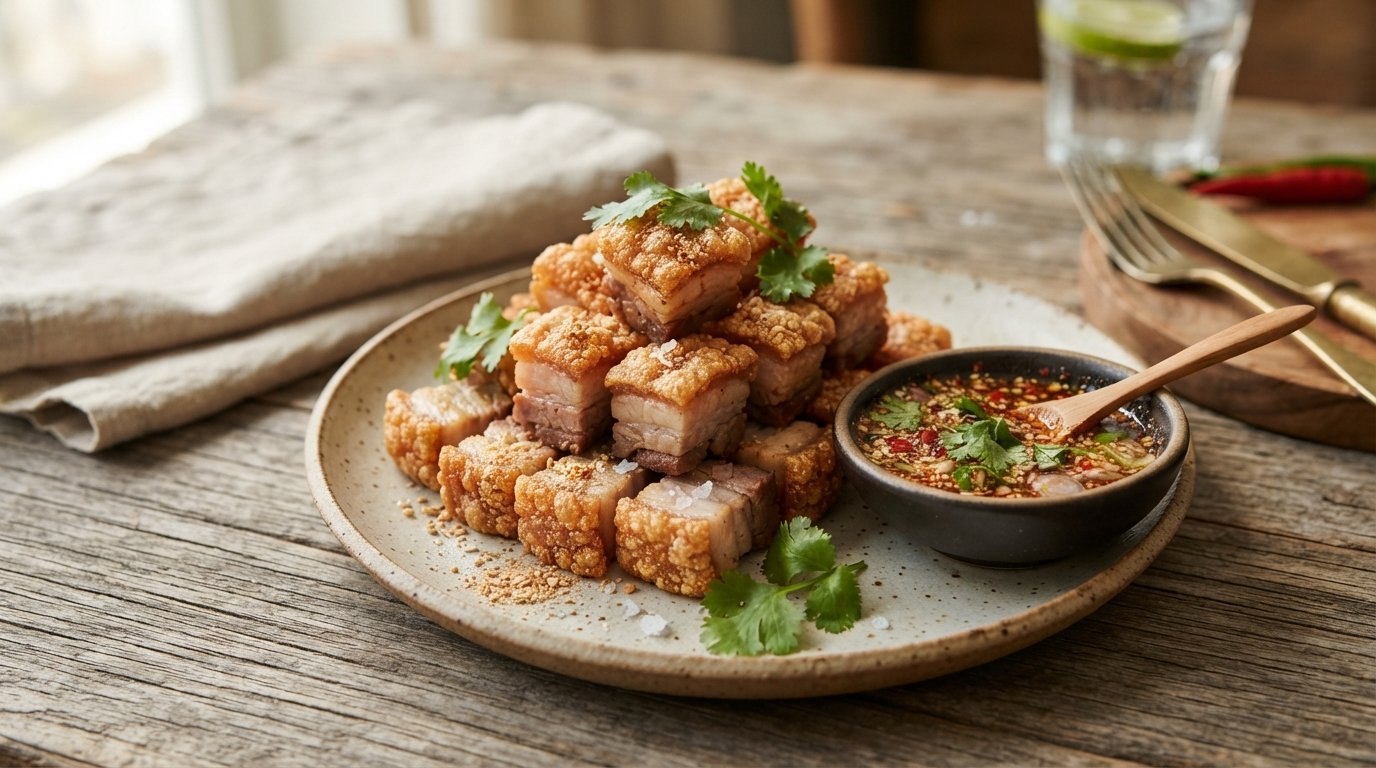
- Visual Cue: Vigorous bubbling around skin. Color shifts from pale gold to rich amber/brown. Bubbles form distinct “pearls” on surface.
- Sound Cue: Loud, active sizzling indicates proper temp. Quiet oil = too cool. Burning smell = too hot.
- Safety Warning: Hot oil + moisture = splatter. Use lid as shield if needed. Never leave unattended. Have fire extinguisher nearby.
H3: Make Chimichurri & Assemble
While pork rests/fries, combine chopped parsley, minced garlic, vinegar, chili flakes, salt, and oil in bowl. Stir vigorously. Let sit 10 mins for flavors to meld. Slice fried pork into bite-sized cubes. Arrange on platter. Spoon chimichurri generously over top JUST BEFORE SERVING.
- Why it matters: Fresh chimichurri oxidizes quickly; make close to service. Acid/herbs cut fat. Adding sauce last preserves skin crispness.
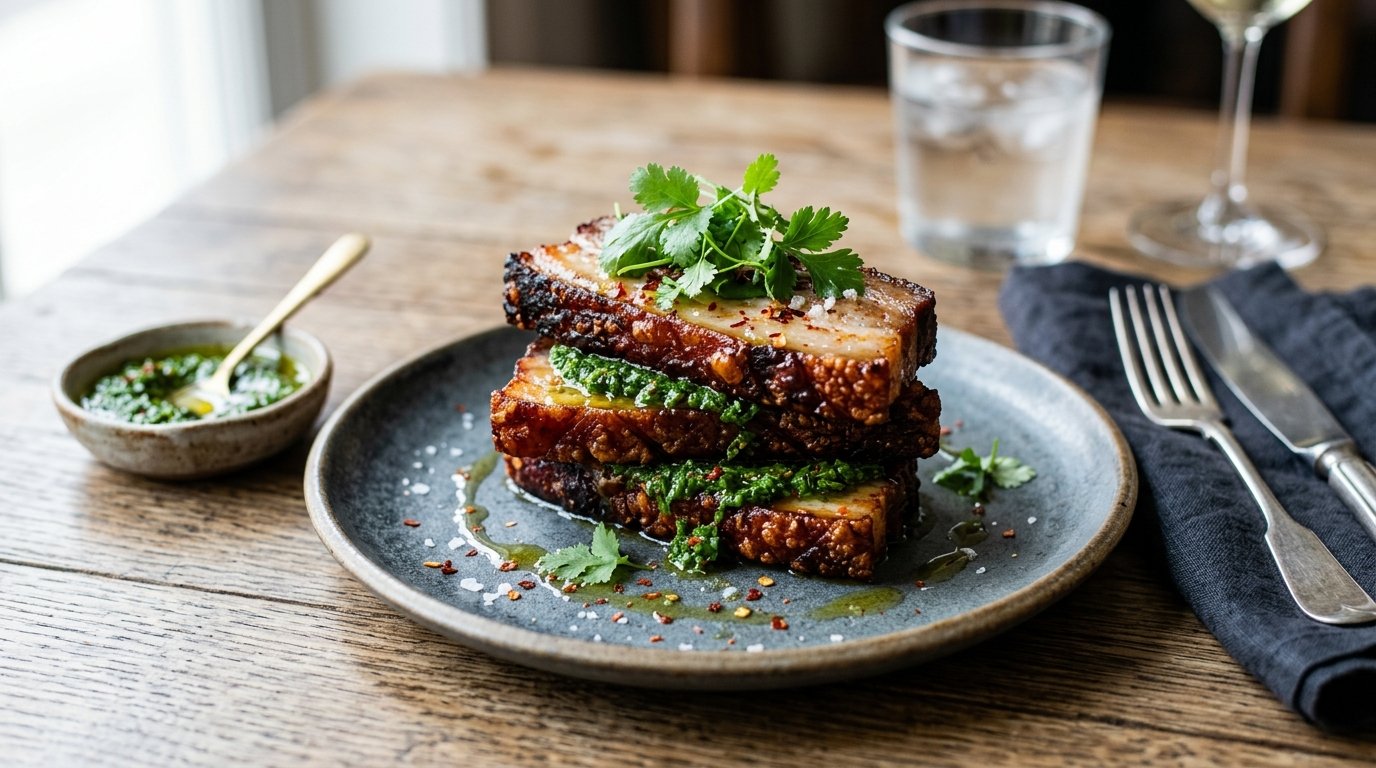
- Visual Cue: Vibrant green sauce with visible herb flecks. Pork cubes show bubbly, blistered skin and pink smoke ring.
- Aroma Cue: Bright garlic, herbal parsley, tangy vinegar contrasting with smoky pork.
- Serving Tip: Serve IMMEDIATELY. Crispy skin begins softening within minutes of saucing. Provide forks/toothpicks.
Expert Tips
- Dry Skin is Non-Negotiable: After smoking, if skin feels at all moist, pat aggressively with paper towels or air-dry under fan 15 mins. Even slight dampness ruins crispness. Some chefs sprinkle baking soda on skin pre-smoke to draw moisture—rinse off before frying if using this trick.
- Oil Temperature Control: Use thermometer for oil. 375°F is sweet spot. Below 350°F = soggy/greasy. Above 400°F = burnt skin/raw interior. Adjust heat between batches.
- Slice Against Grain: Always cut perpendicular to muscle fibers. This shortens strands, making each bite tender rather than chewy. Visible grain runs lengthwise on belly; slice crosswise.
- Don’t Overcrowd Fryer: Dropping temp kills crispness. Fry in batches if needed. Maintain oil temp between batches (let recover 2-3 mins).
- Chimichurri Timing: Make sauce 10-15 mins before serving. Too early = herbs wilt/oxidize. Too late = flavors haven’t married. Taste and adjust acid/salt right before plating.
- Rest Before Fry: Skipping the 30-min rest after smoking leads to steaming instead of frying. Internal moisture migrates to skin during rest, then evaporates in oil = better puff.
Common Mistakes
- Leathery/Tough Skin: Fried at too-low temp or skin wasn’t dry enough. Fix: Ensure oil hits 375°F+. Dry skin thoroughly pre-fry. Score deeply enough.
- Burnt Skin, Cold Meat: Oil too hot or fried too long. Fix: Monitor temp. 2-4 mins max. Flip briefly. Rest pork adequately before frying so interior is already hot.
- Greasy/Soggy Belly: Under-rendered during smoke or oil temp dropped. Fix: Smoke to true tenderness (probe test). Maintain oil temp. Drain on rack, not paper towels (traps steam).
- Bitter Smoke Flavor: Thick white smoke or wrong wood. Fix: Aim for thin blue smoke. Use fruit/hickory woods. Clean smoker grates/firebox regularly.
- Wilted/Bitter Chimichurri: Processed herbs or made too far ahead. Fix: Chop by hand. Make 10-15 mins before serving. Store at room temp, not fridge (cold dulls flavor).
- Dry/Chewy Meat: Over-smoked or sliced with grain. Fix: Pull at 195°F-205°F AND probe-tender. Always slice against grain. Rest before cutting.
Recipe Variations
- Spicy Gochujang Glaze: Brush belly with gochujang-honey glaze during last 30 mins of smoke. Skip chimichurri; serve with pickled daikon. Korean fusion twist.
- Citrus Mojo Marinade: Marinate belly in orange juice, garlic, cumin, oregano 24 hrs before smoking. Cuban-inspired. Pairs with black beans.
- Vegetarian Alternative: Use king oyster mushrooms scored similarly. Smoke 45 mins, fry 2 mins. Mimics texture surprisingly well. Serve with same chimichurri.
- Vegan Option: Substitute pork with pressed tofu blocks or seitan. Smoke 1 hr, fry 3 mins. Use vegan chimichurri (no honey if used).
- Chicken Thigh Adaptation: Boneless, skin-on thighs. Smoke 1.5 hrs, fry skin-side 3 mins. Faster cook time. Same chimichurri pairing.
- Beef Short Rib Style: Beef short ribs (boneless). Smoke 6-8 hrs to 205°F. Fry skinless—focus on bark. Serve with horseradish cream instead of chimichurri.
- Extra Crispy Double-Fry: Fry strips 2 mins at 325°F (render/blanch). Rest 5 mins. Refry 1 min at 400°F (crisp). Ultimate crunch. Labor-intensive but worth it.
- Low-Carb/Keto: Already compliant! Skip sugary glazes. Serve with cauliflower mash or zucchini noodles. Verify chimichurri has no added sugar.
What to Serve With This Recipe
- Grilled Corn on Cob: Charred sweetness complements smoky pork. Brush with chili-lime butter.
- Black Bean & Rice Pilaf: Hearty base that soaks up chimichurri. Traditional Latin pairing.
- Pickled Red Onions: Acidic crunch cuts richness. Quick-pickle in vinegar/sugar/water 30 mins.
- Crisp Lager or IPA: Carbonation and hops cleanse palate. Avoid heavy stouts—they clash with acidity.
- Avocado Salad: Creamy, cool contrast to hot, crispy pork. Lime-cilantro dressing echoes chimichurri.
- Sweet Potato Fries: Earthy sweetness balances salty/smoky pork. Serve with aioli for dipping.
Make Ahead & Meal Prep Tips
- Smoke Ahead: Smoke belly fully up to 3 days ahead. Cool, wrap tightly, refrigerate. Flavors improve overnight. Reheat gently before frying.
- Chimichurri Base: Mix herbs/garlic/vinegar/spices ahead. Store in jar. Add oil 15 mins before serving. Prevents oxidation.
- Pre-Slice for Frying: Slice smoked belly into strips ahead. Store in single layer on rack in fridge. Ensures even frying later.
- Freeze Smoked Belly: Freeze whole smoked slab up to 3 months. Thaw overnight in fridge before slicing/frying. Texture holds well.
- Mise en Place: Have oil heated, rack ready, sauce mixed BEFORE frying. Crispy window is narrow—organization is key.
Storage & Reheating Instructions
Storage
- Refrigerator: Store fried pork in airtight container up to 3 days. Skin WILL soften—this is inevitable. Store chimichurri separately up to 5 days.
- Freezer: Freeze smoked (unfried) belly up to 3 months. Do NOT freeze fried pork—texture destroys upon thaw/reheat.
- Chimichurri: Refrigerate up to 5 days. Oil may solidify; bring to room temp and stir before use.
Reheating
- Air Fryer (Best for Crispness): 375°F (190°C) for 3-4 mins. Restores skin crispness remarkably well. Shake basket halfway.
- Oven: 400°F (200°C) on wire rack 8-10 mins. Better than microwave but less crisp than air fryer. Broil last 1 min for extra crunch.
- Stovetop: Dry skillet over medium-high heat, skin-side down 2-3 mins. Press gently. Good for small portions. Watch closely.
- Microwave (Avoid): Makes skin rubbery and meat tough. Only use if no other option. 30 secs max. Finish in toaster oven/air fryer if possible.
Nutritional Information
Estimates per serving (based on 8 servings):
- Calories: 580
- Protein: 28g
- Carbohydrates: 4g
- Fat: 50g
- Fiber: 0.5g
- Sugar: 1g
- Sodium: 620mg
Note: Values vary based on belly thickness, oil absorption, and chimichurri quantity.
Troubleshooting Guide
| Problem | Cause | Solution |
|---|---|---|
| Skin leathery/tough | Low fry temp or wet skin | Ensure oil 375°F+. Dry skin thoroughly. Score deeply. |
| Burnt skin, cold meat | Oil too hot or over-fried | Monitor temp. 2-4 mins max. Rest pork before frying. |
| Greasy/soggy belly | Under-rendered smoke or temp drop | Smoke to probe-tender. Maintain oil temp. Drain on rack. |
| Bitter smoke | White smoke or wrong wood | Thin blue smoke only. Use fruit/hickory. Clean smoker. |
| Wilted chimichurri | Processed herbs or made too early | Chop by hand. Make 10-15 mins before serving. |
| Dry/chewy meat | Over-smoked or sliced with grain | Pull at 195°F-205°F + probe-tender. Slice against grain. |
Frequently Asked Questions
1. Can I skip the smoker and use an oven? Yes, but flavor differs significantly. Roast at 250°F (121°C) on rack over pan 3-4 hrs until tender. Add liquid smoke (½ tsp) to rub for approximation. Finish with fry as directed. Won’t replicate true smoke but still delicious.
2. Why did my skin not puff/crisp despite high oil temp? Three likely causes: 1) Skin wasn’t dry enough pre-fry. 2) Scores too shallow/deep. 3) Belly under-rendered (fat didn’t melt). Fix: Dry skin aggressively. Score to fat layer only. Smoke to true tenderness (probe test).
3. Can I use peanut oil instead of vegetable oil? Absolutely. Peanut oil has high smoke point (450°F) and neutral flavor. Excellent choice. Avocado, grapeseed, or canola also work. Avoid olive oil (low smoke point) or butter (burns instantly).
4. How do I know when the pork belly is done smoking? Temperature (195°F-205°F) is guideline; tenderness is truth. Probe should slide in/out with zero resistance, like pushing into room-temp butter. If temp is right but probe meets pushback, keep smoking. Collagen conversion takes time.
5. Can I make chimichurri with cilantro instead of parsley? Yes, but flavor profile shifts dramatically. Cilantro creates brighter, more citrusy sauce (closer to salsa verde). Parsley is earthier/herbal. Both work; choose based on preference. Some use 50/50 blend.
6. Why is my chimichurri turning brown/oxidized? Herbs exposed to air/light degrade. Minimize processing (hand-chop). Add oil last to coat herbs. Store in dark container. Make close to service. Lemon juice slows oxidation slightly but alters flavor.
7. Can I fry the whole smoked slab instead of slicing first? Not recommended. Whole slab fries unevenly—edges burn before center crisps. Slicing ensures uniform exposure to oil and manageable portions. Plus, pre-sliced reveals beautiful cross-section for presentation.
8. What if I don’t have a wire rack for draining? Use crumpled foil balls in pan to elevate pork. Paper towels trap steam and soften crust. Metal rack allows airflow underneath. Critical for maintaining crispness post-fry.
9. How spicy is the chimichurri? Adjustable! Start with ½ tsp chili flakes. Taste after 10-min rest. Add more gradually. Fresh jalapeño/minced serrano can replace flakes for brighter heat. Remember: acid amplifies perceived spice.
10. Can I reuse the frying oil? Yes, if filtered and stored properly. Strain through cheesecloth/coffee filter to remove particles. Store in sealed container in fridge up to 3 uses. Discard if dark, foamy, or rancid-smelling. Never mix old/new oil.
Final Thoughts
This smoked crispy pork belly with chimichurri is more than a recipe—it’s a celebration of technique, patience, and bold flavor. It asks you to respect the ingredient, honor the process, and trust that the reward is worth every minute of waiting. The first bite, with its symphony of crackle, smoke, richness, and brightness, is a reminder that great food is both science and art.