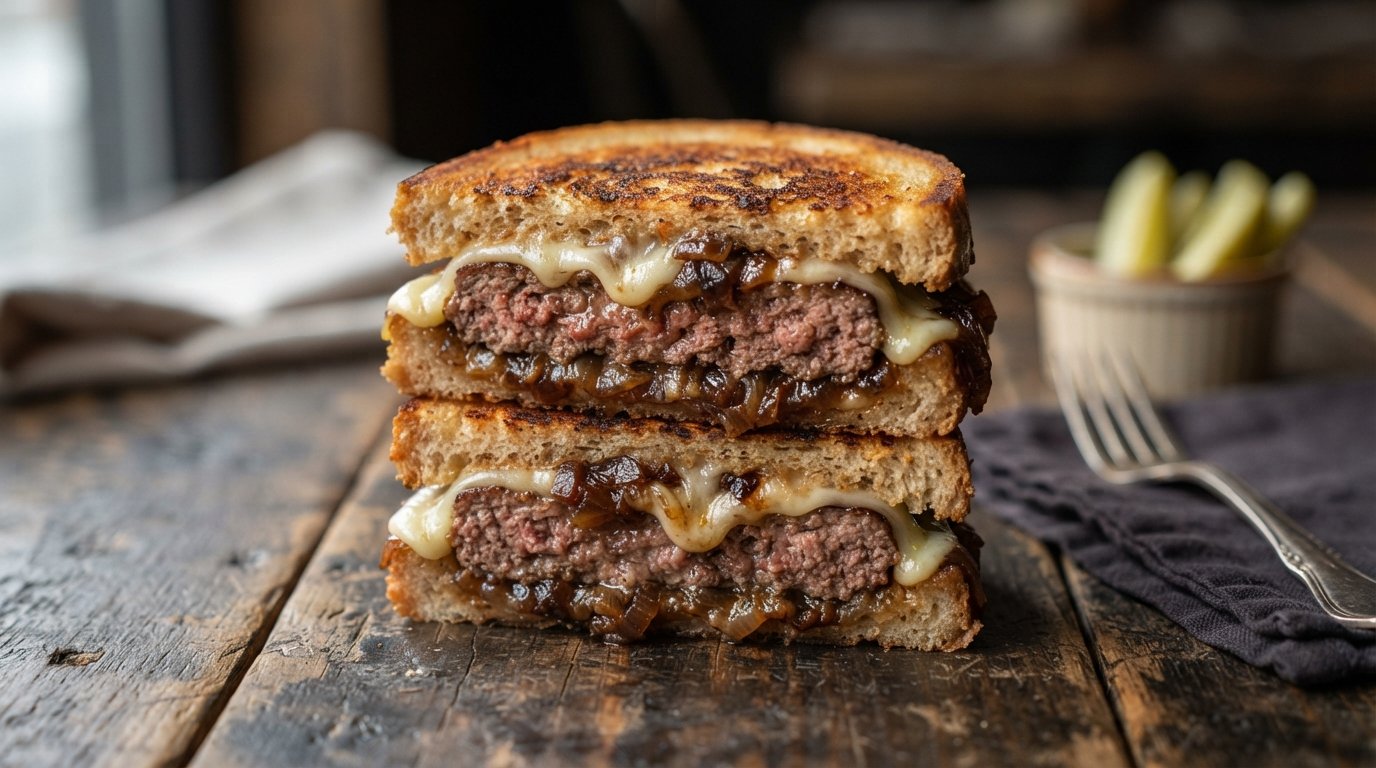
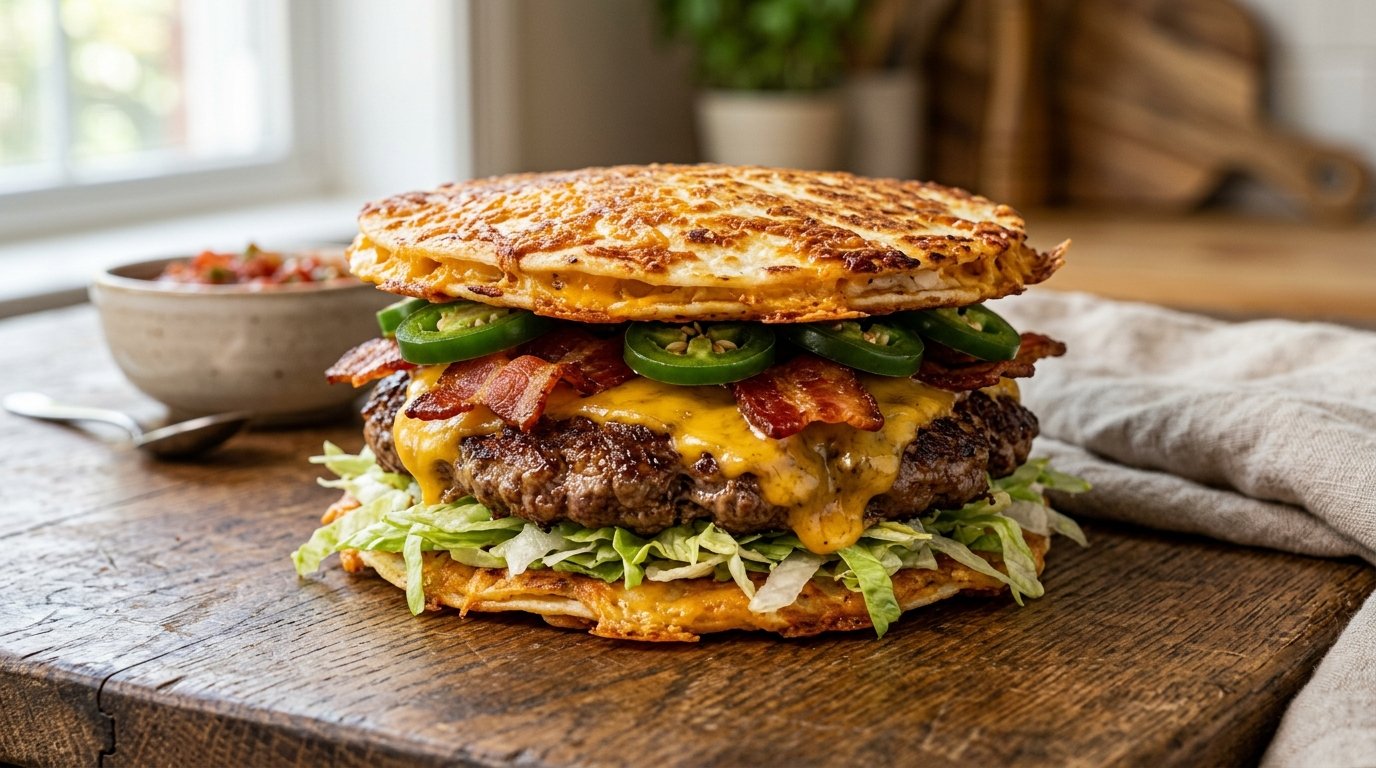
There is a distinct category of comfort food that exists somewhere between a burger and a grilled cheese, a culinary hybrid that satisfies cravings for both savory meat and crispy, buttery bread. The Ultimate Patty Melt Sandwich is exactly that—a masterpiece of texture and flavor that elevates the humble diner staple into a gourmet experience. Unlike a traditional burger served on a soft bun, this sandwich uses thick-cut sourdough or rye, toasted directly in the pan until it achieves an audible crunch that shatters upon the first bite.
The magic lies in the layering. A juicy, seared beef patty rests atop a bed of caramelized onions, providing a sweet and savory foundation that prevents the bread from getting soggy while adding depth to every mouthful. Crisp pickles cut through the richness, while crispy bacon adds a necessary salty contrast. But the true star is the generous application of a creamy, tangy special sauce that acts as both a condiment and a moisture barrier, ensuring the bread stays crisp even as the hot ingredients steam inside. Whether you are looking for a hearty lunch or a satisfying dinner that feels like a hug, this recipe delivers restaurant-quality results right in your own kitchen.
Why This Recipe Works
The success of any great patty melt relies on managing moisture and heat distribution. In this recipe, we use a cast iron skillet not just for its superior heat retention, but for its ability to create an even, golden-brown crust on the bread. By toasting the bread in the pan before assembly (or during the final press), we gelatinize the starches on the surface, creating a hydrophobic barrier that resists sogginess from the juicy patty and sauce.
Furthermore, the order of operations is critical. Caramelizing the onions separately ensures they are deeply browned and sweet without burning the garlic or overcooking the beef. The “special sauce”—a blend of mayonnaise, ketchup, and relish—is applied to both slices of bread. This creates a lipid seal that protects the crumb structure from the tomato acidity and meat juices. Finally, pressing the sandwich gently while grilling ensures maximum contact between the bread and the hot pan, resulting in uniform browning and helping the layers meld together into a cohesive unit rather than a sliding stack of ingredients.
Why You’ll Love This Recipe
Texture Contrast: The interplay of shattering crisp bread, juicy beef, soft onions, and crunchy pickles creates a sensory experience that keeps you engaged with every bite.
Flavor Balance: The tangy special sauce and acidic pickles perfectly cut through the richness of the beef and bacon, preventing palate fatigue.
One-Pan Simplicity: Everything comes together in a single cast iron skillet, minimizing cleanup and maximizing flavor development through fond retention.
Customizable Heat: The base recipe is family-friendly, but the sauce and toppings can easily be adjusted for spice lovers or those preferring mild flavors.
Visual Appeal: The cross-section reveal—layers of melted cheese, pink beef, and vibrant sauce—is as beautiful as it is delicious, making it perfect for sharing (or keeping all to yourself).
Ingredient Notes
Thick-Cut Sourdough or Rye Bread
Purpose: The structural foundation. Must be sturdy enough to hold heavy fillings without collapsing.
Buying Tip: Look for artisan loaves with a tight crumb and thick crust. Avoid pre-sliced sandwich bread; it lacks the integrity needed for a proper melt. Day-old bread actually works better as it has less moisture.
Substitution: Texas Toast, Ciabatta, or Marble Rye. Avoid fluffy white bread which will disintegrate.
Storage: Keep at room temperature in a paper bag to maintain crust crispness. Freeze slices if not using within 2 days.
Ground Beef (80/20 Blend)
Purpose: Primary protein source. The 20% fat content is non-negotiable for juiciness and flavor.
Buying Tip: Ask your butcher for freshly ground chuck. Pre-packaged “hamburger meat” often contains trimmings and excessive connective tissue that can make the patty tough.
Prep: Form patties slightly wider than your bread slices; they will shrink during cooking. Make a thumbprint in the center to prevent doming. Season generously with salt and pepper just before hitting the pan.
Safety: Cook to an internal temperature of 160°F (71°C) for ground beef safety.
Yellow Onion
Purpose: Sweetness and umami depth. Caramelization transforms sharp raw onion into a jam-like condiment.
Technique: Slice thinly. Cook low and slow (medium-low heat) for 15-20 minutes. Patience is key; high heat burns them before they caramelize. Deglaze with a splash of water or vinegar if they stick.
Substitution: Sweet Vidalia onions work beautifully. Red onions are too sharp for this application unless pickled first.
Storage: Store leftover caramelized onions in an airtight container in the fridge for up to 5 days. They freeze exceptionally well.
Special Sauce (Burger Sauce)
Purpose: Creamy, tangy binder that ties all flavors together.
Composition: Typically mayonnaise, ketchup, sweet pickle relish, and a dash of Worcestershire or hot sauce.
Tip: Make this ahead of time. The flavors need at least 30 minutes to meld. Taste before assembling; it should be balanced—creamy, sweet, tangy, and savory.
Substitution: Thousand Island dressing is a close cousin, but homemade allows control over sweetness and quality of ingredients.
Crispy Bacon & Pickles
Bacon: Use thick-cut applewood smoked bacon. Cook until deeply crisp; limp bacon gets lost in the sandwich. Drain on paper towels immediately.
Pickles: Dill pickle chips or spears. The acidity is crucial for cutting fat. Avoid sweet bread-and-butter pickles unless you prefer a sweeter profile.
Prep: Pat pickles dry before assembling. Excess brine is the enemy of crisp bread.
Kitchen Equipment
Cast Iron Skillet (10-12 inch): Essential for even heat distribution and superior browning. Non-stick works but won’t achieve the same crust.
Spatula (Thin Metal): For flipping patties and pressing the sandwich without crushing the bread.
Sharp Chef’s Knife: For slicing the finished sandwich cleanly. A serrated bread knife is also excellent for cutting through crust without squishing.
Tongs: For handling hot bacon and onions safely.
Meat Thermometer: To ensure perfect doneness without guessing.
Heat 1 tbsp oil or butter in your cast iron skillet over medium-low heat. Add sliced onions and a pinch of salt. Cook, stirring occasionally, for 15-20 minutes until deep golden brown and soft. If they begin to burn, add a splash of water and scrape up the fond. Remove from pan and set aside.
Why it matters: Proper caramelization develops complex sugars and removes harsh sulfur compounds. Rushing this step yields bitter, crunchy onions instead of sweet, jammy ones.
Visual Cue: Onions transform from white/purple to rich amber/brown. Volume reduces significantly.
Aroma Cue: Sweet, savory, almost nutty smell replaces raw onion pungency.
Pro Tip: Don’t overcrowd the pan. If making a large batch, cook in batches or use a wider pan to allow evaporation rather than steaming.
H3: Cook the Beef Patty
Increase heat to medium-high. Season formed patties generously with salt and pepper. Place in the hot skillet (wipe out excess onion oil if needed, but leave the fond). Cook undisturbed for 3-4 minutes to develop a crust. Flip and cook another 2-3 minutes until internal temp reaches 160°F. Remove and let rest for 2 minutes.
Why it matters: High heat creates the Maillard reaction (browning/flavor). Resting allows juices to redistribute; cutting immediately releases them onto the cutting board.
Visual Cue: Deep brown crust forms on exterior. Juices run clear when pressed (for well-done) or pink for medium (if safe/preferred).
Texture Cue: Firm but yielding resistance. Not rock hard (overcooked) or mushy (undercooked).
Common Mistake: Pressing down on the patty with the spatula. This squeezes out precious juices. Let the heat do the work.
H3: Toast the Bread & Assemble
Wipe skillet clean or use a separate pan. Butter one side of each bread slice. Place butter-side down in skillet over medium heat. Toast for 2-3 minutes until golden. Remove from heat. Spread special sauce generously on the untoasted side of both slices. Layer bottom bread (sauce-side up), patty, caramelized onions, pickles, bacon, more sauce, then top bread (sauce-side down).
Why it matters: Toasting creates a moisture barrier. Sauce on both sides acts as glue and flavor enhancer. Assembly order prevents sogginess (onions protect bottom bread).
Visual Cue: Bread is uniformly golden brown, not pale or burnt. Sauce covers surface evenly.
Texture Cue: Toasted side is crisp and warm. Untoasted side is soft and tacky from sauce.
Professional Tip: Build vertically and centrally. Overhanging ingredients make flipping impossible and cause uneven cooking.
H3: Grill the Sandwich
Return assembled sandwich to skillet (buttered/toasted side down). Cook over medium-low heat for 2-3 minutes. Press gently with spatula. Flip carefully. Cook other side 2-3 minutes until golden and cheese (if added) is melted. Remove and let rest 1 minute before slicing.
Why it matters: Gentle pressure ensures even contact with pan for uniform browning. Low heat prevents burning bread before interior is warmed through. Resting sets the structure for cleaner cuts.
Visual Cue: Both sides are deep golden brown with visible grill/toast marks. Cheese is molten and oozing slightly.
Aroma Cue: Toasted bread, seared meat, and tangy sauce perfume the kitchen.
Critical Step: DO NOT rush this step. High heat burns the outside while leaving the inside cold. Patience yields perfection.
Expert Tips
Butter vs. Mayo for Grilling: While the video shows butter, many pros use mayonnaise on the outside of the bread for grilling. Mayo has a higher smoke point than butter and contains egg yolks which promote deeper browning and crispier texture. Try it!
Rest the Patty: Never assemble a hot patty directly onto bread without a 2-minute rest. The residual heat continues cooking the meat and releases steam that will instantly sog your toast.
Sauce Both Sides: This cannot be overstated. Sauce isn’t just flavor; it’s a functional moisture barrier. Skipping it on one side guarantees a soggy bottom or dry top.
Warm Your Plate: Serve on a warmed plate. Cold ceramic steals heat from the sandwich rapidly, causing cheese to congeal and bread to lose crispness.
Slice Diagonally: Cutting straight down crushes the layers. A diagonal cut with a sharp serrated knife preserves structure and creates elegant presentation.
Quality Bread Matters: This recipe lives or dies by the bread. Invest in good sourdough or rye. It’s worth the extra dollar.
Common Mistakes
Soggy Bread: Caused by skipping the toast, wet pickles, or no sauce barrier. Fix: Toast bread thoroughly. Pat pickles dry. Sauce both sides. Assemble quickly.
Burnt Outside, Cold Inside: Heat too high during grilling. Fix: Medium-low heat only. Extend cook time. Cover pan briefly to trap heat if needed.
Dry/Tough Patty: Overcooked or lean beef. Fix: Use 80/20 blend. Cook to temp, not time. Rest before assembling.
Sliding Ingredients: Overloading or poor layering. Fix: Keep fillings centered. Use sauce as adhesive. Limit onion quantity.
Bitter Onions: Burnt during caramelization. Fix: Lower heat. Stir frequently. Add splash of water if sticking. Start over if burnt; bitterness ruins the sandwich.
Crushed Bread: Cutting with dull knife or pressing too hard. Fix: Sharp serrated knife. Gentle sawing motion. No downward pressure.
Recipe Variations
Spicy Kick: Add sriracha or chipotle powder to special sauce. Use pepper jack cheese. Swap dill pickles for jalapeño slices.
Vegetarian: Replace beef with portobello mushroom cap or plant-based patty. Add avocado and sprouts. Use vegan mayo for sauce.
Vegan: Use vegan patty and bacon. Cashew-based special sauce. Vegan butter for grilling. Nutritional yeast adds cheesy umami.
Chicken Melt: Swap beef for breaded chicken cutlet or grilled chicken breast. Pair with honey mustard sauce and swiss cheese.
Seafood Twist: Use crab cake or salmon patty. Remoulade sauce instead of special sauce. Arugula instead of lettuce.
Extra Cheesy: Add american or cheddar cheese directly to patty while cooking. Melt under lid. Double the cheese layer in assembly.
Low-Carb/Keto: Skip bread. Use large portobello caps as “buns” or wrap filling in butter lettuce leaves. Verify sauce is sugar-free.
Breakfast Style: Add fried egg and hash browns. Maple-infused special sauce. Cheddar cheese. Perfect for brunch.
What to Serve With This Recipe
Classic Fries: Crinkle-cut or shoestring fries are mandatory. The salt cuts the richness. Serve with ketchup or aioli.
Coleslaw: Creamy or vinegar-based slaw adds acidic crunch that balances the heavy sandwich.
Tomato Soup: For dipping! The ultimate comfort combo. Warm, acidic, and perfect for soaking up stray sauce.
Craft Beer or Soda: IPA or cola complement the savory, fatty profile perfectly. Root beer is a classic diner pairing.
Pickle Spear: Extra dill pickle on the side cleanses the palate between bites.
Sweet Potato Fries: Offers a sweeter, earthier contrast to the savory sandwich.
Make Ahead & Meal Prep Tips
Special Sauce: Prepare up to 1 week ahead. Flavors meld and improve over time. Store in airtight container in fridge.
Caramelized Onions: Make a big batch. Store in fridge up to 5 days or freeze up to 3 months. Reheat gently before assembling.
Patties: Form and season patties ahead. Store covered in fridge up to 24 hours. Bring to room temp before cooking for even doneness.
Bread: Slice and store in paper bag. Toast just before assembling to maintain maximum crispness.
Bacon: Cook ahead and store in airtight container at room temp up to 3 days. Re-crisp in oven 2 mins if needed.
Storage & Reheating Instructions
Storage
Refrigerator: Store leftover assembled sandwich in airtight container up to 2 days. Expect softer bread.
Components: Store cooked patties, onions, and sauce separately up to 4 days. Keep bread separate to maintain texture.
Freezer: Freeze cooked patties and onions up to 3 months. Do NOT freeze assembled sandwich or bread (texture ruins).
Reheating
Oven (Best): 350°F (175°C) for 8-10 mins. Wrap loosely in foil to prevent burning while warming through. Unwrap last 2 mins to re-crisp bread.
Air Fryer: 320°F (160°C) for 3-4 mins. Excellent for reviving bread crispness. Watch closely to prevent burning.
Skillet: Low heat, covered, 3-4 mins per side. Gentle reheating preserves moisture without sogginess. Best for restoring original texture.
Microwave (Avoid): Makes bread chewy and tough. Only use if no other option. 30 secs max. Finish in toaster oven if possible.
Nutritional Information
Estimates per sandwich:
Calories: 850
Protein: 42g
Carbohydrates: 58g
Fat: 52g
Fiber: 3g
Sugar: 8g
Sodium: 1,150mg
Note: Values vary based on bread size, beef fat %, bacon thickness, and sauce quantity.
Troubleshooting Guide
Problem
Cause
Solution
Soggy bread
Untoasted bread / wet veggies / no sauce barrier
Toast bread thoroughly. Pat pickles dry. Sauce both sides. Assemble quickly.
Burnt outside, cold inside
Heat too high during grilling
Medium-low heat only. Extend cook time. Cover pan briefly to trap heat.
Dry/tough patty
Overcooked or lean beef
Use 80/20 blend. Cook to temp, not time. Rest 2 mins before assembling.
Sliding ingredients
Overloading or poor layering
Center fillings. Use sauce as adhesive. Limit onion quantity. Press gently.
Bitter onions
Burnt during caramelization
Lower heat. Stir frequently. Add splash of water if sticking. Start over if burnt.
Crushed bread
Dull knife or excessive pressure
Sharp serrated knife. Gentle sawing motion. No downward pressure when cutting.
Frequently Asked Questions
1. Can I use pre-sliced sandwich bread? Not recommended. Standard sandwich bread lacks the structural integrity to hold the heavy fillings and will become soggy and collapse. Always use thick-cut artisan bread like sourdough, rye, or Texas Toast. If you must use sliced bread, choose the thickest available and toast it heavily.
2. Why did my patty shrink and curl? Overworking the meat or uneven thickness. Handle beef gently; don’t knead. Make a slight indent in the center of raw patties—they’ll flatten evenly during cooking. Chill formed patties 15 mins before cooking to firm up fat.
3. What’s the best cheese for a patty melt? American cheese melts best and provides classic diner flavor. Sharp cheddar adds punch. Swiss or Gruyère offer nutty complexity. Avoid pre-shredded cheese—it contains anti-caking agents that prevent smooth melting. Always shred your own block cheese.
4. How do I keep the bread from getting soggy? Three defenses: 1) Toast the bread thoroughly before assembly. 2) Spread special sauce on BOTH cut sides (creates lipid barrier). 3) Place caramelized onions directly on bottom bread (they absorb moisture). Also, serve immediately—time is the enemy of crisp bread.
5. Can I make this vegetarian? Absolutely. Substitute beef with grilled portobello mushroom caps, halloumi, or high-quality plant-based patties. Halloumi works especially well because its salty, squeaky texture mirrors the indulgence of beef while standing up to the hearty bread.
6. Is there a way to make this healthier? Use whole grain sourdough, leaner beef (90/10), reduced-fat cheese, and load up on veggies. Skip the bacon. Use Greek yogurt-based sauce instead of mayo. It won’t be identical, but still satisfying and more balanced.
7. Why did my caramelized onions burn? Heat too high or insufficient stirring. True caramelization takes 15-20 mins on MEDIUM-LOW heat. Stir frequently. Add splash of water if sticking. Patience yields sweet, jammy onions; haste yields bitter charcoal.
8. Can I prep the entire sandwich ahead of time? Not recommended. Bread stales and soggifies quickly. Prep components separately (patties, onions, sauce, washed veggies). Assemble just before eating. If you must prep ahead, store components in separate containers and assemble within 1 hour of serving.
9. What drink pairs best with this? Classic diner fare calls for an ice-cold cola or root beer. For adults, an IPA or amber ale cuts through the richness beautifully. A crisp lager also works. Avoid heavy red wines—they clash with the tangy sauce and pickles.
10. How do I slice without destroying it? Sharp serrated bread knife is non-negotiable. Use a gentle sawing motion. Support the sandwich with your other hand to prevent rolling/crushing. Slice when warm, not piping hot (hot fillings slide). Chill 1 min if falling apart.
Final Thoughts
The Ultimate Patty Melt Sandwich is proof that comfort food doesn’t have to be complicated to be extraordinary. It’s a celebration of textures and flavors working in harmony—the crisp bread, the juicy patty, the sweet onions, the tangy sauce—all coming together in a single, satisfying bite. This recipe invites you to slow down, savor the process, and appreciate the simple joy of a well-made meal.