Quick Recipe Summary
| Feature | Details |
|---|---|
| Prep Time | 20 Minutes |
| Cook Time | 15 Minutes |
| Total Time | 35 Minutes |
| Servings | 2 |
| Cuisine | French-American Fusion |
| Course | Lunch, Dinner, or Brunch |
| Difficulty | Easy |
| Calories | ~850 kcal per sandwich |
Table of Contents
- Introduction
- Why This Recipe Works
- Why You’ll Love This Recipe
- Ingredient Notes
- Kitchen Equipment
- Preparation Information
- Step-by-Step Instructions
- Expert Tips
- Common Mistakes
- Recipe Variations
- What to Serve With This Recipe
- Make Ahead & Meal Prep Tips
- Storage & Reheating Instructions
- Nutritional Information
- Troubleshooting Guide
- Frequently Asked Questions
- Final Thoughts
Introduction
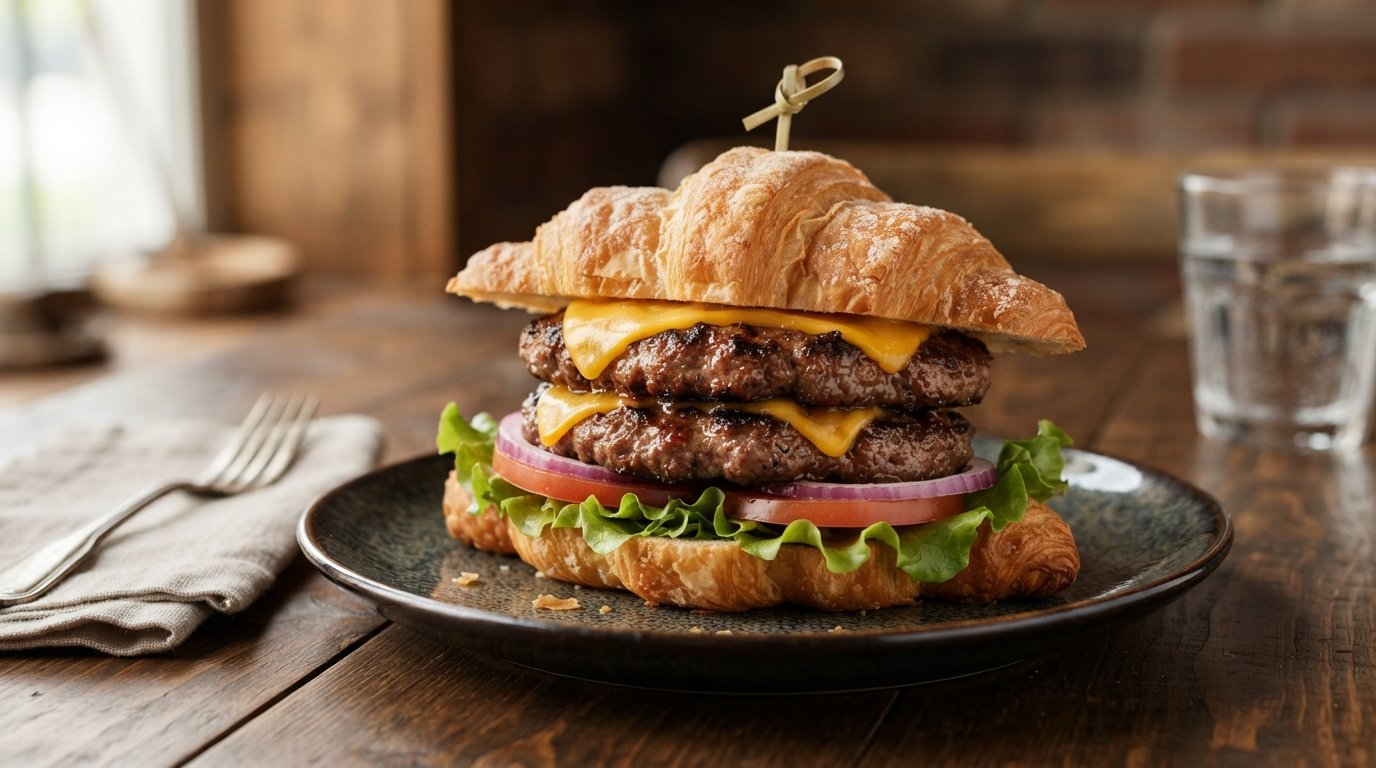
Forget everything you know about the traditional burger bun. There is a new contender in town that combines the flaky, buttery layers of French patisserie with the savory, juicy satisfaction of an American classic. Welcome to the double cheeseburger croissant sandwich, a culinary mashup that elevates comfort food to gourmet status. By swapping the standard brioche or sesame seed bun for a buttery croissant, you introduce a textural contrast that transforms every bite into an experience. The crisp exterior shatters delicately while the soft interior cradles two beef patties, melted cheddar, caramelized onions, and fresh produce.
This isn’t just a sandwich; it’s a celebration of indulgence. The richness of the laminated dough pairs surprisingly well with the umami of seared beef and sharp cheese, while the acidity of tomato and crunch of lettuce provide necessary balance. Whether you are hosting a weekend brunch, planning a date night at home, or simply treating yourself to a spectacular lunch, this recipe delivers restaurant-quality results with minimal effort. Let’s explore how to build the perfect stack without compromising the integrity of your pastry.
Why This Recipe Works
The success of a croissant burger relies on managing moisture and texture. Croissants are structurally different from bread; they are airy and layered, which means they can become soggy if not protected. In this recipe, we create multiple barriers against sogginess. First, the bottom half is toasted or brushed with garlic butter (as seen in the video), creating a hydrophobic seal. Second, the lettuce and tomato act as physical shields between the meat juices and the pastry. Finally, the double patty construction ensures there is enough protein-to-bread ratio so the sandwich doesn’t feel overwhelmingly doughy.
Flavor-wise, the lamination process of a croissant involves folding butter into dough hundreds of times. When heated, this butter melts and fries the layers from the inside out, creating a nutty, rich flavor profile that complements beef far better than neutral white bread. The addition of caramelized onions adds sweetness that bridges the gap between the savory meat and the buttery pastry, while the special sauce ties all these disparate elements together into a cohesive, addictive bite.
Why You’ll Love This Recipe
- Texture Contrast: The interplay of shattering crisp pastry, juicy meat, gooey cheese, and crunchy vegetables is unmatched.
- Elevated Comfort Food: It feels like a special occasion meal but uses accessible ingredients and simple techniques.
- Customizable Stack: The wide surface area of a croissant allows for generous toppings without the structural failure common in round buns.
- Aromatic Experience: The smell of baking pastry mixed with searing beef creates an irresistible kitchen atmosphere.
- Visual Appeal: The golden-brown ridges of the croissant make for stunning food photography and presentation.
Ingredient Notes
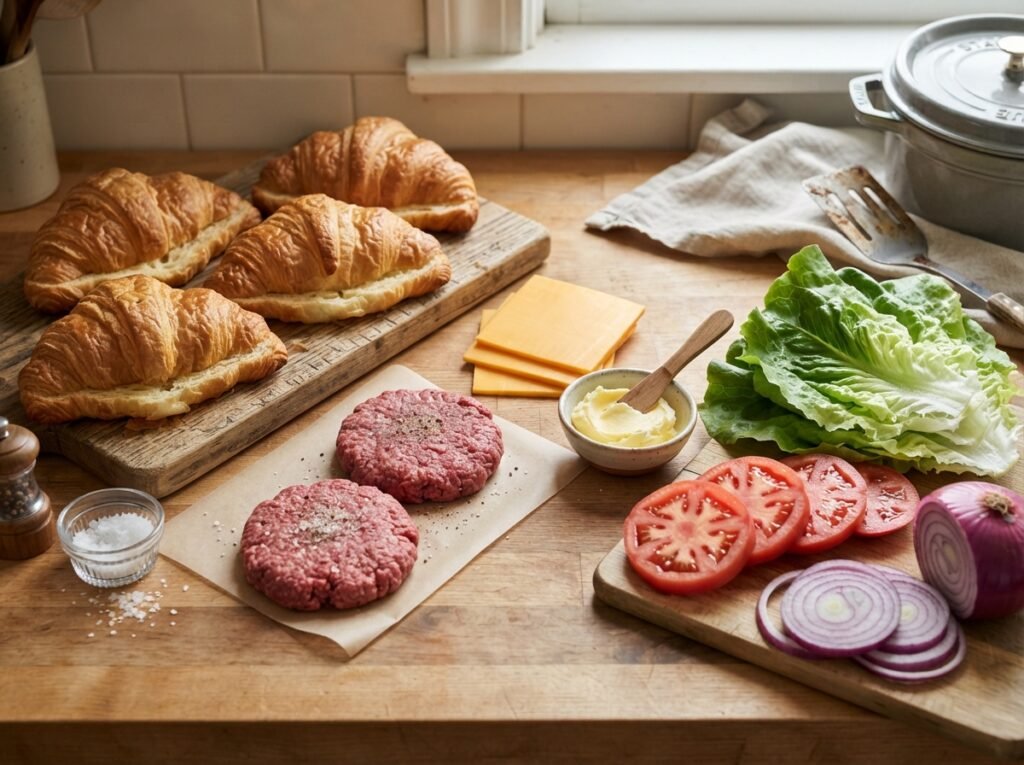
Large Butter Croissants
- Purpose: The vessel. Provides buttery flavor, flaky texture, and structural lift.
- Buying Tip: Choose large, day-old croissants from a bakery rather than supermarket packaged ones. Day-old pastries have slightly less moisture, making them more resistant to sogginess when toasted. Look for visible layers on the side.
- Substitution: If unavailable, use high-quality brioche buns, though you will lose the signature flakiness.
- Storage: Keep in a paper bag at room temperature for up to 2 days. Freeze for longer storage; refresh in oven before using.
Ground Beef (80/20 Blend)
- Purpose: Primary protein. The 20% fat content is crucial for juiciness and flavor.
- Buying Tip: Ask your butcher for freshly ground chuck. Avoid pre-packaged “hamburger meat” which often contains trimmings and excessive connective tissue.
- Prep: Form into thin patties slightly wider than your croissant base. They will shrink during cooking. Season generously with salt and pepper just before hitting the pan.
- Safety: Cook to an internal temperature of 160°F (71°C) for ground beef safety.
American or Sharp Cheddar Cheese
- Purpose: Melting agent and flavor enhancer. American cheese provides the classic “burger melt” due to emulsifying salts; cheddar adds tang.
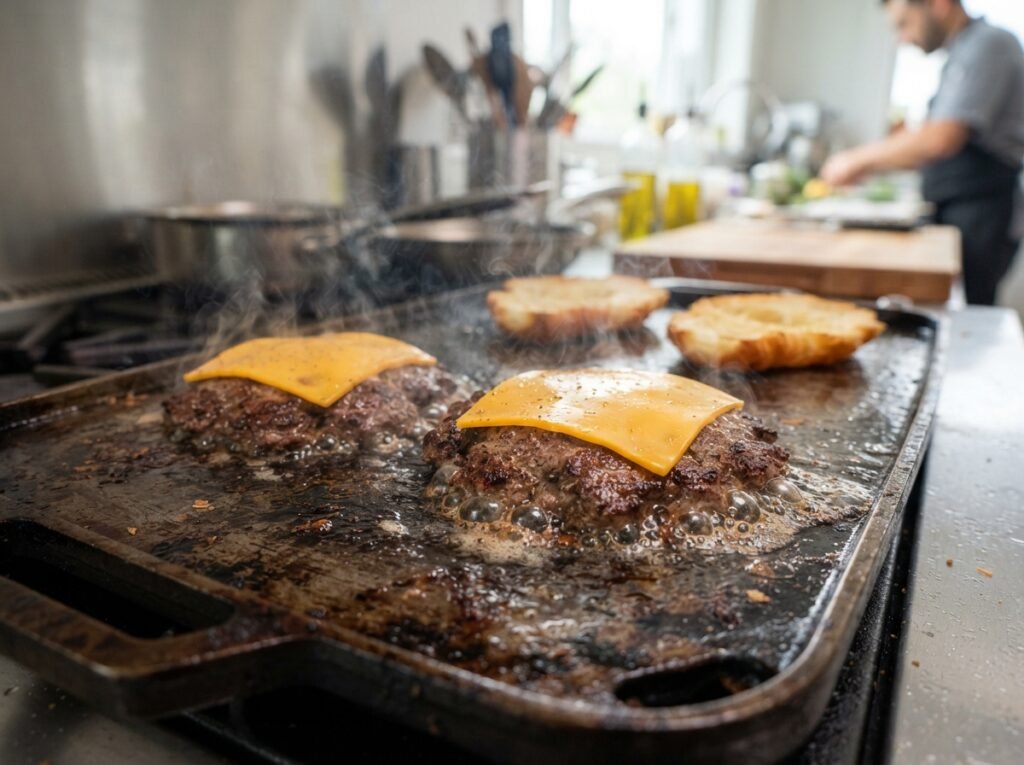
- Technique: Place cheese on patties during the last minute of cooking and cover the pan to steam-melt. This ensures a gooey blanket rather than separated oil and solids.
- Substitution: Gruyère or Swiss cheese pairs exceptionally well with the nuttiness of the croissant.
Caramelized Onions
- Purpose: Sweet, savory depth that complements both beef and butter.
- Method: Slice yellow onions thinly. Cook low and slow in butter/oil for 20-30 minutes until deep golden brown. Patience is key; high heat burns them before they caramelize.
- Tip: Make a big batch. They keep for a week and elevate sandwiches, steaks, and eggs.
Fresh Produce (Lettuce, Tomato)
- Purpose: Acidity, crunch, and moisture barrier.
- Prep: Dry lettuce thoroughly after washing. Water droplets are the enemy of crisp pastry. Slice tomatoes thickly but not so thick they slide out.
- Selection: Use crisp iceberg or romaine for crunch. Beefsteak tomatoes offer better flavor and hold up better than slicing tomatoes.
Special Sauce & Garlic Butter
- Special Sauce: A blend of mayonnaise, ketchup, relish, and spices (similar to Big Mac sauce). Adds creaminess and tang.
- Garlic Butter: Melted butter mixed with minced garlic and parsley. Brushed on the top crust post-assembly for aroma and gloss.
- Application: Spread sauce on both cut sides of the croissant to create a moisture seal.
Kitchen Equipment
- Cast Iron Skillet or Grill Pan: Essential for achieving a proper sear on the patties and retaining heat.
- Pastry Brush: For applying garlic butter evenly to the croissant crust.
- Sharp Serrated Knife: Crucial for slicing croissants horizontally without crushing the delicate layers.
- Spatula: For flipping patties and scraping up fond.
- Meat Thermometer: To ensure safe doneness without overcooking.
- Parchment Paper: For assembling the sandwich cleanly and wrapping for serving.
Preparation Information
- Prep Time: 20 Minutes (Slicing, seasoning, prepping toppings)
- Cook Time: 15 Minutes (Cooking patties, melting cheese, toasting)
- Total Time: 35 Minutes
- Servings: 2 Generous Sandwiches
Step-by-Step Instructions
H3: Prepare the Croissant Base
Using a serrated knife, carefully slice the croissants in half horizontally. Be gentle to avoid squashing the airy interior. Mix softened butter with minced garlic and chopped parsley. Brush the cut sides of the bottom halves lightly with this garlic butter mixture. Toast them cut-side down in a dry skillet over medium heat for 1-2 minutes until golden and crisp.
- Why it matters: Toasting creates a barrier against sogginess. Garlic butter infuses flavor directly into the bread matrix.
- Visual Cue: Cut surface should be golden brown with visible grill marks or toast lines.
- Texture Cue: Surface should feel crisp to the touch, not soft or greasy.
- Pro Tip: Don’t skip the toasting step. A raw croissant bottom will disintegrate under the weight of hot meat and sauce.
H3: Cook the Double Patties
Season ground beef with salt and pepper. Form into 4 thin patties. Heat skillet over medium-high heat. Cook patties for 2-3 minutes per side. During the last minute, place a slice of cheese on each patty and cover the pan to melt. Remove from heat and let rest for 1 minute.
- Why it matters: Thin patties cook quickly and develop a crust without drying out. Resting allows juices to redistribute.
- Visual Cue: Deep brown crust on exterior. Cheese should be fully melted and glossy.
- Aroma Cue: Savory seared meat and melting dairy.
- Common Mistake: Pressing down on patties with spatula. This squeezes out precious juices. Let the heat do the work.
H3: Assemble the Stack
Spread special sauce generously on the toasted bottom croissant halves. Layer with lettuce leaf, then tomato slice. Place two cheese-covered patties on top of the tomato. Spoon a heap of caramelized onions over the top patty. Spread more sauce on the cut side of the top croissant half and place it on the stack.
- Why it matters: Sauce acts as glue and moisture barrier. Lettuce/tomato placement protects the bottom bun. Onions on top prevent sliding.
- Visual Cue: Distinct layers visible from the side. No ingredients protruding excessively.
- Texture Cue: Firm but yielding resistance when pressed gently.
- Professional Tip: Build vertically, not horizontally. Keep ingredients centered to maintain structural integrity.
H3: Finish and Garnish
Brush the top crust of the assembled sandwich with remaining garlic butter. Sprinkle with fresh chopped parsley. Serve immediately while warm. Wrap the bottom third in parchment paper for easier handling.
- Why it matters: Top brushing adds aroma and visual appeal. Parchment keeps hands clean and holds the flaky layers together.
- Visual Cue: Glossy, herb-speckled top crust. Golden-brown ridges glistening.
- Serving Note: Provide a knife and fork. Croissant burgers are inherently messy; embracing this is part of the experience.
Expert Tips
- Day-Old is Better: Fresh croissants are too soft and moist. Staling slightly firms up the crumb, making it sturdier for heavy fillings.
- Thin Patties Rule: Thick burgers overwhelm the delicate pastry. Two thin patties provide double the crust-to-meat ratio and better integration with the croissant’s texture.
- Sauce Both Sides: Never leave one side of the bread bare. Sauce creates a lipid barrier that prevents tomato juice and meat grease from soaking in.
- Warm the Top: If your croissant top has gone stale, warm it in the oven (350°F for 3 mins) before assembling. Cold, hard pastry on top makes biting difficult.
- Caramelize Onions Ahead: This step takes time. Do it while prepping other ingredients or make a batch on Sunday for the whole week.
- Knife Technique: Use a sawing motion, not downward pressure, to slice croissants. Support the pastry with your free hand to prevent crushing.
Common Mistakes
- Soggy Bottom Bun: Caused by skipping the toast or placing wet ingredients directly on bread. Fix: Always toast bottom half. Use lettuce as shield. Dry tomatoes before slicing.
- Crushed Pastry: Caused by dull knife or heavy-handed assembly. Fix: Serrated knife only. Gentle layering. Don’t press down after assembly.
- Dry Meat: Overcooked patties or lean beef. Fix: Use 80/20 blend. Cook to temp, not time. Rest meat before stacking.
- Sliding Ingredients: Overloading or poor layering order. Fix: Center ingredients. Use sauce as adhesive. Limit onion quantity.
- Burnt Garlic Butter: Heat too high during toasting. Fix: Medium heat only. Watch closely. Garlic burns in seconds.
- Cold Sandwich: Assembly took too long. Fix: Have all components prepped and ready (mise en place). Work efficiently. Serve immediately.
Recipe Variations
- Spicy Kick: Add jalapeños or chipotle mayo to the stack. Use pepper jack cheese instead of cheddar.
- Breakfast Style: Swap beef for crispy bacon and fried egg. Use hollandaise instead of special sauce. Perfect for brunch.
- Chicken Croissant: Use breaded chicken cutlet or grilled chicken breast. Pair with honey mustard and swiss cheese.
- Veggie Option: Replace beef with portobello mushroom cap or plant-based patty. Add avocado and sprouts.
- Steakhouse Luxe: Use sliced ribeye steak instead of ground beef. Add blue cheese crumbles and arugula.
- Low-Carb/Keto: Skip the croissant. Use large portobello caps as “buns” or wrap filling in butter lettuce leaves.
- Seafood Twist: Use crab cake or salmon patty. Pair with remoulade sauce and dill.
- Sweet & Savory: Add fig jam or apple chutney with brie cheese. Omit lettuce/tomato. Great for appetizers.
What to Serve With This Recipe
- Classic Fries: Crinkle-cut or shoestring fries are mandatory. The salt cuts the buttery richness.
- Coleslaw: Creamy or vinegar-based slaw adds acidic crunch that balances the heavy sandwich.
- Pickles: Dill pickle spears or chips provide essential acid to cleanse the palate.
- Craft Beer or Soda: IPA or cola complement the savory, fatty profile perfectly.
- Tomato Soup: For dipping! The ultimate comfort combo.
- Fresh Fruit Salad: Light, refreshing contrast to the rich main course.
Make Ahead & Meal Prep Tips
- Caramelized Onions: Make up to 1 week ahead. Store in fridge. Reheat gently before use.
- Special Sauce: Prepare 3-5 days ahead. Flavors meld and improve over time.
- Patties: Form and season patties ahead. Store covered in fridge up to 24 hours. Bring to room temp before cooking.
- Croissants: Buy or bake ahead. Freeze individually. Thaw and toast day-of.
- Vegetables: Wash and dry lettuce/tomato up to 2 days ahead. Store with paper towels to absorb moisture.
Storage & Reheating Instructions
Storage
- Refrigerator: Store leftover assembled sandwich in airtight container up to 2 days. Expect softer pastry.
- Components: Store cooked patties, onions, and sauce separately up to 4 days. Keep croissants separate to maintain texture.
- Freezer: Freeze cooked patties and onions up to 3 months. Do NOT freeze assembled sandwich or croissants (texture ruins).
Reheating
- Oven (Best): 350°F (175°C) for 8-10 mins. Wraps in foil loosely to prevent burning while warming through. Restores some crispness.
- Air Fryer: 320°F (160°C) for 3-4 mins. Excellent for reviving pastry crispness. Watch closely to prevent burning.
- Skillet: Low heat, covered, 3-4 mins per side. Gentle reheating preserves moisture without sogginess.
- Microwave (Avoid): Makes pastry chewy and tough. Only use if no other option. 30 secs max.
Nutritional Information
Estimates per sandwich:
- Calories: 850
- Protein: 42g
- Carbohydrates: 58g
- Fat: 52g
- Fiber: 3g
- Sugar: 8g
- Sodium: 1,150mg
Note: Values vary based on croissant size, beef fat %, and sauce quantity.
Troubleshooting Guide
| Problem | Cause | Solution |
|---|---|---|
| Soggy bottom | Untoasted bread / wet veggies | Toast bottom half. Dry lettuce/tomato thoroughly. Sauce both sides. |
| Pastry crushed | Dull knife / heavy pressing | Serrated knife only. Saw gently. Don’t compress after assembly. |
| Dry meat | Overcooked / lean beef | Use 80/20 blend. Cook to 160°F. Rest before stacking. |
| Ingredients slide | Poor layering / too much topping | Center ingredients. Use sauce as glue. Limit onion volume. |
| Burnt garlic butter | Heat too high | Medium heat only. Watch constantly. Garlic burns fast. |
| Cold center | Slow assembly / cold components | Mise en place everything. Warm patties/onions before stacking. |
Frequently Asked Questions
1. Can I use frozen croissants? Yes, but thaw completely at room temperature first. Then toast lightly before assembling. Frozen-then-thawed croissants can be dense; toasting restores some airiness. Never assemble with frozen pastry—it will be rock hard and impossible to bite.
2. Why are my patties shrinking and curling? Overworking the meat or uneven thickness. Handle beef gently; don’t knead. Make a slight indent in the center of raw patties—they’ll flatten evenly during cooking. Chill formed patties 15 mins before cooking to firm up fat.
3. What’s the best cheese for a croissant burger? American melts best and tastes classic. Sharp cheddar adds punch. Gruyère complements the buttery pastry beautifully. Avoid pre-shredded cheese—it contains anti-caking agents that prevent smooth melting. Always shred your own block cheese.
4. How do I keep the croissant from getting soggy? Three defenses: 1) Toast the bottom half. 2) Spread sauce on both cut sides (creates lipid barrier). 3) Place lettuce between meat and bread. Also, serve immediately—time is the enemy of crisp pastry.
5. Can I make this vegetarian? Absolutely. Substitute beef with grilled halloumi, portobello mushrooms, or high-quality plant-based patties. Halloumi works especially well because its salty, squeaky texture mirrors the indulgence of beef while standing up to the buttery croissant.
6. Is there a way to make this healthier? Use whole wheat croissants (if available), leaner beef (90/10), reduced-fat cheese, and load up on veggies. Skip the garlic butter brush and special sauce; use mustard or hummus instead. It won’t be identical, but still delicious.
7. Why did my caramelized onions burn? Heat too high or insufficient stirring. True caramelization takes 20-30 mins on LOW-MEDIUM heat. Stir frequently. Add splash of water if sticking. Patience yields sweet, jammy onions; haste yields bitter charcoal.
8. Can I prep the entire sandwich ahead of time? Not recommended. Croissants stale and soggify quickly. Prep components separately (patties, onions, sauce, washed veggies). Assemble just before eating. If you must prep ahead, store components in separate containers and assemble within 1 hour of serving.
9. What wine pairs with this? Pinot Noir or Gamay. Light-bodied reds with bright acidity cut through the butter and fat without overwhelming the delicate pastry. Avoid heavy tannic wines—they clash with the croissant’s richness.
10. How do I slice a croissant without destroying it? Serrated bread knife is non-negotiable. Use a gentle sawing motion. Support the croissant with your other hand to prevent rolling/crushing. Slice when cool/warm, never hot (hot pastry collapses). Chill briefly if very soft.
Final Thoughts
The double cheeseburger croissant sandwich is proof that culinary boundaries are meant to be crossed. It marries the elegance of French baking with the hearty satisfaction of American grilling, creating something greater than the sum of its parts. Yes, it’s indulgent. Yes, it’s messy. But life is too short for boring burgers and sad pastries.