
Quick Recipe Summary
| Detail | Information |
|---|---|
| Prep Time | 15 minutes |
| Marinating Time | 15–30 minutes |
| Total Time | 45 minutes |
| Servings | 2–3 (as a snack or side) |
| Cuisine | Southeast Asian / Thai-Inspired |
| Course | Snack / Appetizer / Side Dish |
| Difficulty | Easy |
| Calories | ~180 kcal per serving |
Table of Contents
- Introduction
- Why This Recipe Works
- Why You’ll Love These Spicy Sweet Green Mangoes
- Ingredient Notes
- Kitchen Equipment
- Preparation Information
- Step-by-Step Instructions
- Expert Tips for Perfect Texture
- Common Mistakes to Avoid
- Recipe Variations
- What to Serve With This Recipe
- Make Ahead & Meal Prep Tips
- Storage Instructions
- Nutritional Information
- Troubleshooting Guide
- Frequently Asked Questions
- Final Thoughts
Introduction
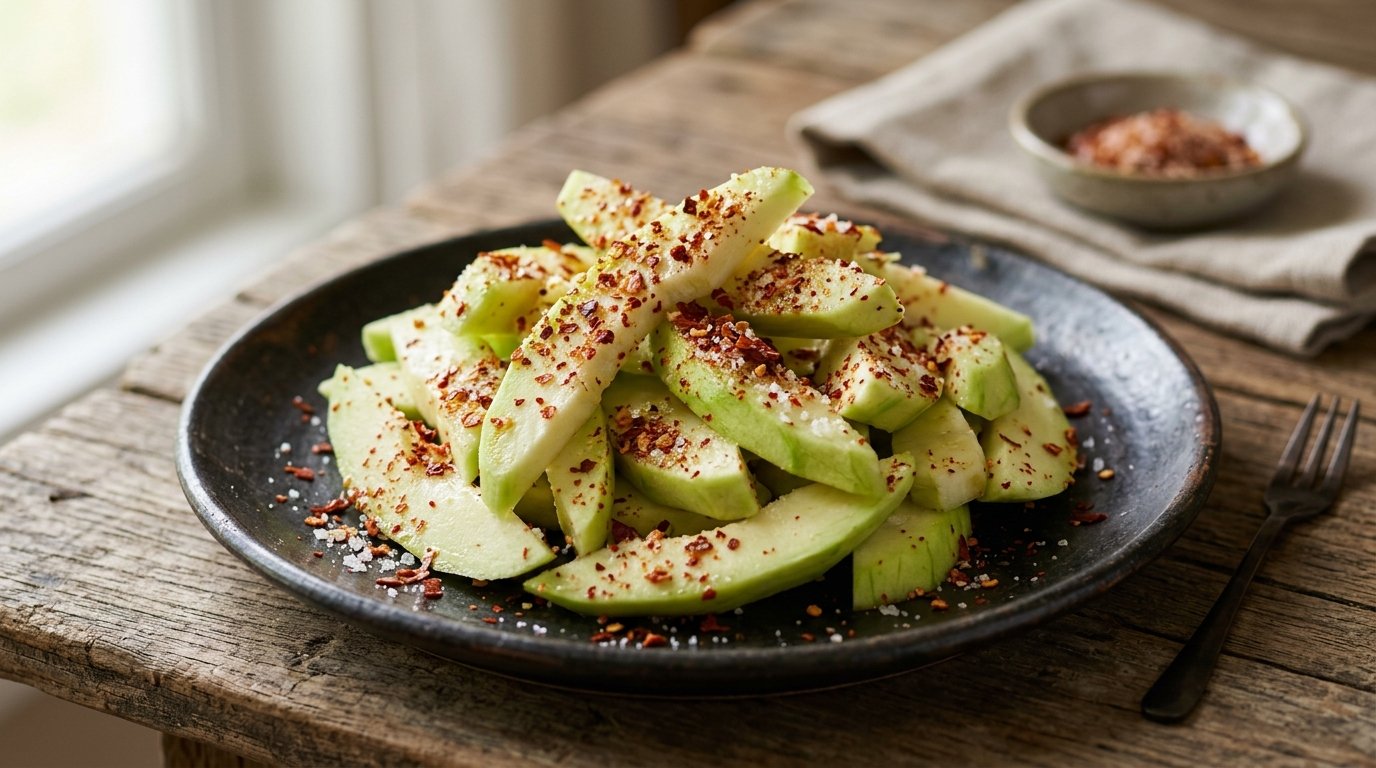
If you have ever craved a snack that is simultaneously crunchy, sour, sweet, salty, and spicy, then these Spicy Sweet Green Mangoes are about to change your life. Originating from Southeast Asian street food culture, this dish transforms unripe, tart mangoes into an addictive culinary experience by balancing bold flavors against the fruit’s natural firmness. It is not just a recipe; it is a sensory awakening that proves fruit doesn’t always have to be soft and sugary to be delicious.
Unlike ripe mangoes which are best eaten fresh off the tree, green mangoes possess a crisp, apple-like texture that holds up beautifully to aggressive seasoning. The interplay of brown sugar’s molasses depth, chili flakes’ heat, salt’s savory punch, and lime juice’s bright acidity creates a complex flavor profile that dances on the palate. Whether you are looking for a healthy afternoon pick-me-up, a zesty side dish for grilled meats, or simply want to explore global flavors in your own kitchen, this Spicy Sweet Green Mangoes recipe delivers maximum satisfaction with minimal effort.
Why This Recipe Works
The success of Spicy Sweet Green Mangoes lies in the science of osmosis and flavor layering. Green mangoes are dense and low in moisture compared to their ripe counterparts. When we score the flesh and apply salt and sugar directly, we initiate osmosis: the salt draws out a small amount of water from the fruit, creating a brine that mixes with the sugar and lime juice. This liquid then re-absorbs into the mango slices, carrying the dissolved seasonings deep into the flesh rather than just coating the surface.
Scoring the mangoes—making shallow vertical cuts without slicing all the way through—is a critical technique. It dramatically increases the surface area available for the marinade to penetrate. Without these cuts, the seasoning would sit on the smooth skin, resulting in a bland interior and an overly seasoned exterior. The scoring acts as a conduit, ensuring every bite has a consistent balance of sweet, sour, and spicy notes.
Furthermore, the marinating time is non-negotiable. While you can eat them immediately, the 15–30 minute rest allows the acid in the lime juice to slightly “cook” or soften the outer layer of the fruit, mellowing its harsh raw tartness while maintaining the signature crunch. The brown sugar dissolves completely during this window, transforming from gritty crystals into a glossy, sticky glaze that clings to the slices. This transformation is what elevates the dish from simple seasoned fruit to a cohesive, restaurant-quality snack.
Why You’ll Love These Spicy Sweet Green Mangoes
- Addictive Flavor Profile: Hits every taste bud—sweet, sour, salty, spicy, and umami—in a single bite.
- Incredible Crunch: Retains a satisfying, crisp texture that contrasts beautifully with the sticky glaze.
- Healthy Indulgence: A guilt-free snack packed with Vitamin C and fiber, far superior to processed chips.
- Quick & Easy: Requires no cooking, just chopping and mixing. Ready in under 45 minutes.
- Versatile Serving: Works as a standalone snack, appetizer, salad component, or palate cleanser.
- Vegan & Gluten-Free Naturally: Inclusive recipe suitable for almost all dietary restrictions.
- Budget Friendly: Uses inexpensive, accessible ingredients found in most grocery stores.
- Customizable Heat: Easily adjust chili levels to suit mild preferences or spice enthusiasts.
Ingredient Notes
Green Mangoes (Unripe)
- Purpose: The structural base. Provides tartness and crunch essential for this dish.
- Substitutions: Green papaya (similar texture/tartness), jicama (milder/sweeter), cucumber (less tart but very crunchy), or sour apple varieties like Granny Smith.
- Buying Tips: Look for fruits that are rock-hard with dark green skin. Avoid any yellowing or soft spots, which indicate ripening. They should feel heavy for their size. At Asian markets, ask specifically for “green eating mangoes” or “salad mangoes.”
- Storage Tips: Store at room temperature if you want them to ripen (avoid for this recipe). Keep refrigerated in a paper bag to maintain green state for up to 1 week. Do not store in plastic bags as trapped moisture accelerates rotting.
Brown Sugar
- Purpose: Provides sweetness and molasses depth. Helps create the sticky glaze when mixed with lime juice.
- Substitutions: Palm sugar (traditional/authentic), coconut sugar (lower GI), white sugar + pinch of molasses, or maple syrup (adjust liquid content).
- Buying Tips: Dark brown sugar has more molasses and richer flavor than light. Ensure it is moist and clumpy, not hard/dry. If hardened, microwave with a damp paper towel for 20 seconds to soften.
- Storage Tips: Store in airtight container to prevent hardening. Add a terra cotta disc or marshmallow to maintain moisture.
Chili Flakes
- Purpose: Adds heat and visual appeal. Balances the sweetness and acidity.
- Substitutions: Fresh bird’s eye chilies (finely minced, much hotter), cayenne powder (use sparingly), gochugaru (Korean flakes, milder/sweeter), or red pepper flakes.
- Buying Tips: Check freshness date. Old chili flakes lose potency and turn brown. Bright red/orange color indicates good quality. For authentic Thai flavor, seek dried Thai chilies crushed manually.
- Storage Tips: Keep in cool, dark place away from light/heat. Refrigeration extends shelf life and preserves color/potency.
Salt
- Purpose: Enhances all other flavors. Draws out moisture for marinade formation. Essential for balancing sweetness.
- Substitutions: Sea salt, kosher salt, or fish sauce (adds umami/saltiness, reduce added salt).
- Buying Tips: Fine grain dissolves faster in marinade. Avoid iodized table salt which can impart metallic taste. Flaky sea salt adds nice texture if used as finishing garnish.
- Storage Tips: Indefinite shelf life. Store dry. Moisture causes clumping.
Fresh Lime Juice
- Purpose: Provides necessary acidity to balance sugar/salt. Brightens overall flavor. Softens fruit texture slightly.
- Substitutions: Lemon juice (more floral/less sharp), calamansi (traditional SE Asian citrus, sweeter), tamarind paste (sour/umami, use less), or rice vinegar (milder acid).
- Buying Tips: ALWAYS use fresh squeezed. Bottled lime juice contains preservatives and lacks volatile aromatics. Roll limes on counter before cutting to maximize juice yield. Choose heavy, thin-skinned limes.
- Storage Tips: Juice lasts 2-3 days refrigerated in sealed container. Whole limes keep 2 weeks fridge or months frozen. Freeze juice in ice cube trays for future use.
Kitchen Equipment
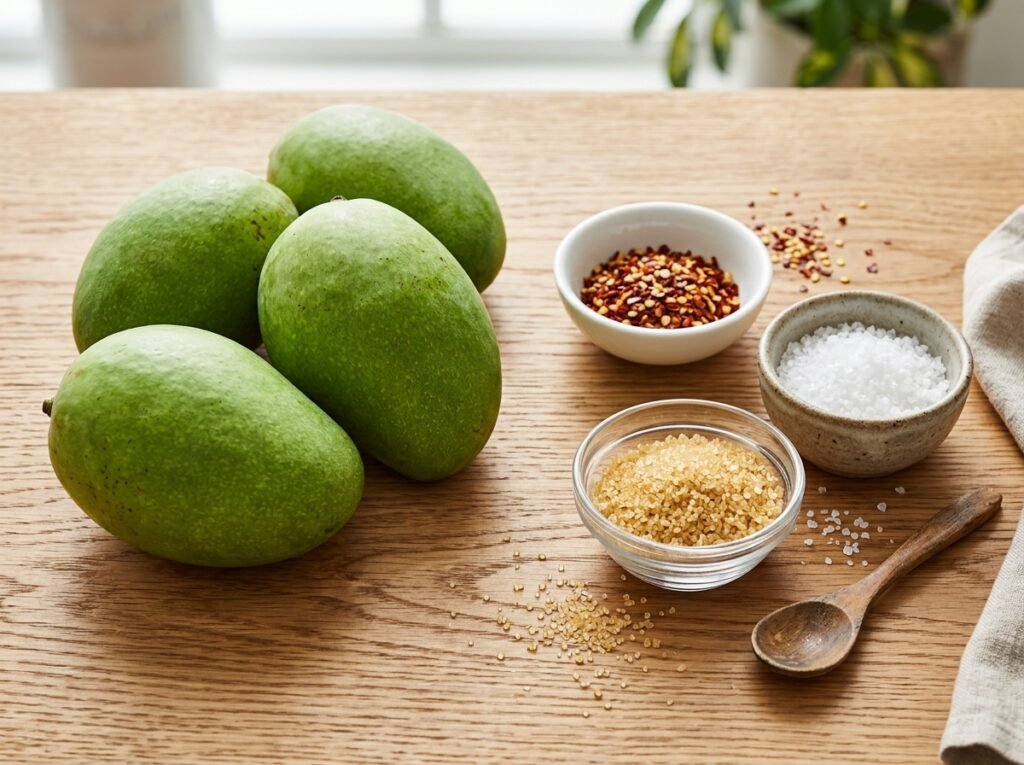
- Sharp Chef’s Knife: Essential for safely peeling tough green mango skin and making precise scores. Dull knives slip on hard fruit.
- Cutting Board: Stable surface for peeling/scoring. Bamboo or wood preferred over plastic for grip.
- Large Mixing Bowl: Wide enough to toss mangoes without spilling. Glass or stainless steel won’t absorb odors/stains from chili.
- Measuring Spoons: Precision matters for balancing sweet/sour/spicy/salty. Eyeballing leads to inconsistent results.
- Citrus Juicer/Reamer: Maximizes juice extraction. Handheld reamer works fine; electric juicer overkill for small quantity.
- Spatula or Tongs: For gentle tossing to coat evenly without bruising fruit. Silicone spatula prevents scratching bowl.
- Plastic Wrap or Lid: To cover bowl during marinating. Prevents contamination and retains moisture/aroma.
- Serving Plate/Bowl: Shallow vessel showcases glossy glaze and vibrant colors. White ceramic contrasts beautifully with green mango/red chili.
Preparation Information
- Prep Time: 15 Minutes
- Marinating Time: 15–30 Minutes
- Total Time: 45 Minutes
- Servings: 2–3
Step-by-Step Instructions
Preparing the Fruit
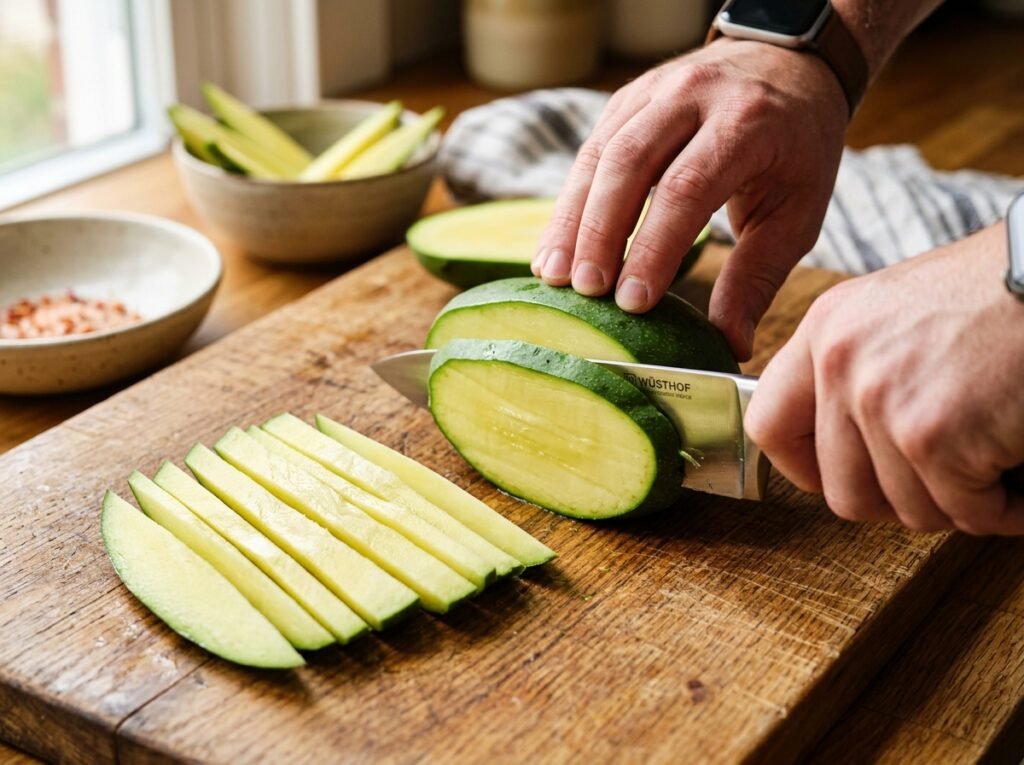
Wash green mangoes thoroughly under cold water to remove any dirt/residue. Using a sharp chef’s knife, peel the thick green skin completely, revealing pale yellow-green flesh. Cut each peeled mango lengthwise into quarters, avoiding the large flat pit in center. Make shallow vertical scores (¼-inch deep) along the length of each quarter, spacing cuts ½-inch apart. DO NOT cut all the way through. Arrange scored pieces on plate/bowl. Why it matters: Peeling removes bitter/tough skin. Scoring creates channels for marinade penetration and makes eating easier (bite-sized strips). Cutting around pit avoids waste and ensures uniform pieces. Uniform size = even marinating. Visual Cue: Flesh should be pale, firm, uniform color. No brown spots/bruises. Scores should be straight, parallel, consistent depth. Texture Cue: Fruit feels hard, crisp, resistant to knife. Not yielding/soft. Aroma Cue: Mild, fresh, slightly grassy/tart scent. No fermented/sour smell (indicates overripeness/spoilage). Common Mistake: Cutting too deep severs pieces, losing structural integrity. Too shallow limits marinade absorption. Aim for ¼-inch depth consistently. Pro Tip: Soak peeled/cut mangoes in ice water 5 mins if oxidizing (browning) quickly. Drain thoroughly before seasoning. Water dilutes marinade.
The Flavor Bomb Seasoning
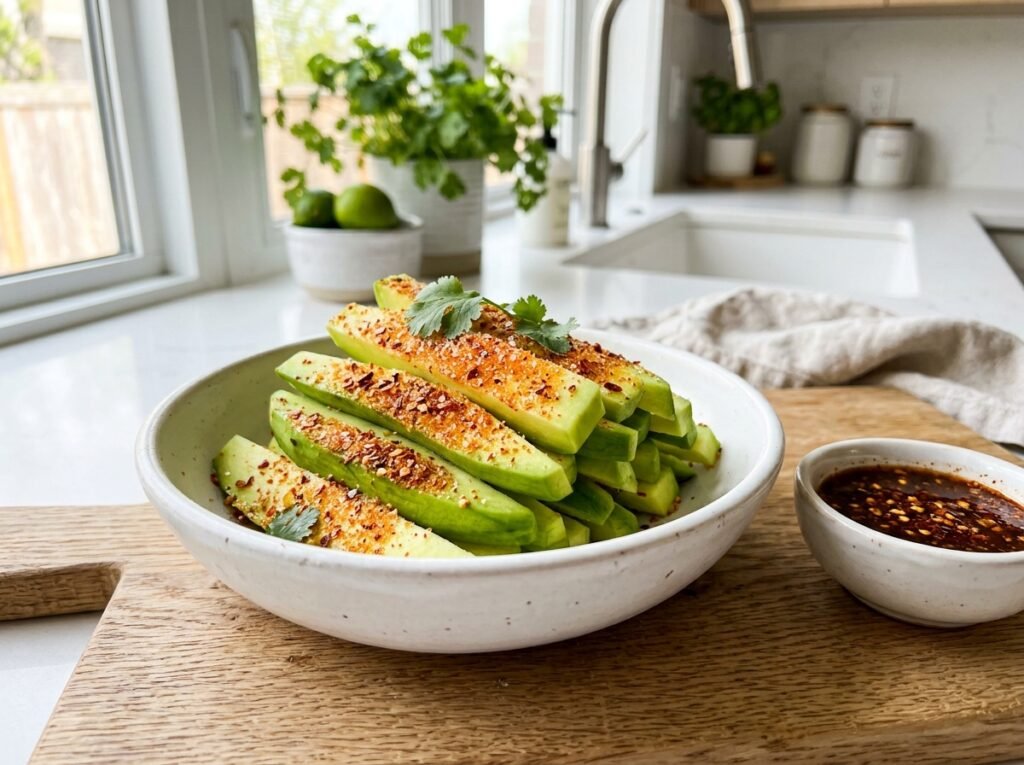
In small bowl, mix 2 tbsp brown sugar, ½ tsp salt, and 1 tsp chili flakes (adjust to taste). Sprinkle mixture evenly over scored mango pieces, ensuring seasoning falls INTO the cuts, not just on top. Gently press seasoning into scores with fingers/spoon to adhere. Why it matters: Pre-mixing dry ingredients ensures even distribution. Pressing into cuts guarantees flavor penetrates deep, not just surface. Salt begins drawing moisture immediately upon contact. Sugar starts dissolving with fruit’s natural moisture. Visual Cue: Even coating of golden-brown sugar, white salt crystals, red chili flecks visible in scores. No bare patches. Texture Cue: Surface feels tacky/gritty from sugar/salt. Not wet/slimy yet. Aroma Cue: Sweet molasses, salty, spicy chili aroma emerges. Fragrant and inviting. Chef Tip: Taste a tiny bit of seasoning mix before applying. Adjust ratio NOW based on mango tartness. Tartter mangoes need more sugar/salt. Milder ones need less.
Adding the Acid
Squeeze fresh lime juice (approx. 2-3 tbsp, depending on lime size/juiciness) evenly over seasoned mangoes. Aim juice directly into scored grooves. Let juice pool slightly at bottom of bowl. Why it matters: Lime juice activates osmosis, dissolving sugar/salt into brine. Acid balances sweetness/heat. Begins tenderizing outer fruit layer. Juice volume determines marinade consistency—too little = dry/gritty; too much = soupy/diluted. Visual Cue: Juice glistens in scores, pools at bowl bottom. Sugar begins dissolving visibly. Colors brighten. Texture Cue: Surface becomes moist/sticky, not dry. Juice feels cool/wet to touch. Aroma Cue: Bright, zesty citrus aroma dominates. Fresh, clean, appetizing. Common Mistake: Using bottled juice lacks freshness/vibrancy. Over-squeezing includes bitter pith/oil from rind. Squeeze gently, stop before white pith appears.
Tossing and Marinating
Using spatula/tongs, gently toss mangoes to coat EVERY surface evenly with juice/seasoning mixture. Ensure liquid distributes uniformly. Cover bowl tightly with plastic wrap/lid. Refrigerate 15–30 minutes. Toss once halfway through marinating time. Remove from fridge. Toss again before serving. Why it matters: Tossing ensures even coating/marination. Halfway toss redistributes settled liquid/flavors. Chilling slows enzymatic browning, maintains crunch, allows flavors to meld. Room temp marinating speeds process but risks mushiness/oxidation. Final toss re-coats after settling. Visual Cue: Mangoes look glossy/wet. Liquid reduced slightly (absorbed). Color deepens slightly. Glaze forms. Texture Cue: Fruit still CRISP but slightly softened at edges. Not mushy/limp. Coating sticky/tacky. Aroma Cue: Complex blend of sweet/sour/spicy/salty. Intense, mouth-watering fragrance. Doneness Cue: After 15 mins: lightly seasoned, very crisp. After 30 mins: deeply flavored, slight give at edges. Beyond 30 mins: risk of sogginess/over-marination. Trust your preference! Pro Tip: Set timer! Over-marinating destroys texture. 30 mins MAX for optimal crunch/flavor balance. Taste test at 15 mins to decide if longer needed.
Expert Tips for Perfect Texture
- Select TRUE Green Mangoes: Ripeness is everything. Even slight yellowing means softer texture/milder flavor unsuitable for this dish. Squeeze test: should feel like unripe avocado/apple, NOT yielding. Err on side of greener/harder.
- Score Consistently: Uneven scores = uneven flavor. Use ruler/knife guide if needed. Consistent ¼-inch depth, ½-inch spacing ensures predictable marination. Practice makes perfect.
- Balance BEFORE Marinating: Taste seasoning mix + lime juice combo BEFORE adding to mangoes. Adjust NOW. Can’t fix imbalance after marinating starts. Remember: mango tartness varies wildly by variety/season.
- Chill During Marinate: Room temp accelerates enzymatic breakdown = mushy mangoes. Fridge maintains crunch while allowing flavor infusion. Non-negotiable for texture preservation.
- Toss GENTLY: Aggressive tossing bruises delicate scored flesh. Bruised areas turn brown/mushy fast. Fold/toss motion, don’t stir vigorously. Respect the fruit’s structure.
- Serve CHILLED: Warm green mangoes taste unpleasantly sour/astringent. Cold temperature enhances crunch, balances acidity, refreshes palate. Refrigerate until moment of serving.
- Adjust Heat Gradually: Chili potency varies enormously. Start conservative (½ tsp), taste after 15 mins marinate, add more IF needed. Can’t remove heat once absorbed. Better mild than inedible.
Common Mistakes to Avoid
- Using Ripe/Yellowing Mangoes: Results in soft, mushy, overly sweet fruit that collapses under seasoning. Texture ruined irreversibly. ONLY use hard, green, unripe mangoes.
- Skipping the Score: Marinade sits on surface, interior remains bland. Eating experience frustrating (seasoned outside, plain inside). Scoring is ESSENTIAL, not optional.
- Over-Marinating (>30 mins): Fruit absorbs too much liquid/salt/sugar. Becomes soggy, oversalted, loses signature crunch. Texture degradation permanent. Stick to 15-30 min window strictly.
- Bottled Lime Juice: Lacks fresh brightness, contains preservatives/metals that alter flavor. Tastes artificial/flat. Fresh squeezed is NON-NEGOTIABLE for authentic taste.
- Uneven Seasoning Distribution: Some bites bland, others overpowering. Pre-mix dry spices, toss thoroughly, press into scores. Patience in application pays off.
- Room Temp Marinating: Accelerates spoilage/texture loss. Enzymes break down pectin faster = mush. Always refrigerate during marinate. Safety + texture depend on it.
- Ignoring Mango Variety: Some “green” mangoes are naturally sweeter/milder (e.g., Nam Dok Mai vs. Maha Chanok). Taste raw slice first. Adjust sugar/salt/chili accordingly. One size doesn’t fit all.
- Serving Warm/Lukewarm: Temperature affects perception. Warm = sour/astringent emphasis. Cold = balanced/crisp/refreshing. Chill before serving ALWAYS.
Recipe Variations
- Extra Spicy: Double chili flakes. Add minced fresh bird’s eye chilies. Finish with chili oil drizzle. For heat seekers only! Warn guests.
- Vegetarian/Vegan: Already vegan! Ensure sugar is vegan-certified (some refined with bone char). Coconut/palm sugar inherently vegan. No animal products used.
- Low-Sodium: Reduce salt to ¼ tsp. Increase lime juice slightly to compensate. Use potassium-based salt substitute if medically necessary. Flavor still balanced.
- Low-Sugar/Diabetic-Friendly: Replace brown sugar with erythritol/monk fruit blend. Reduce quantity by half. Mango’s natural tartness shines. Monitor blood sugar response.
- Herbal Twist: Add fresh mint/cilantro/thai basil leaves during toss. Herbaceous notes complement citrus/chili beautifully. Garnish with extra herbs.
- Umami Boost: Add ½ tsp fish sauce (nam pla) or soy sauce. Deepens savory complexity. Reduce added salt accordingly. Authentic Thai street food secret.
- Tropical Fusion: Add diced pineapple/passion fruit during toss. Extra sweetness/acidity layers. Vibrant color boost. Summer party hit.
- Crunchy Texture Add: Top with roasted peanuts/cashews/toasted sesame seeds before serving. Nutty contrast to juicy mango. Protein/fat boost.
- Creamy Version: Serve with coconut cream/yogurt dip on side. Cooling contrast to spicy/sour mango. Dessert-like treatment.
- Smoky Variation: Add pinch smoked paprika/cumin to seasoning. Earthy depth complements tartness. Unexpected but delicious twist.
What to Serve With This Recipe
- Grilled Meats/Seafood: Acts as palate cleanser between rich bites. Acidity cuts fat perfectly. Classic Thai pairing.
- Sticky Rice: Traditional accompaniment. Sweet rice balances sour/spicy mango. Complete meal experience.
- Fresh Spring Rolls: Herbs/rice noodles/shrimp rolls benefit from tangy mango side. Light, refreshing combo.
- Coconut Ice Cream: Hot/cold, sweet/sour contrast. Decadent dessert pairing. Street food classic.
- Iced Thai Tea/Coffee: Sweet, creamy beverages balance intense mango flavors. Refreshing drink pairing.
- Simple Green Salad: Lettuce/cucumber/herb salad with light vinaigrette. Extends freshness theme. Light lunch option.
- Satay Skewers: Peanut sauce richness offset by acidic mango. Protein-packed appetizer spread.
- Lemongrass Chicken Soup: Tom Yum/Tom Kha soups harmonize with mango’s citrus/chili notes. Cohesive flavor profile.
Make Ahead & Meal Prep Tips
- Peel/Score Ahead: Prep mangoes up to 4 hours ahead. Store submerged in ICE WATER in fridge. Prevents oxidation/browning. Drain THOROUGHLY before seasoning. Water ruins marinade balance.
- Seasoning Mix Prep: Combine dry spices (sugar/salt/chili) up to 1 week ahead. Store airtight. Saves assembly time. Shake before use to redistribute settled spices.
- Lime Juice Prep: Juice limes up to 2 days ahead. Store airtight fridge. Freshness declines after 48 hrs. Freeze excess in ice cube trays for future batches.
- Partial Marinate: Marinate 15 mins max ahead. Store covered fridge. Add remaining lime juice/toss JUST before serving. Maintains optimal crunch. Full 30-min marinate degrades texture if held >1 hr.
- Portion Control: Divide into individual serving containers post-marinate. Grab-and-go snacks. Prevents over-handling/bruising from repeated bowl access.
Storage Instructions
Refrigerator
Store leftover marinated mangoes in airtight container up to 24 hours. Texture degrades significantly after this point (sogginess/oxidation). Best consumed within 4-6 hours of marinating. Liquid may separate; toss before eating.
Freezer
NOT RECOMMENDED. Freezing ruptures cell walls = mushy, watery texture upon thawing. Flavor intensifies unpleasantly. Spice/salt become concentrated/bitter. Enjoy fresh only.
Room Temperature
DO NOT STORE. Ambient temps accelerate spoilage/enzymatic breakdown. Food safety risk + texture ruin. Always refrigerate if not consuming immediately. Max 2 hours room temp exposure.
Nutritional Information
Estimates per serving (based on 1 medium green mango, standard seasoning)
- Calories: 180 kcal
- Protein: 2g
- Carbohydrates: 42g
- Fat: 1g
- Fiber: 3g
- Sugar: 32g (includes added brown sugar)
- Sodium: 380mg
Note: Values vary based on mango size/sweetness, exact seasoning quantities. High natural sugar content in mango + added sugar. Moderate sodium from salt. Low fat/protein.
Troubleshooting Guide
| Problem | Cause | Solution |
|---|---|---|
| Mango Too Sour/Tart | Underripe variety / insufficient sugar. | Add 1 tsp more brown sugar. Toss gently. Rest 5 mins. Taste again. Balance gradually. |
| Mango Too Sweet/Bland | Overripe / too much sugar / insufficient acid/salt. | Add squeeze lime juice + pinch salt. Toss. Rest 5 mins. Rebalance carefully. |
| Mango Mushy/Soggy | Over-marinated (>30 mins) / ripe fruit used / room temp storage. | Cannot fix texture. Prevent next time: strict timing, true green fruit, fridge marinate. |
| Seasoning Not Penetrating | Insufficient scoring / uneven toss / dry seasoning. | Re-score deeper next batch. Pre-mix spices. Press into cuts. Toss thoroughly. |
| Too Spicy/Hot | Excess chili / potent variety. | Add more mango slices (if available) to dilute. Or serve with coconut yogurt/cream dip to neutralize. |
| Oxidized/Brown Spots | Exposure to air / dull knife bruising / old fruit. | Soak in ice water + lemon juice 5 mins pre-season. Use sharp knife. Select fresher fruit. |
| Gritty Texture | Undissolved sugar/salt. | Extend marinate 5-10 mins. Toss more frequently. Ensure adequate lime juice volume to dissolve. |
| Watery Marinade | Too much lime juice / mango released excess water. | Drain excess liquid. Reduce separately in pan 2-3 mins to concentrate. Pour back over mangoes. |
Frequently Asked Questions
1. Can I use regular ripe mangoes instead? No. Ripe mangoes are soft, sweet, and lack the necessary tartness/crunch. They will turn mushy instantly when marinated. This recipe REQUIRES unripe, hard, green mangoes. Substitutes: green papaya, jicama, Granny Smith apple.
2. How do I know if a mango is green/unripe enough? Squeeze test: Should feel HARD like an apple/unripe avocado. Zero give. Skin uniformly dark green, NO yellow/orange blush. Heavy for size. Smell: faint/grassy, NOT sweet/fruity. When in doubt, choose harder/greener.
3. Can I reduce the sugar for health reasons? Yes. Reduce to 1 tbsp or substitute with monk fruit/erythritol. Note: Sugar aids dissolution/glaze formation. Less sugar = grittier texture, less glossy. Compensate with extra lime juice for balance. Taste-adjust carefully.
4. Is this recipe safe for diabetics? With modifications. Omit added sugar. Use zero-calorie sweetener. Limit portion size (green mango still contains natural sugars). Monitor blood glucose. Consult healthcare provider. Lower-sugar version provided in variations.
5. Why did my mangoes turn brown/black? Oxidation from air exposure or enzymatic browning from bruising/dull knife. Prevention: Sharp knife, ice water soak pre-season, minimize handling, consume promptly. Lemon/lime juice slows browning but doesn’t stop it entirely.
6. Can I make this less spicy for kids? Absolutely. Omit chili flakes entirely or use ⅛ tsp mild paprika for color without heat. Increase sugar/lime slightly to maintain balance. Kids often enjoy the sweet/sour profile sans spice. Always label clearly.
7. How long can I leave it marinating safely? MAX 30 minutes refrigerated. Beyond this, texture deteriorates rapidly (mushy/oversalted). Food safety isn’t primary concern (acid/salt preserve), but QUALITY suffers immensely. Set timer. Taste at 15 mins to decide.
8. Can I use other citrus besides lime? Yes. Lemon (brighter/floral), calamansi (traditional, sweeter), yuzu (complex/floral), or key lime (more aromatic). Each alters flavor profile distinctly. Adjust quantity based on acidity/sweetness. Taste-test as you go.
9. Where do I buy green mangoes? Asian/Latin grocery stores most reliable. Ask for “green eating mangoes,” “salad mangoes,” or “unripe mangoes.” Some mainstream stores carry them seasonally (spring/summer). Online retailers specialize in tropical fruits. Call ahead to confirm stock.
10. Can I add protein to make it a meal? Yes! Top with grilled shrimp/chicken/tofu. Add edamame/roasted chickpeas for plant protein. Serve alongside sticky rice/quinoa for complete amino profile. Transforms snack into balanced meal effortlessly.
Final Thoughts
These Spicy Sweet Green Mangoes are more than just a snack—they’re an invitation to explore the vibrant, bold flavors of Southeast Asian cuisine right in your own kitchen. The combination of textures and tastes creates an experience that is both refreshing and deeply satisfying, proving that simplicity done well can be truly extraordinary. Whether you’re seeking a healthy alternative to processed snacks, a unique addition to your next gathering, or simply a moment of culinary adventure, this recipe delivers with elegance and ease.