| Quick Recipe Summary | |
|---|---|
| Prep Time | 10 minutes |
| Cook Time | 12–15 minutes |
| Total Time | 22–25 minutes |
| Servings | 2–3 |
| Cuisine | Mediterranean-inspired |
| Course | Breakfast, Brunch, Light Lunch |
| Difficulty | Easy |
| Calories | Approximately 380–420 per serving |
Table of Contents
- Introduction
- Why This Recipe Works
- Why You’ll Love This Recipe
- Ingredient Notes
- Kitchen Equipment
- Preparation Information
- Step-by-Step Instructions
- Expert Tips
- Common Mistakes
- Recipe Variations
- What to Serve With This Recipe
- Make Ahead Tips
- Meal Prep Tips
- Storage Instructions
- Reheating Instructions
- Nutritional Information
- Troubleshooting Guide
- Frequently Asked Questions
- Final Thoughts
Introduction
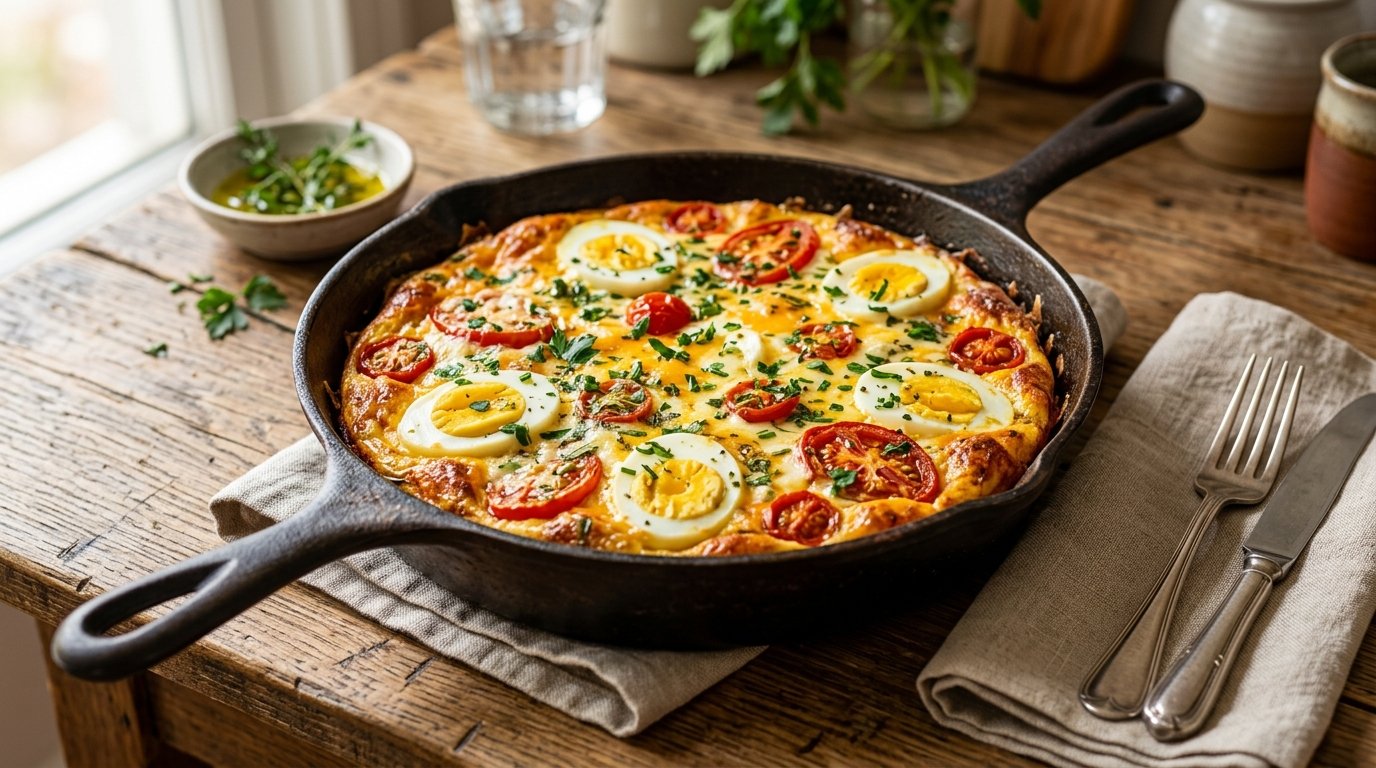
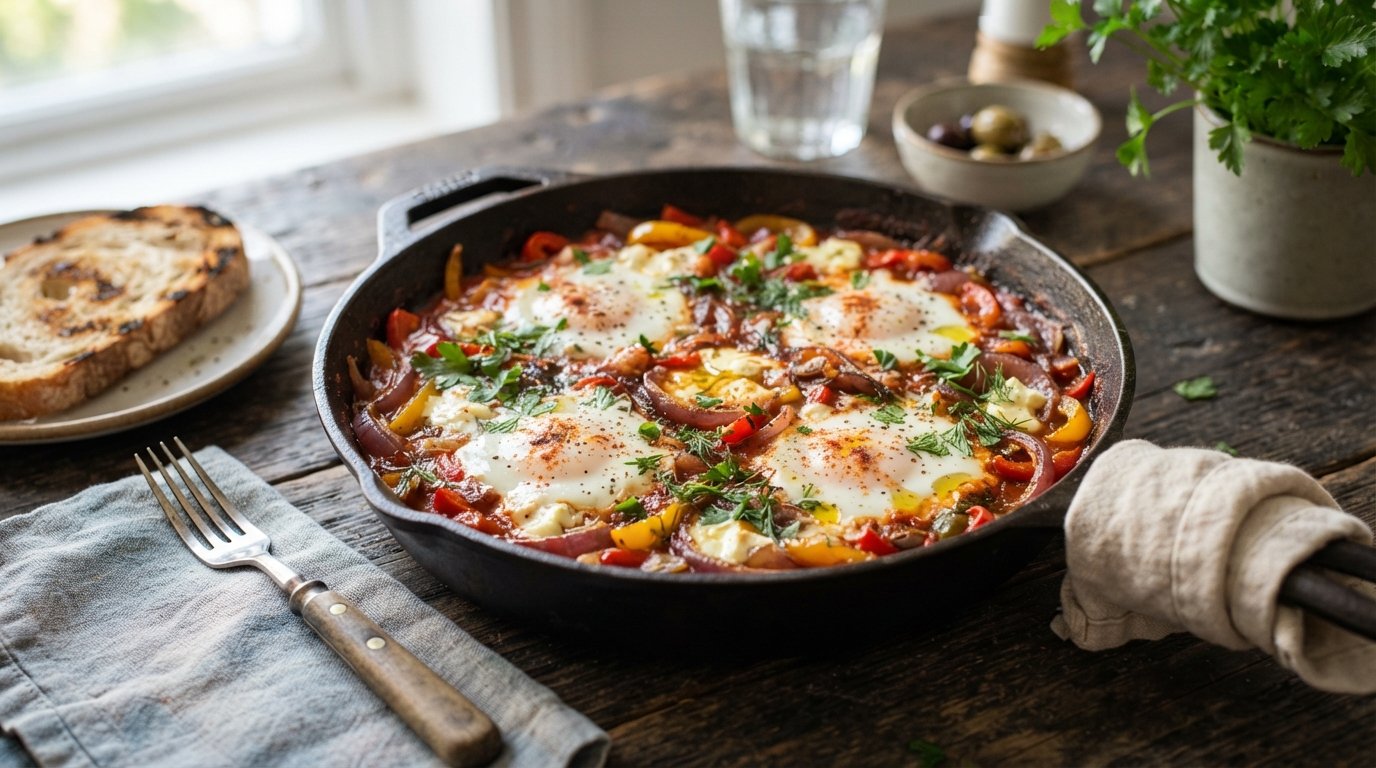
There’s something deeply satisfying about a skillet of eggs nestled among sweet red onions, crisp green peppers, melty cheese, and bright toppings that come together in under half an hour. These cheesy Mediterranean skillet eggs deliver restaurant-style flavor with almost no fuss—perfect for busy mornings, lazy weekends, or a quick protein-packed lunch. The combination of gently softened onions, juicy peppers, perfectly set yolks, and a blanket of cheese creates a dish that feels special yet stays completely approachable. One pan, a handful of ingredients, and a lid are all you need to turn simple eggs into something you’ll want to make again and again.
Why This Recipe Works
The magic lies in the sequence. Softening the red onions and green peppers first builds a sweet, savory foundation that keeps the eggs from sticking and adds depth. Cracking the eggs directly into the spaces between the vegetables lets the whites set around the vegetables while the yolks stay runny or jammy, depending on your preference. A quick sprinkle of dried herbs, shredded cheese, olives, and cherry tomatoes adds layers of flavor and texture without extra pans or complicated techniques. Covering the skillet traps gentle steam, cooking the tops of the eggs evenly so you never have to flip or risk breaking a yolk. The result is a cohesive, flavorful skillet meal that looks impressive and tastes even better.
Why You’ll Love This Recipe
- Ready in about 25 minutes from start to finish
- Uses one skillet and minimal cleanup
- Naturally gluten-free and easy to adapt
- Balanced mix of protein, vegetables, and healthy fats
- Customizable heat, cheese, and toppings
- Looks beautiful straight from the pan
- Works for breakfast, brunch, or a light dinner
- Kid-friendly while still feeling grown-up
Ingredient Notes
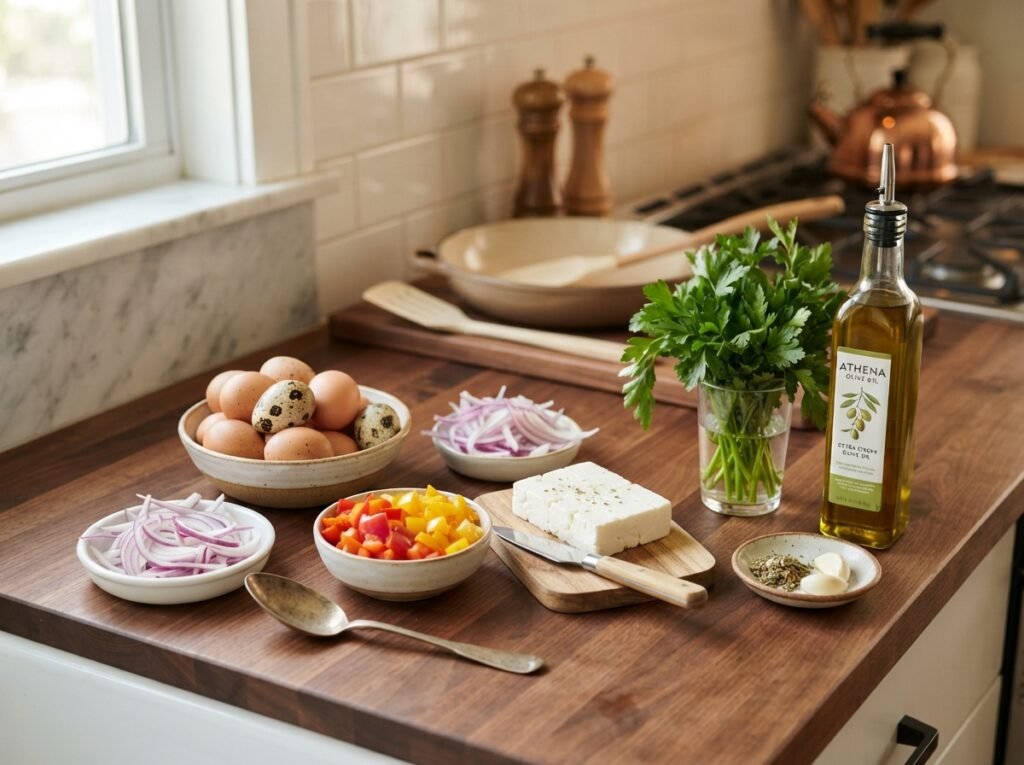
Red onions
Sliced into half-moons, they soften quickly and turn sweet and mellow. Choose firm, heavy onions with tight skins. Store in a cool, dark place. Substitute yellow onions or shallots if needed; the color and mild sweetness will change slightly.
Green bell peppers
Diced small so they cook at the same rate as the onions. They add fresh crunch and color. Any color bell pepper works; green keeps the dish bright and slightly bitter in a pleasant way. Store in the refrigerator crisper.
Eggs
The star. Use the freshest eggs you can find for the best structure and color. Room-temperature eggs cook more evenly. Large eggs are ideal.
Neutral oil or olive oil
Just enough to coat the pan and help the vegetables soften without browning too fast. Extra-virgin olive oil adds Mediterranean character.
Dried herbs (oregano, mixed Italian seasoning, or similar)
A light sprinkle over the eggs brings aroma and earthiness. Fresh herbs can be used at the end, but dried herbs stand up better during the covered cooking phase.
Shredded cheese
Mozzarella or a mild melting cheese works best—it softens and stretches without overpowering. Freshly shredded melts more evenly than pre-shredded. Store opened packages tightly wrapped in the refrigerator.
Black olives
Sliced rings add salty, briny pops. Choose pitted olives packed in water or light brine. Drain well.
Cherry tomatoes
Halved, they release a little juice and add bright acidity and color. Use firm, ripe tomatoes.
Fresh basil (for finishing)
Torn leaves add a final fresh note and beautiful green contrast.
Kitchen Equipment
- 10- to 12-inch nonstick or well-seasoned skillet with a tight-fitting lid
- Cutting board and sharp knife
- Mixing bowl (for holding eggs if preferred)
- Spatula or wooden spoon
- Measuring spoons (optional)
Optional: kitchen scale for precise cheese amounts, citrus juicer if you like a squeeze of lemon at the end.
Preparation Information
- Prep Time: 10 minutes
- Cook Time: 12–15 minutes
- Total Time: 22–25 minutes
- Servings: 2–3 generous portions
Step-by-Step Instructions
Soften the Onions and Peppers
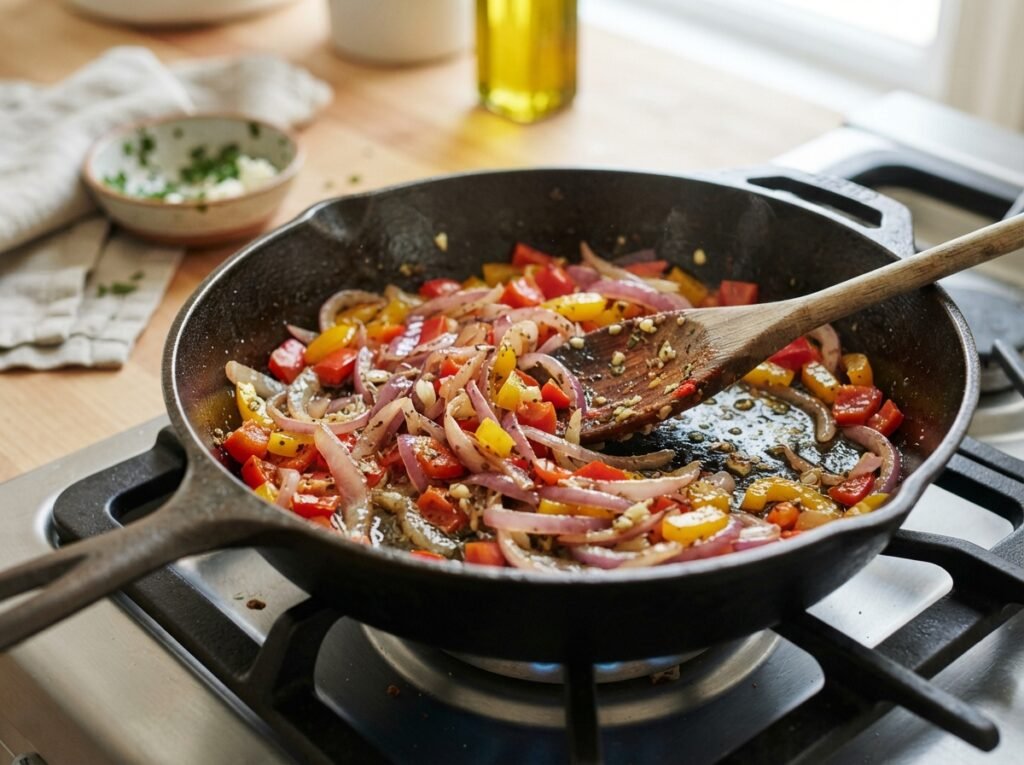
Heat a thin layer of oil in your skillet over medium heat. Add the sliced red onions and diced green peppers. Cook, stirring occasionally, until the onions turn translucent and the peppers soften slightly—about 4–5 minutes. You want them tender but still holding their shape. This step builds the flavor base and creates little pockets for the eggs later. If the vegetables start to brown too quickly, lower the heat.
Crack in the Eggs
Gently crack 5–6 eggs into the spaces between the vegetables, keeping the yolks intact. The whites will spread and begin to set around the onions and peppers. Work carefully so the yolks stay whole. The residual heat from the vegetables helps the bottoms of the eggs start cooking immediately.
Season and Add Liquid
If any egg white remains in your bowl, pour it over the eggs. Sprinkle dried herbs evenly across the surface. The herbs bloom in the heat and perfume the whole skillet. A light hand is best—too much can overpower the fresh vegetables.
Top with Cheese, Olives, and Tomatoes
Scatter shredded cheese over and around the eggs. Add sliced black olives and halved cherry tomatoes. The cheese will begin to soften from the residual heat, while the olives and tomatoes add contrast in flavor and texture. Do not stir—everything should stay in place so the eggs cook evenly.
Cover and Finish
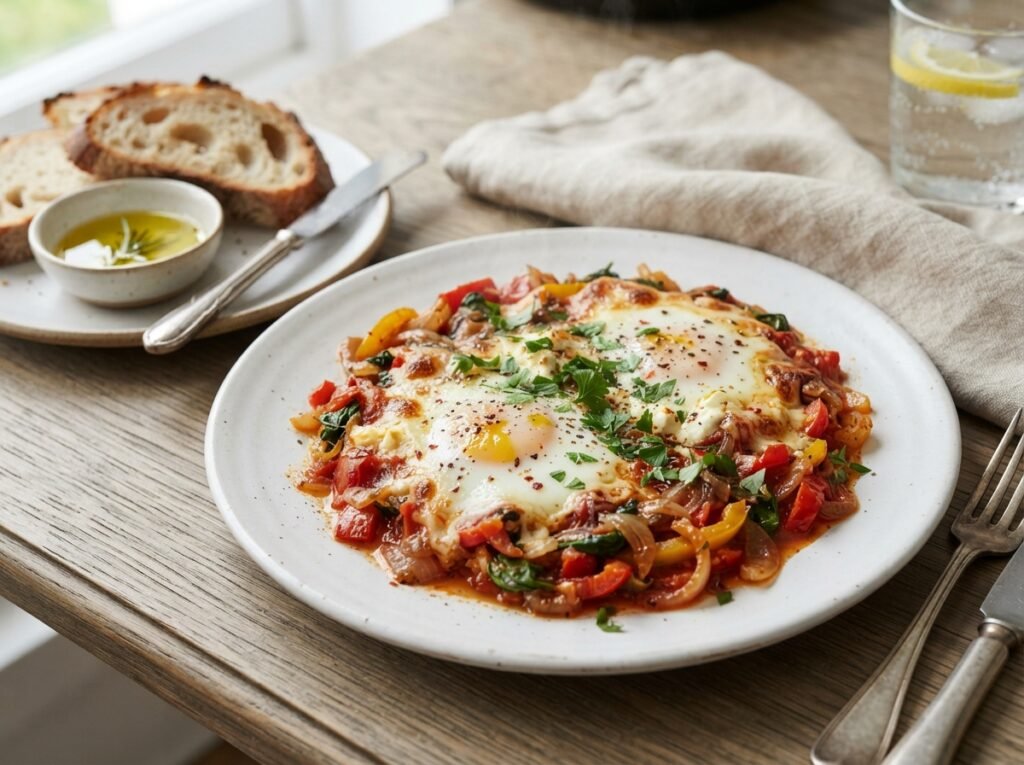
Place a tight-fitting lid on the skillet. Reduce the heat to medium-low. Let the eggs cook undisturbed for 4–7 minutes, depending on how set you like the yolks. Steam trapped under the lid gently cooks the tops of the eggs. Check at the 4-minute mark: the whites should be fully opaque and the yolks still soft and jiggly for a runny result, or firmer if you prefer them more cooked. Remove the lid when the eggs look done and the cheese is melted.
Garnish and Serve
Turn off the heat. Scatter fresh basil leaves over the top if desired. Serve straight from the skillet while everything is hot and the cheese is still stretchy.
Expert Tips
- Use a lid that fits well—steam is what finishes the tops of the eggs without flipping.
- Keep the heat moderate after adding the eggs so the bottoms don’t toughen before the tops set.
- Freshly shredded cheese melts more smoothly than bagged varieties that contain anti-caking agents.
- If you want runnier yolks, pull the skillet off the heat a minute earlier; residual heat continues cooking.
- A nonstick or well-seasoned pan makes cleanup almost effortless and prevents the eggs from sticking.
- Let the finished dish rest for 1 minute off the heat before serving—the eggs firm up slightly and are easier to portion.
Common Mistakes
Eggs sticking or browning too much on the bottom
Usually caused by heat that is too high or insufficient oil. Keep the flame at medium or medium-low once the eggs are in and make sure the pan is properly coated.
Rubbery whites or overcooked yolks
Leaving the lid on too long or cooking over high heat. Check early and remove the lid as soon as the whites are set.
Watery pan
Tomatoes or vegetables releasing too much liquid. Use firm cherry tomatoes and don’t overcrowd the skillet. A quick uncovered minute at the end can evaporate excess moisture if needed.
Cheese not melting
Adding cheese too late or using cold, thick shreds. Scatter it while the eggs are still cooking under the lid so the steam helps it melt.
Recipe Variations
- Spicy: Add a pinch of red pepper flakes or a few slices of fresh chili with the onions.
- Extra Cheesy: Double the shredded cheese or finish with a few small mozzarella pearls.
- Higher Protein: Add cooked crumbled sausage, chorizo, or leftover shredded chicken when the vegetables are softening.
- Seafood: Stir in a handful of cooked shrimp or flaked smoked salmon just before covering.
- Vegetarian Boost: Add baby spinach or kale in the last minute of vegetable cooking.
- Low-Carb / Keto-Friendly: Already low in carbs; simply increase the cheese and olives if desired.
- Dairy-Free: Skip the cheese or use a plant-based melting alternative.
- Herb-Forward: Finish with extra fresh parsley, dill, or chives instead of or in addition to basil.
What to Serve With This Recipe
- Crusty bread or warm pita for scooping
- Simple green salad with lemon vinaigrette
- Sliced avocado or a quick cucumber-tomato salad
- Greek yogurt or labneh on the side
- Fresh fruit for a complete brunch plate
- Light white wine or sparkling water with lemon for lunch
Make Ahead Tips
Slice the onions and dice the peppers up to a day ahead and store them in an airtight container in the refrigerator. The dish itself is best cooked fresh, but you can have everything prepped and ready so the skillet comes together in minutes.
Meal Prep Tips
Cook a double batch of the vegetable base and store it. When ready to eat, reheat the vegetables in a skillet, crack in fresh eggs, and finish as directed. The eggs are always best freshly cooked.
Storage Instructions
Cool completely, then transfer to an airtight container. Refrigerate for up to 2 days. The texture of the eggs changes slightly after refrigeration, so this is best enjoyed fresh. Freezing is not recommended—the eggs become rubbery and watery when thawed.
Reheating Instructions
- Stovetop (preferred): Place in a covered skillet over low heat with a splash of water for 3–4 minutes until warmed through.
- Microwave: Heat in short 20–30 second bursts, covered, until just warm. Avoid overheating or the eggs will toughen.
- Oven or air fryer: Not ideal for this delicate dish; stick to stovetop or microwave.
Nutritional Information
Approximate values per serving (based on 3 servings, using 6 large eggs and moderate cheese):
- Calories: 380–420
- Protein: 22–25 g
- Carbohydrates: 10–12 g
- Fat: 28–32 g
- Fiber: 2–3 g
- Sugar: 5–6 g
- Sodium: 450–550 mg (varies with cheese and olives)
Values are estimates and will change with exact ingredients and portion sizes.
Troubleshooting Guide
Whites still translucent after covering
Heat may be too low or lid not tight. Increase heat slightly and give it another 1–2 minutes.
Yolks fully hard when you wanted them runny
Next time check earlier. Residual heat continues to cook the eggs even after the pan is off the burner.
Vegetables too soft or mushy
They were cooked too long before the eggs went in. Aim for just-softened, not fully collapsed.
Bland flavor
Season the vegetables lightly with salt while they soften, and don’t skimp on the herbs or a final pinch of salt and pepper at the table.
Frequently Asked Questions
Can I use only egg whites?
Yes. The dish will be lighter and still flavorful, though less rich.
What if I don’t have a lid?
Cover the skillet tightly with foil. The steam is important for cooking the tops of the eggs evenly.
Can I make this in the oven?
Yes. After adding the eggs and toppings, transfer the skillet to a 375°F (190°C) oven for 6–8 minutes until the whites are set.
Are the olives necessary?
No, but they add a nice salty contrast. Capers or a few anchovy pieces can stand in if you like.
How do I know when the eggs are done?
The whites should be fully opaque and no longer jiggly. The yolks can remain soft and glossy for a runny center or firm up longer if preferred.
Can I double the recipe?
Use a larger skillet or cook in two batches so the eggs have room and cook evenly.
Is this recipe gluten-free?
Yes, as written.
What’s the best cheese to use?
Mozzarella for stretch, or a mix of mozzarella and a little Parmesan for extra flavor. Any good melting cheese works.
Final Thoughts
These cheesy Mediterranean skillet eggs prove that a handful of everyday ingredients and one pan can deliver something truly satisfying. The sweet onions, bright peppers, perfectly cooked eggs, and melty cheese come together in a dish that feels both comforting and fresh. Whether you’re cooking for yourself on a quiet morning or feeding a small group at brunch, this recipe rewards you with big flavor and almost no effort. Give it a try this weekend—then come back and tell me how you customized it. I’d love to hear about your favorite toppings or twists in the comments below. Enjoy every bite.