Quick Recipe Summary
| Feature | Details |
|---|---|
| Prep Time | 15 Minutes |
| Cook Time | 12–15 Minutes |
| Total Time | 30 Minutes |
| Servings | 4 |
| Cuisine | American / Seafood Fusion |
| Course | Main Course, Dinner |
| Difficulty | Intermediate |
| Calories | ~480 kcal per serving |
Table of Contents
- Introduction
- Why This Recipe Works
- Why You’ll Love This Recipe
- Ingredient Notes
- Kitchen Equipment
- Preparation Information
- Step-by-Step Instructions
- Expert Tips
- Common Mistakes
- Recipe Variations
- What to Serve With This Recipe
- Make Ahead & Meal Prep Tips
- Storage & Reheating Instructions
- Nutritional Information
- Troubleshooting Guide
- Frequently Asked Questions
- Final Thoughts
Introduction

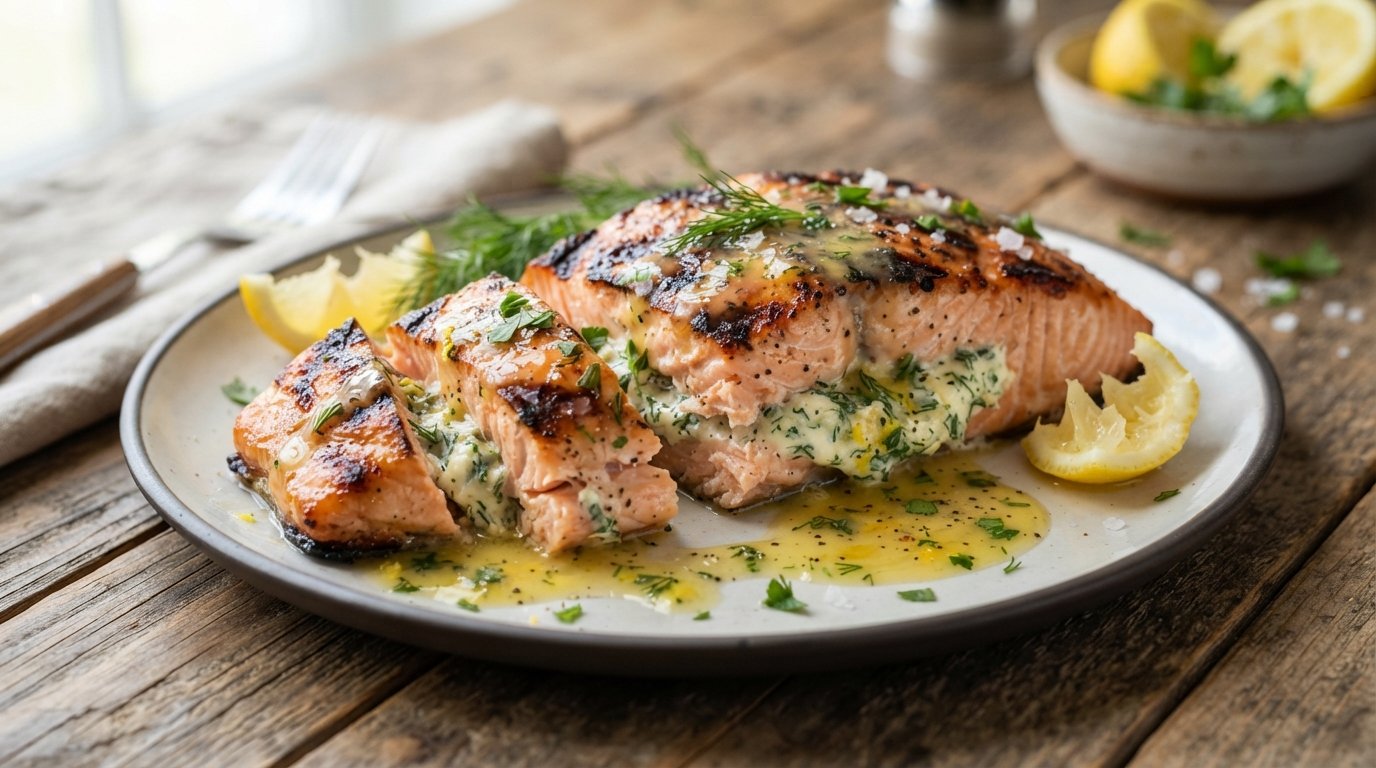
There is a moment in cooking when technique meets indulgence, and the result is nothing short of magic. This grilled stuffed salmon with cream cheese and lemon butter captures that moment perfectly. Imagine a thick, vibrant orange fillet of wild-caught salmon, scored deeply and filled with a cool, herb-flecked cream cheese mixture. As it hits the hot grill, the skin crisps to a golden shatter while the interior steams gently in its own juices and melting filling. Then comes the finale: a warm, emulsified lemon-butter sauce poured tableside, pooling around the fish and glistening under summer light.
This isn’t just dinner; it’s an experience. The contrast of textures—crisp skin, flaky flesh, creamy center, silky sauce—is what elevates this dish from simple seafood to restaurant-worthy fare. Whether you’re hosting a backyard gathering or treating yourself to a luxurious solo meal, this recipe delivers elegance without pretension. It proves that impressive cooking doesn’t require hours of prep or exotic ingredients—just smart technique and quality components. Let’s fire up the grill and create something unforgettable.
Why This Recipe Works
The genius of this stuffed grilled salmon lies in three interconnected elements: moisture retention, flavor layering, and thermal control. Salmon is a fatty fish, but even it can dry out over direct heat. By scoring the fillet and stuffing it with cream cheese, we create internal steam pockets that baste the fish from within during grilling. The cheese acts as both insulator and flavor carrier, ensuring every bite is moist and rich.
Simultaneously, the lemon-butter sauce isn’t merely a garnish—it’s a functional component. When spooned over the hot fish during the last minutes of grilling (as shown), the residual heat gently warms the sauce without breaking the emulsion. The acid cuts through the fat of both fish and cheese, while the butter adds gloss and richness. Cooking on parchment paper (visible in the video) is another critical trick: it prevents sticking without sacrificing grill marks or smoke flavor, while allowing easy transfer to the plate. Together, these techniques ensure a foolproof result that looks and tastes like professional catering.
Why You’ll Love This Recipe
- Juicy Guarantee: The cream cheese stuffing acts as a built-in basting system, eliminating the #1 fear of grilling salmon: dryness.
- Visual Drama: Deep scores filled with white-green cheese, charred grill marks, and glossy sauce make this dish stunning before the first bite.
- Flavor Balance: Rich salmon + tangy cheese + bright lemon + herbal freshness = perfect harmony in every mouthful.
- Grill-Friendly Simplicity: Parchment paper method means no stuck fish, no lost fillets, and minimal cleanup.
- Elegant Yet Approachable: Feels special enough for guests but simple enough for a Tuesday night. No fancy equipment needed beyond a basic grill.
Ingredient Notes
Salmon Fillet (Skin-On, Center-Cut)
- Purpose: Primary protein. Skin-on protects flesh from direct heat and provides crispy texture. Center-cut ensures uniform thickness for even cooking.
- Buying Tip: Ask for “center-cut” or “tail-off” fillets. Avoid thin tail ends—they cook too fast and lack substance. Look for firm, bright orange flesh with no brown spots or gaping.
- Substitution: Steelhead trout or Arctic char work similarly. Avoid delicate fish like tilapia or sole—they’ll fall apart.
- Storage: Keep refrigerated until ready to use. Pat DRY before scoring/stuffing. Moisture = poor sear.
Cream Cheese (Full-Fat, Block Style)
- Purpose: Stuffing base. Provides moisture, richness, and structural integrity when melted.
- Critical Note: MUST be full-fat block cream cheese. Whipped or tub varieties contain air/water and won’t hold shape. Low-fat versions separate and become grainy.
- Prep: Soften to room temperature 30 mins before mixing. Cold cream cheese tears fish when spreading.
- Storage: Refrigerate unused portion tightly wrapped. Discard if left at room temp >2 hours.
Fresh Parsley & Chives
- Purpose: Herbaceous brightness and color contrast against white cheese/orange fish.
- Fresh vs. Dried: FRESH ONLY. Dried herbs lack volatile oils and turn bitter when heated. Chop finely for even distribution.
- Quantity: ¼ cup total packed. Too little = bland; too much = overwhelms fish.
- Substitution: Dill or tarragon complement salmon beautifully. Avoid rosemary/thyme—they’re too woody for delicate fish.
Lemon (Zest + Juice)

- Purpose: Acid balances fat, enhances seafood flavor, and prevents oxidation (browning).
- Zest First: Always zest BEFORE juicing. Zest contains essential oils; juice alone lacks aromatic depth.
- Juice Timing: Add juice to sauce OFF HEAT. Boiling destroys fresh citrus notes and can cause bitterness.
- Substitution: Lime or yuzu offer interesting twists. Bottled juice is unacceptable here—fresh is non-negotiable.
Unsalted Butter
- Purpose: Sauce base. Emulsifies with lemon juice to create glossy, cohesive coating.
- Why Unsalted? Controls sodium level. Salted butter varies wildly in salinity and can overpower delicate fish.
- Temperature: Cut into cubes and soften slightly. Cold butter shocks hot pan and breaks emulsion.
- Quality Matters: Use European-style butter (higher fat content, lower water) for superior melt and flavor.
Seasoning (Salt, Pepper, Red Pepper Flakes)
- Salt: Kosher salt preferred. Seasons evenly without harshness. Apply generously to flesh side before stuffing.
- Pepper: Freshly cracked black pepper. Pre-ground lacks aroma and turns dusty.
- Red Pepper Flakes: Optional heat. Sprinkle INSIDE score lines before stuffing. Adds subtle warmth without overwhelming.
- Timing: Season JUST before grilling. Salting too early draws out moisture, making fish soggy.
Kitchen Equipment
- Gas or Charcoal Grill: Essential for smoky flavor and high heat. Electric grills work but lack authentic char.
- Parchment Paper (Unbleached): Critical for preventing sticking. Do NOT substitute foil—it traps steam and makes skin soggy.
- Sharp Chef’s Knife: For precise scoring without tearing flesh. Dull knives crush tissue and leak filling.
- Mixing Bowl & Spatula: For combining cream cheese filling. Silicone spatula scrapes cleanly.
- Tongs & Fish Spatula: Tongs for handling parchment; flexible spatula for transferring cooked fish intact.
- Small Saucepan: For warming lemon-butter sauce gently. Prevents breaking emulsion.
- Instant-Read Thermometer: Ensures perfect doneness (145°F/63°C). Visual cues alone are unreliable.
Preparation Information
- Prep Time: 15 Minutes (Scoring, stuffing, sauce prep)
- Cook Time: 12–15 Minutes (Grilling + sauce application)
- Total Time: 30 Minutes
- Servings: 4 (Based on 1.5–2 lb fillet)
Step-by-Step Instructions
H3: Prepare the Cream Cheese Filling
In a bowl, combine softened cream cheese, chopped parsley, chives, lemon zest, salt, and pepper. Mix until smooth and evenly flecked green. Taste and adjust seasoning—it should be bright and herby. Chill 10 mins to firm slightly for easier stuffing.
- Why it matters: Room-temp cheese mixes smoothly; chilling prevents oozing during assembly. Herbs distribute evenly only when cheese is pliable.
- Visual Cue: Uniform pale green-white mixture with visible herb specks. No streaks of plain cheese.
- Texture Cue: Smooth, spreadable consistency—not lumpy or runny. Should hold shape when scooped.
- Pro Tip: Fold herbs gently; overmixing bruises them and releases bitter compounds.
H3: Score and Stuff the Salmon
Place fillet skin-side down on parchment paper. Using sharp knife, make 3-4 deep diagonal cuts (¾ depth, not through skin) spaced 1 inch apart. Season flesh generously with salt, pepper, and red pepper flakes. Spoon filling into each cut, pressing gently to pack. Smooth excess over surface.
- Why it matters: Scoring creates channels for heat penetration and filling retention. Packing firmly prevents gaps where steam escapes.
- Visual Cue: Cuts open visibly, filled with white-green mixture. Surface looks even, not bulging.
- Aroma Cue: Fresh herbs and citrus zest release fragrant oils when handled.
- Common Mistake: Cutting all the way through skin. Fish falls apart on grill. Stop knife ¼ inch from skin.
H3: Grill to Perfection
Preheat grill to medium-high (400°F/200°C). Place parchment-wrapped salmon directly on grates. Close lid. Cook 8-10 mins undisturbed. Open lid; spoon half the warm lemon-butter sauce over fish. Close lid; cook 2-4 more mins until internal temp reaches 145°F (63°C) and flesh flakes easily.
- Why it matters: Undisturbed cooking develops crust. Basting mid-cook adds moisture and flavor without washing away seasoning. Lid closure traps heat for even cooking.
- Visual Cue: Skin blisters and chars slightly. Flesh turns opaque pink-orange from edges inward. Sauce bubbles gently on surface.
- Texture Cue: Fork slides in with slight resistance; flesh separates cleanly along natural lines. Not translucent or rubbery.
- Safety Note: NEVER guess doneness. Salmon continues cooking off-grill. Pull at 140°F; carryover brings to 145°F. Overcooked = dry, chalky disaster.
H3: Rest and Serve
Transfer fish (on parchment) to cutting board. Tent loosely with foil. Rest 3-5 mins. Meanwhile, reheat remaining sauce gently. Slice between scores if desired. Plate, drizzle with warm sauce, and garnish with extra herbs and lemon slices.
- Why it matters: Resting allows juices to redistribute. Cutting immediately releases precious moisture onto board. Warm sauce coats better than cold.
- Visual Cue: Steam rises gently. Sauce glistens on surface. Herbs look vibrant, not wilted.
- Serving Tip: Bring entire parchment packet to table for dramatic presentation. Peel back slowly to reveal steaming, sauced fish.
Expert Tips
- Parchment is Non-Negotiable: Foil reflects heat and steams fish; parchment allows airflow while preventing stick. Trim to fit grate exactly—excess burns.
- Score Depth Matters: Too shallow = filling leaks out. Too deep = fish splits. Aim for ¾ depth consistently. Practice on cheap fish first if unsure.
- Baste Strategically: Only baste ONCE mid-cook. Multiple bastes wash away seasoning and cool grill surface. Save half sauce for finishing.
- Thermometer Placement: Insert probe horizontally into thickest part, avoiding filling. Vertical insertion hits cheese and gives false reading.
- Resting is Mandatory: 3-5 mins minimum. This isn’t optional—it’s science. Juices need time to reabsorb into muscle fibers.
- Sauce Temperature Control: Warm sauce to 120-130°F MAX. Higher temps break emulsion, creating greasy separation. Use low heat and constant stirring.
Common Mistakes
- Dry, Chalky Fish: Overcooked or no resting. Fix: Pull at 140°F. Rest 5 mins. Use thermometer religiously.
- Filling Leaks Out: Shallow scores or loose packing. Fix: Cut ¾ depth. Pack filling firmly. Chill filling before stuffing.
- Stuck to Grill: No parchment or wet fish. Fix: ALWAYS use parchment. Pat fish bone-dry before scoring. Oil parchment lightly if concerned.
- Broken Sauce: Overheated or added cold butter to hot liquid. Fix: Warm sauce gently (<130°F). Whisk constantly. If broken, blend with immersion blender or add tsp cold water while whisking.
- Soggy Skin: Foil instead of parchment or covered too long. Fix: Parchment only. Lid closed only during cooking—not resting.
- Bland Flavor: Under-seasoned or skipped zest. Fix: Salt flesh generously. Always include zest. Taste filling before stuffing.
Recipe Variations

- Spicy Cajun Twist: Replace herbs with Cajun spice blend in filling. Add cayenne to sauce. Serve with remoulade dip.
- Vegetarian Alternative: Use large portobello mushrooms caps. Stuff with same cream cheese mix. Grill 8-10 mins. Sauce unchanged.
- Vegan Version: Substitute cashew cream for cream cheese. Nutritional yeast + lemon zest mimics cheesy tang. Vegan butter for sauce.
- Chicken Adaptation: Butterfly chicken breasts. Stuff with cream cheese/herb mix. Grill 6-8 mins/side. Sauce pairs perfectly.
- Beef Variation: Use flank steak. Score diagonally. Stuff with blue cheese + chives. Grill to 135°F. Lemon-butter sauce complements richness.
- Extra Cheesy Upgrade: Mix grated Gruyère into cream cheese filling. Top with Parmesan crumbs before grilling. Broil 1 min post-grill for crust.
- Healthy Lighter Option: Use Greek yogurt (strained) instead of cream cheese. Reduce butter in sauce by half; increase lemon juice. Serve over greens.
- Low-Carb/Keto: Skip starchy sides. Serve with roasted asparagus or zucchini noodles. Sauce remains keto-friendly.
What to Serve With This Recipe
- Garlic Roasted Asparagus: Classic pairing. Earthy crunch balances rich fish. Toss with olive oil, salt, garlic powder; roast at 400°F for 12 mins.
- Lemon Herb Rice Pilaf: Absorbs sauce beautifully. Cook rice with broth, lemon zest, dill, and toasted almonds.
- Arugula Salad with Shaved Parmesan: Peppery greens cut through fat. Dress simply with lemon vinaigrette.
- Grilled Corn on the Cob: Sweet char contrasts savory fish. Brush with chili-lime butter for extra flair.
- Crispy Smashed Potatoes: Golden, crunchy exterior with fluffy inside. Perfect vehicle for leftover sauce.
- Sparkling Wine or Sauvignon Blanc: High-acid wines cleanse palate and enhance citrus notes in sauce.
Make Ahead & Meal Prep Tips
- Filling Prep: Mix cream cheese filling up to 2 days ahead. Store airtight in fridge. Bring to room temp 30 mins before stuffing.
- Fish Prep: Score and stuff salmon up to 4 hours ahead. Keep refrigerated on parchment. Do NOT season until grilling (salt draws moisture).
- Sauce Base: Combine lemon juice, zest, and herbs ahead. Store separately. Melt butter and combine JUST before serving to preserve emulsion.
- Grill Setup: Preheat grill 15 mins before cooking. Have parchment trimmed and tools ready. Mise en place prevents scrambling.
- Leftover Strategy: Flake cooled fish into salads or pasta next day. Sauce reheats poorly—make fresh batch if needed.
Storage & Reheating Instructions
Storage
- Refrigerator: Store cooked fish in airtight container up to 3 days. Separate sauce in small jar.
- Freezer: Freeze cooked fish portions up to 2 months. Thaw overnight in fridge. Sauce does NOT freeze well—emulsion breaks irreversibly.
- Raw Fish: Store uncooked stuffed salmon on parchment, wrapped tightly, up to 24 hours. Longer = texture degradation.
Reheating
- Oven (Best): 300°F (150°C) on parchment-lined tray, covered loosely with foil. 8-10 mins until warmed through. Preserves moisture.
- Air Fryer: 275°F (135°C) for 4-5 mins. Crisps skin slightly while warming interior. Watch closely to prevent drying.
- Stovetop: Skillet over LOW heat, covered, 3-4 mins. Add splash of water/broth to create steam. Gentle reheating prevents toughness.
- Microwave (Last Resort): 30% power, 1-min intervals, covered with damp paper towel. Expect softer texture. Finish under broiler 1 min to crisp skin.
Nutritional Information
Estimates per serving (based on 4 servings):
- Calories: 480
- Protein: 38g
- Carbohydrates: 4g
- Fat: 34g
- Fiber: 0.5g
- Sugar: 1g
- Sodium: 420mg
Note: Values vary based on salmon size, cheese amount, and butter quantity.
Troubleshooting Guide
| Problem | Cause | Solution |
|---|---|---|
| Fish dry/chalky | Overcooked or no resting | Pull at 140°F. Rest 5 mins. Use thermometer. |
| Filling leaks | Shallow scores or loose packing | Cut ¾ depth. Pack firmly. Chill filling first. |
| Stuck to grill | No parchment or wet fish | ALWAYS use parchment. Pat fish dry. Oil parchment lightly. |
| Broken sauce | Overheated or cold butter shock | Warm gently (<130°F). Whisk constantly. Blend if broken. |
| Soggy skin | Foil used or over-covered | Parchment only. Lid closed only during cook—not rest. |
| Bland taste | Under-seasoned or skipped zest | Salt flesh well. Include zest. Taste filling pre-stuff. |
Frequently Asked Questions
1. Can I use frozen salmon? Yes, but thaw COMPLETELY in fridge overnight. Pat EXTREMELY dry before scoring. Frozen fish releases more water, risking sogginess. Never stuff partially frozen fish—it won’t cook evenly.
2. Why did my cream cheese filling melt out completely? Three likely causes: 1) Scores too deep (cut through skin). 2) Filling not chilled before stuffing. 3) Grill too hot (>450°F). Fix: Chill filling 10 mins. Score ¾ depth only. Maintain 400°F grill temp.
3. Can I bake this instead of grilling? Absolutely. Bake at 400°F (200°C) on parchment-lined sheet for 12-15 mins. Baste with sauce at 8-min mark. Lacks smoky flavor but retains juiciness. Broil 1-2 mins post-bake for color.
4. How do I know when salmon is done without a thermometer? Press flesh gently—it should feel firm but yield slightly. Flesh should flake easily along natural lines and appear opaque pink-orange throughout. Translucent center = undercooked. White, dry flakes = overcooked. When in doubt, USE THERMOMETER.
5. Can I make the lemon-butter sauce ahead? Prepare components ahead (juice, zest, herbs), but combine and melt butter JUST before serving. Reheating pre-made sauce often breaks emulsion. If unavoidable, reheat VERY gently while whisking constantly.
6. What if I don’t have parchment paper? Oil grill grates HEAVILY with high-smoke-point oil (avocado/grapeseed). Chill fish 15 mins before grilling—cold fish sticks less. Still risky; parchment is strongly recommended.
7. Can I use flavored cream cheese (e.g., garlic-herb)? Not recommended. Pre-flavored versions contain additives/gums that alter melting behavior and may clash with fresh herbs. Stick to plain block cream cheese + your own fresh herbs/zest for control.
8. Why is my skin not crispy? Moisture or low heat. Pat fish BONE-DRY before scoring. Ensure grill is fully preheated to 400°F+. Parchment allows crisping; foil prevents it. Don’t move fish for first 8 mins—crust needs time to form.
9. Can I substitute the herbs? Dill, tarragon, or chervil excel with salmon. Avoid woody herbs (rosemary, thyme)—they overwhelm delicate fish. Fresh is mandatory; dried herbs turn bitter when heated.
10. How do I prevent the fish from falling apart when removing from grill? Use WIDE fish spatula. Slide UNDER entire fillet (including parchment). Lift confidently—hesitation causes tearing. Alternatively, serve directly on parchment at table for zero-transfer risk.
Final Thoughts
This grilled stuffed salmon with cream cheese and lemon butter is more than a recipe—it’s a testament to the beauty of thoughtful technique. Each element, from the precise scoring to the final sauce drizzle, serves a purpose in creating a dish that is simultaneously elegant and comforting. It reminds us that extraordinary meals don’t require complexity, just attention to detail and respect for quality ingredients.