| Quick Recipe Summary | |
|---|---|
| Prep Time | 10 minutes |
| Cook Time | 25–30 minutes |
| Total Time | 35–40 minutes |
| Servings | 3–4 |
| Cuisine | Mediterranean / Middle Eastern-inspired |
| Course | Breakfast, Brunch, or Light Dinner |
| Difficulty | Easy |
| Calories (approx.) | 420–480 per serving |
Table of Contents
- Introduction
- Why This Recipe Works
- Why You’ll Love This Recipe
- Ingredient Notes
- Kitchen Equipment
- Preparation Information
- Step-by-Step Instructions
- Expert Tips
- Common Mistakes
- Recipe Variations
- What to Serve With This Recipe
- Make-Ahead Tips
- Meal Prep Tips
- Storage Instructions
- Reheating Instructions
- Nutritional Information
- Troubleshooting Guide
- Frequently Asked Questions
- Final Thoughts
Introduction
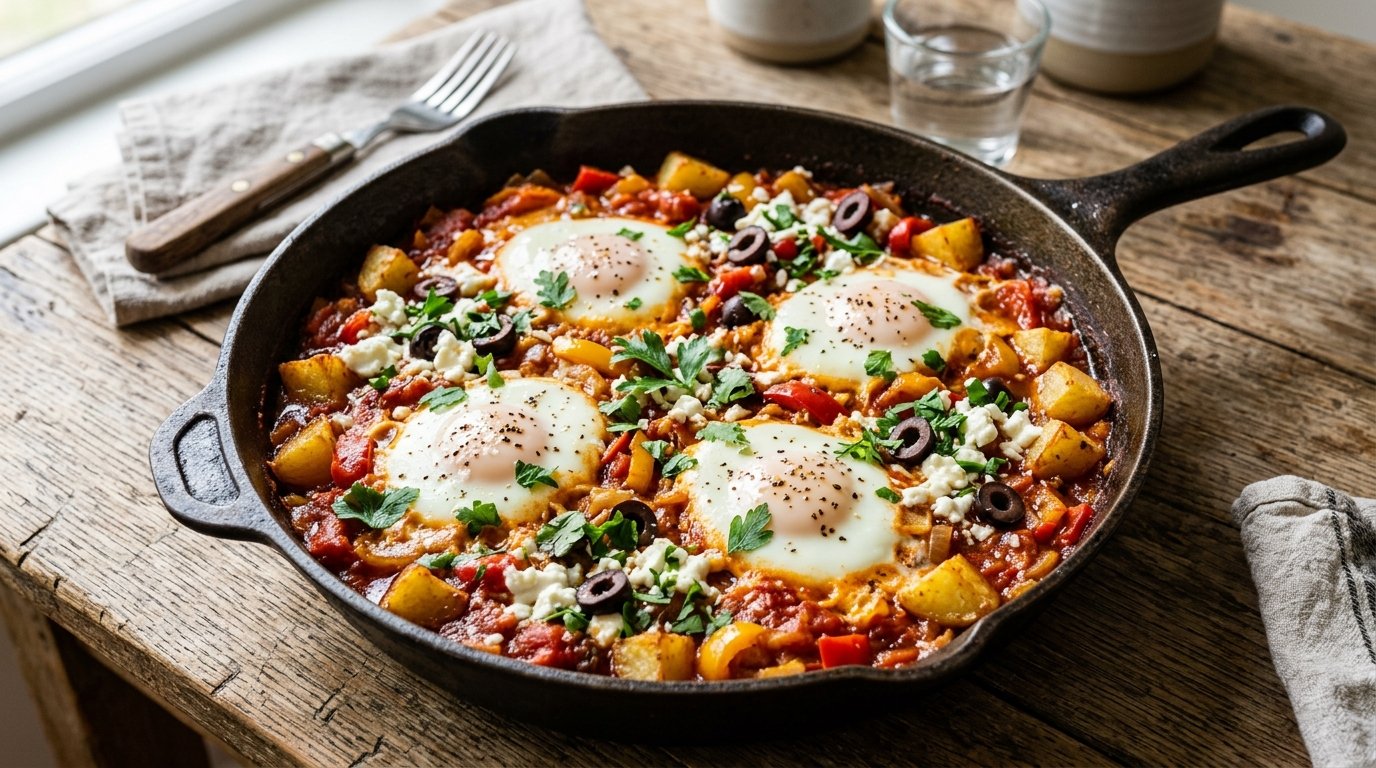
This one-pan potato shakshuka with cheese and olives turns simple ingredients into a deeply satisfying skillet meal that works for breakfast, brunch, or a quick weeknight dinner. Golden cubes of potato are first crisped in the pan, then joined by onion, green pepper, and tomato before a rich tomato sauce, briny olives, and fresh herbs create the base. Eggs are gently nestled in and topped with melting cheese until the whites set and the cheese bubbles and browns. Served with crusty bread for dipping, it delivers the comforting flavors of classic shakshuka with extra heartiness from the potatoes—all in a single pan with minimal cleanup.
Why This Recipe Works
Frying the potatoes first builds a golden crust and starchy foundation that soaks up the tomato sauce without turning mushy. The brief sauté of onion, green pepper, and fresh tomato layers aromatic sweetness and acidity. A simple seasoned tomato sauce thickened with olives and herbs gives depth and brightness. Poaching the eggs directly in the sauce keeps them tender while the cheese melts into a stretchy, golden blanket. Everything happens in one pan, so flavors concentrate and cleanup stays easy. The result is balanced: crispy-edged potatoes, silky eggs, tangy sauce, and gooey cheese in every bite.
Why You’ll Love This Recipe
- Truly one-pan from start to finish
- Uses everyday ingredients you likely already have
- Ready in under 40 minutes
- Customizable heat level and protein additions
- Naturally gluten-free (serve with gluten-free bread if needed)
- Looks impressive yet requires almost no skill
- Perfect for sharing straight from the skillet
Ingredient Notes
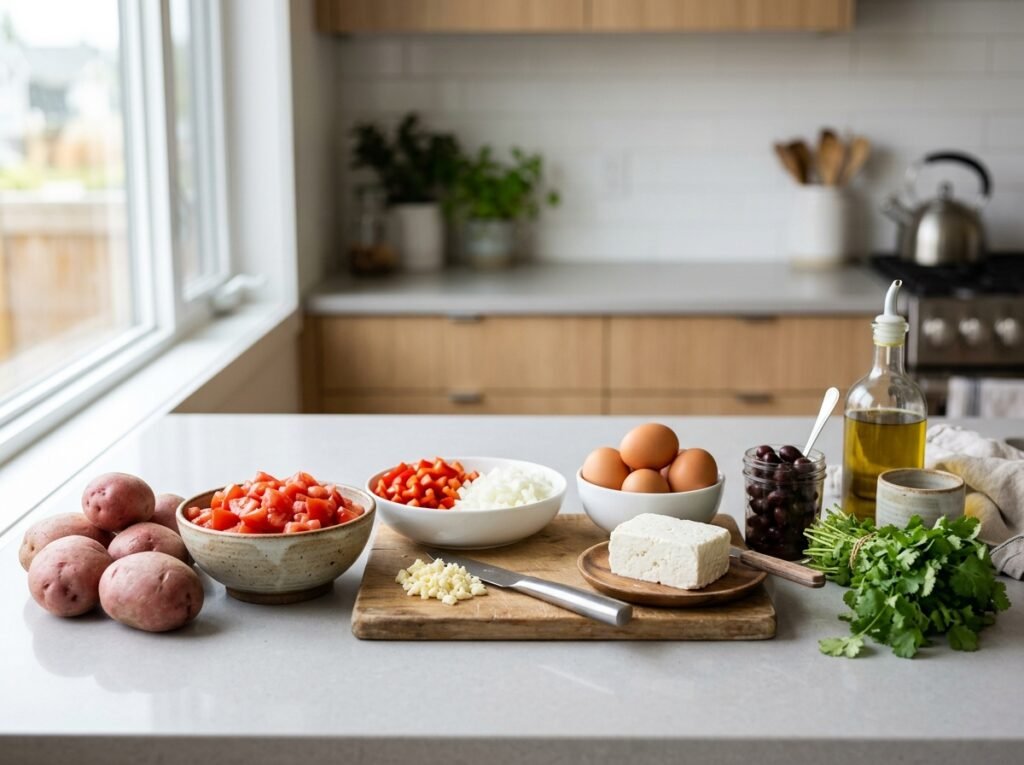
Potatoes Waxy or all-purpose potatoes (Yukon Gold or similar) hold their shape best when cubed and fried. Cut into roughly 2 cm cubes for even cooking. Purpose: provide hearty texture and absorb sauce. Substitutions: sweet potato for a sweeter twist (cook a few minutes longer). Buying tip: firm, unblemished potatoes. Storage: cool, dark place up to 2 weeks.
Oil Neutral oil with a high smoke point (vegetable, canola, or light olive oil) for frying the potatoes. Purpose: crisp the exterior. Extra-virgin olive oil can finish the dish for flavor.
Red Onion Adds sweetness and aroma when sautéed. Purpose: builds the flavor base. Substitution: yellow onion or shallot. Storage: refrigerator once cut.
Green Pepper Bell pepper or mild long green chili supplies freshness and slight bitterness. Purpose: color and mild vegetal note. Substitution: red or yellow bell pepper, or omit for milder flavor.
Fresh Tomato Diced ripe tomato contributes bright acidity and moisture. Purpose: fresh tomato flavor before the sauce goes in. Canned diced tomato works in a pinch.
Tomato Sauce or Crushed Tomatoes Forms the rich red base. Purpose: creates the classic shakshuka sauce. Use good-quality plain tomato sauce or passata. Buying tip: look for low-sugar varieties.
Green Olives Briny, slightly bitter contrast that cuts through the richness. Purpose: authentic Mediterranean punch. Substitution: black olives or capers. Drain well before adding.
Fresh Herbs Parsley, cilantro, or a mix of basil and parsley. Purpose: bright finish and aroma. Add most at the end so they stay vibrant.
Eggs Large eggs for generous yolks. Purpose: the signature poached element. Fresher eggs hold their shape better.
Shredded Melting Cheese Mozzarella or a mozzarella-cheddar mix. Purpose: creates the stretchy, browned top. Substitution: feta for tang (add after cooking) or dairy-free shreds.
Seasonings Salt, freshly ground black pepper. Optional pinch of cumin or smoked paprika for extra depth.
Crusty Bread For serving and dipping. Baguette, ciabatta, or sourdough works perfectly.
Kitchen Equipment
- Large non-stick or well-seasoned skillet (25–30 cm / 10–12 inch)
- Wooden spatula or silicone spoon
- Sharp knife and cutting board
- Measuring spoons
- Lid for the skillet (helpful for setting the eggs)
Optional: kitchen tongs, grater if shredding cheese yourself.
Preparation Information
Prep Time: 10 minutes Cook Time: 25–30 minutes Total Time: 35–40 minutes Servings: 3–4
Step-by-Step Instructions
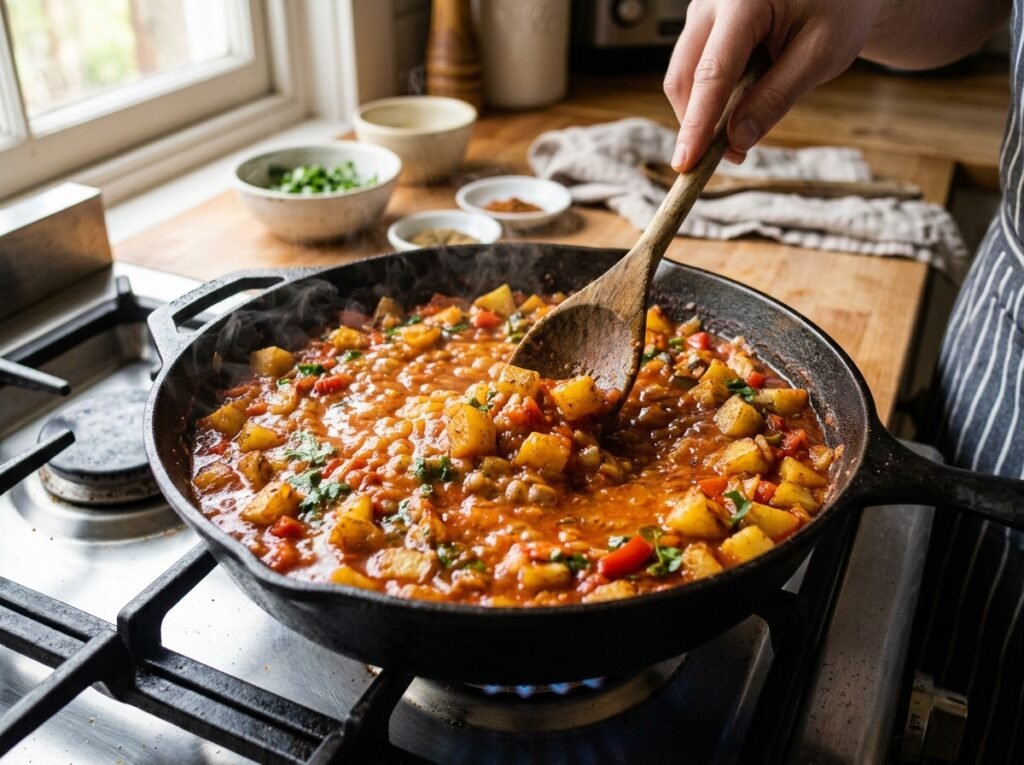
1. Crisp the Potatoes Heat 3–4 tablespoons oil in a large skillet over medium-high heat. Add the cubed potatoes in a single layer. Let them cook undisturbed for 3–4 minutes until the bottoms turn golden, then stir occasionally until all sides are lightly browned and the potatoes are just tender when pierced with a fork (8–12 minutes total). This initial frying creates the crispy edges that make the finished dish special. Visual cue: potatoes should be golden-brown in spots, not pale or burnt. Common mistake: overcrowding the pan—work in batches if needed so they fry instead of steam.
2. Add the Aromatics and Vegetables Reduce heat to medium. Add the diced red onion, green pepper, and diced tomato. Stir and cook for 3–4 minutes until the onion softens and the tomato begins to break down. The vegetables release moisture that helps deglaze the pan and builds flavor. Aroma cue: the kitchen fills with sweet onion and bright tomato scent.
3. Build the Sauce Pour in enough tomato sauce or crushed tomatoes to create a saucy base (roughly 400–500 ml / 1½–2 cups). Stir in the green olives, most of the chopped fresh herbs, salt, and black pepper. Simmer gently for 5–7 minutes so the sauce thickens slightly and the flavors meld. The potatoes should be nestled in the sauce but still visible. Texture cue: sauce should be thick enough to hold a soft peak when stirred but still loose enough for eggs to settle into.
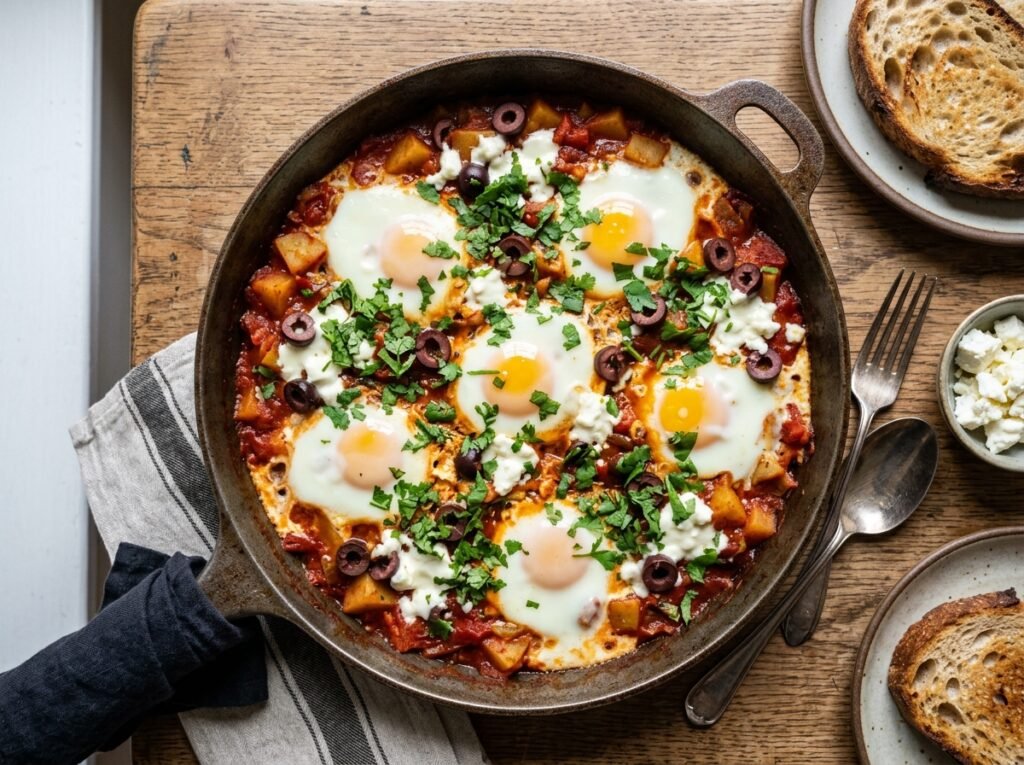
4. Create Wells and Add the Eggs Use the back of a spoon to make 4–5 small wells in the sauce. Crack an egg into each well. Keep the heat at medium-low. This gentle heat cooks the whites without scrambling the yolks. Cover the pan with a lid for 4–6 minutes until the egg whites are mostly set but the yolks remain runny (or cook longer for firmer yolks). Visual cue: whites turn opaque while yolks stay glossy and bright yellow.
5. Add Cheese and Finish Sprinkle shredded cheese evenly over the eggs and sauce. Cover again for 1–2 minutes, or place under a hot broiler for 1–2 minutes, until the cheese melts, bubbles, and develops golden-brown spots. The residual heat finishes the eggs while the cheese becomes stretchy and appetizing. Aroma cue: toasty cheese and warm herbs.
6. Garnish and Serve Remove from heat. Scatter the remaining fresh herbs over the top. Serve immediately in the skillet with slices of crusty bread for dipping into the runny yolks and cheesy sauce.
Expert Tips
- Cut potatoes into uniform cubes so they cook evenly.
- Do not stir the potatoes too early—let them develop a crust first.
- Warm the tomato sauce slightly before adding if it is cold from the fridge; this keeps the cooking temperature steady.
- For perfect runny yolks, start checking the eggs at the 4-minute mark.
- A well-seasoned or non-stick pan prevents sticking and makes cleanup effortless.
- Taste the sauce before adding the eggs and adjust salt—olives already contribute salinity.
- If the sauce reduces too much while the eggs cook, splash in a tablespoon of water.
Common Mistakes
- Soggy potatoes: caused by adding them to oil that is not hot enough or overcrowding the pan. Solution: heat oil properly and give the cubes space.
- Overcooked, rubbery eggs: heat too high or cooking too long. Keep the temperature moderate and watch closely.
- Watery sauce: not simmering long enough after adding the tomatoes. Let it reduce until it coats the potatoes.
- Cheese that does not brown: simply melt under a lid instead of using the broiler. A quick blast under the broiler solves this.
- Bland flavor: under-seasoning. Season the sauce in layers and taste before the eggs go in.
Recipe Variations
- Spicy: Add chili flakes, a diced fresh chili, or a spoonful of harissa with the sauce.
- Vegetarian (already is): Keep as is or add spinach or zucchini.
- Vegan: Omit eggs and cheese; add chickpeas or white beans and a dairy-free cheese alternative.
- Chicken or Beef: Stir in cooked shredded chicken or browned ground beef with the sauce.
- Seafood: Nestle cooked shrimp or flaked white fish into the sauce just before the eggs.
- Extra Cheesy: Double the cheese or add crumbled feta on top after cooking.
- Healthy: Use less oil, increase the vegetable volume, and choose reduced-fat cheese.
- Low-Carb: Replace potatoes with cauliflower florets (roast or sauté first).
- High-Protein: Add an extra egg per person and a handful of white beans.
What to Serve With This Recipe
Crusty bread is essential for scooping. A simple green salad with lemon dressing balances the richness. For a bigger meal, add roasted vegetables or a side of hummus. Drinks: fresh orange juice, mint tea, or a light red wine for dinner. Dessert can be as simple as fresh fruit or yogurt with honey.
Make-Ahead Tips
Cube the potatoes and chop the vegetables up to a day ahead and store separately in the refrigerator. The tomato sauce base (without eggs or cheese) can be prepared fully, cooled, and refrigerated for 2 days. Reheat gently, then add eggs and cheese when ready to serve.
Meal Prep Tips
Cook the full potato-and-sauce base, divide into individual oven-safe dishes, and refrigerate. When ready to eat, reheat, crack in an egg, top with cheese, and finish in the oven or microwave. Perfect for grab-and-go breakfasts.
Storage Instructions
Cool completely, then transfer to an airtight container. Refrigerator: 2–3 days. Freezer: not recommended because the eggs and potatoes change texture. Store bread separately.
Reheating Instructions
- Stovetop (best): Place in a skillet over low heat with a splash of water, cover, and warm gently until heated through.
- Oven: 160 °C (320 °F) for 10–12 minutes, covered with foil.
- Air Fryer: 150 °C for 5–7 minutes for individual portions.
- Microwave: 60–90 seconds on medium power; yolks will firm up more than with other methods.
Nutritional Information (Approximate per serving, based on 4 servings)
Calories: 420–480 Protein: 18–22 g Carbohydrates: 35–42 g Fat: 22–28 g Fiber: 5–7 g Sugar: 8–10 g Sodium: 780–950 mg
Values vary with exact quantities of oil, cheese, and olives used.
Troubleshooting Guide
- Potatoes not crisping: oil not hot enough or pan overcrowded. Heat oil until it shimmers and cook in a single layer.
- Eggs overcooked: reduce heat and shorten covered cooking time.
- Sauce too thin: simmer uncovered a few extra minutes before adding eggs.
- Cheese not melting evenly: shred it finely and distribute well; finish under the broiler if needed.
- Too salty: balance with a pinch of sugar or extra tomato sauce; next time reduce added salt because of the olives.
Frequently Asked Questions
Can I use leftover cooked potatoes? Yes. Add them with the onion and pepper and skip the initial frying step, though you will lose some of the crispy texture.
How do I know when the eggs are done? The whites should be fully opaque and set while the yolks still jiggle slightly when the pan is gently shaken.
Can I make this without olives? Absolutely. The dish remains delicious; just taste and adjust salt.
Is this the same as classic shakshuka? It is a heartier potato variation of shakshuka. Traditional versions usually start with peppers and onion only.
What cheese works best? Mozzarella gives the best melt and stretch. A mix with cheddar adds extra flavor.
Can I cook the eggs fully set? Yes—simply leave the pan covered a few minutes longer or finish under the broiler.
How many eggs should I use? Four to five works well for a standard skillet serving 3–4 people. Adjust based on appetite.
Can I make it spicier? Add fresh chili, chili flakes, or a spoonful of your favorite hot sauce with the tomato sauce.
Final Thoughts
This one-pan potato shakshuka with cheese and olives proves that a handful of humble ingredients can create something truly crave-worthy. The combination of crispy-edged potatoes, bright tomato sauce, briny olives, perfectly cooked eggs, and melted cheese is pure comfort in a skillet. Whether you serve it for a leisurely weekend brunch or a fast weeknight meal, it delivers big flavor with almost no fuss. Give it a try, then share how you customized it—extra chili, different cheese, or your favorite bread for dipping. I can’t wait to hear how it turned out!