Quick Recipe Summary
| Prep Time | Cook Time | Total Time | Servings |
|---|---|---|---|
| 25 Minutes | 20-25 Minutes | 45-50 Minutes | 2-3 (Full Rack) |
| Cuisine | Course | Difficulty | Calories (Est.) |
|---|---|---|---|
| French / Modern American | Main Course | Intermediate | 580 kcal per serving |
Table of Contents
- Introduction
- Why This Recipe Works
- Why You’ll Love This Recipe
- Ingredient Notes
- Kitchen Equipment
- Step-by-Step Instructions
- Expert Tips for Perfect Doneness
- Common Mistakes to Avoid
- Recipe Variations
- What to Serve With This Recipe
- Make Ahead & Meal Prep Tips
- Storage & Reheating Instructions
- Nutritional Information
- Troubleshooting Guide
- Frequently Asked Questions
- Final Thoughts
Introduction

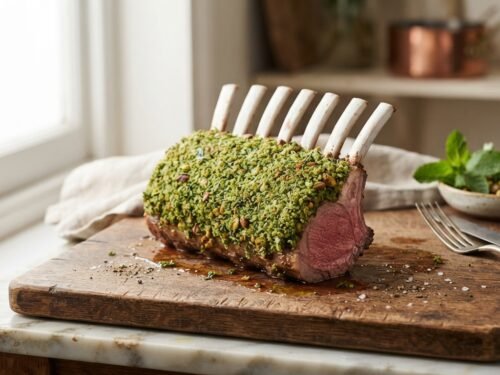
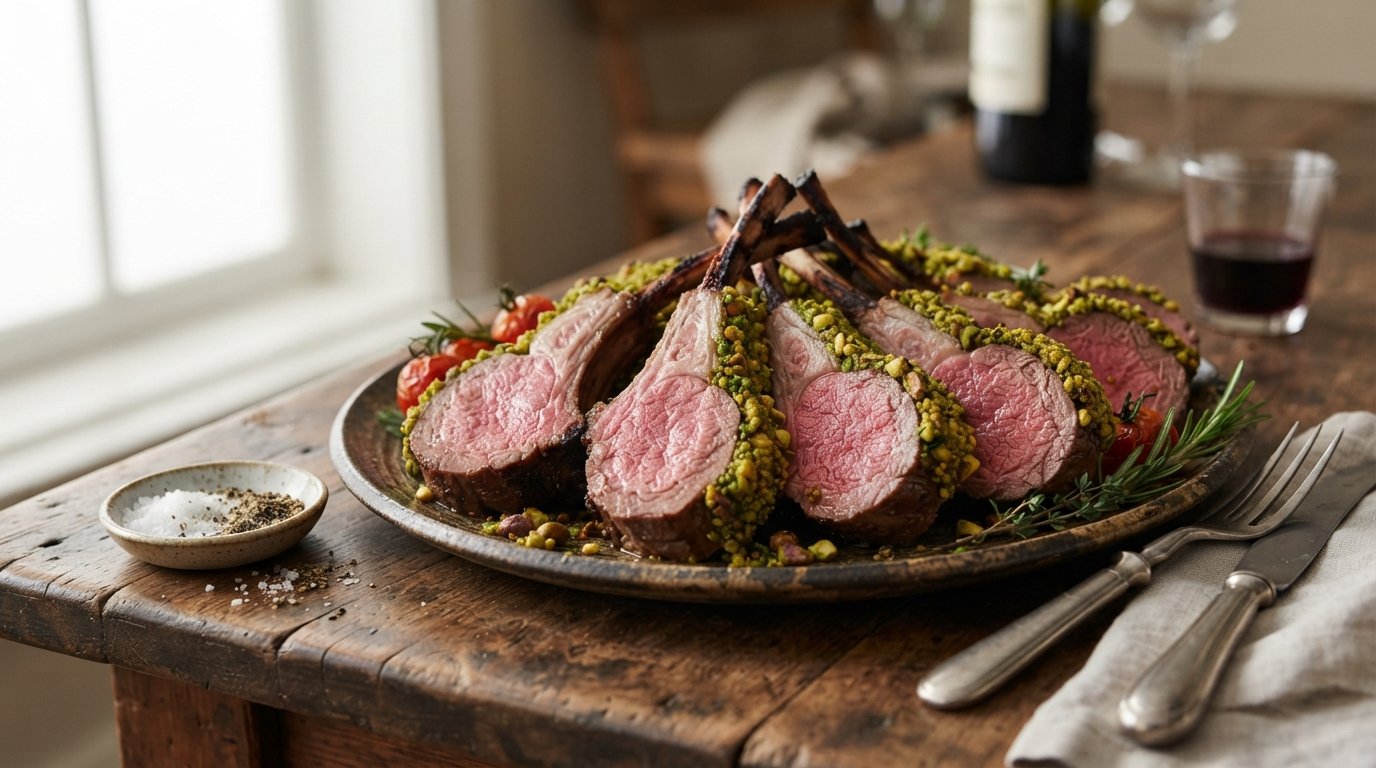
There are few dishes that command attention at the dinner table quite like a perfectly roasted rack of lamb. When you score the fat cap, sear it to golden perfection, and encrust it with a vibrant mixture of pistachios, fresh herbs, and mustard, you create a sensory experience that is both rustic and refined. This Pistachio & Herb Crusted Rack of Lamb is not just a meal; it is a celebration of texture and flavor. The nutty crunch of the crust contrasts beautifully with the tender, rosy-pink meat, while the pan sauce—made from the fond left in the skillet—ties everything together with savory depth.
Whether you are celebrating an anniversary, hosting a holiday dinner, or simply treating yourself to a restaurant-quality steakhouse experience at home, this recipe delivers. The technique shown here ensures that the fat renders properly without burning the delicate herb crust, resulting in a slice that is juicy, flavorful, and visually stunning. Let’s elevate your cooking game with this masterpiece.
Why This Recipe Works
The success of this dish relies on three critical techniques visible in the preparation process. First, scoring the fat cap in a diamond pattern allows the thick layer of fat to render down during cooking rather than remaining chewy and unappetizing. It also creates pockets for the mustard and herbs to adhere to, ensuring every bite has flavor.
Second, the use of Dijon mustard acts as a dual-purpose agent: its acidity helps tenderize the surface slightly, but more importantly, it serves as the “glue” that holds the pistachio and herb crust in place during the high-heat sear and oven finish. Without this binder, the expensive nuts would simply fall off into the pan.
Finally, the basting technique—spooning foaming butter infused with garlic and rosemary over the meat—does more than add flavor. It conducts heat gently to the top of the roast, promoting even cooking and creating a beautiful mahogany color on the exposed meat surfaces that aren’t covered by the crust.
Why You’ll Love This Recipe
- Restaurant-Quality Presentation: The cross-section of pink meat against the green-gold crust looks professional and impressive.
- Texture Contrast: The shatteringly crisp pistachio crust gives way to succulent, buttery lamb.
- Flavor Balance: Earthy lamb, salty nuts, fresh herbs, and tangy mustard create a complex profile that isn’t one-note.
- Fast Cooking Time: Despite looking fancy, a rack of lamb cooks in under 25 minutes, making it perfect for weeknight luxury.
- Zero Waste Sauce: The pan drippings are transformed into a rich jus, utilizing every bit of flavor developed during searing.
Ingredient Notes
Quality ingredients are non-negotiable for a dish with so few components. Here is what to look for.
For the Lamb
- Rack of Lamb (Frenched): Ask your butcher to “french” the bones, meaning they trim the meat and fat off the rib ends to create clean handles. An 8-rib rack is standard.
- Buying Tip: Look for bright red meat with white, firm fat. Avoid grayish meat or yellowed fat, which indicates age.
- Fat Cap: Do not trim this off completely! Score it instead. The fat protects the delicate loin muscle from drying out during the high-heat sear.
For the Crust

- Pistachios: Use unsalted, shelled pistachios. Salted nuts will make the crust overpoweringly salty when combined with the seasoned meat.
- Substitution: If allergic, pecans or walnuts work well, though the color will be darker.
- Fresh Herbs: Parsley and mint are traditional. Mint cuts the richness of the lamb fat perfectly. Dried herbs lack the necessary moisture and vibrancy for a crust.
- Dijon Mustard: Smooth, not grainy. Grainy mustard doesn’t spread evenly and can cause uneven browning.
- Breadcrumbs/Panko: Optional but recommended if you want extra crunch. The video shows a dense nut crust, but adding 2 tbsp of panko helps bind the nuts if they are coarsely chopped.
For the Baste & Sauce
- Unsalted Butter: Allows you to control salinity. We need about 3-4 tablespoons for basting.
- Garlic & Rosemary: Whole cloves and sprigs. They infuse the butter without burning as quickly as minced garlic would.
- Chicken or Beef Stock: For deglazing the pan. Adds body to the sauce.
Kitchen Equipment
- Oven-Safe Skillet: Stainless steel or cast iron is essential. Non-stick pans cannot handle the high heat needed for a good sear and often cannot go in the oven.
- Sharp Chef’s Knife: Crucial for scoring the fat cap cleanly without cutting into the meat.
- Pastry Brush: For applying the mustard evenly.
- Meat Thermometer: The only reliable way to judge doneness. Visual cues can be deceiving with a dark crust.
- Cutting Board: Preferably wood, to catch juices while resting.
- Tongs: For handling the hot rack safely.
Preparation Information
- Prep Time: 25 Minutes
- Cook Time: 20-25 Minutes
- Total Time: 45-50 Minutes
- Servings: 2-3 (Full Rack)
Step-by-Step Instructions
Follow these steps carefully to replicate the results shown in the video.
H3: Score and Season the Lamb

- Score the Fat: Using a sharp knife, make shallow cuts across the fat cap in a diamond (crosshatch) pattern. Cut through the fat but not into the red meat.
- Why this matters: This prevents the fat from curling up during cooking and allows seasoning to penetrate. It also helps the fat render into liquid gold rather than staying waxy.
- Season Generously: Rub the entire rack (meat side and fat side) with salt and freshly cracked black pepper. Press it in.
- Rest: Let the lamb sit at room temperature for 20-30 minutes. Cold meat sears poorly and cooks unevenly.
H3: Prepare the Pistachio Crust
- Chop Nuts: Pulse pistachios in a food processor or chop by hand until coarse. Do not turn them into dust; you want texture.
- Mix Herbs: Combine chopped pistachios with finely minced fresh parsley, mint, salt, and pepper.
- Visual Cue: The mixture should look vibrant green and speckled with beige nuts.
- Apply Binder: Brush a thin, even layer of Dijon mustard over the fat cap and the sides of the meat (avoiding the bone tips).
- Press Crust: Firmly press the nut mixture onto the mustard-coated areas. Pat it down so it adheres securely.
H3: Sear and Baste
- Heat Pan: Place your oven-safe skillet over medium-high heat. Add a splash of oil with a high smoke point (avocado or grapeseed). Wait until it shimmers.
- Sear Fat Side First: Place the rack fat-side down in the pan. Render for 2-3 minutes until the fat is golden and crispy.
- Aroma Cue: You should smell nutty, rendering fat. If it smells acrid, lower the heat.
- Sear Meat Sides: Turn the rack to sear the curved meat sides for 1 minute each. Do not sear the crusted top yet!
- Butter Baste: Flip the rack so the crust is facing UP. Add butter, whole garlic cloves, and rosemary sprigs to the pan. Tilt the pan slightly and spoon the foaming butter continuously over the exposed meat ends and bones.
- Why baste? This cooks the meat gently from the top while keeping it moist. The herbs infuse the butter, which then flavors the meat.
H3: Roast to Perfection
- Transfer to Oven: Move the skillet directly to a preheated 400°F (200°C) oven.
- Monitor Temp: Roast for 12-18 minutes. Check temperature early.
- Target Temps: Rare: 120-125°F | Medium-Rare: 130-135°F | Medium: 140-145°F.
- Note: Pull the lamb 5 degrees before your target temp. Carryover cooking will raise the temperature while resting.
- Rest Crucial Step: Remove from oven. Transfer to a cutting board. Tent loosely with foil. Rest for 10-15 minutes.
- Why rest? Cutting immediately causes all the juices to run out onto the board, leaving you with dry meat. Resting allows proteins to relax and reabsorb moisture.
H3: Make Pan Sauce & Slice
- Deglaze: While lamb rests, pour off excess fat from the skillet (leave the brown bits/fond). Return pan to stove over medium heat. Add 1/2 cup stock or wine. Scrape up the fond with a wooden spoon.
- Finish Sauce: Simmer for 2-3 minutes to reduce slightly. Whisk in a knob of cold butter for gloss. Strain if desired.
- Slice: Cut between the bones into individual chops.
- Plate: Serve chops over mashed potatoes or polenta. Drizzle with sauce. Garnish with fresh chives.
Expert Tips for Perfect Doneness
- Thermometer Placement: Insert the probe horizontally into the center of the loin muscle, avoiding the bone. Bone conducts heat differently and will give a false high reading.
- Don’t Overcook: Lamb is best served medium-rare. Beyond 145°F, the texture becomes grainy and the distinctive lamb flavor turns gamy and unpleasant.
- Crust Protection: If the pistachio crust starts browning too quickly in the oven, tent just the top with foil for the last few minutes of roasting.
- Room Temp is Key: Never cook a rack of lamb straight from the fridge. The temperature gradient will result in a gray band of overcooked meat on the outside and raw center.
- Save the Bones: After eating, save the cleaned bones. Roast them and simmer with veggies for an incredible lamb stock.
Common Mistakes to Avoid
| Mistake | Why It Happens | How to Fix/Prevent |
|---|---|---|
| Burnt Crust, Raw Center | Oven too hot; rack too close to element. | Lower rack position. Cover crust with foil if browning fast. |
| Chewy Fat Cap | Didn’t score fat; didn’t render fat side first. | Always score deeply. Sear fat-side down for 2-3 mins before roasting. |
| Dry Meat | Overcooked; skipped resting. | Use thermometer. Rest minimum 10 mins. Pull at 125°F for med-rare. |
| Crust Falling Off | Mustard layer too thin; nuts too fine. | Apply generous mustard. Chop nuts coarsely. Press firmly. |
| Bitter Sauce | Burnt fond; reduced too long. | Deglaze promptly after searing. Don’t let fond blacken. |
Recipe Variations
Adapt this classic to suit different palates.
- Mediterranean Style: Swap pistachios for pine nuts and oregano. Use lemon zest in the mustard. Serve with tzatziki.
- Spicy Harissa Crust: Mix harissa paste into the mustard binder. Add cumin and coriander to the nuts.
- Herb-Only (Nut-Free): Use a mix of breadcrumbs, parmesan, parsley, thyme, and garlic. Classic French “Persillade.”
- Asian Fusion: Coat with miso-mustard mix. Crust with toasted sesame seeds and crushed nori. Glaze with soy-honey reduction.
- Low-Carb/Keto: Skip breadcrumbs entirely. Use almond flour + parmesan in the crust. Serve with cauliflower mash.
- Beef Variation: Use a beef rib roast (prime rib). Same technique, but cook to 135°F internal for medium-rare beef.
- Goat Cheese Crust: Replace nuts with herbed goat cheese mixed with breadcrumbs. Tangy and creamy contrast.
What to Serve With This Recipe
Lamb is rich and earthy. Pair it with sides that provide acid, freshness, or starch.
- Creamy Polenta or Mashed Potatoes: As seen in the video, these act as a bed for the sauce and balance the lean protein.
- Roasted Root Vegetables: Carrots, parsnips, or fennel roasted with honey complement the lamb’s sweetness.
- Green Salad: Arugula with shaved parmesan and lemon vinaigrette cuts through the fat.
- Red Wine: A Cabernet Sauvignon, Syrah, or Bordeaux stands up to the bold flavors.
- Mint Pesto: A dollop alongside the pan sauce adds fresh herbal brightness.
- Dessert: Keep it light. Lemon tart or berry sorbet. Heavy chocolate would be too much.
Make Ahead & Meal Prep Tips
- Prep Crust Ahead: Chop nuts and herbs up to 24 hours ahead. Store in fridge. Bring to room temp before using.
- Trim Early: Ask butcher to french bones day before. Store wrapped tightly.
- Sear Ahead (Not Recommended): Lamb is best cooked fresh. However, you can sear and crust up to 2 hours ahead, then refrigerate. Bring to room temp before finishing in oven (add 5 mins cook time).
- Sauce Base: Make stock reduction ahead. Finish with butter just before serving.
Storage & Reheating Instructions
Refrigerator
Store leftover lamb in airtight container for up to 3 days. Store sauce separately.
Freezer
Wrap cooled chops tightly in plastic wrap, then foil. Freeze up to 2 months. Thaw in fridge overnight.
Reheating Methods
- Oven (Best): 275°F on wire rack until internal temp hits 110°F. Sear quickly in pan or torch crust to refresh.
- Stovetop: Slice cold lamb. Warm gently in pan with sauce over low heat. Do not boil.
- Air Fryer: 300°F for 3-4 mins. Watch closely to prevent drying.
- Microwave (Avoid): Will turn lamb rubbery and grey. Only use if desperate, at 50% power.
Nutritional Information
Approximate values per serving (based on 3 servings):
- Calories: 580 kcal
- Protein: 42g
- Carbohydrates: 8g
- Fat: 42g
- Saturated Fat: 16g
- Cholesterol: 140mg
- Sodium: 480mg
Note: Values vary based on trim level and sauce amount.
Troubleshooting Guide
Problem: Fat cap is still chewy/gelatinous. Solution: Didn’t render enough. Next time, spend extra time searing fat-side down. You can also finish under broiler for 1 min to crisp it up (watch closely).
Problem: Crust is soggy. Solution: Lamb rested too long covered tightly, trapping steam. Tent loosely. Or, crust was applied to wet meat. Pat meat dry before mustard.
Problem: Meat is grey around edges. Solution: Overcooked or seared too long. Reduce sear time to 1 min/side. Rely on oven for cooking through. Use thermometer.
Problem: Sauce is too salty. Solution: Pan drippings were very concentrated. Dilute with unsalted stock or water. Balance with squeeze of lemon juice.
Frequently Asked Questions
1. Can I cook this without an oven-safe skillet? Yes. Sear in any heavy pan, then transfer lamb to a roasting pan or baking sheet for the oven finish. Just make sure to deglaze the original searing pan for the sauce.
2. How do I know when the lamb is done without a thermometer? Touch test: Press the center of the loin. Rare feels soft like your cheek. Medium-rare feels springy like your chin. Medium feels firm like your forehead. But seriously, use a thermometer.
3. Can I use ground lamb instead? No. This recipe relies on the structure of the rack. Ground lamb would fall apart. Use ground lamb for kofta or meatballs instead.
4. Why did my pistachios burn? Nuts burn faster than meat. If your oven runs hot, cover the crust with foil for the last 5-10 minutes of roasting. Also, ensure nuts are coarse, not powdered.
5. Is it safe to eat lamb medium-rare? Yes, whole muscle cuts like rack of lamb are safe at 130-135°F because bacteria are primarily on the surface, which gets seared. Ground lamb must be cooked to 160°F.
6. Can I marinate the lamb overnight? You can, but acid-based marinades can make the surface mushy. A dry brine (salt only) overnight is better. Apply the mustard/crust just before cooking.
7. What if I don’t like mint? Omit it. Use extra parsley, thyme, or rosemary. Basil or tarragon also pair beautifully with lamb if you want something different.
8. Can I grill this instead of roasting? Absolutely. Sear on direct heat, then move to indirect heat and close lid. Monitor temp closely. Grilling adds smoky flavor but makes crust management trickier.
Final Thoughts
Mastering this Pistachio & Herb Crusted Rack of Lamb is a milestone for any home cook. It teaches patience, precision, and the importance of respecting premium ingredients. The reward is a dish that looks and tastes like it came from a Michelin-starred kitchen, yet is achievable in your own home with focus and care. The combination of the nutty crust, the buttery baste, and the rich pan sauce creates a symphony of flavors that will linger in your memory long after the last bite.