Quick Recipe Summary
| Detail | Information |
|---|---|
| Prep Time | 20 minutes |
| Cook Time | 15 minutes |
| Total Time | 35 minutes |
| Servings | 4 sandwiches |
| Cuisine | American / Philly Fusion |
| Course | Main Course / Lunch |
| Difficulty | Easy |
| Calories | ~650 per sandwich |
Table of Contents
- Introduction
- Why This Recipe Works
- Why You’ll Love This Recipe
- Ingredient Notes
- Kitchen Equipment
- Preparation Information
- Step-by-Step Instructions
- Expert Tips for the Perfect Bite
- Common Mistakes to Avoid
- Recipe Variations
- What to Serve With This Recipe
- Make Ahead & Meal Prep Tips
- Storage Instructions
- Reheating Instructions
- Nutritional Information
- Troubleshooting Guide
- Frequently Asked Questions
- Final Thoughts
Introduction
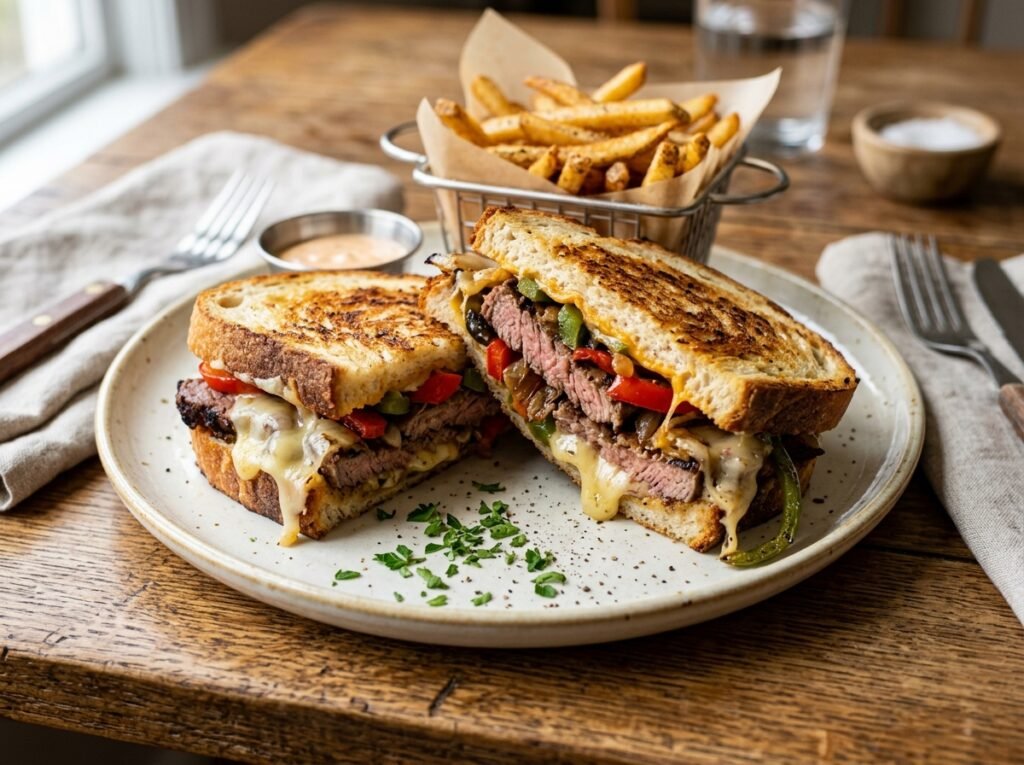
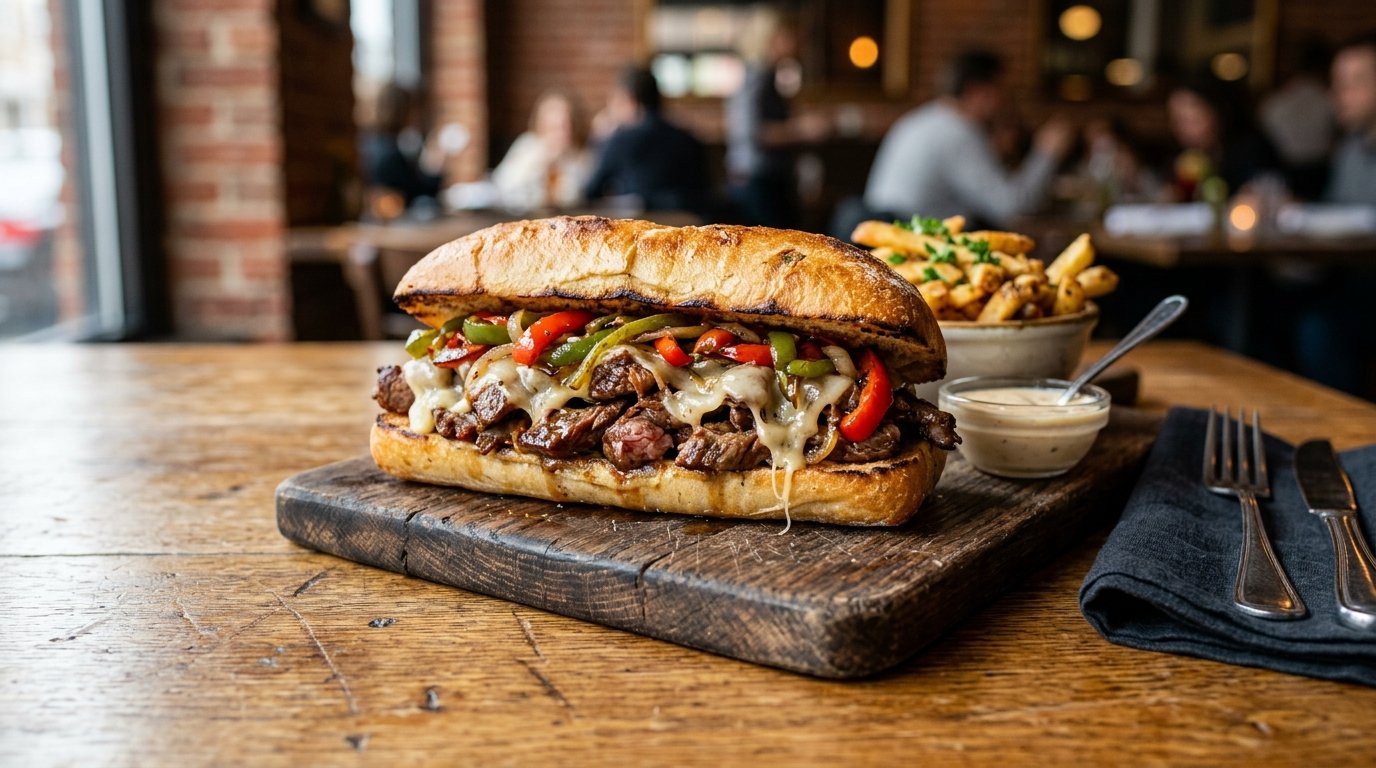
There is a distinct satisfaction in biting into a sandwich where every component is hot, melty, and perfectly integrated. This ultimate griddled steak and cheese sandwich delivers exactly that experience. Unlike traditional cheesesteaks that rely on thinly shaved raw meat cooked directly on the grill, this recipe uses marinated beef cubes seared on a flat-top griddle. The result is tender, juicy chunks of steak that are deeply flavored from the inside out, rather than just seasoned on the surface.
The magic happens when those savory beef cubes meet sweet, caramelized peppers and onions, all bound together by a blanket of melted provolone cheese. Nestled inside a toasted hoagie roll that has absorbed the savory juices from the griddle, this sandwich is a masterclass in texture and flavor balance. Whether you are cooking outdoors on a portable griddle or indoors on a cast iron plancha, this method guarantees a restaurant-quality meal that rivals your favorite local spot. Let’s get griddling!
Why This Recipe Works
The success of this steak and cheese sandwich lies in its two-stage cooking process and the use of marinade. Traditional shaved steak can sometimes be dry or tough if overcooked. By using cubed steak (like sirloin or ribeye) and marinating it first, we ensure the meat remains succulent even at high heat. The marinade acts as a buffer, keeping the interior moist while the exterior develops a beautiful sear.
Furthermore, cooking the vegetables separately before combining them prevents sogginess. If you cook peppers and onions with the meat from the start, they release water that steams the beef instead of searing it. By giving each component its own moment on the hot surface, we achieve optimal texture: crisp-tender veggies, crusty beef, and gooey cheese. Finally, toasting the bread directly on the griddle with the rendered fats creates a barrier against sogginess and adds a crucial layer of savory crunch.
Why You’ll Love This Recipe
- Superior Texture: Cubed marinated steak offers a juicy, tender bite that differs delightfully from standard shaved steak.
- Deep Flavor Profile: The marinade penetrates the meat, ensuring every cube is seasoned, not just the outside.
- One-Surface Cooking: Using a griddle or large skillet means less cleanup and better heat distribution for melting cheese.
- Customizable Heat: Easily adjust the spice level in the marinade or add fresh chilies to suit your palate.
- Visual Appeal: The vibrant colors of red, green, and yellow peppers make this sandwich as beautiful as it is delicious.
- Quick Weeknight Meal: Despite the gourmet results, it comes together in under 40 minutes.
Ingredient Notes
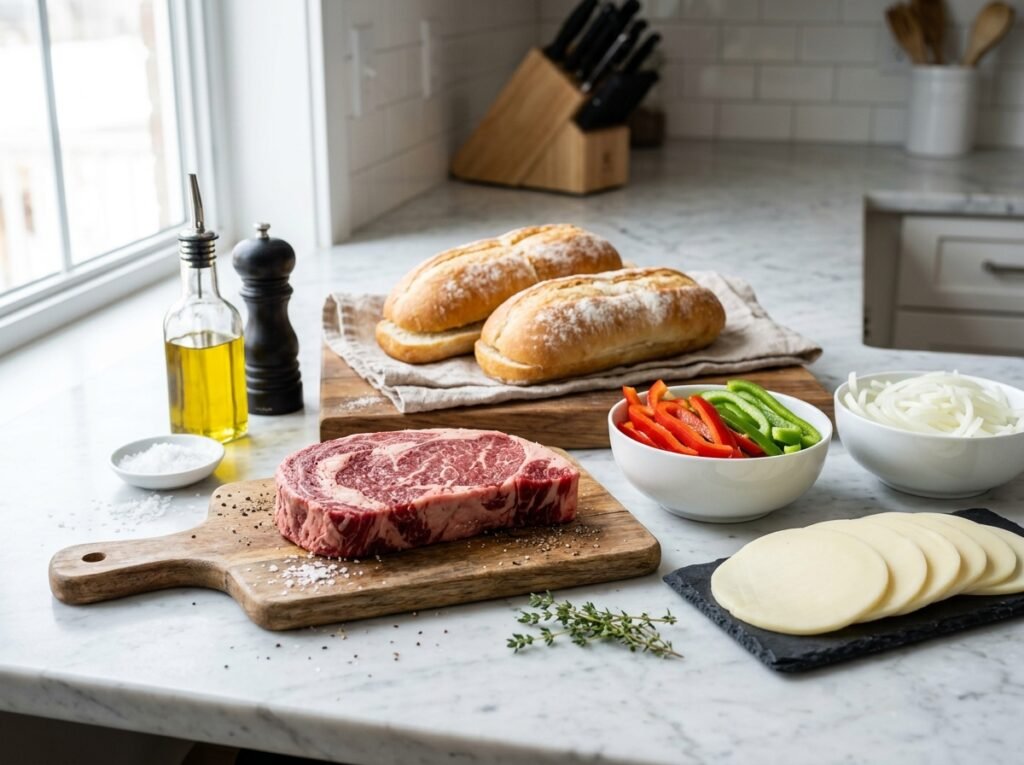
Beef Sirloin or Ribeye (Cubed)
- Purpose: The protein foundation. Sirloin offers great beefy flavor and value; ribeye provides superior marbling and tenderness.
- Substitutions: Flank steak (slice against grain after cooking), skirt steak, or even high-quality ground beef patties broken up.
- Buying Tips: Look for bright red color and consistent marbling. Ask your butcher to cube it, or freeze slightly for easier home cutting.
- Storage Tip: Keep refrigerated until ready to marinate. Freeze if not using within 3 days.
Hoagie Rolls or Sub Buns
- Purpose: The vessel. Needs to be sturdy enough to hold juicy filling without disintegrating, but soft enough to bite through easily.
- Substitutions: Ciabatta rolls, French baguette sections, or brioche buns for a richer taste.
- Buying Tips: Choose rolls with a crisp crust and airy crumb. Avoid dense, doughy breads that overwhelm the filling.
- Storage Tip: Store in paper bags to maintain crust crispness. Freeze extras; toast from frozen.
Provolone Cheese Slices
- Purpose: The binder. Mild, creamy provolone melts beautifully without becoming greasy or overpowering the beef.
- Substitutions: White American (classic melt), Mozzarella (milder stretch), Pepper Jack (for heat), or Cheez Whiz (authentic Philly style).
- Buying Tips: Buy sliced deli-style provolone rather than pre-packaged blocks for better melting consistency.
- Storage Tip: Keep tightly wrapped to prevent drying. Use within a week of opening.
Bell Peppers (Red, Green, Yellow) & Onions
- Purpose: Sweetness, crunch, and color contrast. Onions provide savory depth; peppers add freshness.
- Substitutions: Poblano peppers (smoky heat), banana peppers (tangy), or mushrooms (umami boost).
- Buying Tips: Select firm, heavy peppers with tight skin. Onions should be dry with no soft spots.
- Storage Tip: Store whole in crisper drawer. Slice just before cooking to preserve moisture and crunch.
Marinade Ingredients (Soy Sauce, Worcestershire, Oil, Garlic Powder, Black Pepper)
- Purpose: Tenderizes meat and builds umami base. Soy sauce adds salt and depth; Worcestershire adds tang; oil promotes searing.
- Substitutions: Tamari (GF), liquid smoke (smoky note), balsamic vinegar (acidic tenderizer), or steak seasoning blend.
- Buying Tips: Use low-sodium soy sauce to control salt levels. Fresh garlic powder retains potency longer than old jars.
- Storage Tip: Mix extra marinade and store in fridge for up to a week as a dipping sauce or stir-fry base.
Kitchen Equipment
- Flat Top Griddle or Large Cast Iron Skillet: Essential for even heating and creating the signature sear. Electric griddles work great indoors.
- Metal Spatula(s): Two spatulas are ideal—one for flipping meat, one for managing veggies and assembly.
- Sharp Chef’s Knife: For uniform vegetable slicing and beef cubing.
- Cutting Board: Stable surface for prep.
- Mixing Bowl: For marinating beef.
- Tongs: For handling hot meat safely.
- Serrated Bread Knife: For splitting rolls cleanly without crushing.
- Meat Thermometer: To ensure beef reaches safe temperature without overcooking.
Preparation Information
- Prep Time: 20 minutes
- Cook Time: 15 minutes
- Total Time: 35 minutes
- Servings: 4 sandwiches
Step-by-Step Instructions
Marinating the Beef for Maximum Flavor
Cut beef into ½-inch cubes. In a bowl, whisk together soy sauce, Worcestershire sauce, oil, garlic powder, and black pepper. Add beef and toss to coat evenly. Let marinate for at least 15 minutes (or up to 4 hours in fridge).
Why this matters: The acid and salt in the marinade begin breaking down muscle fibers, tenderizing the meat. Oil coats the cubes, promoting even browning and preventing sticking. Short marination time is sufficient for cubed meat due to increased surface area.
Visual Cues: Beef should look glossy and uniformly coated. No dry patches visible.
Aroma Cues: Savory, garlicky, slightly salty smell. Not sour or fermented.
Professional Tip: Don’t over-marinate beyond 4 hours; the acid can start making the texture mushy.
Searing Vegetables to Sweet Perfection
Heat griddle/skillet to medium-high. Add oil. Toss sliced peppers and onions onto hot surface. Cook undisturbed for 2-3 minutes to develop char. Stir and cook another 3-4 minutes until tender-crisp and caramelized. Remove and set aside.
Why this matters: High heat triggers caramelization, concentrating natural sugars. Undisturbed contact creates fond (browned bits) that add flavor. Removing veggies prevents them from releasing water into the beef later.
Texture Cues: Edges slightly blistered/charred. Interior still has slight crunch, not mushy.
Color Cues: Peppers vibrant but softened. Onions translucent with golden-brown edges.
Common Mistakes: Crowding pan causes steaming. Leave space between pieces for proper searing.
Griddling the Marinated Steak
Wipe griddle clean if needed. Increase heat to high. Add marinated beef in single layer (work in batches). Sear undisturbed 2-3 minutes per side until deeply browned and cooked through (145°F+ internal temp).
Why this matters: High heat creates Maillard reaction crust. Single layer ensures searing, not steaming. Leaving undisturbed allows proper crust formation.
Visual Cues: Deep mahogany brown exterior. Juices bubbling around cubes.
Texture Cues: Firm but yielding to touch. Not rubbery or hard.
Aroma Cues: Intense savory, meaty, roasted garlic scent. Smoke rising indicates proper sear.
Professional Tip: Resist urge to move meat constantly. Patience = better crust.
The Melt: Combining Meat, Cheese, and Veggies
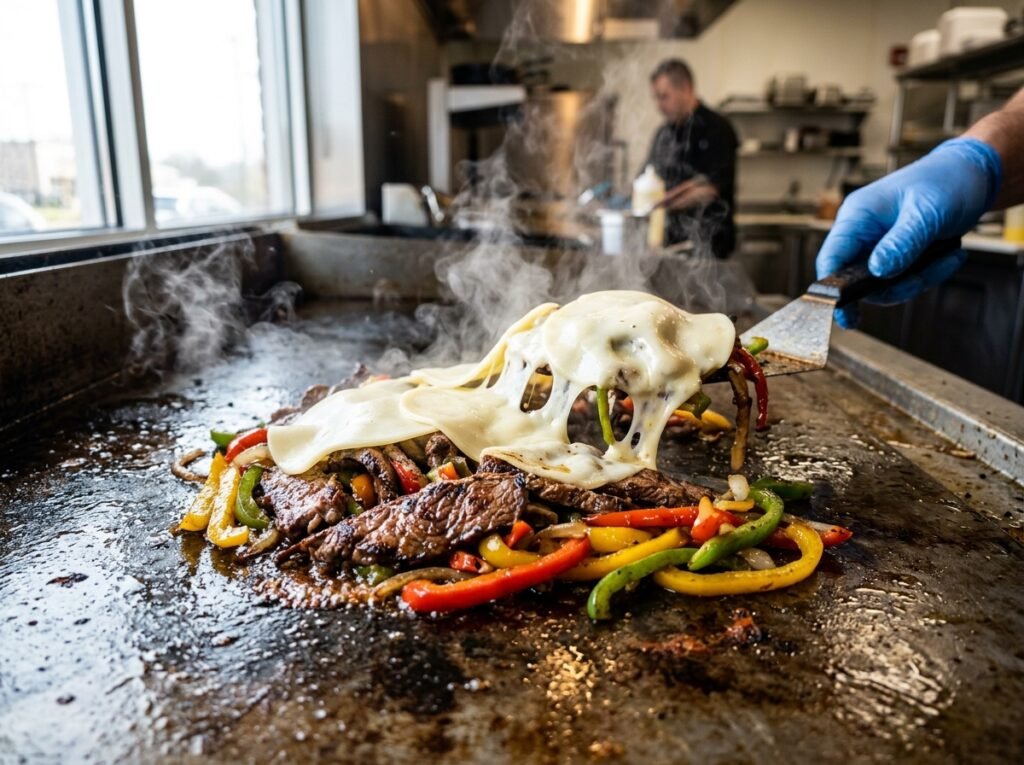
Reduce heat to medium. Push beef to one side. Return veggies to griddle next to beef. Place provolone slices directly over beef pile. Immediately top cheese with veggies. Let sit 1-2 minutes until cheese fully melts and binds everything.
Why this matters: Lower heat prevents burning cheese while allowing gentle melt. Layering order matters: cheese on meat melts into beef; veggies on top steam slightly and warm through without losing texture.
Visual Cues: Cheese completely molten, glossy, stretching when lifted. Veggies glistening with rendered fat.
Texture Cues: Unified mass that holds together when scooped. Not separate components.
Common Mistakes: High heat burns cheese before melting. Watch closely during melt phase.
Assembly and Toasting the Roll
Split hoagie rolls lengthwise. Place cut-side down directly on griddle where meat/cheese were cooking (absorb flavorful residues). Toast 1-2 minutes until golden and crisp. Open roll, scoop generous portion of meat/cheese/veggie mixture inside. Press gently to integrate. Serve immediately.
Why this matters: Toasting on griddle infuses bread with savory flavors and creates moisture barrier. Immediate serving preserves heat and melt. Gentle press helps filling adhere to bread.
Visual Cues: Roll interior golden brown, not pale. Filling overflowing slightly, cheese oozing.
Texture Cues: Crisp exterior, soft interior. Hot, cohesive filling.
Aroma Cues: Toasted bread, melted cheese, savory beef. Irresistible combination.
Expert Tips for the Perfect Bite
- Cube Size Matters: Uniform ½-inch cubes cook evenly. Larger cubes stay raw inside; smaller ones dry out. Consistency is key.
- Don’t Skip the Rest: After searing beef, let it rest 1 minute before adding cheese. This allows juices to redistribute, preventing them from flooding out when melted.
- Cheese Placement: Always put cheese directly on meat, not bread. Meat heat melts cheese faster and more evenly than bread heat.
- Bread Selection Test: Squeeze roll gently. It should spring back slightly. Too hard = stale; too soft = will get soggy.
- Griddle Seasoning: If using cast iron, ensure it’s well-seasoned. This creates non-stick surface and adds subtle flavor to everything cooked on it.
- Batch Cooking: Never overcrowd. Cook in batches if necessary. Overcrowding drops temperature and ruins sear.
Common Mistakes to Avoid
- Overcooking Beef: Cubed steak cooks fast. Pull at 145°F; carryover heat brings to perfect doneness. Overcooked = tough, chewy bites.
- Soggy Bread: Skipping toast step or assembling too early. Always toast bread last, right before filling. Moisture is enemy of crispness.
- Burnt Cheese: Heat too high during melt phase. Reduce to medium-low. Cheese should melt slowly, not fry.
- Underseasoned Veggies: Relying only on meat juices for veggie flavor. Season veggies lightly with salt/pepper when they hit griddle.
- Cold Center: Assembling too quickly after cooking. Ensure filling is piping hot before stuffing. Cold cheese = sad sandwich.
- Wrong Cut of Beef: Using lean cuts like round steak. They lack fat for flavor and moisture. Stick to sirloin, ribeye, or flank.
Recipe Variations
- Spicy Jalapeño Kick: Add sliced fresh jalapeños to veggie mix. Use Pepper Jack cheese instead of provolone.
- Mushroom Swiss: Swap peppers/onions for sautéed cremini mushrooms. Use Swiss cheese for nutty flavor.
- Chicken Alternative: Use cubed chicken thigh marinated same way. Cook thoroughly (165°F). Lighter, leaner option.
- Vegetarian Portobello: Replace beef with thick-sliced portobello mushrooms. Marinate same way. Grill until tender.
- Low-Carb Lettuce Wrap: Skip roll. Serve meat/cheese/veggie mix in large butter lettuce cups. Keto-friendly.
- Extra Cheesy Deluxe: Double cheese layer. Add mozzarella under provolone for extra stretch.
- Breakfast Version: Add scrambled eggs and hash browns to filling. Use cheddar cheese. Morning comfort food.
- Seafood Shrimp Twist: Use large shrimp instead of beef. Cook 2 mins/side. Use Old Bay seasoning in marinade.
- Vegan Option: Use marinated seitan or jackfruit. Vegan cheese slices. Oil-based marinade.
- Philly Authentic Style: Shave beef thin instead of cubing. Use Cheez Whiz. Add fried onions on top.
What to Serve With This Recipe
Balance richness with acidity and crunch.
- Side Dishes: Crispy french fries, onion rings, tater tots, or coleslaw.
- Salads: Simple garden salad with vinaigrette, pickle spear, or tomato-cucumber salad.
- Sauces: Au jus for dipping, spicy mustard, horseradish cream, or extra marinade warmed as sauce.
- Drinks: Ice-cold beer, root beer float, lemonade, or iced tea.
- Desserts: Brownie bites, vanilla ice cream, or fruit sorbet to cleanse palate.
Make Ahead & Meal Prep Tips
Marinate beef up to 24 hours ahead; flavor improves. Slice veggies day-of for best texture. Cook beef and veggies separately; store in airtight containers fridge 3 days. Assemble and reheat when ready. For parties, prep all components; cook to order for peak quality. Rolls can be split and stored in bag day-of.
Storage Instructions
- Refrigerator: Store cooked filling (meat/veggies/cheese mixed) in airtight container up to 3 days. Store rolls separately.
- Freezer: Freeze cooked filling (without bread) up to 2 months. Thaw overnight fridge before reheating. Bread does not freeze well assembled.
- Raw Components: Marinated beef freezes up to 3 months. Thaw completely before cooking.
Reheating Instructions
- Skillet/Griddle (Best): Reheat filling over medium heat, stirring occasionally, until hot. Toast fresh roll. Assemble. Restores texture perfectly.
- Oven: 350°F for 10-12 mins covered with foil. Uncover last 2 mins to crisp. Good for multiple servings.
- Air Fryer: 350°F for 5-7 mins. Shake basket halfway. Excellent for reviving crispness.
- Microwave (Last Resort): 30-sec intervals. Cover with damp paper towel. Expect softer texture. Finish in toaster oven if possible.
Nutritional Information
Values approximate per sandwich:
- Calories: 650
- Protein: 42g
- Carbohydrates: 48g
- Fat: 32g
- Fiber: 4g
- Sugar: 8g
- Sodium: 980mg
Troubleshooting Guide
- Beef Tough/Chewy: Overcooked or wrong cut. Next time, pull earlier (145°F). Use sirloin/ribeye. Marinate adequately.
- Cheese Not Melting: Heat too low or wrong cheese type. Use deli-sliced provolone/American. Ensure filling is hot before adding cheese.
- Soggy Sandwich: Bread not toasted or assembled too early. Always toast bread on griddle last. Serve immediately.
- Bland Flavor: Underseasoned marinade or veggies. Taste marinade before adding to beef. Season veggies when cooking.
- Vegetables Mushy: Overcooked or crowded pan. Cook high heat, undisturbed initially. Give space for searing.
- Roll Too Hard/Stale: Old bread or over-toasted. Use fresh rolls. Toast briefly (1-2 mins max).
Frequently Asked Questions
1. Can I use frozen beef cubes? Yes, but thaw completely in fridge first. Cooking frozen cubes releases water, steaming instead of searing. Pat very dry before marinating.
2. What if I don’t have a griddle? Large cast iron skillet works perfectly. Preheat well. Work in batches to avoid crowding. Same technique applies.
3. Is this sandwich gluten-free? Not with standard rolls. Use GF hoagie rolls or serve filling over rice/potatoes. Check marinade ingredients (soy sauce = wheat; use tamari).
4. How do I know when beef is done? Use thermometer. Target 145°F for medium-rare, 160°F for medium. Cubes cook fast; check early to avoid overcooking.
5. Can I make this ahead for lunch? Yes. Cook filling, store separate from bread. Reheat filling in skillet. Toast fresh roll. Assemble just before eating for best texture.
6. Why cube instead of shave the beef? Cubing allows marination penetration and creates juicier, more substantial bites. Shaved steak cooks instantly but can be drier. Both valid; this is a textural variation.
7. What cheese melts best? Provolone, American, Mozzarella, Monterey Jack. Avoid aged cheeses like parmesan (don’t melt smoothly). Deli-sliced > block for consistency.
8. Can I add other veggies? Absolutely! Mushrooms, zucchini, spinach, or jalapeños work great. Cook separately first to avoid sogginess.
9. How to prevent bread from getting soggy? Toast thoroughly on griddle. Create moisture barrier with cheese/meat against bread. Serve immediately. Don’t let sit assembled.
10. Is this recipe scalable for crowds? Yes. Multiply ingredients. Cook in batches to maintain heat. Keep cooked components warm in low oven (200°F) while finishing batches.
Final Thoughts
This ultimate griddled steak and cheese sandwich proves that sometimes the best meals come from simple techniques executed with care. The combination of marinated beef, caramelized vegetables, and melted cheese on a perfectly toasted roll creates a symphony of flavors and textures that satisfies on every level. Don’t be afraid to experiment with different cuts of beef or cheese varieties to find your perfect version. We’d love to hear how yours turned out! Share your photos and tips in the comments below, and please rate the recipe if you enjoyed it.