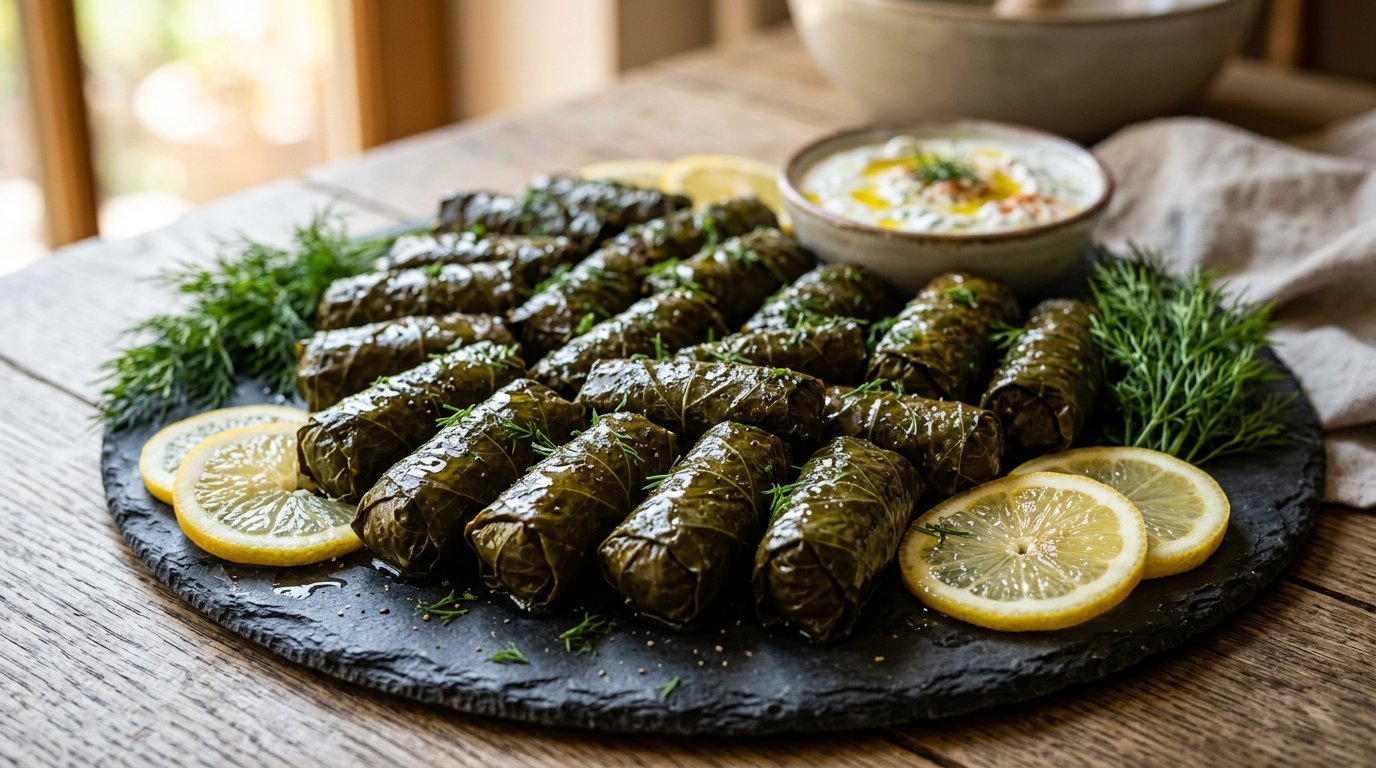
This recipe focuses on the efficient assembly and slow-simmering cooking method essential for authentic dolma. The result is a dish where the grape leaves become silky and translucent, encasing a savory, herb-infused rice mixture that is moist but never mushy. It is a versatile appetizer that can be served warm, at room temperature, or chilled, making it ideal for meal prep and entertaining.
For many, the barrier to making homemade dolma isn’t the flavor—it’s the repetitive motion of folding and rolling dozens of delicate leaves by hand. Enter the Ultimate Dolma Hack, a game-changing technique that uses a standard metal ice cream scoop as a molding tool. Instead of struggling to shape each roll individually, you simply place a leaf over the scoop, fill it with your rice mixture, and use a spoon to tuck and fold the leaf into a perfect cylinder within the scoop’s bowl. This method guarantees consistent sizing and tightness, which is crucial for even cooking and preventing the filling from spilling out during the simmer.
Beyond the mechanical advantage, this recipe honors the traditional flavor profile of Mediterranean stuffed leaves. The filling combines short-grain rice with fresh herbs like dill and mint, while the cooking liquid—a blend of olive oil and tomato broth—infuses the rolls with richness and acidity as they braise. Whether you are hosting a mezze platter night or simply craving a comforting, plant-based staple, this hack removes the intimidation factor and puts restaurant-quality dolma within reach.
Why This Recipe Works
The success of this recipe lies in two key factors: mechanical consistency and thermal regulation. The ice cream scoop acts as a standardized mold, ensuring every dolma has identical volume and surface area. In braising, uniformity is everything; if some rolls are loose and others tight, or large and small, they will cook at different rates, leading to a mix of undercooked and mushy results. The scoop eliminates this variable entirely.
Furthermore, the “low and slow” simmering method shown in the video is scientifically necessary for grape leaves. Grape leaves contain tannins and fibrous structures that require prolonged, gentle heat to break down into a palatable, silky texture. High heat would cause the leaves to toughen and the rice to burst before the leaves soften. The parchment paper lid (cartouche) creates a mini-pressure environment, keeping steam circulating directly over the rolls to ensure the top layer cooks just as well as the bottom, while the tomato broth provides the acidic medium needed to further tenderize the leaves.
Why You’ll Love This Recipe
Time-Saving Assembly: The scoop hack cuts rolling time by at least 50%, turning a marathon task into a quick assembly line.
Professional Presentation: Achieves uniform, tight cylinders that look like they came from a specialty deli.
Foolproof Texture: Consistent sizing means no more guessing which roll is done; they all finish perfectly together.
Versatile Serving: Equally delicious hot, warm, or cold, making it perfect for buffets and picnics.
Naturally Vegan & Gluten-Free: A safe, inclusive option for guests with dietary restrictions without sacrificing flavor.
Freezer Friendly: Holds up exceptionally well to freezing, allowing you to batch-cook for future meals.
Ingredient Notes
Grape Leaves (Jarred or Fresh)
Purpose: The edible wrapper that imparts a distinct tangy, herbal flavor and silky texture.
Buying Tips: If using jarred, look for leaves packed in brine rather than vinegar for a milder taste. Rinse thoroughly to remove excess salt. Fresh leaves must be blanched for 2-3 minutes before use.
Substitutions: Collard greens or chard leaves (blanched) can work in a pinch, though the flavor profile will differ significantly.
Storage Tips: Unopened jars last indefinitely in the pantry. Opened jars keep refrigerated for months if submerged in brine.
Short-Grain Rice (e.g., Arborio or Egyptian)
Purpose: Provides the starchy, sticky base that holds the filling together and absorbs the cooking liquid.
Why Short Grain? Long-grain rice stays separate and fluffy, which causes dolma to fall apart. Short grain releases amylopectin, creating the necessary glue-like texture.
Substitutions: Medium-grain rice works well. Avoid basmati or jasmine unless mixed with a binder like bulgur.
Prep Tip: Do not pre-cook the rice. It must cook inside the leaf to absorb the flavorful broth properly.
Fresh Herbs (Dill, Mint, Parsley)
Purpose: Essential for the authentic bright, aromatic flavor profile that cuts through the richness of the oil.
Buying Tips: Use fresh herbs whenever possible. Dried herbs lack the volatile oils needed for this delicate dish.
Substitutions: If fresh is unavailable, use dried at 1/3 the amount, but expect a less vibrant flavor. Lemon balm can substitute for mint.
Tip: Chop finely to distribute flavor evenly without creating large fibrous bits in the smooth rice filling.
Olive Oil
Purpose: Adds richness, prevents sticking, and carries fat-soluble flavors from the herbs and tomatoes.
Buying Tips: Use a good quality extra virgin olive oil for finishing, but regular or light olive oil is fine for cooking since high heat isn’t used.
Substitutions: Avocado oil or melted ghee (if not vegan). Avoid strong-flavored oils like sesame or walnut.
Usage: Generous amounts are traditional; don’t be shy, as the leaves absorb much of it during cooking.
Tomato Broth / Sauce
Purpose: Provides acidity to tenderize leaves, moisture for rice absorption, and savory depth.
Prep Tip: Mix tomato paste with water or use diluted passata. Pure ketchup is too sweet; pure paste is too thick. Aim for a thin, pourable consistency.
Substitutions: Lemon juice + vegetable broth can replace tomato for “white” dolma variations. Pomegranate molasses adds a lovely tartness.
Visual Cue: The liquid should be reddish-orange and opaque, not clear water.
Kitchen Equipment
Ice Cream Scoop (Metal): The star tool for the hack. Must be sturdy and have a release mechanism or smooth interior.
Large Spoon: For tucking and folding the leaf inside the scoop.
Wide, Heavy-Bottomed Pot: Essential for arranging rolls in a single layer. Stainless steel or enameled cast iron is best.
Parchment Paper: For creating a cartouche (lid) to trap steam.
Measuring Cups/Spoons: For consistent filling portions.
Sharp Knife: For trimming tough stems from grape leaves.
Colander: For rinsing jarred leaves thoroughly.
Preparation Information
Prep Time: 45 Minutes
Cook Time: 45-60 Minutes
Total Time: 1 Hour 45 Minutes
Servings: 30-40 Rolls (depending on leaf size)
Step-by-Step Instructions
H3: Prepare the Leaves and Filling
Rinse jarred grape leaves under cold water to remove excess brine. Trim any tough stem ends with kitchen shears. In a large bowl, combine uncooked short-grain rice, chopped fresh herbs (dill, mint, parsley), salt, pepper, and a generous glug of olive oil. Mix thoroughly so every grain is coated.
Why it matters: Coating rice in oil before cooking helps prevent clumping and adds flavor. Rinsing leaves prevents overly salty dolma.
Texture Cue: Rice mixture should feel loose and fragrant, not pasty.
Aroma Cue: Strong scent of fresh herbs and raw rice starch.
Common Mistake: Using pre-cooked rice. This leads to mushy, disintegrating dolma. Always use raw rice.
H3: The Scoop Hack Assembly
Place a grape leaf shiny-side down over the opening of the ice cream scoop. Spoon a portion of rice filling into the center of the leaf inside the scoop. Using a smaller spoon, fold the bottom edge of the leaf up over the filling, then fold the sides in. Finally, use the back of the spoon to press and tuck the leaf into the curve of the scoop, forming a tight cylinder. Release the roll onto your work surface.
Why it matters: The scoop provides structural support, allowing you to apply pressure without tearing the delicate leaf. This ensures a tight roll that won’t unravel during cooking.
Visual Cue: Roll should be compact, cylindrical, and seamless. No rice should be visible at the ends.
Pro Tip: Keep leaves moist while working. Cover unused leaves with a damp towel to prevent drying and cracking.
Mistake to Avoid: Overfilling. Rice expands 2-3x when cooked. Leave 1/3 of the leaf empty to allow for expansion.
H3: Arrange in Pot
Line the bottom of your wide pot with any torn or imperfect grape leaves to prevent scorching. Arrange the rolled dolma seam-side down in tight, concentric circles or neat rows. Pack them snugly; they should touch but not be crushed.
Why it matters: Tight packing prevents rolls from shifting and unrolling during the simmer. The sacrificial bottom layer protects delicate rolls from direct heat.
Visual Cue: No gaps between rolls. Layers should be stable and interlocked.
Tip: If stacking multiple layers, place a plate or parchment between layers to distribute weight evenly.
H3: Add Liquid and Simmer
Pour olive oil and tomato broth mixture over the arranged rolls until they are almost submerged (about 3/4 up the sides). Place a round of parchment paper directly on top of the rolls. Cover pot with lid. Bring to a boil, then immediately reduce to lowest possible simmer. Cook for 45-60 minutes.
Why it matters: Parchment lid keeps steam in contact with top rolls, ensuring even cooking. Low heat prevents violent bubbling that breaks rolls apart.
Visual Cue: Liquid should barely bubble. Rolls will darken to olive-green/brown and shrink slightly.
Aroma Cue: Savory, herbal steam with tangy tomato notes.
Doneness Test: Rice should be tender and creamy. Leaf should be soft enough to cut with a fork. Liquid should be mostly absorbed/reduced.
H3: Rest and Serve
Remove from heat. Let dolma rest in the pot, covered, for 15-20 minutes before serving. This allows the rice to set and absorb remaining liquid. Transfer to a platter. Serve warm, at room temperature, or chilled.
Why it matters: Resting is critical! Hot dolma are fragile and may fall apart. Cooling firms the structure and melds flavors.
Texture Cue: Rolls hold shape when lifted. Interior is moist but not wet.
Serving Tip: Drizzle with extra virgin olive oil and lemon juice before serving. Garnish with fresh dill sprigs.
Expert Tips
Leaf Orientation Matters: Always place leaves shiny-side down (veins up) when rolling. The vein side is rougher and grips the filling better; the smooth side becomes the attractive exterior.
Season the Rice Generously: Grape leaves are bland on their own. Your rice filling should taste slightly over-seasoned before cooking, as the leaves and cooking liquid will dilute the flavor.
Test One First: Cook a single test roll before committing the whole batch. This lets you adjust seasoning, tightness, and cooking time without risking 40 rolls.
Use a Scale for Consistency: For ultimate precision, weigh your filling portions (e.g., 20g each). This guarantees identical cooking times and professional uniformity.
Acid Balance: Taste your tomato broth before pouring. It should be distinctly tangy. If mild, add lemon juice or more tomato paste. Acid is what tenderizes the leaves.
Common Mistakes
Rolls Unraveling During Cooking: Caused by loose rolling or insufficient packing in pot. Fix: Use the scoop hack firmly; pack pot tightly seam-side down.
Hard/Crunchy Leaves: Undercooked or insufficient acid/liquid. Fix: Ensure full 45-60 min simmer; check liquid level midway; add more broth/water if dry.
Mushy/Falling Apart: Overfilled or pre-cooked rice. Fix: Use raw rice; leave expansion space; don’t overstuff scoop.
Burnt Bottom Layer: Heat too high or insufficient bottom protection. Fix: Use lowest simmer; line pot bottom with extra leaves; rotate pot occasionally if hot spots exist.
Bland Flavor: Underseasoned filling or insufficient resting time. Fix: Season rice boldly; always rest 20 mins post-cook; finish with lemon/oil.
Recipe Variations
Meat Dolma: Add 200g ground lamb or beef (brown first) to rice mixture. Increase cooking time to 60-75 mins. Richer, heartier version.
Spicy Harissa Dolma: Add 1-2 tbsp harissa paste to tomato broth. Top with chili flakes. North African twist with smoky heat.
Lemon-Herb White Dolma: Omit tomato. Use lemon juice + veggie broth + extra dill/mint. Brighter, lighter flavor profile.
Bulgur-Rice Blend: Replace 1/3 rice with fine bulgur wheat. Adds nutty texture and reduces glycemic load. Traditional in some regions.
Use raw rice; leave expansion space; reduce fill amount.
Burnt bottom
High heat / No bottom layer
Lowest simmer; line pot with extra leaves; rotate pot.
Bland taste
Underseasoned / No rest
Season rice boldly; rest 20 mins; finish with lemon/oil.
Dry rolls
Insufficient liquid
Check liquid midway; add broth/water; use parchment lid.
Frequently Asked Questions
1. Can I use fresh grape leaves instead of jarred? Yes! Blanch fresh leaves in boiling water for 2-3 minutes until pliable and color changes to dull green. Shock in ice water, drain, and use as directed. Fresh leaves have superior texture but require more prep.
2. Why did my dolma turn brown/black? Overcooking or high heat causes oxidation. Maintain lowest simmer; use parchment lid to regulate steam; avoid aluminum pots which react with acid. Brown is normal; black indicates burning.
3. Can I make dolma without tomato? Absolutely! “White dolma” uses lemon juice, olive oil, and vegetable broth. Lighter, brighter flavor. Adjust acid to taste; lemon is key for tenderizing leaves without tomato.
4. How do I know when dolma is done? Rice should be tender and creamy (not crunchy). Leaf should be soft enough to pierce easily with fork. Liquid mostly absorbed. Taste test one roll—if rice is done, all are done.
5. Why rest after cooking? Resting allows rice to reabsorb liquid and set structure. Hot dolma are fragile; cooling firms them for clean slicing/serving. Flavors also meld and improve during rest. Never skip this step!
6. Can I use long-grain rice? Not recommended. Long grain lacks starch to bind filling, causing crumbling. Short/medium grain (Arborio, Calrose, Egyptian) is essential for cohesive texture. Bulgur is acceptable alternative.
7. How tight should I roll? Snug but not compressed. Rice needs space to expand 2-3x. Too tight = bursting; too loose = unraveling. Scoop hack helps achieve perfect tension consistently.
8. Can I cook dolma in Instant Pot? Yes! Layer in IP, add liquid to cover 3/4, parchment lid. Pressure cook HIGH 15 mins, natural release 10 mins. Faster but texture may be softer than stovetop simmer.
Final Thoughts
Mastering the Ultimate Dolma Hack doesn’t just save time—it unlocks the joy of making this beloved Mediterranean staple without dread. The ice cream scoop technique democratizes a dish once reserved for patient grandmothers, proving that tradition and innovation can coexist beautifully in the kitchen. Whether you’re serving these at a festive gathering or enjoying them as a quiet solo meal, the satisfaction of biting into a perfectly formed, flavor-packed roll is unmatched. We encourage you to embrace the hack, experiment with fillings, and share your creations. Tag us in your photos, leave a rating, and tell us in the comments how your dolma turned out—your tips might inspire the next home cook to try this wonderful recipe!