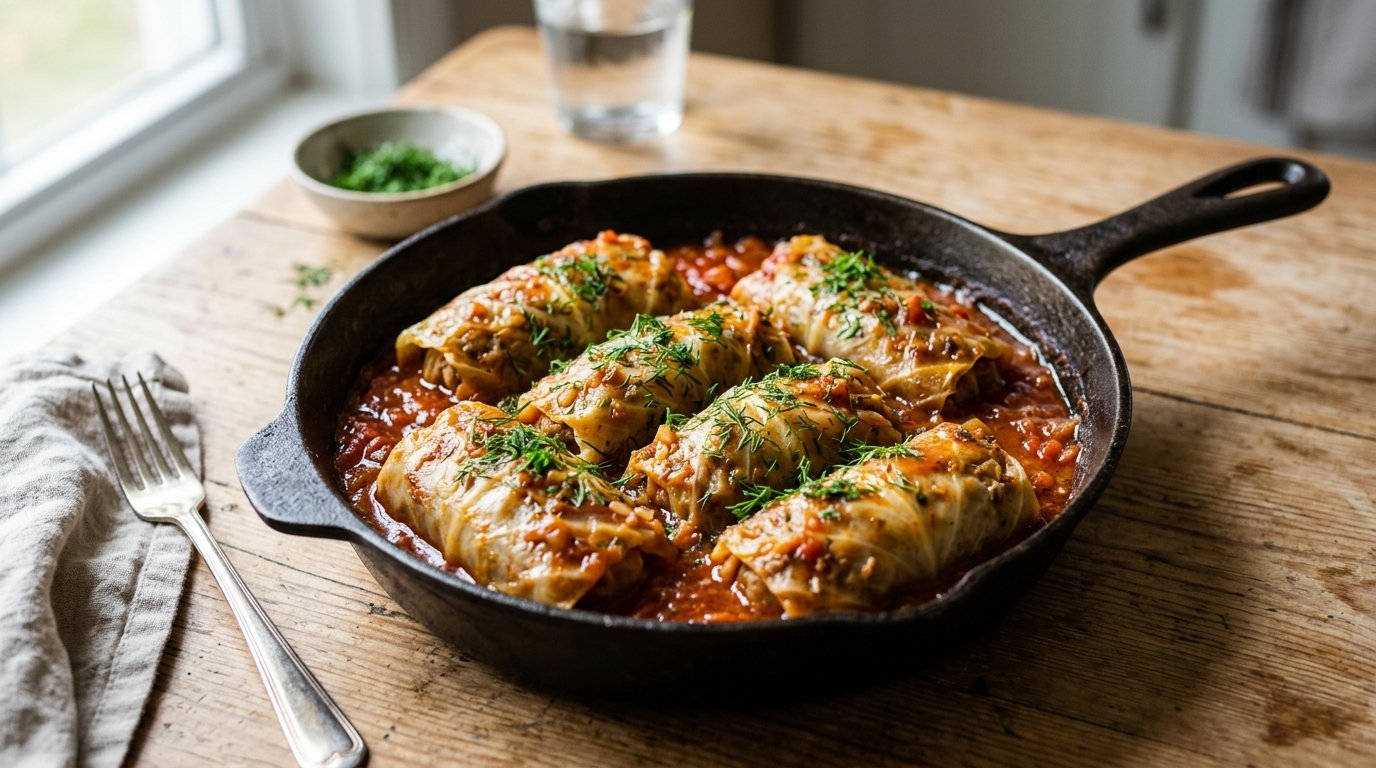
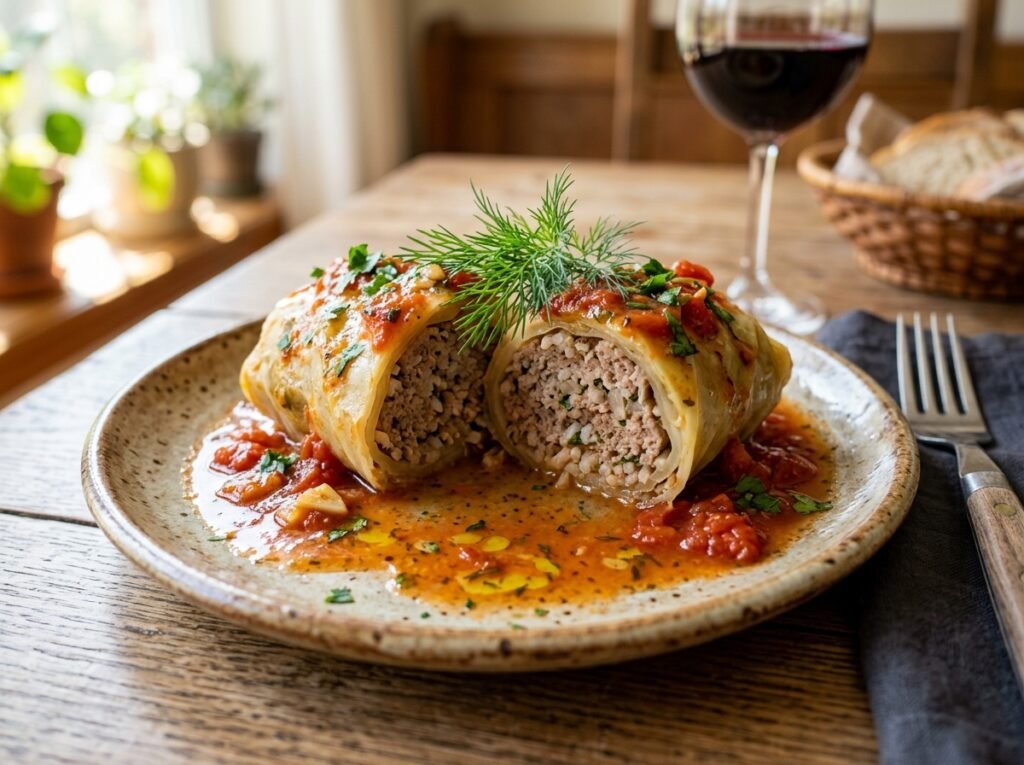
Tender cabbage leaves wrapped around a savory ground-meat and rice filling, simmered slowly in rich tomato sauce until everything is melt-in-your-mouth delicious.
Quick Recipe Summary
Prep Time
Cook Time
Total Time
Servings
Cuisine
Course
Difficulty
Calories
30 minutes
60–75 minutes
90–105 minutes
6–8 (makes 12–16 rolls)
Eastern European / American
Main Course
Medium
≈280–320 per roll
These classic stuffed cabbage rolls deliver comfort-food satisfaction with minimal fuss. Blanching the cabbage softens the leaves for easy rolling, while the seasoned meat-and-rice filling stays juicy as it simmers in tomato sauce. A plate placed on top keeps the rolls submerged and intact. The result is tender, flavorful rolls perfect for family dinners or make-ahead meals.
Table of Contents
Why This Recipe Works
Why You’ll Love This Recipe
Ingredient Notes
Kitchen Equipment
Preparation Information
Step-by-Step Instructions
Expert Tips
Common Mistakes
Recipe Variations
What to Serve With This Recipe
Make Ahead Tips
Meal Prep Tips
Storage Instructions
Reheating Instructions
Nutritional Information
Troubleshooting Guide
Frequently Asked Questions
Final Thoughts
Introduction
Classic stuffed cabbage rolls turn simple ingredients into a hearty, satisfying main dish. Softened cabbage leaves cradle a flavorful mixture of ground meat, rice, onion, and spices, then gently simmer in tomato sauce until the filling is fully cooked and the leaves are tender. This recipe follows the traditional method of blanching a whole head of cabbage, mixing a well-seasoned filling, rolling the leaves tightly, and cooking everything together in one pot. The result is comforting, budget-friendly, and ideal for feeding a crowd or preparing ahead.
Why This Recipe Works
Blanching the whole cabbage head softens the leaves just enough to make them pliable without tearing. Combining raw rice with the meat allows the grains to cook and absorb juices during the long simmer, keeping the filling moist. Tomato paste in the filling adds depth, while a generous tomato sauce provides moisture and acidity that balances the richness of the meat. Weighing the rolls down with a plate prevents them from floating and unrolling. Slow, covered cooking ensures even heat and tender results.
Why You’ll Love This Recipe
Uses affordable, everyday ingredients
One-pot cooking for easy cleanup
Make-ahead and freezer-friendly
Comforting flavors the whole family enjoys
Flexible with different meats or spice levels
Impressive yet approachable for home cooks
Ingredient Notes
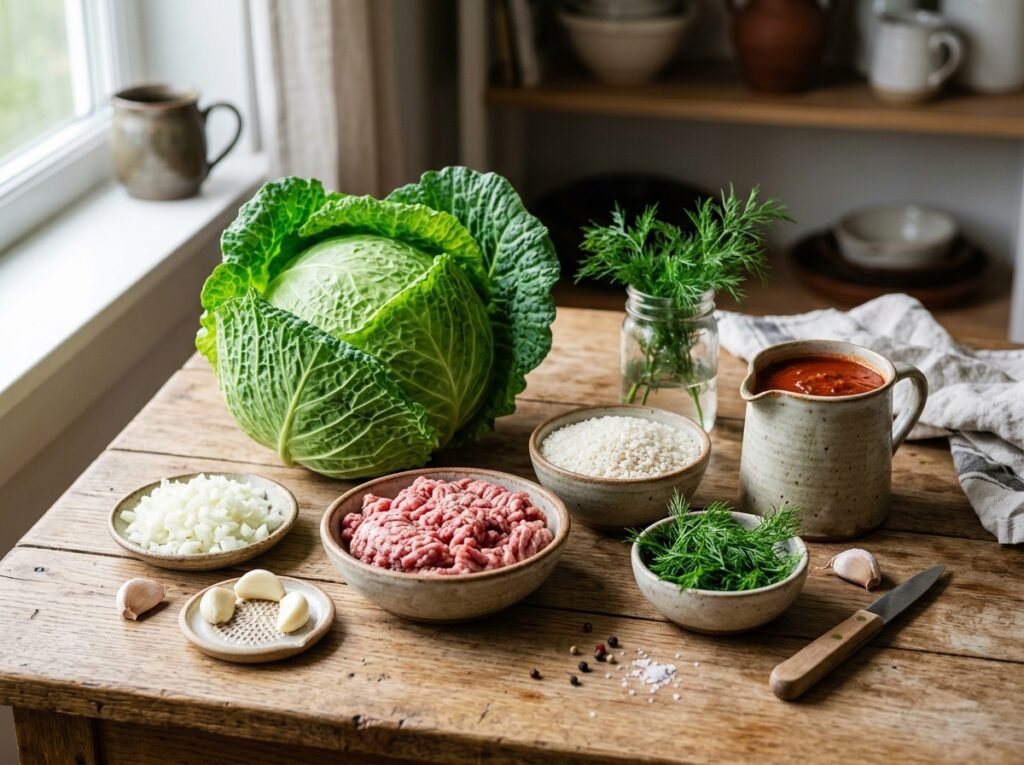
Green cabbage – The wrapper. Choose a large, firm head with tightly packed leaves. Napa cabbage can substitute for a milder taste. Store whole heads in the refrigerator for up to two weeks.
Ground meat – Typically a mix of beef and pork for best flavor and moisture; all-beef or turkey also works. Look for 80–85% lean to avoid excess grease.
Uncooked rice – Long-grain white rice is traditional; it absorbs liquid and expands during cooking. Rinse if desired. Brown rice requires longer cooking and extra liquid.
Onion – Yellow or white onion adds sweetness and aroma. Finely dice for even distribution.
Green onion / scallion – Provides fresh, mild onion flavor and color.
Garlic – Fresh minced garlic sharpens the filling.
Tomato paste – Concentrated flavor and slight sweetness that deepens the filling.
Spices – Salt, black pepper, and paprika (sweet or smoked) season the meat. Adjust to taste.
Tomato sauce or crushed tomatoes – Forms the simmering liquid. Choose a good-quality plain sauce so you can control seasoning.
Oil – A little for greasing or starting the sauce if needed.
Kitchen Equipment
Required: large pot for blanching, large mixing bowl, wooden cutting board, sharp knife, tongs, spoon, Dutch oven or heavy pot with lid, heat-proof plate that fits inside the pot. Optional: kitchen scale, food processor for chopping, meat thermometer.
Bring a large pot of water to a rolling boil. Using tongs, carefully lower a whole head of cabbage into the water. Cook 5–8 minutes, turning occasionally, until the outer leaves soften and become pliable but still hold their shape. Remove the head, let it cool slightly, then carefully peel off the softened leaves one by one. Trim the thick core from each leaf with a knife so the leaf lies flat. Return the head to the pot as needed to soften remaining leaves. This step is essential—raw leaves crack and tear when rolled.
Make the Filling
In a large bowl combine ground meat, uncooked rice, finely diced onion, sliced green onion, minced garlic, a spoonful of tomato paste, salt, pepper, and paprika. Mix thoroughly with clean hands until everything is evenly distributed. The mixture should feel cohesive but not overworked. Mixing by hand incorporates the seasonings without compacting the meat, which keeps the finished filling tender.
Fill and Roll the Leaves
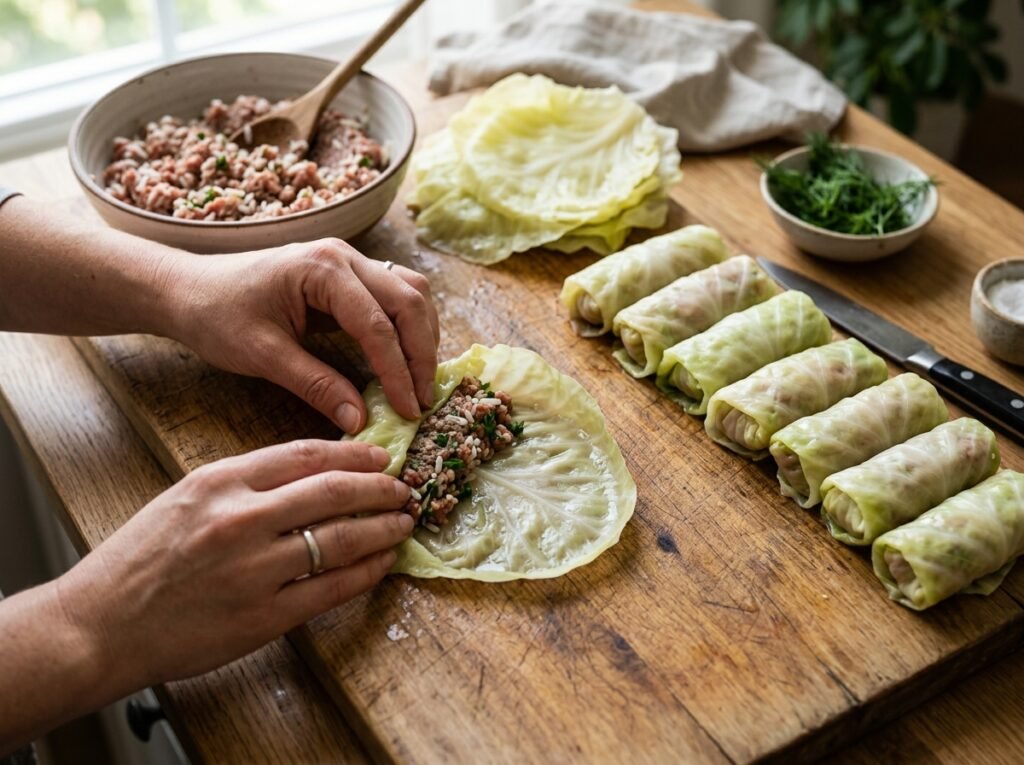
Lay one cabbage leaf flat on a cutting board, core end toward you. Place a generous spoonful of filling near the base of the leaf. Fold the bottom edge over the filling, then fold in both sides, and roll tightly toward the top of the leaf, like a burrito. The leaf should fully enclose the filling. Repeat with remaining leaves and filling. Tight, even rolls hold together during cooking and look neat on the plate.
Arrange in the Pot
Pour a layer of tomato sauce into the bottom of a heavy Dutch oven or pot. Nestle the cabbage rolls seam-side down in a single layer (or snug double layer if needed). Pour remaining sauce over the top so the rolls are mostly covered. The sauce keeps the rolls moist and creates a flavorful braising liquid.
Weigh Down and Simmer
Place a heat-proof plate directly on top of the rolls to keep them submerged and prevent unraveling. Cover the pot with its lid. Bring the sauce to a gentle simmer over medium heat, then reduce to low and cook 60–75 minutes. The rolls are done when the cabbage is very tender and the rice inside is fully cooked. Aromas of tomato and savory meat will fill the kitchen; the sauce will thicken slightly.
Serve
Carefully lift the rolls onto plates and spoon extra sauce over the top. Cut one open to reveal the cooked meat-and-rice filling. Serve hot.
Expert Tips
Choose a large cabbage so you have plenty of good-sized leaves. If leaves tear, use two smaller ones overlapped. Do not overfill—about 2–3 tablespoons of mixture per leaf is ideal. Keep the simmer gentle; a hard boil can cause the rolls to split. Taste the sauce midway and adjust seasoning if needed. Leftover core and small leaves can be chopped and added to the sauce for extra body.
Common Mistakes
Skipping the blanch or under-blanching leads to stiff leaves that crack when rolled—always soften them properly. Overmixing the filling makes it dense—mix just until combined. Rolling too loosely allows the filling to escape—tuck the sides firmly. Cooking at too high a heat can scorch the bottom—maintain a low simmer. Forgetting the plate on top lets rolls float and unroll—use the weight.
Recipe Variations
Spicy – Add red pepper flakes or a diced chili to the filling. Vegetarian – Replace meat with cooked lentils or mushrooms and extra rice or quinoa. Chicken or Turkey – Use ground poultry for a lighter version; add a bit of oil for moisture. Beef Only – All-beef filling works well; consider a splash of Worcestershire for depth. Extra Cheesy – Sprinkle grated Parmesan or mozzarella into the filling or on top before serving. Healthy / Low-Carb – Swap rice for cauliflower rice (reduce liquid slightly). High-Protein – Increase the meat ratio and reduce rice.
What to Serve With This Recipe
Mashed potatoes, buttered egg noodles, or crusty bread soak up the sauce beautifully. A simple cucumber salad or steamed green beans adds freshness. Sour cream on the side is traditional and cooling. Pair with a light red wine or sparkling water with lemon. Fresh fruit or a light yogurt dessert finishes the meal.
Make Ahead Tips
Assemble the rolls up to one day ahead, cover, and refrigerate. Add the sauce and cook when ready. The filling can also be mixed a day in advance.
Meal Prep Tips
Cook a full batch, cool completely, and portion into containers with sauce. They reheat well for lunches throughout the week.
Storage Instructions
Refrigerator: Store cooled rolls in an airtight container with sauce for up to 4 days. Freezer: Freeze in a single layer, then transfer to freezer bags or containers for up to 3 months. Thaw overnight in the refrigerator before reheating.
Reheating Instructions
Oven: Cover with foil and heat at 350°F (175°C) for 20–25 minutes until hot. Stovetop: Warm gently in a covered pan with a splash of water or extra sauce over low heat. Microwave: Heat individual portions in short intervals, covered, stirring sauce as needed. Air Fryer: Not ideal for saucy rolls; use oven or stovetop instead.
Nutritional Information (Approximate per roll)
Calories: 280–320 Protein: 18–22 g Carbohydrates: 20–25 g Fat: 12–16 g Fiber: 3–4 g Sugar: 5–7 g Sodium: 450–550 mg
Values vary based on exact ingredients and portion size.
Troubleshooting Guide
Rolls falling apart → Leaves not blanched enough or rolled too loosely. Soften leaves fully and tuck sides tightly. Dry filling → Not enough sauce or overcooked. Ensure rolls are mostly covered and simmer gently. Undercooked rice → Simmer longer or use a slightly smaller grain. Check one roll after 60 minutes. Sauce too thin → Simmer uncovered for the last 10–15 minutes or stir in a little tomato paste. Bitter cabbage → Choose a fresh, sweet head and avoid over-blanching.
Frequently Asked Questions
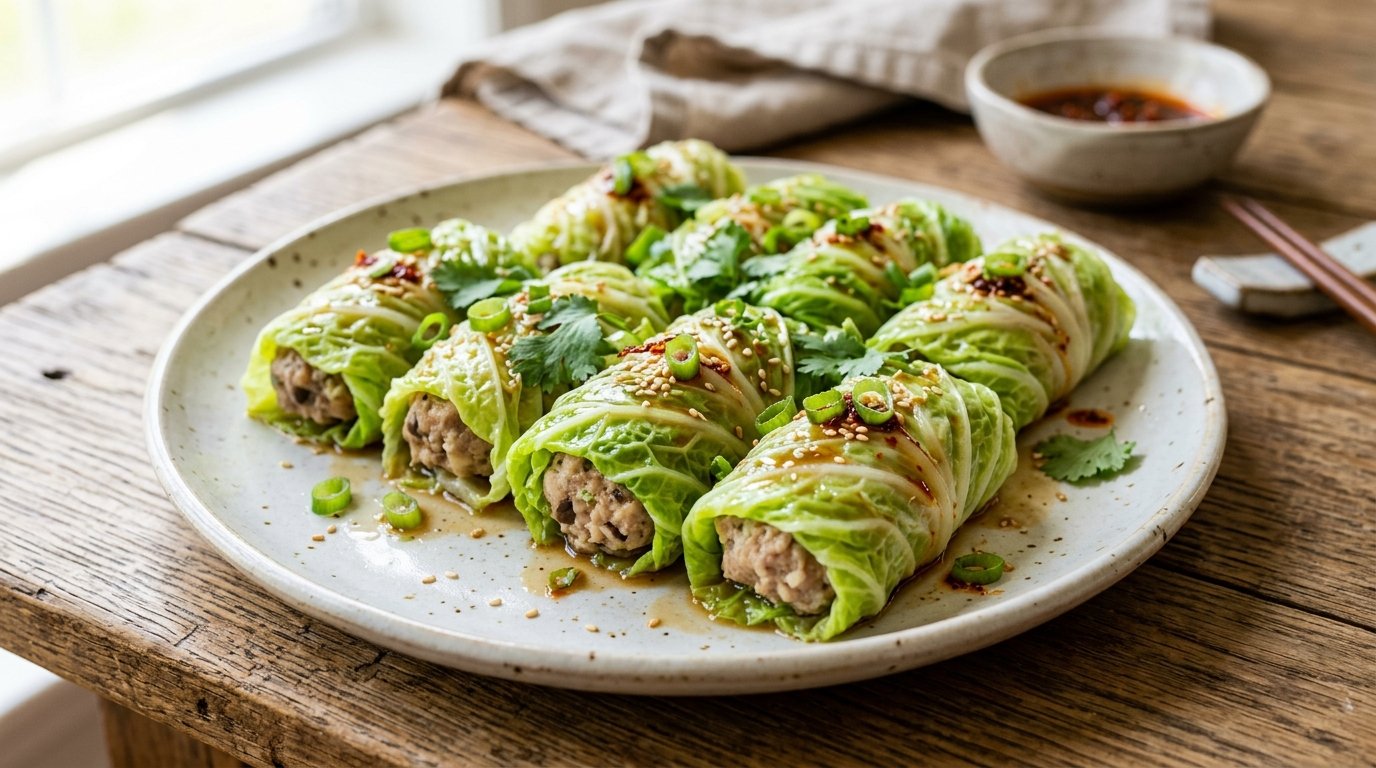
Can I use savoy or napa cabbage? Yes. Savoy is more tender and ornamental; napa is milder and cooks faster—reduce simmer time slightly.
Do I have to use raw rice? Raw rice is traditional because it cooks in the sauce. Pre-cooked rice can be used but may result in a softer, less cohesive filling.
Can I freeze uncooked rolls? Yes. Assemble, freeze on a tray, then bag. Cook from frozen, adding 15–20 minutes to the simmer time.
How do I know when they’re done? The cabbage should be very soft and a fork should easily pierce the roll. The internal temperature of the filling should reach 160°F (71°C).
Can I make these in a slow cooker? Yes. Layer rolls and sauce in the slow cooker and cook on low 6–8 hours or high 3–4 hours.
Is tomato paste necessary? It adds depth, but you can omit it and rely on the sauce alone if preferred.
What if my cabbage leaves are small? Overlap two leaves or make smaller rolls. Use the leftover scraps in the sauce.
Can I bake them instead of simmering? Yes. Arrange in a baking dish, cover tightly with foil, and bake at 350°F (175°C) for 75–90 minutes.
Final Thoughts
Classic stuffed cabbage rolls bring together tender leaves, a savory meat-and-rice filling, and rich tomato sauce in a dish that feels both nostalgic and deeply satisfying. Once you master the simple rolling technique, the recipe becomes a reliable favorite for family meals and gatherings. Give these stuffed cabbage rolls a try, adjust the seasonings to your taste, and enjoy the comforting results. Leave a comment or rating to share how they turned out—happy cooking!